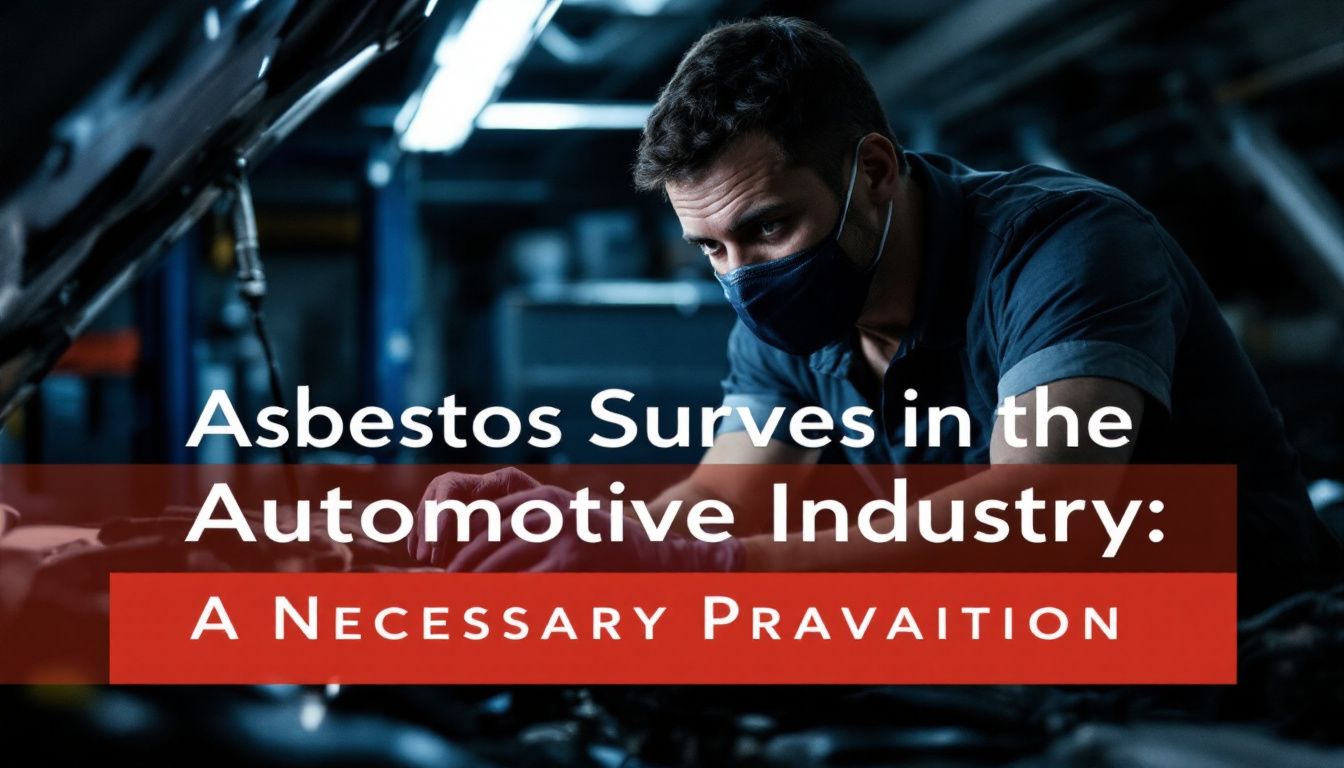
Why Industrial Health Screening for Auto Workers Is More Urgent Than Many Realise
Asbestos doesn’t announce itself. It hides in brake drums, clutch facings, and gaskets — and for decades, mechanics worked with these components every single day without knowing the risks. Industrial health screening for auto workers exists precisely because the damage caused by asbestos exposure can take 20 to 50 years to surface, long after the harm is already done.
If you manage an automotive workshop, own a garage, or oversee fleet maintenance operations, understanding the asbestos risk in your environment isn’t optional — it’s a legal and moral obligation. The consequences of getting this wrong are severe, and they fall on both workers and employers.
The Historical Use of Asbestos in the Automotive Industry
From the early 1900s through to the 1980s, asbestos was considered an ideal material for automotive components. It handled extreme heat, resisted wear, and was cheap to produce. Brake pads, clutch facings, gaskets, and heat shields were all routinely manufactured using asbestos-containing materials (ACMs).
Major manufacturers and parts suppliers across the industry relied on ACMs as standard. It wasn’t until the evidence of serious health harm became undeniable that the industry began to change course.
The UK banned the use of asbestos in 1999, but that ban didn’t make older vehicles disappear. Classic cars, imported vehicles, and older fleet equipment can still contain ACMs. Authorities have identified asbestos components in vehicles imported from certain overseas markets — a stark reminder that the problem didn’t end when domestic manufacturing changed.
Where Asbestos Hides in Vehicles and Automotive Workshops
Identifying where asbestos may be present is the first step in any credible risk management programme. In automotive environments, the most common locations include:
- Brake pads and brake shoes — particularly in vehicles manufactured before the late 1980s
- Clutch facings and clutch plates — asbestos was used for its heat-resistance during friction
- Gaskets — engine gaskets and exhaust manifold gaskets frequently contained asbestos
- Heat shields — used around exhausts and engines in older vehicles
- Insulation materials — found in older workshop buildings themselves, not just the vehicles
- Textured coatings and floor tiles — common in garage buildings constructed before 2000
The vehicle itself is only part of the picture. Many automotive workshops, particularly those operating from older premises, may have ACMs in their roofing, wall panels, pipe lagging, or ceiling tiles. Any building constructed or refurbished before 2000 should be treated as potentially containing asbestos until properly surveyed.
How Asbestos Exposure Happens During Automotive Work
The danger with asbestos in automotive settings is that routine, everyday tasks are the most likely to cause exposure. This isn’t a risk confined to dramatic demolition or renovation — it happens quietly, during ordinary repairs.
Brake and Clutch Work
Brake repair is one of the highest-risk tasks in any automotive workshop. As brake pads and shoes wear down over time, asbestos fibres become embedded in brake dust. When a mechanic removes brake drums, blows out dust with compressed air, or dry-sweeps the work area, those fibres become airborne.
Clutch replacement carries similar risks. Worn clutch plates release dust that may contain chrysotile asbestos fibres — invisible to the naked eye and capable of remaining suspended in the air for extended periods.
Gasket Removal and Engine Work
Removing old gaskets — particularly on engines from vehicles manufactured before the 1990s — can release asbestos fibres if the gasket material is disturbed. Scraping, grinding, or cutting old gasket material without appropriate controls is a significant exposure risk.
Secondary Exposure
Asbestos fibres are microscopic and cling to clothing, hair, and skin. Workers who don’t change out of contaminated overalls before leaving the workshop can carry fibres home, exposing family members — a phenomenon known as secondary or para-occupational exposure.
This is not a theoretical risk. It has resulted in mesothelioma diagnoses in people who never worked directly with asbestos themselves. The implications for workshop operators who fail to provide adequate changing facilities are both moral and legal.
The Health Consequences: What Asbestos Does to the Body
Industrial health screening for auto workers matters because the diseases caused by asbestos exposure are severe, largely irreversible, and often fatal. The conditions linked to asbestos inhalation include:
- Mesothelioma — a cancer of the lining of the lungs, abdomen, or heart. There is no cure, and the prognosis is poor. It is almost exclusively caused by asbestos exposure.
- Asbestos-related lung cancer — directly linked to asbestos inhalation, particularly in smokers
- Asbestosis — a chronic lung condition caused by scarring of lung tissue, leading to progressive breathlessness and reduced lung function
- Pleural disease — thickening or calcification of the pleura (the lining around the lungs), which can restrict breathing and cause chronic pain
The latency period for these diseases is what makes them particularly insidious. A mechanic exposed to asbestos dust in the 1980s may not receive a diagnosis until decades later. By the time symptoms appear, the disease is often at an advanced stage.
Research has consistently shown elevated rates of mesothelioma among automotive mechanics compared to the general population — a direct consequence of years of unprotected exposure to asbestos-containing brake and clutch components.
Industrial Health Screening for Auto Workers: What It Involves
Effective industrial health screening for auto workers operates on two levels: screening the working environment for asbestos-containing materials, and monitoring the health of workers who may have been exposed.
Environmental Asbestos Surveys
Before any health monitoring programme can be meaningful, you need to know what materials are present in your workplace. An asbestos management survey assesses the building fabric, identifies any ACMs, evaluates their condition, and determines the risk they pose. For automotive workshops, this should cover both the building structure and any fixed equipment or storage areas where older parts may be kept.
If your workshop has undergone changes, extensions, or refurbishment, a re-inspection survey ensures your asbestos register remains accurate and that no new risks have emerged since the last assessment. Asbestos conditions change over time — materials that were stable can deteriorate, and any disturbance during building work can create new hazards.
Air Monitoring
In environments where ACMs are known to be present, or where work on older vehicles is frequent, air monitoring provides an objective measure of fibre concentrations in the workplace. This is particularly relevant during brake and clutch work, gasket removal, or any task that generates dust from older components.
Occupational Health Surveillance
Workers with a history of asbestos exposure — even historical exposure from years or decades ago — should be enrolled in a health surveillance programme. This typically involves periodic chest X-rays, lung function tests, and clinical assessments by an occupational health physician.
The goal is early detection, not cure. Catching pleural changes or early-stage asbestosis can influence treatment options and quality of life, even if the underlying condition cannot be reversed.
Testing Individual Components
When working on vehicles of uncertain age or provenance, testing suspect components before disturbing them is a practical safeguard. A testing kit allows samples to be collected and sent for laboratory analysis, giving you a definitive answer before any work begins. This is particularly useful for classic vehicle restorers and workshops that regularly handle pre-1990s vehicles.
Legal Obligations for Automotive Employers
The Control of Asbestos Regulations places clear duties on employers and those in control of non-domestic premises. For automotive workshop operators, the key obligations include:
- Duty to manage — identify whether asbestos is present in your premises, assess its condition, and put a management plan in place
- Risk assessment — assess the risk of exposure during all relevant work activities, including vehicle repairs involving older components
- Information and training — ensure all workers who may encounter asbestos receive appropriate awareness training before they start work
- Provision of PPE — supply suitable respiratory protective equipment and protective clothing where exposure cannot be eliminated
- Notification of licensable work — if any asbestos removal work in your premises requires a licensed contractor, the Health and Safety Executive (HSE) must be notified in advance
HSE guidance under HSG264 sets out the standards for asbestos surveys and should be the reference point for any survey commissioned for your premises. Non-compliance carries serious consequences — enforcement action, improvement notices, prohibition notices, and in cases of gross negligence, prosecution.
Beyond regulatory penalties, the civil liability exposure for employers who fail to protect workers from asbestos is substantial. Courts take a dim view of employers who knew — or ought to have known — about asbestos risks and failed to act.
Best Practices for Managing Asbestos Risk in Automotive Workshops
Compliance with the law is the floor, not the ceiling. The best-run automotive workshops go further, embedding asbestos risk management into their day-to-day operations.
Establish and Maintain an Asbestos Register
Every premises that may contain asbestos should have an up-to-date asbestos register — a documented record of where ACMs are located, their condition, and the risk they pose. This register must be accessible to anyone who may disturb those materials, including contractors carrying out maintenance or repair work on your building.
A management survey from a qualified surveying company will form the foundation of this register. Without it, you’re managing blind.
Adopt Safe Working Methods for High-Risk Tasks
For brake and clutch work on older vehicles, adopt wet methods to suppress dust rather than dry sweeping or blowing with compressed air. Use HEPA-filtered vacuum equipment for cleaning. Dispose of waste materials in sealed, labelled bags in accordance with waste regulations for hazardous materials.
Where ACMs need to be removed from your premises entirely, instructing a qualified contractor for asbestos removal is the only safe and legally compliant route. Attempting removal without the appropriate licence and controls is both dangerous and unlawful.
Control Access and Segregate Work Areas
When working on vehicles suspected of containing asbestos components, restrict access to the work area to prevent unnecessary exposure. Use barriers and signage to keep other workers and customers away from the immediate area during high-risk tasks.
Provide Changing Facilities
Workers should have access to changing facilities so they can remove contaminated overalls before leaving the premises. Contaminated clothing should be laundered appropriately — not taken home to be washed with the family’s laundry, where secondary exposure risks arise.
Review Your Procedures Regularly
Asbestos risk management isn’t a one-time exercise. As your premises change, as new staff join, and as the vehicles you work on evolve, your procedures need to keep pace. Schedule regular reviews of your asbestos management plan and ensure training records are kept up to date.
What to Do If You Suspect Asbestos in Your Workshop Right Now
If you haven’t yet had your premises assessed, or if your last survey is more than a few years old, the steps are straightforward:
- Don’t disturb anything you suspect may contain asbestos. Leave materials undisturbed until they’ve been assessed by a qualified professional.
- Commission a management survey from a qualified surveying company. This will give you a complete picture of what’s present and what risk it poses.
- Act on the findings. Put your asbestos management plan in place, brief your staff, and schedule a re-inspection to keep your register current.
- Test suspect vehicle components before any work begins on older or imported vehicles where the provenance of parts is uncertain.
- Enrol exposed workers in health surveillance. If any of your team have historical exposure, occupational health monitoring should begin without delay.
Supernova Asbestos Surveys covers the full length and breadth of the UK. Whether you need an asbestos survey in London, an asbestos survey in Manchester, or an asbestos survey in Birmingham, our UKAS-accredited surveyors can assess your automotive premises and deliver a clear, actionable report.
The Cost of Inaction
Some workshop operators put off commissioning a survey because they assume it’s expensive, disruptive, or something they can deal with later. The reality is that a professional asbestos survey is a modest investment compared to the potential costs of enforcement action, civil litigation, or — most importantly — the human cost of a preventable illness.
Industrial health screening for auto workers isn’t a bureaucratic exercise. It’s the mechanism by which employers fulfil their duty of care to the people who show up to work every day. The mechanics, technicians, and apprentices in your workshop deserve to know they’re protected.
If you operate from older premises, work on pre-2000 vehicles, or have any doubt about the asbestos status of your workplace, act now. The longer the delay, the greater the risk — to your workers, and to your business.
Frequently Asked Questions
Do modern vehicles still contain asbestos?
Vehicles manufactured and sold in the UK after 1999 should not contain asbestos-containing materials, as the UK banned the use of asbestos that year. However, imported vehicles, classic cars, and older fleet vehicles can still contain ACMs in brake pads, clutch facings, and gaskets. If you’re working on any vehicle of uncertain age or origin, treat it as potentially containing asbestos until components have been tested.
What type of asbestos survey does an automotive workshop need?
Most automotive workshops require a management survey as a starting point. This assesses the building fabric and identifies any ACMs present, their condition, and the risk they pose. If your premises are undergoing refurbishment or structural work, a refurbishment and demolition survey is required for the affected areas before work begins. Re-inspection surveys should then be conducted periodically to keep your asbestos register up to date.
Are automotive mechanics at higher risk of asbestos-related disease?
Research has consistently shown elevated rates of mesothelioma and other asbestos-related conditions among automotive mechanics, particularly those who worked on vehicles during the 1960s, 1970s, and 1980s. Brake and clutch work were identified as the primary exposure routes, as asbestos fibres become embedded in brake dust and are released during routine servicing tasks. Industrial health screening for auto workers is designed to identify and monitor those at elevated risk.
What happens if I don’t comply with asbestos regulations in my workshop?
Failure to comply with the Control of Asbestos Regulations can result in enforcement action by the HSE, including improvement notices, prohibition notices, and — in serious cases — prosecution. Beyond regulatory penalties, employers who fail to protect workers from known asbestos risks face significant civil liability. Courts have consistently awarded substantial damages in cases where employers knew or ought to have known about asbestos risks and failed to act.
How do I find out if my workshop building contains asbestos?
The only reliable way to determine whether your premises contain asbestos is to commission a professional asbestos management survey from a qualified and accredited surveying company. Visual inspection alone is not sufficient — many ACMs are indistinguishable from non-asbestos materials without laboratory analysis. Supernova Asbestos Surveys can assess your premises and provide a detailed report with a full asbestos register. Call us on 020 4586 0680 or visit asbestos-surveys.org.uk to arrange a survey.
To speak with one of our qualified surveyors about protecting your automotive workshop, call 020 4586 0680 or visit asbestos-surveys.org.uk today. With over 50,000 surveys completed nationwide, Supernova Asbestos Surveys has the experience and accreditation to give you the answers you need.