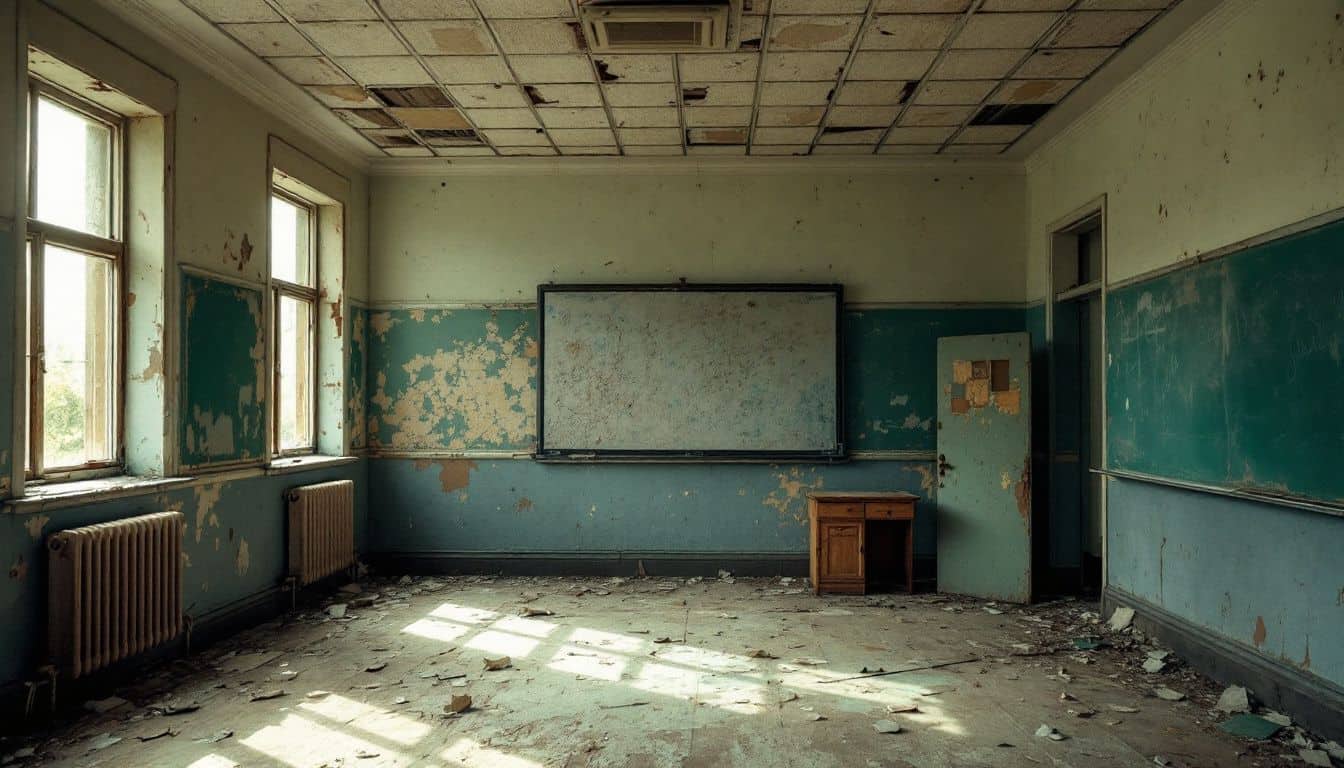
The Long-Term Health Risks of Asbestos Exposure in Schools
Asbestos was once called a wonder material — cheap, fireproof, and durable. For decades, it was built into the fabric of thousands of UK school buildings. The consequences of that decision are still unfolding, and understanding what are the potential long term effects of exposure to asbestos in schools is not an academic exercise. For parents, teachers, governors, and facilities managers, it is a matter of life and death.
The UK banned asbestos in new construction in 1999, but the material remains present in a significant proportion of school buildings constructed before that date. Many of those buildings are still in daily use.
How Asbestos Ended Up in UK Schools
From the 1940s through to the late 1980s, asbestos was a standard building material across the UK. Schools built or refurbished during that period routinely incorporated asbestos-containing materials (ACMs) because of their low cost, strength, and resistance to fire and heat.
The industries supplying asbestos were aware of its dangers long before the public was told. That information was suppressed for decades, during which time entire generations of children and teachers were exposed without their knowledge or consent.
Where Asbestos Is Typically Found in Schools
Asbestos does not announce itself. It can be hidden in plain sight or concealed entirely within the building’s structure. Common locations in school buildings include:
- Ceiling tiles and suspended ceiling systems
- Floor tiles and the adhesive used to fix them
- Pipe lagging and boiler insulation in plant rooms and corridors
- Textured coatings and Artex on walls and ceilings
- Spray-on insulation in roof spaces and attics
- Partition walls and wallboard in older classroom blocks
- Roof panels and external cladding on prefabricated buildings
Even when undisturbed, asbestos-containing materials can deteriorate over time, releasing fibres into the air. In a school environment, where maintenance work, drilling, and general wear and tear are routine, the risk of disturbance is ever-present.
What Are the Potential Long Term Effects of Exposure to Asbestos in Schools?
The diseases caused by asbestos exposure are serious, often fatal, and characterised by a cruelly long latency period. Symptoms may not appear until 10 to 50 years after the initial exposure. This means someone who attended or worked in an asbestos-containing school in the 1970s or 1980s may only now be developing a related illness.
There are four primary conditions associated with asbestos exposure.
Mesothelioma
Mesothelioma is a cancer of the lining of the lungs, abdomen, or heart. It is almost exclusively caused by asbestos exposure and carries an extremely poor prognosis. Diagnosis typically comes at a late stage, and median survival from diagnosis is often less than two years.
The UK has one of the highest rates of mesothelioma in the world — a direct legacy of widespread asbestos use in the post-war decades. Teachers and school staff appear in mesothelioma mortality statistics at rates that reflect their prolonged occupational exposure. The Health and Safety Executive’s own data links occupational exposure, including in educational settings, to a substantial proportion of UK mesothelioma deaths.
Lung Cancer
Asbestos is a recognised cause of lung cancer, entirely independent of smoking. When someone who has been exposed to asbestos also smokes, the risk is dramatically compounded.
The cancer can develop decades after exposure, making it difficult to attribute definitively to a specific source. Symptoms include persistent coughing, chest pain, breathlessness, and unexplained weight loss. By the time these symptoms present, the disease is frequently at an advanced stage.
Asbestosis
Asbestosis is a chronic, progressive scarring of the lung tissue caused by inhaling asbestos fibres. It is not cancer, but it is a serious and debilitating condition. The scarring reduces the lungs’ ability to transfer oxygen into the bloodstream, leading to breathlessness that worsens over time.
People with asbestosis also carry an elevated risk of developing mesothelioma or lung cancer. There is no cure — management focuses on slowing progression and improving quality of life.
Pleural Thickening and Pleural Plaques
Pleural plaques are areas of hardened tissue on the lining of the lungs. They are a marker of past asbestos exposure rather than a disease in themselves, but their presence confirms that significant exposure has occurred.
Diffuse pleural thickening, where larger areas of the lining become scarred, can cause breathlessness and chest discomfort. In severe cases it significantly impairs lung function and quality of life.
Who Is Most at Risk: Students or Staff?
Both groups face real risks, but the nature and level of those risks differ in important ways.
School Staff
Teachers, caretakers, maintenance staff, and cleaners face the highest cumulative exposure. They spend more hours in the building, over more years, and may work in areas — such as plant rooms, roof spaces, and service corridors — where ACMs are more concentrated or more likely to be disturbed.
Caretakers and maintenance workers are particularly vulnerable. Any activity involving drilling, cutting, or disturbing building fabric — however routine it seems — can release asbestos fibres if ACMs are present. Historically, these workers often had no idea what they were working alongside.
Students
Children are generally considered more biologically vulnerable to carcinogens than adults, meaning the same dose of asbestos fibres may carry a greater long-term risk. However, students typically spend fewer hours in the building than staff and move on after a few years, so their total cumulative exposure is usually lower.
That said, children who attended heavily affected schools during the period of greatest use — particularly those in buildings where ACMs were deteriorating — may have received significant exposure. Given the latency period involved, some of those individuals are only now entering the age range where asbestos-related diseases typically manifest. Understanding what are the potential long term effects of exposure to asbestos in schools is therefore urgent for former pupils as well as current ones.
UK Regulations Governing Asbestos in Schools
The management of asbestos in UK schools is governed by the Control of Asbestos Regulations, which impose a legal duty on those responsible for non-domestic premises — including schools — to manage asbestos-containing materials. This is known as the duty to manage.
Under these regulations, duty holders must:
- Identify whether ACMs are present in the building
- Assess the condition and risk posed by any ACMs found
- Produce and maintain a written asbestos management plan
- Ensure the plan is implemented and kept up to date
- Share information about ACMs with anyone who may disturb them
- Review the plan regularly and whenever circumstances change
The HSE’s guidance document HSG264 sets out the standards for asbestos surveying and is the benchmark against which surveys are assessed. Schools are required to hold an asbestos register — a documented record of all known or suspected ACMs — and to make this available to contractors, maintenance teams, and local authorities. Failure to comply with these duties is a criminal offence. More importantly, failure to comply puts lives at risk.
The Role of Local Authorities
Local authorities have oversight responsibilities for maintained schools in their area. They are expected to support schools in meeting their asbestos management obligations, including helping to fund surveys and remedial work where necessary. Academy trusts and independent schools hold their own duty to manage responsibilities directly.
Asbestos Management Plans: What Schools Must Have in Place
An asbestos management plan is not a one-off document — it is a living record that must be maintained and acted upon. A robust plan will include:
- A full asbestos register identifying the location, type, and condition of all ACMs
- A risk assessment for each ACM, taking into account its condition and likelihood of disturbance
- Procedures for managing ACMs in good condition through monitoring and maintenance
- Procedures for dealing with damaged or deteriorating ACMs through repair, encapsulation, or removal
- A system for informing contractors and maintenance workers before they begin any work
- Records of all inspections, works, and incidents involving asbestos
- Staff training records confirming that relevant personnel understand the risks
Where asbestos is in good condition and not at risk of disturbance, the safest approach is often to leave it in place and monitor it. Where it is damaged, deteriorating, or in a location where disturbance is likely, asbestos removal should be considered as part of a planned remediation programme.
Safe Removal and Containment: What the Process Involves
When asbestos must be removed — whether because it is damaged or because building works are planned — the process must be carried out by licensed contractors following strict HSE-approved procedures.
Safe removal involves:
- Sealing off the affected area to prevent fibre migration
- Using negative pressure enclosures to contain airborne fibres
- Equipping workers with appropriate personal protective equipment, including respiratory protection
- Conducting air monitoring throughout and after the work
- Disposing of asbestos waste in sealed, clearly labelled containers at licensed disposal sites
- Carrying out a thorough clearance inspection and air test before the area is returned to use
Schools should never allow maintenance staff or general contractors to disturb suspected ACMs without first verifying whether asbestos is present and following the correct procedures. Even well-intentioned but uninformed intervention can cause far greater harm than leaving materials undisturbed.
Air Quality Monitoring and Regular Inspections
Asbestos management does not end with the production of a register. Schools must monitor the condition of known ACMs on a regular basis — typically annually, though higher-risk materials may require more frequent checks. Any change in condition must be recorded and acted upon.
Air quality monitoring can establish whether asbestos fibres are present in the air at measurable levels. This is particularly relevant following any incident where ACMs may have been disturbed, or in buildings where deterioration is a concern.
Transmission electron microscopy (TEM) provides the most accurate measurement of airborne fibre concentrations and is used in situations where a high degree of certainty is required.
The Long Latency Period: Why Early Action Matters Now
One of the most troubling aspects of asbestos-related disease is that the damage is done long before any symptoms appear. Fibres inhaled in a school corridor decades ago may be causing cellular changes that will not manifest as cancer until years or decades from now.
This latency period means that the full scale of harm caused by asbestos in UK schools is still unfolding. It also means that action taken today — to identify, manage, and where necessary remove asbestos — is not just about protecting current occupants. It is about preventing a further wave of disease in the decades ahead.
Early and accurate surveying, rigorous management planning, and prompt remediation of damaged materials are the most effective tools available. Schools that have not had a recent, HSG264-compliant survey should treat commissioning one as a priority.
Getting a Professional Asbestos Survey for Your School
The starting point for any school’s asbestos management programme is a professional survey carried out by a qualified, accredited surveyor. There are two main types of survey relevant to schools.
Management Survey
A management survey identifies ACMs that could be disturbed during normal occupation and routine maintenance. This is the baseline requirement for all occupied schools and must be in place before any maintenance activity takes place. It forms the foundation of the asbestos register and management plan.
Demolition and Refurbishment Survey
A demolition survey is required before any major refurbishment or demolition work begins. It is more intrusive than a management survey and is designed to locate all ACMs in areas that will be disturbed during the works. No school should proceed with significant building works without one.
Both survey types must be conducted in accordance with HSG264 by a surveyor with the appropriate qualifications and accreditation. The results must be documented clearly and communicated to all relevant parties.
What Happens If a School Has No Survey?
Operating a pre-2000 school building without an up-to-date asbestos survey is not only a breach of the duty to manage under the Control of Asbestos Regulations — it is a direct and ongoing risk to everyone in the building. Contractors working without knowledge of ACM locations are among the most common causes of uncontrolled asbestos fibre release in educational settings.
If your school does not have a current, HSG264-compliant survey, commissioning one is the single most important step you can take right now.
Asbestos Surveys for Schools Across the UK
Supernova Asbestos Surveys provides professional asbestos surveys for schools and educational establishments across the country. Whether your school is in a major city or a rural area, our accredited surveyors can carry out HSG264-compliant surveys quickly and with minimal disruption to school operations.
We cover schools throughout England, including those seeking an asbestos survey in London, an asbestos survey in Manchester, and an asbestos survey in Birmingham. Our nationwide reach means that wherever your school is located, expert help is close at hand.
With over 50,000 surveys completed, Supernova has the experience and expertise to support your school’s asbestos management obligations from initial survey through to ongoing monitoring and, where required, safe removal.
Frequently Asked Questions
What are the potential long term effects of exposure to asbestos in schools?
The primary long-term health effects of asbestos exposure in schools include mesothelioma, lung cancer, asbestosis, and pleural thickening. These conditions can take between 10 and 50 years to develop after the initial exposure, meaning former pupils and staff from decades ago may only now be experiencing symptoms. All of these conditions are serious, and mesothelioma in particular carries a very poor prognosis.
Are children more at risk from asbestos than adults?
Children are generally considered more biologically susceptible to carcinogens than adults, which means the same level of exposure may carry a proportionally higher long-term risk. However, students typically accumulate less total exposure than staff because they spend fewer hours in the building and leave after a few years. Both groups face real risks if ACMs are present and poorly managed.
What should a school do if it suspects asbestos is present?
The first step is to commission a professional asbestos management survey carried out by an accredited surveyor in line with HSG264. Do not disturb any suspected materials in the meantime. Once the survey is complete, a management plan must be produced, and any damaged or high-risk ACMs should be addressed promptly through encapsulation or licensed removal.
Is it legal for a school to operate without an asbestos survey?
Under the Control of Asbestos Regulations, duty holders — including those responsible for school buildings — are legally required to identify and manage asbestos-containing materials. Operating a pre-2000 building without a current asbestos survey is a breach of these regulations and constitutes a criminal offence. It also exposes staff, pupils, and contractors to unnecessary and potentially fatal risk.
How often should a school’s asbestos management plan be reviewed?
The asbestos management plan must be reviewed regularly and updated whenever circumstances change — for example, following building works, a change in the condition of known ACMs, or a significant incident. The condition of ACMs should be physically inspected at least annually, and high-risk materials may require more frequent monitoring. The plan is a live document, not a one-off exercise.
Concerned about asbestos in your school? Supernova Asbestos Surveys has completed over 50,000 surveys across the UK. Our accredited surveyors deliver HSG264-compliant reports that give you the information you need to protect staff, pupils, and contractors. Call us on 020 4586 0680 or visit asbestos-surveys.org.uk to arrange a survey.