A school estate can look well maintained and still hide serious asbestos risks behind ceiling tiles, inside risers, beneath floor finishes and around old service runs. That is why asbestos in schools remains a live compliance issue for local authorities, academy trusts, governors, bursars, estates teams and site managers across the UK.
The problem is rarely the simple presence of asbestos. The real danger starts when asbestos-containing materials are drilled, cut, broken, sanded, lifted or otherwise disturbed during maintenance, minor works, refurbishment or demolition. If you are responsible for school premises, the key question is blunt: do you know what is in the building, where it is, what condition it is in, and who checks that information before work starts?
Why asbestos in schools still matters
Asbestos in schools is still a major issue because many education buildings were constructed, extended or refurbished when asbestos was widely used in UK construction. It was valued for insulation, fire resistance and durability, so it appeared in a huge range of products across teaching blocks, halls, plant rooms and outbuildings.
That legacy has not disappeared. Even where previous asbestos work has taken place, materials can remain in less obvious areas such as service ducts, heater cupboards, old floor adhesives, ceiling voids, roof sheets and external stores.
Under the Control of Asbestos Regulations, those responsible for premises must identify asbestos-containing materials so far as is reasonably practicable, assess the risk and put arrangements in place to manage that risk. HSE guidance and HSG264 set the framework for asbestos surveys, registers, re-inspection and management planning.
For most schools, sensible asbestos management means:
- having the right survey information for each building
- maintaining an accurate asbestos register
- reviewing the condition of known or presumed materials
- sharing asbestos information with anyone liable to disturb it
- planning intrusive works properly before they begin
- making sure relevant staff understand local asbestos procedures
If any one of those points is weak, your arrangements need attention.
What asbestos is and why condition matters
Asbestos is the name for a group of naturally occurring fibrous minerals that were added to building materials because they resist heat, fire and chemical attack. In schools, asbestos may be present in insulation, boards, coatings, cement products, floor materials, gaskets and textured finishes.
The three asbestos types most commonly encountered in UK buildings are chrysotile, amosite and crocidolite. You cannot confirm asbestos reliably just by sight. Some materials can be strongly presumed to contain asbestos because of age and appearance, but confirmation usually requires sampling and laboratory analysis by a competent provider.
Not all asbestos-containing materials present the same level of risk. A damaged insulating board or deteriorating pipe lagging can release fibres far more easily than an intact asbestos cement sheet. The management response depends on several factors:
- the type of asbestos-containing material
- its condition
- whether the surface is sealed or damaged
- how accessible it is
- how likely it is to be disturbed
- whether maintenance or building works are planned nearby
This is why blanket assumptions are dangerous. Two materials in the same school can require very different controls.
Common sources of asbestos in schools
When people think about asbestos in schools, they often picture boiler rooms and corrugated roof sheets. Those are certainly common locations, but asbestos can be found across the estate, including classrooms, corridors, sports halls, laboratories, workshops and temporary buildings.
Typical sources include:
- pipe lagging and thermal insulation
- boiler and plant insulation
- asbestos insulating board in partitions, ceiling tiles, soffits and risers
- sprayed coatings on structural elements
- textured coatings on walls and ceilings
- vinyl floor tiles and bitumen adhesives
- asbestos cement roof sheets, wall panels, gutters and downpipes
- heater cupboard linings and backing boards
- electrical flash guards and backing boards
- laboratory panels and older service enclosures
- toilet cisterns, flues, ducts and tanks made from asbestos cement
Classrooms and corridors
Older classrooms may contain asbestos in ceiling tiles, wall panels, column casings, service boxing and textured finishes. Corridors often include floor tiles, service risers, soffit boards and enclosures around pipework.
These areas matter because they are heavily used and often subject to small jobs that people underestimate. Fixing displays, installing whiteboards, replacing lighting, fitting IT cabling or mounting security equipment can all disturb asbestos if the register is not checked first.
Boiler rooms and plant areas
Plant rooms are among the most sensitive areas in older schools. Pipe lagging, boiler insulation, rope seals, gaskets and insulating boards may all be present, sometimes hidden by later alterations or poor housekeeping.
If these materials are damaged or deteriorating, the risk of fibre release is much higher than with more robust products. Access controls, clear labelling where appropriate and strict contractor checks are especially important in these spaces.
Sports halls, stores and external buildings
Asbestos cement was widely used on sports halls, garages, sheds, stores and temporary classroom blocks. Roof sheets, wall cladding, gutters and downpipes are common examples.
Intact asbestos cement is generally lower risk than friable insulation materials, but it still needs to be identified, recorded and managed. Weathering, impact damage, roof access, drilling and maintenance work can all increase the chance of disturbance.
Science labs and workshops
Science rooms and design technology areas deserve close attention. Older bench materials, heat-resistant panels, service ducts, partitions and fume cupboard components may contain asbestos-containing materials.
These spaces also tend to see more intrusive maintenance and adaptation over time. If a school is upgrading labs or workshops, a pre-works survey is essential rather than optional.
Who is responsible for managing asbestos in schools?
One of the most common problems with asbestos in schools is confusion over responsibility. The legal duty usually rests with whoever has responsibility for maintenance and repair of the premises, but the exact arrangement depends on the school type and property structure.
In practice, the duty holder may be:
- the local authority for many maintained schools
- the academy trust for academies
- the proprietor or governing body in some independent schools
- a landlord or other responsible party where obligations are set out by lease or contract
Where responsibility is shared, there must be absolute clarity. If nobody is certain who commissions surveys, updates the register, briefs contractors and signs off remedial work, the management system already has a serious weakness.
What the duty holder must do
The duty to manage asbestos is practical. It is about preventing accidental disturbance, not just filing paperwork.
That usually means the responsible person or organisation must:
- identify whether asbestos is present, so far as is reasonably practicable
- keep an up-to-date record of the location and condition of known or presumed asbestos-containing materials
- assess the risk of exposure
- prepare and implement a plan to manage that risk
- review the plan and material condition regularly
- provide relevant asbestos information to staff, contractors and anyone else who may disturb the material
Without reliable survey information, the asbestos register and management plan are only guesswork.
What type of asbestos survey does a school need?
The right survey depends on what is happening in the building. Schools often run into trouble when they rely on an old survey for work it was never intended to support.
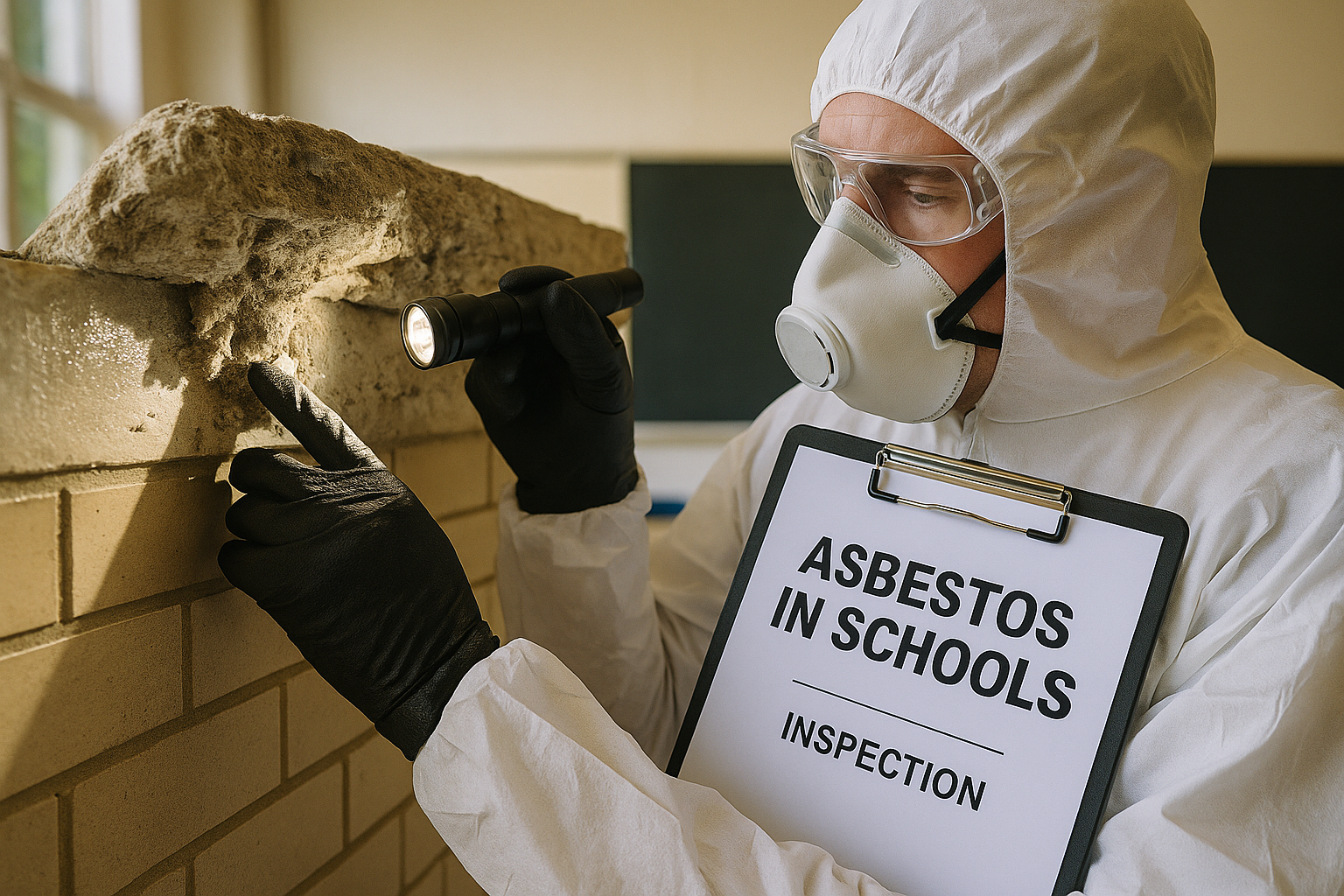
Management survey for occupied school buildings
Where a school is in normal occupation and the aim is to manage asbestos during everyday use, a management survey is usually the starting point. This survey helps locate, as far as reasonably practicable, the presence and extent of asbestos-containing materials that could be damaged or disturbed during normal occupation, including foreseeable maintenance.
For property managers, this is the core document behind the asbestos register. It supports day-to-day decisions, contractor control and routine re-inspection.
Refurbishment survey before intrusive works
If the school is planning upgrades, alterations or intrusive maintenance, a management survey is not enough for the affected area. A refurbishment survey is required before work starts where the job will disturb the fabric of the building.
This applies to projects such as replacing ceilings, opening walls, upgrading toilets, rewiring, installing new heating systems or modernising science labs. The survey must cover the specific area affected by the works so contractors are not exposed to hidden materials once the job begins.
Demolition survey before a building comes down
Where a block, outbuilding or structure is due for demolition, a demolition survey is needed. This is a fully intrusive survey intended to identify asbestos-containing materials before demolition proceeds.
For schools with ageing mobile classrooms, redundant stores or obsolete sports buildings, this is a critical step. Demolition should never begin on assumptions.
How to manage asbestos in schools day to day
Good asbestos management is not complicated, but it does require discipline. The schools that handle it well tend to follow the same practical routine.
Keep the asbestos register current and usable
The register should be accurate, accessible and easy to understand. It should not sit in a file nobody opens.
Make sure the register is available to:
- site managers and caretakers
- estates and compliance teams
- approved contractors
- project managers
- maintenance staff
- senior leaders making premises decisions
If contractors are signing in without checking asbestos information, your control system needs tightening immediately.
Re-inspect known materials
Known or presumed asbestos-containing materials should be reviewed regularly to check whether their condition has changed. Damage, water ingress, vibration, repeated impact and unauthorised works can all alter the risk profile.
Re-inspection should be recorded clearly, and any change in condition should trigger action. That might mean repair, encapsulation, restricted access, updated labelling or removal by a licensed contractor where necessary.
Control minor works properly
Many asbestos incidents in schools happen during minor jobs rather than major projects. Someone fixes shelving, drills into a boxed-in service, lifts old floor tiles or opens a ceiling void without checking the register.
Set a simple rule: no drilling, cutting, lifting, chasing, sanding or intrusive access until asbestos information has been reviewed. That rule should apply to in-house teams and external contractors alike.
Plan school holidays carefully
Holiday periods often bring a rush of maintenance and refurbishment. That is exactly when asbestos controls can slip because multiple contractors are on site and programmes are tight.
Before holiday works begin:
- review the scope of each project
- check whether existing survey information is suitable
- commission refurbishment or demolition surveys where needed
- brief all contractors on asbestos arrangements
- make sure emergency procedures are understood
Do this early. Leaving asbestos checks until the week before works start creates delays and unnecessary risk.
Do teachers and school staff have responsibilities?
Teachers and most school staff are not usually the legal duty holders for asbestos in schools. They are not generally expected to commission surveys or design the asbestos management system unless that sits within their formal premises role.
They do, however, have a practical role in preventing accidental disturbance. Day-to-day awareness matters.
Staff should:
- know that asbestos may be present in older school buildings
- avoid pinning, drilling or fixing into walls, ceilings or panels unless the area has been checked
- report damage to suspect materials promptly
- follow local procedures if debris or deterioration is found
- co-operate with access restrictions and asbestos controls
Site teams, caretakers and premises staff often need a higher level of awareness because they may arrange or undertake minor works. They should know how to read the register, when to stop work and when to escalate concerns.
What to do if suspect asbestos is damaged
If a material that may contain asbestos is damaged, the immediate response should be simple and controlled:
- stop work straight away
- keep people out of the area
- do not sweep, vacuum or clean debris unless properly trained and authorised
- report the issue through the school’s asbestos procedure
- seek competent asbestos advice before re-entry or remedial work
Fast reporting and calm isolation of the area can prevent a minor incident from becoming a much larger one.
Government and HSE guidance on asbestos in schools
HSE guidance on asbestos in schools is consistent on the central point: asbestos must be managed effectively to prevent exposure. The expectation is not that every asbestos-containing material is automatically removed. The expectation is that schools know what is present and control the risk properly.
Key themes from the guidance include:
- identifying asbestos-containing materials so far as reasonably practicable
- maintaining an asbestos register and management plan
- sharing information with anyone liable to disturb asbestos
- ensuring relevant staff have suitable awareness
- reviewing material condition regularly
- planning refurbishment and demolition works before they begin
HSG264 is particularly relevant when deciding what type of survey is appropriate. If the building is occupied and the aim is routine management, the survey must support that purpose. If intrusive work is planned, the survey must be intrusive enough for the affected area. Using the wrong survey type is a common compliance failure.
Does asbestos always need to be removed?
No. One of the biggest misunderstandings around asbestos in schools is the belief that all asbestos must be removed immediately. That is not what the regulations or HSE guidance require.
If asbestos-containing materials are in good condition, unlikely to be disturbed, properly recorded and actively managed, leaving them in place can be the safest option. Unnecessary removal can create more disturbance than controlled management.
The right decision depends on:
- the type of material
- its condition
- its location
- how accessible it is
- the likelihood of disturbance
- whether works are planned nearby
Where materials are damaged, deteriorating, exposed to frequent impact or likely to be disturbed by planned works, repair, encapsulation or removal may be the better option. The decision should be based on competent assessment, not guesswork.
A practical asbestos checklist for schools
If you manage school premises, use this checklist to test whether your arrangements are working in practice.
- Confirm the duty holder. Make sure responsibility for asbestos management is clear and documented.
- Check survey coverage. Confirm that each building has suitable survey information for its current use.
- Review the asbestos register. Make sure it is accurate, current and easy for staff and contractors to access.
- Inspect known materials. Re-inspect asbestos-containing materials at suitable intervals and record findings.
- Control contractor access. Require asbestos checks before any intrusive work begins.
- Assess planned works early. Commission refurbishment or demolition surveys before projects are tendered or scheduled.
- Train relevant staff. Ensure caretakers, premises teams and others likely to encounter asbestos understand procedures.
- Plan for incidents. Have a clear procedure for damage, suspected disturbance and area isolation.
- Review external structures. Do not overlook garages, sheds, stores, sports buildings and temporary classrooms.
- Audit the system. Test whether the process is actually followed on site, not just written down in policy files.
Finding asbestos survey support across the school estate
Large estates often need support across multiple sites, especially where buildings vary in age and condition. If your school or trust operates in the capital, arranging an asbestos survey London service can help keep occupied sites, refurbishment projects and estate records aligned.
For schools in the North West, using a local asbestos survey Manchester provider can make it easier to plan pre-works surveys around term dates and contractor programmes. The same applies in the Midlands, where an asbestos survey Birmingham service can support academies, maintained schools and independent settings with practical site-specific advice.
Whatever the location, the priority is the same: survey information must be suitable, current and matched to the work being done.
Get expert help with asbestos in schools
If you are unsure whether your asbestos register is current, whether your survey type is suitable, or whether planned school works need a more intrusive inspection, get advice before the risk becomes an incident. Supernova Asbestos Surveys has completed more than 50,000 surveys nationwide and supports schools, trusts, local authorities and property managers with clear, practical asbestos guidance.
For help with asbestos in schools, call 020 4586 0680 or visit asbestos-surveys.org.uk to arrange a survey or discuss your compliance needs.
Frequently Asked Questions
Where is asbestos most commonly found in schools?
Common locations include pipe lagging, boiler insulation, asbestos insulating board, ceiling tiles, service risers, floor tiles, textured coatings, heater cupboard linings and asbestos cement roof sheets or wall panels on external buildings. The exact locations vary by age, construction type and later refurbishment history.
Do all schools need an asbestos survey?
Not every school building will contain asbestos, but many older premises do. Where asbestos may be present, those responsible for maintenance and repair need suitable information to manage the risk. In occupied buildings, that often means a management survey, with refurbishment or demolition surveys required before intrusive work.
Should asbestos in schools always be removed?
No. If asbestos-containing materials are in good condition, unlikely to be disturbed and properly managed, they may safely remain in place. Removal is usually considered where materials are damaged, deteriorating or likely to be disturbed by planned work.
What should staff do if they discover damaged material that could contain asbestos?
Stop work, keep people away from the area, report the issue through the school’s procedure and seek competent asbestos advice. Staff should not sweep or clean up suspect debris unless they are properly trained and authorised to do so.
What survey is needed before refurbishment in a school?
If the work will disturb the fabric of the building, a refurbishment survey is usually required for the affected area before the project begins. A management survey alone is not suitable for intrusive refurbishment work.