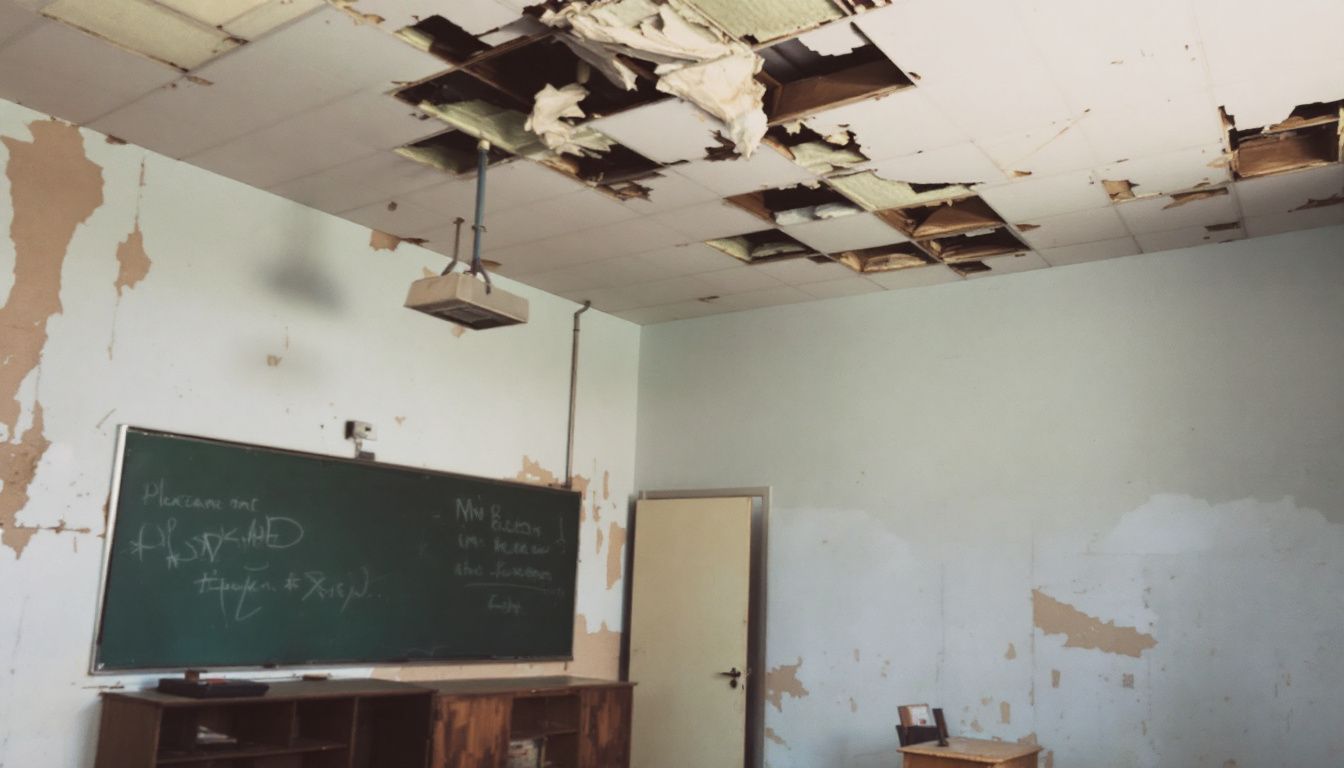
Why Asbestos in Schools Cannot Be Left to Chance
Thousands of school buildings across the UK were constructed before 2000, and a significant proportion contain asbestos-containing materials (ACMs) woven into their very fabric. Prioritising safety and effectively managing asbestos to protect children’s health is not a matter of best practice — it is a legal duty, and the consequences of getting it wrong are severe.
A child exposed to asbestos fibres at a young age faces a substantially greater lifetime risk of developing asbestos-related disease than an adult first exposed later in life. They simply have more years ahead for the disease to manifest, and that reality should sharpen the focus of every headteacher, governor, and facilities manager responsible for a school building.
Asbestos was used extensively in British construction from the 1950s right through to the late 1990s, prized for its fire-retardant and insulating properties. If your school was built or significantly refurbished during that period, there is a real possibility that ACMs are present somewhere in the building.
Where Asbestos Hides in School Buildings
Asbestos does not announce itself. It can be concealed within dozens of building materials that look entirely unremarkable, and school staff and governors are often surprised by just how many locations can harbour ACMs.
Common locations in school buildings include:
- Ceiling tiles and suspended ceiling systems
- Floor tiles and the adhesive used to fix them
- Pipe and boiler lagging in plant rooms and corridors
- Insulating boards used in wall partitions and around structural steelwork
- Cement roofing sheets and guttering
- Textured coatings such as Artex on ceilings and walls
- Soffit boards on exterior overhangs
- Heating system components and fire doors
The critical point is that undisturbed asbestos in good condition does not generally pose an immediate risk. The danger arises when materials are damaged, drilled, sanded, or disturbed during routine maintenance or refurbishment work — releasing microscopic fibres into the air that can be inhaled without anyone realising.
The Legal Duties Placed on Schools and Dutyholders
Under the Control of Asbestos Regulations, whoever is responsible for the maintenance and repair of a non-domestic building — the dutyholder — must manage asbestos within it. For schools, this responsibility typically falls to the headteacher, the governing body, or the local authority, depending on the school type.
The legal duties are clear and non-negotiable:
- Take reasonable steps to identify whether ACMs are present
- Assess the condition and risk of any ACMs found
- Produce and maintain a written asbestos register
- Develop and implement an Asbestos Management Plan (AMP)
- Make the register and plan available to anyone who may disturb the building fabric
- Carry out regular reviews and re-inspections of known ACMs
Failure to comply is a serious matter. Schools that mismanage asbestos risk significant financial penalties and, more critically, put pupils, staff, and contractors in genuine danger. HSE enforcement action in educational settings is not uncommon.
Prioritising Safety: How Schools Can Effectively Manage Asbestos and Protect Children’s Health
Step 1: Commission a Professional Management Survey
The starting point for any school is a thorough management survey carried out by a qualified surveyor. This involves a visual inspection of all accessible areas, sampling of suspect materials, and laboratory analysis to confirm whether asbestos is present and in what form.
The survey must follow HSG264 — the HSE’s definitive guidance on asbestos surveying. The resulting report gives the school an asbestos register: a record of where ACMs are located, what type of asbestos they contain, and a risk rating for each material based on its condition and the likelihood of disturbance.
If you are unsure whether your school has an up-to-date survey, do not assume the building is clear. Older surveys may be incomplete, out of date, or not compliant with current HSG264 guidance.
Step 2: Develop a Robust Asbestos Management Plan
Once the survey is complete, the school must produce an Asbestos Management Plan. This document is not a formality — it is the operational blueprint for keeping everyone on site safe.
A strong AMP should include:
- Named individuals with responsibility for asbestos management
- The location and condition of all known ACMs
- Risk management strategies for each material
- Procedures for planned and reactive maintenance work
- Emergency procedures in the event of an accidental disturbance
- A schedule for regular re-inspections
- Records of all training, inspections, and incidents
The plan must be reviewed regularly and updated whenever circumstances change — for example, after building works, damage to an ACM, or changes in how certain areas of the school are used.
Step 3: Schedule Regular Re-inspections
Asbestos management is not a one-off task. The condition of ACMs can deteriorate over time due to wear, accidental damage, or works carried out in adjacent areas.
A scheduled re-inspection survey allows the school to monitor the condition of known materials and update risk ratings accordingly. HSE guidance recommends that ACMs in normal condition are re-inspected at least annually, and materials in poorer condition may require more frequent checks. All re-inspection records should be kept as part of the asbestos register.
Step 4: Commission a Refurbishment Survey Before Any Building Works
If the school is planning any refurbishment, extension, or significant maintenance work — even something as routine as replacing a boiler or installing new cabling — a refurbishment survey must be carried out in the areas to be disturbed before work begins. This is a legal requirement under the Control of Asbestos Regulations.
Unlike a management survey, a refurbishment survey is intrusive. The surveyor will access concealed areas — above ceiling voids, inside wall cavities, beneath floor coverings — to identify any ACMs that could be disturbed during the planned works. Contractors must be given the results before they start.
Never allow maintenance or building work to proceed in an older school building without this survey in place. The consequences of accidental disturbance can be severe, both for health and for legal liability.
Step 5: Use Licensed Contractors for Asbestos Work
When ACMs need to be removed, encapsulated, or otherwise worked on, the school must ensure that only appropriately licensed contractors carry out the work. Most work involving higher-risk asbestos materials — such as sprayed coatings, lagging, and insulating board — requires a contractor licensed by the HSE.
Professional asbestos removal carried out by a licensed contractor ensures that materials are safely contained, removed, and disposed of in accordance with current regulations. Always ask to see a contractor’s licence and insurance before engaging them for any asbestos-related work.
Training, Communication, and Transparency
Effective asbestos management in schools is as much about people as it is about paperwork. Every member of staff who works in or manages the building needs to understand the basics: where ACMs are located, what they look like, and what to do if they suspect damage or disturbance.
Asbestos awareness training should be provided to:
- Caretakers and site managers
- Maintenance staff and visiting contractors
- Senior leadership and governors
- Any staff who may carry out ad hoc tasks involving the building fabric
Staff should know that if they discover damaged or suspect material, they must stop work immediately, prevent access to the area, and report the situation to the designated asbestos responsible person. The area should not be re-entered until a qualified professional has assessed it.
Communicating with Parents, Carers, and Visitors
Parents and carers have a right to understand how the school manages asbestos. Open, transparent communication builds trust and demonstrates that the school takes its responsibilities seriously.
Schools should be prepared to share their Asbestos Management Plan on request and to communicate clearly if an incident occurs. In the event of an accidental fibre release, the school must act quickly: evacuate the affected area, prevent re-entry, and notify the HSE as required under RIDDOR. Prompt, honest communication with all stakeholders is not optional — it is essential.
Engaging Trade Union Safety Representatives
Trade union safety representatives play a valuable role in supporting asbestos management in schools. They can help raise awareness among staff, flag concerns early, and contribute meaningfully to the review of the Asbestos Management Plan.
Schools should actively involve them in safety discussions rather than treating asbestos management as a purely administrative function. Their on-the-ground knowledge of how the building is used day-to-day is genuinely useful when assessing disturbance risk.
What to Do When Asbestos Is Found in Poor Condition
Not all asbestos needs to be removed immediately. In many cases, ACMs in good condition that are unlikely to be disturbed can be safely managed in place. However, when materials are damaged, deteriorating, or located where disturbance is inevitable, action is required.
The available options are:
- Encapsulation: Sealing the material with a specialist coating to prevent fibre release, buying time until removal is feasible
- Enclosure: Boxing in or covering the material to prevent access and disturbance
- Removal: The permanent solution, carried out by a licensed contractor under controlled conditions
The right approach depends on the type of asbestos, its condition, its location, and the school’s longer-term plans for the building. A qualified asbestos surveyor can advise on the most appropriate course of action for each specific material.
For suspect materials where you need rapid confirmation, an asbestos testing kit can be used to collect bulk samples for laboratory analysis. That said, for a full site assessment in a school environment, a professional survey remains the correct and legally defensible approach.
You can also explore standalone asbestos testing services if you need targeted analysis of specific materials without commissioning a full survey.
Securing Funding for Asbestos Works
Cost is a genuine concern for many schools, particularly those in older buildings with extensive ACMs. Capital funding for asbestos-related works may be available through the Department for Education, and schools should explore what routes are open to them.
Documenting the condition of ACMs through regular surveys and re-inspections also helps build the evidence base needed to support funding applications. Schools that can demonstrate the scale and urgency of the risk are better placed to secure the resources they need.
Procurement frameworks approved for public sector use can help schools access vetted contractors at competitive rates while remaining compliant with procurement rules. This is worth exploring before committing to any remedial works, particularly where multiple buildings or phases of work are involved.
Don’t Overlook Fire Safety Alongside Asbestos Management
Schools managing asbestos compliance should also ensure their fire safety obligations are met. A fire risk assessment is a legal requirement for all non-domestic premises under the Regulatory Reform (Fire Safety) Order, and combining both assessments through a single trusted provider can save time and reduce disruption to the school day.
Addressing asbestos and fire safety together also ensures that any remedial works — such as upgrading fire doors or improving compartmentation — are planned with full knowledge of where ACMs may be present. This significantly reduces the risk of accidental disturbance during those works.
Asbestos Surveys for Schools in London and Across the UK
Schools in the capital face a particular challenge. Many London school buildings date from the post-war era, and the density of older stock means that asbestos management is a live concern across a large number of sites. If you need an asbestos survey in London, Supernova Asbestos Surveys has extensive experience working in educational settings across the city and can mobilise quickly to minimise disruption.
Our surveyors are fully accredited and work to HSG264 standards on every project. Whether your school needs a first-time management survey, a pre-works refurbishment survey, or a programme of annual re-inspections, we have the expertise and capacity to support you.
For schools outside London, our nationwide coverage means the same quality of service is available wherever your site is located. With over 50,000 surveys completed across the UK, we understand the pressures facing schools and deliver clear, actionable reports that make compliance straightforward.
To discuss your school’s asbestos management needs, call us on 020 4586 0680 or visit asbestos-surveys.org.uk to request a quote or find out more about our full range of services.
Frequently Asked Questions
Does my school legally have to have an asbestos survey?
Under the Control of Asbestos Regulations, the dutyholder for any non-domestic building — which includes schools — must take reasonable steps to identify whether asbestos-containing materials are present. In practice, this means commissioning a professional management survey unless you have strong documented evidence that the building contains no ACMs. For most schools built before 2000, a survey is the only reliable way to meet this duty.
What happens if a contractor disturbs asbestos during school building works?
An accidental disturbance can trigger a serious incident response. The affected area must be evacuated and sealed off immediately. A licensed asbestos contractor will need to carry out a clean-up under controlled conditions, and the incident may need to be reported to the HSE under RIDDOR. This is precisely why a refurbishment survey must be completed before any building work begins in an older school building.
How often does an asbestos management plan need to be reviewed?
There is no fixed statutory interval, but HSE guidance makes clear that the plan must be kept up to date. In practice, this means reviewing it at least annually and updating it whenever there is a change — such as after building works, damage to a known ACM, a change in how part of the building is used, or a change in the person responsible for asbestos management.
Can asbestos be left in place rather than removed?
Yes, in many cases it can. ACMs in good condition that are unlikely to be disturbed can be safely managed in place under a robust Asbestos Management Plan. Removal is not always the right answer and can itself create risk if not managed correctly. The decision should be based on the type of asbestos, its current condition, its location, and the school’s future plans for the building — a qualified surveyor can guide you through this assessment.
How do I know if a material in my school contains asbestos?
You cannot tell by looking. The only reliable way to confirm whether a material contains asbestos is through laboratory analysis of a sample. A professional management survey will include sampling as part of the process. If you need to test a specific material quickly, a dedicated asbestos testing service can provide targeted analysis without the need for a full site survey.