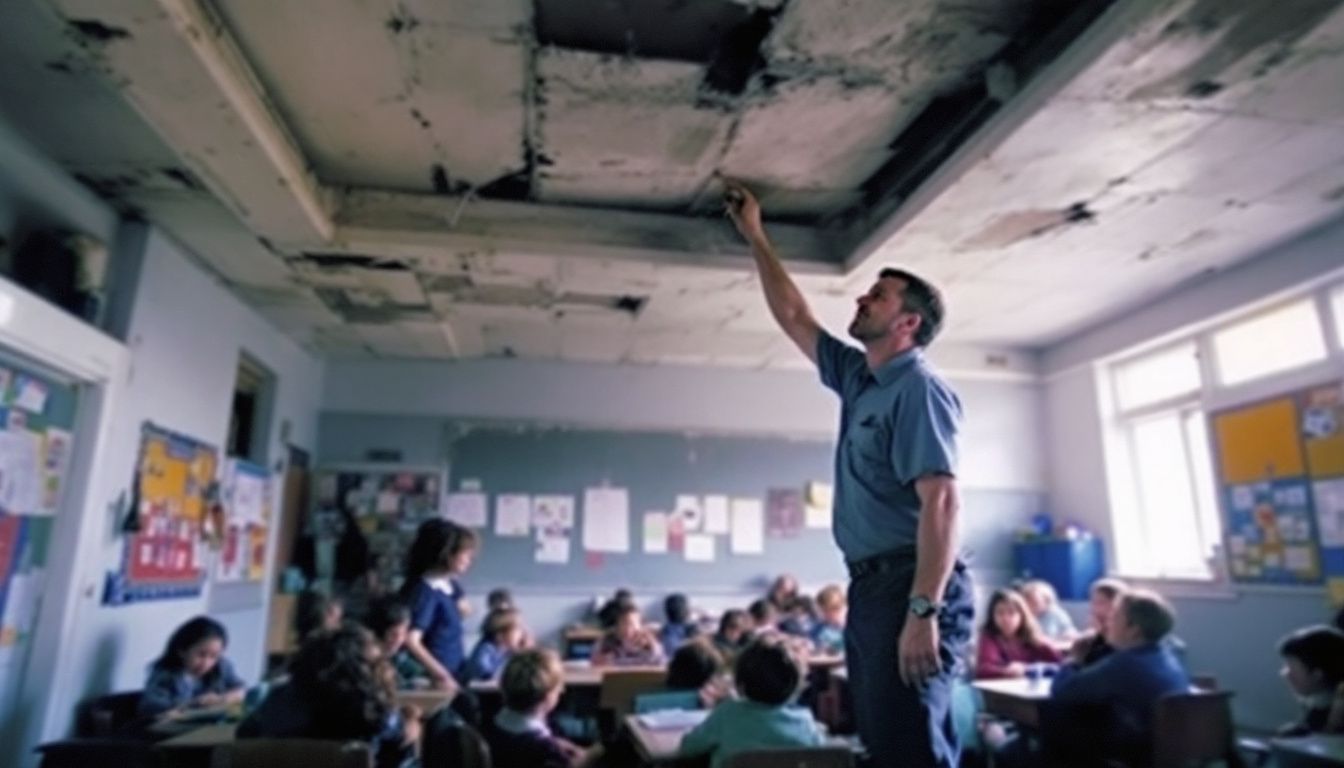
Asbestos in UK Schools: What Every Headteacher and Facilities Manager Must Know
Millions of children attend schools built before 2000 — and a significant proportion of those buildings contain asbestos-containing materials (ACMs). Understanding how UK schools can take action against asbestos to protect children’s health is not optional. It is a legal duty, a moral obligation, and one of the most pressing building safety issues facing the education sector today.
The reassuring reality is that asbestos in a school building does not automatically mean children are in danger. ACMs that are in good condition and left undisturbed pose a low risk. The danger arises when materials are damaged, deteriorating, or disturbed during maintenance and refurbishment work — and that is precisely where schools must get things right.
Why Asbestos Remains a Live Issue in UK Schools
Asbestos was used extensively in UK construction from the 1950s through to the late 1990s. It was cheap, fire-resistant, and widely available — making it a popular choice for everything from ceiling tiles and floor coverings to pipe lagging and roof panels.
Blue asbestos (crocidolite) and brown asbestos (amosite) were banned in 1985. White asbestos (chrysotile) remained in use until 1999. That means any school building constructed or refurbished before the turn of the millennium could contain one or more types of ACM.
When asbestos fibres become airborne — through drilling, cutting, sanding, or accidental damage — they can be inhaled. Once lodged in the lungs, those fibres do not leave. The resulting diseases, including mesothelioma, asbestosis, and lung cancer, typically take 20 to 40 years to manifest. A child exposed today may not develop symptoms until well into adulthood.
This latency period is precisely why the issue demands serious, sustained attention rather than a reactive response. Schools that treat asbestos management as a box-ticking exercise are not just failing their legal duties — they are gambling with the long-term health of the people in their care.
The Legal Framework: What Schools Are Required to Do
Schools operating in non-domestic premises have a clear legal duty to manage asbestos under the Control of Asbestos Regulations. Regulation 4 — the Duty to Manage — places responsibility on the dutyholder to identify ACMs, assess their condition, and put a management plan in place.
The dutyholder is typically the school’s governing body, local authority, or academy trust. The HSE’s guidance document HSG264 sets out how surveys should be conducted and what records must be maintained. Non-compliance is not a technicality — it can result in enforcement action, significant fines, and preventable harm to children and staff.
Schools should treat this legal framework not as a burden but as a structured roadmap for keeping their buildings safe.
Who Is the Dutyholder in a School?
In a local authority-maintained school, dutyholder responsibility is often shared between the school and the local authority, depending on who manages the building. In an academy or free school, the academy trust typically holds this responsibility directly.
Regardless of the governance structure, someone must be clearly accountable. Schools should establish this from the outset and ensure that person has access to up-to-date asbestos records at all times.
How UK Schools Can Take Action Against Asbestos to Protect Children’s Health: A Step-by-Step Approach
Effective asbestos management in schools is not a single action — it is an ongoing process built on several interconnected steps. Each one matters, and skipping any of them creates gaps that put people at risk.
Step One: Commission the Right Type of Asbestos Survey
Before any management plan can be created, schools need to know exactly what they are dealing with. That means commissioning a professional asbestos survey carried out by a qualified surveyor — not relying on outdated records, assumptions, or visual inspections by untrained staff.
There are different survey types depending on the school’s circumstances:
- Management survey: The standard survey for occupied premises. It identifies ACMs that could be disturbed during normal occupancy and maintenance, and forms the basis of the school’s asbestos register and management plan.
- Refurbishment survey: Required before any refurbishment or intrusive maintenance work. More invasive than a management survey, it must be completed before work begins in the affected area.
- Demolition survey: Needed before any part of a school building is demolished. It involves a thorough inspection of all areas, including those not normally accessible.
Schools that are unsure which survey they need should speak to a qualified asbestos consultant before booking. Getting the survey type wrong can leave gaps in the data — and gaps in the data create risk.
Step Two: Build and Maintain an Asbestos Register
Every school with a duty to manage asbestos must hold an up-to-date asbestos register. This document records the location, type, condition, and risk rating of every ACM identified in the building.
The register is not a document you file away and forget. It must be:
- Kept up to date following any new survey or inspection
- Readily accessible to contractors, maintenance staff, and anyone carrying out work on the building
- Reviewed whenever the condition of a known ACM changes
- Updated if any ACMs are removed or encapsulated
Contractors working in the school must be shown the register before starting work. This single step prevents a significant proportion of accidental disturbances. A worker who does not know there is asbestos behind a wall panel is a worker who might drill straight through it.
Step Three: Schedule Regular Re-Inspections
A survey completed several years ago may no longer reflect the current condition of ACMs in a school. Materials deteriorate. Buildings settle. Damage occurs. That is why regular monitoring is essential.
A re-inspection survey allows a qualified surveyor to assess whether previously identified ACMs remain in a stable, low-risk condition or whether their risk rating has changed. Annually is a reasonable baseline for most school buildings, though the frequency should be guided by the condition and risk rating of the materials.
Re-inspections also provide the opportunity to update the asbestos register and management plan, ensuring the school’s documentation remains current and legally defensible. Skipping re-inspections is one of the most common compliance failures in school buildings — and one of the easiest to avoid.
Step Four: Create a Robust Asbestos Management Plan
The asbestos register tells you what is there. The management plan tells you what you are going to do about it. These are two distinct documents, and both are required.
A well-structured asbestos management plan for a school should include:
- A clear summary of all identified ACMs, cross-referenced with the asbestos register
- Risk ratings for each ACM, based on condition, accessibility, and likelihood of disturbance
- Actions for each ACM — whether that is monitoring, encapsulation, or removal
- Timescales and responsibilities for each action
- Procedures for emergency situations, such as accidental disturbance or damage
- A communication protocol for informing staff, contractors, and parents when relevant
The plan should be reviewed at least annually and updated following any significant change to the building or its ACMs. It is a living document, not a one-off exercise.
Step Five: Train Staff and Brief Contractors
The most thorough asbestos register in the country is useless if the people working in the building do not know it exists or do not understand what it means. Staff training and contractor briefing are non-negotiable elements of effective asbestos management.
All school staff responsible for maintenance, facilities management, or commissioning external contractors should receive asbestos awareness training. This training should cover:
- What asbestos is and where it is commonly found in school buildings
- How to recognise potentially damaged or deteriorating ACMs
- What to do if they suspect asbestos has been disturbed
- How to access and interpret the asbestos register
- The school’s procedures for briefing contractors
Contractors must be briefed before starting any work on the premises. This is not a courtesy — it is a legal requirement. Schools should operate a clear permit-to-work system that requires contractors to confirm they have reviewed the asbestos register before any intrusive work begins.
When Asbestos Removal Is the Right Answer
Not all asbestos needs to be removed immediately. In many cases, ACMs that are in good condition and not at risk of disturbance can be safely managed in place. However, there are circumstances where asbestos removal is the most appropriate course of action.
Removal should be considered when:
- ACMs are in poor condition and deteriorating
- Materials are in areas of high footfall or regular maintenance activity
- Refurbishment or demolition work is planned in the affected area
- The ongoing cost and complexity of managing ACMs in place outweighs the cost of removal
All asbestos removal work must be carried out by a licensed contractor. Unlicensed removal of notifiable ACMs is illegal and creates serious health and legal risks. Schools should never attempt DIY removal or instruct contractors who are not properly licensed and insured.
If you need to confirm whether a specific material contains asbestos before commissioning a full survey, an asbestos testing kit can be used to collect a sample for laboratory analysis — though a professional survey remains the more thorough and reliable option for school buildings.
The Role of Asbestos Testing in Schools
There are situations where targeted asbestos testing is a practical first step — particularly when a specific material is suspected of containing asbestos but has not yet been formally assessed. Laboratory analysis of a collected sample can confirm or rule out the presence of ACMs quickly and cost-effectively.
That said, testing a single material in isolation does not replace a full survey. Schools should use targeted testing as a supplement to — not a substitute for — a properly scoped management or refurbishment survey carried out by a qualified professional.
Any testing carried out should be documented and the results added to the asbestos register. Keeping a complete, accurate record of all testing activity is part of demonstrating due diligence under the Control of Asbestos Regulations.
Communicating With Parents and the School Community
Transparency matters. Parents have a right to know that their children’s school takes asbestos management seriously, and open communication builds trust rather than alarm.
Schools do not need to send a letter home every time a re-inspection is scheduled. But when significant work is taking place — such as a refurbishment survey ahead of building works, or the removal of ACMs — clear, factual communication helps manage concerns and demonstrates competent, responsible management.
The message should be straightforward: the school knows where the asbestos is, it is being managed safely, and any work involving ACMs will be carried out by licensed professionals following all relevant regulations. Framing it this way reassures parents without creating unnecessary anxiety.
Avoid vague language or evasive responses to direct questions. Parents who feel they are being kept in the dark are far more likely to escalate concerns than those who receive honest, factual updates.
Additional Safety Considerations: Fire Risk in Older School Buildings
Asbestos management rarely sits in isolation. Schools managing older buildings should also ensure they have a current fire risk assessment in place.
Fire risk assessments are a legal requirement for all non-domestic premises under the Regulatory Reform (Fire Safety) Order and should be reviewed regularly — particularly following any building works, changes in use, or significant alterations to the premises. A school that is on top of its asbestos obligations but has an outdated fire risk assessment is still exposed to serious compliance and safety gaps.
Both asbestos management and fire safety share a common thread: they require regular review, clear documentation, and a named person who is accountable. Treating them as parallel obligations — rather than separate afterthoughts — makes it easier to stay compliant and keep the building safe year-round.
Common Mistakes Schools Make With Asbestos Management
Even well-intentioned schools can fall into familiar traps. Being aware of the most common errors makes it easier to avoid them.
- Relying on old surveys: A survey from ten or fifteen years ago is not a substitute for current data. Building conditions change, and so does the risk profile of ACMs.
- Failing to brief contractors: This is one of the most frequent causes of accidental asbestos disturbance. A contractor who has not seen the asbestos register cannot be expected to avoid ACMs they do not know about.
- Treating the register as a filing exercise: The asbestos register only has value if it is actively used, regularly updated, and accessible to the right people at the right time.
- Assuming no visible damage means no risk: Some ACMs can release fibres without obvious visible deterioration. Regular professional re-inspection is the only reliable way to monitor condition over time.
- Skipping re-inspections to save money: The short-term saving is not worth the long-term liability. A missed re-inspection that allows a deteriorating ACM to go unnoticed can result in far greater costs — financial and human.
- Not having a clear dutyholder: If nobody is specifically accountable for asbestos management, responsibilities fall through the cracks. Assign ownership clearly and make sure that person is properly supported.
Practical Next Steps for Schools Acting Now
If your school has not reviewed its asbestos position recently, the following steps will put you back on solid ground quickly:
- Identify your dutyholder — confirm who is legally responsible for asbestos management in your building and make sure they are aware of that responsibility.
- Locate your asbestos register — if one exists, check when it was last updated and whether it reflects the current condition of the building.
- Commission a survey if needed — if your building has never been surveyed, or your existing survey is significantly out of date, book a management survey with a qualified asbestos surveying company.
- Schedule a re-inspection — if you have an existing register but have not had a formal re-inspection in the past year, arrange one. It is a straightforward process that gives you up-to-date assurance.
- Review your management plan — check that it is current, that responsibilities are clearly assigned, and that all actions have defined timescales.
- Ensure contractor briefing procedures are in place — before any external contractor sets foot in the building, they must have reviewed the asbestos register. Make this a non-negotiable part of your procurement process.
- Book staff awareness training — anyone involved in facilities management, maintenance commissioning, or building oversight should understand the basics of asbestos awareness.
None of these steps are complicated. What they require is commitment and follow-through. The schools that manage asbestos well are not necessarily those with the most resources — they are the ones that treat it as a live, ongoing responsibility rather than a historical footnote.
Frequently Asked Questions
Does every UK school building contain asbestos?
Not every school building contains asbestos, but any building constructed or significantly refurbished before 2000 may contain ACMs. Given the widespread use of asbestos in UK construction from the 1950s onwards, a large proportion of older school buildings do contain asbestos in some form. The only reliable way to know is to commission a professional asbestos survey.
What type of asbestos survey does a school need?
For an occupied school building, the starting point is a management survey. This identifies ACMs that could be disturbed during normal use and maintenance, and forms the basis of the asbestos register and management plan. If refurbishment or demolition work is planned, a refurbishment or demolition survey is required before that work begins. A qualified asbestos surveyor can advise on the right approach for your specific circumstances.
How often should a school’s asbestos register be updated?
The asbestos register should be updated whenever there is a change — following a new survey, a re-inspection, the removal or encapsulation of an ACM, or any incident involving potential disturbance. As a minimum, schools should arrange a formal re-inspection at least annually to check the condition of known ACMs and update the register accordingly.
Can a school manage asbestos in place rather than removing it?
Yes. In many cases, ACMs that are in good condition and unlikely to be disturbed can be safely managed in place under a documented management plan. Removal is not always the right answer and can itself create risk if not handled correctly by a licensed contractor. The decision should be based on the condition of the material, its location, and the likelihood of disturbance — assessed by a qualified professional.
What happens if a school fails to comply with its asbestos duties?
Failure to comply with the Duty to Manage under the Control of Asbestos Regulations can result in enforcement action by the HSE, including improvement notices, prohibition notices, and significant financial penalties. Beyond the legal consequences, non-compliance creates real risk of harm to children, staff, and contractors. Schools found to have failed in their duty of care may also face reputational damage and civil liability.
Get Professional Support From Supernova Asbestos Surveys
Supernova Asbestos Surveys has completed over 50,000 surveys across the UK, working with schools, local authorities, academy trusts, and facilities managers to deliver accurate, reliable asbestos assessments and management support.
Whether you need a management survey for an occupied school building, a refurbishment survey ahead of planned works, or a re-inspection to bring your register up to date, our qualified surveyors are ready to help. We also offer professional asbestos removal coordination, targeted asbestos testing, and fire risk assessments — giving schools a single, trusted point of contact for building safety compliance.
Call us on 020 4586 0680 or visit asbestos-surveys.org.uk to book a survey or speak to one of our team about your school’s specific requirements.