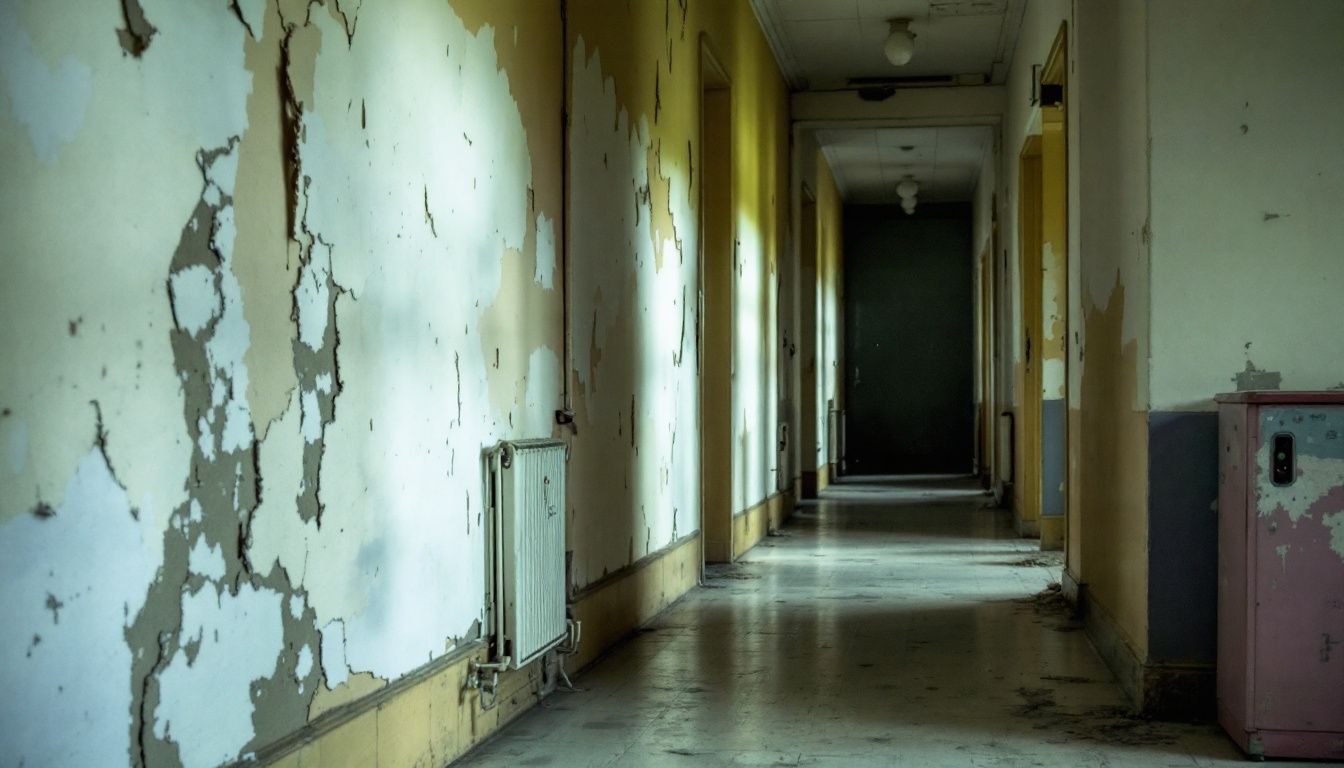
Asbestos in Schools UK: What Every Dutyholder, Parent, and Teacher Needs to Know
Walk into almost any UK school built before 2000 and there is a reasonable chance asbestos is present somewhere in the fabric of that building. It might be above a suspended ceiling, behind a boiler cupboard, or beneath floor tiles that children walk over every single day. Asbestos in schools UK is not a historical footnote — it is an active, ongoing public health issue that demands proper management, clear reporting, and decisive action from everyone responsible for school buildings.
This post covers the scale of the problem, the genuine health risks involved, what the law requires, and the practical steps dutyholders must take to keep pupils and staff safe.
How Widespread Is Asbestos in UK Schools?
The scale of asbestos in schools across the UK is significant. The majority of school buildings constructed between the 1950s and the late 1990s used asbestos-containing materials (ACMs) extensively, because asbestos was cheap, durable, and considered an excellent fire-resistant insulator at the time.
Surveys indicate that around 85% of UK schools contain asbestos somewhere in their structure. That is not a fringe problem — it affects the overwhelming majority of older educational buildings across England, Scotland, and Wales.
Common locations where ACMs are found in schools include:
- Ceiling tiles and suspended ceiling systems
- Floor tiles and the adhesive beneath them
- Pipe lagging and boiler insulation
- Sprayed coatings on structural steelwork
- Asbestos insulating board (AIB) used in partition walls and door linings
- Cement roofing panels and guttering
- Textured decorative coatings such as Artex
- Soffit boards and external cladding
Inspections carried out during 2022/23 found that 71% of asbestos items in schools showed some degree of damage. Damaged ACMs are far more likely to release fibres into the air — and that is precisely where the health risk begins.
Authorities estimate that asbestos will remain present in UK school buildings until at least 2050, given the sheer volume of material involved and the cost and complexity of removal programmes. Until then, the priority must be rigorous management.
The Health Risks: Why Asbestos in Schools Is So Serious
Asbestos becomes dangerous when its fibres become airborne and are inhaled. In a school environment, everyday activities — drilling into a wall, disturbing ceiling tiles during maintenance, or even vigorous cleaning — can release fibres if ACMs are present and not properly managed.
The diseases caused by asbestos exposure are severe and, in most cases, fatal:
- Mesothelioma — a cancer of the lining of the lungs or abdomen, almost exclusively caused by asbestos exposure
- Lung cancer — risk is significantly elevated by asbestos exposure, particularly in those who also smoke
- Asbestosis — a chronic scarring of lung tissue that causes progressive breathing difficulty
- Pleural thickening — thickening of the membrane surrounding the lungs, causing breathlessness
One of the most alarming aspects of these conditions is their latency period. Symptoms typically do not appear until 20 to 40 years after exposure. A child exposed to asbestos fibres in a school today may not develop an asbestos-related disease until their forties, fifties, or beyond.
Mesothelioma alone accounts for approximately 2,500 deaths per year in Great Britain. Records show that 319 teachers have died from mesothelioma since 1980 — individuals who spent their working lives in the very buildings designed to educate the next generation.
These are not abstract statistics. They represent real people whose exposure occurred in schools, often without their knowledge, and whose illnesses only became apparent decades later.
Who Is Responsible? Understanding the Legal Duty
The management of asbestos in schools is governed by the Control of Asbestos Regulations, which place a clear legal duty on specific individuals depending on the type of school.
Who Is the Dutyholder in a School?
Responsibility varies by school type:
- Community schools — the local authority holds the duty
- Academy trusts — the trust itself is responsible for its academies
- Voluntary-aided and foundation schools — the governing body carries the duty
- Independent schools — the proprietor or trustees are responsible
Regardless of school type, the dutyholder must take active steps to manage asbestos — not simply hope it causes no harm.
What the Regulations Require
Under the Control of Asbestos Regulations, dutyholders in schools must:
- Identify the location and condition of all ACMs in the building
- Assess the risk that each ACM poses — based on its type, condition, and likelihood of disturbance
- Produce and maintain a written asbestos register
- Create an asbestos management plan and keep it up to date
- Ensure that anyone who might disturb ACMs — contractors, maintenance staff, caretakers — is informed of their location
- Arrange regular re-inspections to monitor the condition of ACMs
- Report any damage or deterioration promptly and arrange appropriate remediation
HSE guidance (HSG264) sets out in detail how surveys should be conducted and what a compliant asbestos register should contain. Schools that fail to meet these obligations are not just breaching the law — they are putting lives at risk.
The Types of Asbestos Survey Schools Need
Not every school situation calls for the same type of survey. Understanding which survey applies to your circumstances is essential for compliance and for protecting everyone in the building.
Management Survey
A management survey is the standard survey required for any school building that is in normal use. It identifies the location and condition of ACMs that could be disturbed during everyday activities or routine maintenance. Every school with a building constructed before 2000 should have an up-to-date management survey in place — this is not optional.
Refurbishment Survey
Before any renovation, extension, or significant maintenance work takes place in a school, a refurbishment survey must be carried out in the areas to be disturbed. This is a more intrusive survey designed to locate all ACMs before any work begins — protecting contractors and pupils alike from unexpected fibre release.
Schools undergoing building improvement programmes, classroom upgrades, or roof replacements must commission a refurbishment survey before a single drill bit touches the wall.
Re-Inspection Survey
Asbestos conditions change over time. Materials that were intact last year may have been damaged by maintenance work, water ingress, or general wear and tear. A re-inspection survey monitors the condition of known ACMs and updates the asbestos register accordingly. Schools should arrange re-inspections at least annually — and immediately following any incident that may have disturbed asbestos-containing materials.
What Happens When Asbestos Is Damaged or Disturbed in a School?
When ACMs in a school are found to be damaged, deteriorating, or at risk of disturbance, the dutyholder must act quickly. The response will depend on the type of asbestos and the severity of the damage.
In some cases, encapsulation — sealing the ACM to prevent fibre release — is the appropriate short-term measure. In others, particularly where the material is in poor condition or is at high risk of disturbance, asbestos removal by a licensed contractor is the only responsible course of action.
Licensed asbestos removal is a specialist operation. It must be carried out by contractors who hold a licence from the HSE, follow strict containment procedures, and dispose of asbestos waste in accordance with hazardous waste regulations. Schools must never attempt to manage damaged high-risk asbestos through in-house maintenance — this is both illegal and extremely dangerous.
The government allocated £50 million in 2023 specifically for asbestos surveying and removal in schools, recognising the scale of the challenge facing the education estate. Dutyholders should be aware of funding routes available through their local authority or the Department for Education.
Practical Steps Schools Should Take Right Now
If you are a headteacher, business manager, or governor responsible for a school building, here is what you should be doing:
- Check whether your school has an asbestos register. If one does not exist, commissioning a management survey is your immediate priority.
- Review the condition of known ACMs. If your last re-inspection was more than 12 months ago, arrange a new one.
- Ensure all contractors and maintenance staff have seen the asbestos register before they start any work on the building.
- Brief all staff on how to recognise potential asbestos materials and what to do if they suspect damage — the answer is always to stop work, leave the area, and report it.
- Never allow unauthorised work on ceilings, walls, floors, or pipe systems in older buildings without checking the asbestos register first.
- Keep your asbestos management plan updated whenever conditions change, when works are completed, or when ACMs are removed.
If you are unsure whether your building contains asbestos and want to test a specific material before commissioning a full survey, a testing kit allows you to collect a sample safely and have it analysed by a UKAS-accredited laboratory.
Asbestos and Fire Safety: A Combined Risk in School Buildings
Older school buildings often present multiple overlapping safety challenges. The same buildings that contain asbestos may also have outdated fire compartmentation, ageing electrical systems, and fire doors that no longer meet current standards.
A fire risk assessment is a legal requirement for all non-domestic premises, including schools, under the Regulatory Reform (Fire Safety) Order. Combining your fire risk assessment with asbestos management review gives you a clearer picture of the overall risk profile of your building — and allows you to prioritise remediation work more effectively.
Supernova carries out fire risk assessments from £195 for standard commercial premises, and our surveyors can coordinate both assessments to minimise disruption to your school.
Asbestos Survey Costs for Schools
Cost is often cited as a barrier to proper asbestos management in schools — but the cost of non-compliance, both in legal terms and in human health terms, is far greater. Supernova offers transparent, fixed-price surveys with no hidden fees:
- Management Survey: From £195 for smaller properties; larger educational buildings are priced on site size — contact us for a tailored quote
- Refurbishment Survey: From £295, covering all areas to be disturbed prior to works
- Re-Inspection Survey: From £150 plus £20 per ACM re-inspected
- Bulk Sample Testing Kit: From £30 per sample, posted directly to you
- Fire Risk Assessment: From £195 for standard commercial premises
All surveys are carried out by BOHS P402-qualified surveyors and include a full written report, asbestos register, risk assessment, and management plan — fully compliant with HSG264 and the Control of Asbestos Regulations.
Supernova Covers Schools Across the UK
Supernova Asbestos Surveys operates nationwide, with surveyors available across England, Scotland, and Wales. Whether your school is in a major city or a rural location, we can typically offer same-week availability.
If you manage a school or educational property in the capital, our asbestos survey London team covers all London boroughs. For schools in the North West, our asbestos survey Manchester team is ready to assist. In the Midlands, our asbestos survey Birmingham team serves educational establishments across the region.
With over 50,000 surveys completed and more than 900 five-star reviews, Supernova is one of the UK’s most trusted names in asbestos consultancy. Our UKAS-accredited laboratory ensures that every sample is analysed to the highest standard, and our reports are fully legally defensible.
Book Your School Asbestos Survey Today
Asbestos in schools UK is a problem that will not manage itself. Every day without a compliant asbestos register is a day of unnecessary risk for pupils, teachers, and support staff. The law is clear, the health consequences are severe, and the solution is straightforward: commission a professional survey, maintain your records, and act on what the survey tells you.
Supernova Asbestos Surveys is ready to help. Whether you need a first-time management survey, a pre-renovation refurbishment survey, or an annual re-inspection, our qualified team will deliver a fast, accurate, and fully compliant service.
📞 Call us on 020 4586 0680 to speak with a specialist today.
🌐 Visit asbestos-surveys.org.uk to get a free quote online — no obligation, no hidden fees.
Frequently Asked Questions
Is asbestos still present in UK schools?
Yes. The majority of UK school buildings constructed before 2000 are estimated to contain asbestos-containing materials somewhere in their structure. Asbestos was used extensively in school construction from the 1950s through to the late 1990s, and authorities estimate it will remain in many buildings until at least 2050. The priority is proper identification, management, and — where necessary — removal.
What are the legal obligations for schools regarding asbestos?
Under the Control of Asbestos Regulations, dutyholders in schools — whether a local authority, academy trust, governing body, or proprietor — must identify ACMs, assess the risk they pose, maintain an up-to-date asbestos register, produce an asbestos management plan, and ensure all relevant staff and contractors are informed. Regular re-inspections are also required to monitor the condition of known ACMs. Failure to comply can result in significant legal penalties.
What should a school do if asbestos is found to be damaged?
If an ACM in a school is found to be damaged or deteriorating, the area should be secured immediately and access restricted. Depending on the type and condition of the material, the dutyholder should arrange either encapsulation or removal by a licensed asbestos contractor. Work must never be carried out by unqualified in-house staff. A re-inspection survey should follow any remediation work to update the asbestos register.
How often should a school’s asbestos register be updated?
The asbestos register should be reviewed and updated at least annually through a formal re-inspection survey. It should also be updated following any building works, maintenance activities that may have affected ACMs, or incidents involving potential disturbance of asbestos. An out-of-date register does not meet the legal duty to manage and leaves the dutyholder exposed to both regulatory action and health liability.
Can a school use a DIY testing kit to check for asbestos?
A testing kit can be used to collect a sample from a suspect material for laboratory analysis — this can be a useful first step if you want to confirm whether a specific material contains asbestos before commissioning a full survey. However, a testing kit does not replace a management survey. Only a full survey carried out by a qualified surveyor will identify all ACMs across the building and provide the legally compliant asbestos register and management plan that dutyholders are required to maintain.