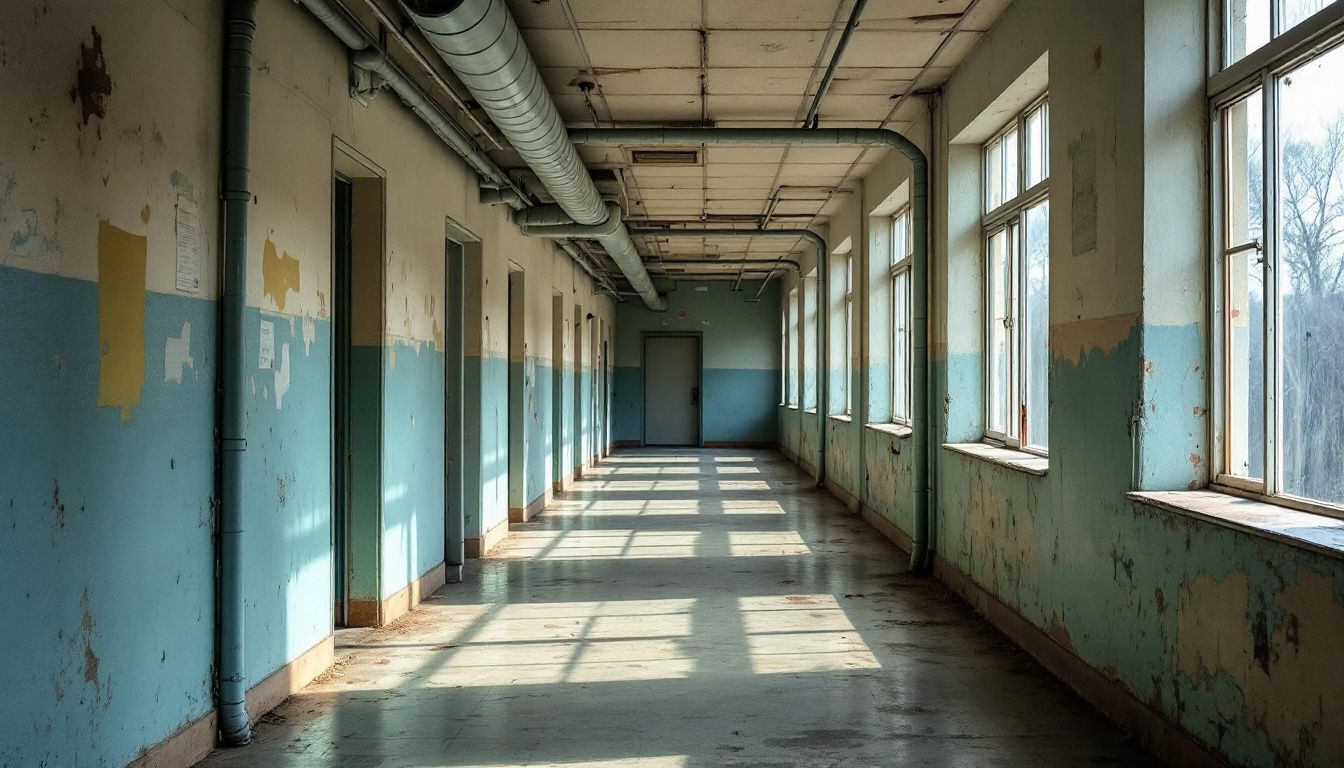
Why Asbestos Surveys for Education Sector Buildings Are a Legal and Moral Necessity
Walk into almost any UK school built before 2000 and there is a reasonable chance asbestos-containing materials (ACMs) are present somewhere in the fabric of that building. Ceiling tiles, pipe lagging, insulation boards, floor tiles — the list is longer than most people realise. Asbestos surveys for education sector properties are not optional extras or box-ticking exercises. They are the legal foundation upon which every school’s duty of care is built.
School governors, bursars, facilities managers, and local authority estates teams all share responsibility for getting this right. Understanding what surveys are needed, when they are needed, and what to do with the results is the difference between a well-managed building and a serious enforcement action from the HSE.
The Scale of the Asbestos Problem in UK Schools
The UK has one of the largest stocks of asbestos-containing school buildings in Europe. Asbestos was widely used in construction from the 1950s through to the mid-1980s, when its use was progressively restricted, with a full ban on all forms coming into force in 1999.
That means a significant proportion of the UK’s school estate — particularly older secondary schools, further education colleges, and university buildings — may still contain ACMs. These materials are not always an immediate risk if they are in good condition and left undisturbed. The danger arises when materials deteriorate, are damaged during maintenance work, or are disturbed during refurbishment without a proper survey having been carried out first.
The consequences of getting this wrong are severe. Asbestos-related diseases — including mesothelioma, asbestosis, and asbestos-related lung cancer — have long latency periods. Someone exposed to asbestos fibres in a school today may not develop symptoms for decades. That long delay makes it tempting to underestimate the risk, but the HSE takes a very different view.
What the Law Requires: Asbestos Regulations in Education Settings
The Control of Asbestos Regulations and the accompanying HSE guidance document HSG264 set out the legal framework for managing asbestos in non-domestic premises. Schools, colleges, and universities all fall within scope.
Under Regulation 4 of the Control of Asbestos Regulations — the Duty to Manage — the person or organisation responsible for maintaining non-domestic premises must:
- Take reasonable steps to find out whether ACMs are present and assess their condition
- Presume materials contain asbestos unless there is strong evidence to the contrary
- Prepare and maintain an up-to-date written asbestos management plan
- Ensure the plan is implemented and reviewed regularly
- Provide information about the location and condition of ACMs to anyone who might disturb them
For schools maintained by a local authority, the duty typically sits with the authority. For academies, free schools, and independent schools, it sits with the governing body or trust. In further and higher education, the institution itself holds the duty.
Failure to comply is not a minor administrative matter. The HSE can issue improvement notices, prohibition notices, and prosecute dutyholders. The reputational and financial consequences of enforcement action in an education setting can be significant.
Types of Asbestos Surveys Required in Schools
Not every situation calls for the same type of survey. Understanding which survey is appropriate for a given set of circumstances is essential for both compliance and cost management.
Management Survey
A management survey is the standard survey required to manage ACMs in a building that is occupied and in normal use. It is the survey that underpins your asbestos register and management plan, and for schools it should cover every accessible area of the building.
The surveyor will carry out a visual inspection, take samples from suspect materials, and produce a report that risk-rates each identified ACM. That risk rating determines how urgently action is needed — whether that means sealing, encapsulating, monitoring, or removing the material.
Refurbishment and Demolition Survey
Before any building work takes place — whether that is a new classroom block, a kitchen refurbishment, or even replacing a suspended ceiling — a refurbishment survey must be carried out in the areas to be disturbed. This is a more intrusive survey than a management survey, because it needs to identify all ACMs that could be encountered during the works, including those hidden within the structure.
Where a building or part of a building is to be demolished, a demolition survey is required. This is the most thorough type of survey, designed to locate all ACMs before any demolition activity begins. Commissioning the right survey before work starts is not just good practice — it is a legal requirement.
Re-Inspection Survey
Once ACMs have been identified and an asbestos management plan is in place, those materials need to be monitored over time. A re-inspection survey revisits previously identified ACMs to assess whether their condition has changed. HSG264 guidance recommends that re-inspections are carried out at least annually, though the frequency may be higher for materials in poor condition or in areas of high footfall.
Schools that skip re-inspections are taking a significant risk. A ceiling tile that was in good condition three years ago may now be damaged, cracked, or showing signs of deterioration. Without a re-inspection, nobody knows — and that ignorance is not a legal defence.
What a Good Asbestos Report Should Contain
The survey itself is only part of the process. The report that follows is what drives action and demonstrates compliance. A properly constructed asbestos report for an education sector building should include:
- A full asbestos register listing every identified ACM, its location, type, and condition
- Risk ratings for each ACM, based on the material’s condition, accessibility, and potential for disturbance
- Photographic evidence of each identified material and its location
- Sample analysis results from a UKAS-accredited laboratory
- A clear management plan setting out recommended actions and timescales
- Floor plans or site plans marking ACM locations
The report must be compliant with HSG264 guidance. It should be written in plain language that a facilities manager or school bursar can act on — not just a technical document that sits in a filing cabinet.
The asbestos register must be kept up to date and made available to anyone who might need to work in the building, from the school caretaker to an external contractor.
Turning Survey Findings Into an Effective Management Plan
Receiving an asbestos report is not the end of the process — it is the beginning. The findings need to be translated into a clear, actionable management plan that the school can implement and review on an ongoing basis.
A good management plan will:
- Prioritise ACMs by risk level — high-risk materials need immediate attention; lower-risk materials need monitoring
- Assign named responsibility for each action — somebody needs to own each item on the list
- Set realistic timescales for action — and stick to them
- Include a communication plan — staff, contractors, and visitors need to know where ACMs are located
- Schedule regular re-inspections — at least annually, more frequently where warranted
- Document all actions taken — the register must be updated whenever work is carried out or conditions change
Where the risk assessment identifies materials that cannot be safely managed in situ, asbestos removal by a licensed contractor will be necessary. Removal is not always the default answer — encapsulation or enclosure may be appropriate in some cases — but where materials are in poor condition or in areas that are difficult to protect from disturbance, removal is often the safest long-term solution.
Asbestos Awareness Training for School Staff
Even the best asbestos management plan will fail if the people working in the building every day are not aware of the risks. The Control of Asbestos Regulations require that anyone liable to disturb ACMs in the course of their work receives appropriate information, instruction, and training.
For schools, this means that caretakers, maintenance staff, and site managers need to understand:
- Where ACMs are located in the building
- What those materials look like and how to recognise potential ACMs they have not seen before
- What to do — and what not to do — if they encounter a suspect material
- Who to contact if they are concerned about the condition of a known ACM
Teachers and other non-maintenance staff also benefit from basic asbestos awareness, so they know not to pin displays to walls that may contain ACMs, and so they understand the management arrangements in place. This is not bureaucratic box-ticking — it is a practical safeguard for everyone in the building.
The Overlap Between Asbestos Management and Fire Safety
Asbestos management and fire safety are often treated as entirely separate disciplines, but in older school buildings they can overlap in important ways. Some fire-resistant materials used in older buildings — particularly around boiler rooms, plant rooms, and escape routes — may contain asbestos.
A fire risk assessment carried out without awareness of the asbestos register could lead to recommendations that inadvertently disturb ACMs. Schools should ensure that whoever carries out their fire risk assessments has access to the current asbestos register, and that the two disciplines are properly co-ordinated.
Treating these as connected responsibilities — rather than siloed tasks — reduces risk and avoids duplication of effort. Where possible, commissioning both from the same provider is a practical way to ensure nothing falls between the gaps.
When to Commission a Survey: Practical Guidance for Schools
If your school does not have a current asbestos management survey, commissioning one should be your first priority. There is no compliant starting point without it.
Beyond the initial survey, the following situations should always trigger a review or a new survey:
- Any planned building work, maintenance, or refurbishment — however minor it seems
- A change in the use of a room or area of the building
- Any accidental damage to materials that might contain asbestos
- A change in the dutyholder — for example, when an academy converts or a new trust takes over
- When the existing survey is more than a few years old and may no longer reflect the current condition of ACMs
If you are unsure whether specific materials contain asbestos, targeted asbestos testing of bulk samples can provide clarity. This does not replace a full management survey, but it can be a useful tool when you need a quick answer about a particular material before deciding on next steps.
Practical Considerations for Surveying Occupied School Buildings
Carrying out asbestos surveys for education sector buildings comes with practical challenges that do not apply in empty commercial premises. Schools are occupied for most of the year, and access to certain areas — particularly classrooms, science labs, and sports halls — needs to be carefully managed to avoid disruption.
The most practical approach is to schedule surveys during school holidays, particularly the summer break, when full access to all areas is possible. For urgent surveys that cannot wait, experienced surveyors can work around the school day, prioritising unoccupied areas and minimising disruption to lessons.
When planning a survey, consider the following:
- Roof voids and ceiling spaces — these often contain ACMs and may require specialist access equipment
- Boiler rooms and plant rooms — frequently contain pipe lagging and other high-risk materials; access should be arranged with the site manager in advance
- Temporary classrooms and modular buildings — these can also contain ACMs and must not be overlooked
- Listed buildings and older structures — some historic school buildings have additional constraints that affect how intrusive surveying can be; an experienced surveyor will know how to navigate these
- Multi-site estates — larger academy trusts and local authority estates may need a phased approach, prioritising buildings by age and condition
Choosing a surveying company with direct experience of education sector buildings makes a genuine difference. The access challenges, the safeguarding considerations, and the need to minimise disruption to pupils and staff all require a surveyor who understands the environment they are working in.
Keeping Your Asbestos Register Current
An asbestos register is only as useful as it is current. A register that was accurate five years ago but has never been updated since is a liability, not an asset. Every time work is carried out that affects an ACM — whether that means removal, encapsulation, or accidental damage — the register must be updated to reflect the change.
The register should record:
- The current condition of each ACM, updated following each re-inspection
- Any work carried out on or near ACMs, including the date, the contractor, and the outcome
- Any changes to the risk rating of individual materials
- Confirmation that the register has been shared with relevant contractors before they begin work
A register that is actively maintained becomes a genuine management tool. One that is filed away and forgotten becomes a compliance risk. The duty to manage asbestos is ongoing — not a one-time task.
Frequently Asked Questions
Do all schools need an asbestos survey?
Any school building built before 2000 should have an asbestos management survey in place. Even if a previous survey found no ACMs, the duty to manage under the Control of Asbestos Regulations still applies, and records should be maintained to demonstrate that a thorough assessment has been carried out. Buildings constructed after 1999 are very unlikely to contain asbestos, but if there is any doubt, a survey or targeted testing will confirm the position.
Who is responsible for asbestos management in schools?
The dutyholder is the person or organisation responsible for maintaining the premises. For local authority-maintained schools, this is typically the local authority. For academies, free schools, and independent schools, responsibility sits with the governing body or trust. In further and higher education, the institution itself holds the duty. In practice, day-to-day management is often delegated to a bursar, facilities manager, or estates team, but legal accountability remains with the dutyholder.
How often should an asbestos re-inspection be carried out in a school?
HSG264 guidance recommends that known ACMs are re-inspected at least annually. Where materials are in poor condition, located in high-traffic areas, or at elevated risk of disturbance, more frequent re-inspections may be warranted. The re-inspection schedule should be documented in the asbestos management plan and reviewed regularly.
Can asbestos surveys be carried out while school is in session?
Yes, though it requires careful planning. Experienced surveyors can work around the school day, focusing on unoccupied areas during lesson times and scheduling more intrusive work for evenings, weekends, or holiday periods. The summer break is the most practical time for a thorough survey of the whole site. For urgent situations, a phased approach can be agreed with the school to minimise disruption.
What should a school do if asbestos is accidentally disturbed?
If ACMs are accidentally disturbed, the area should be vacated immediately and the site manager or dutyholder notified. The area should be secured and access prevented until an assessment has been carried out by a competent person. Depending on the extent of the disturbance, air monitoring may be required, and licensed asbestos contractors may need to be engaged for remediation. The incident should be recorded and the asbestos register updated accordingly.
Talk to Supernova Asbestos Surveys
Supernova Asbestos Surveys has completed over 50,000 surveys across the UK, including extensive work in education sector buildings of all types and ages. Whether you need an initial management survey, a pre-refurbishment survey, annual re-inspections, or targeted asbestos testing, our UKAS-accredited surveyors have the experience and the qualifications to deliver compliant, actionable results.
We understand the practical realities of surveying occupied school buildings — the access constraints, the safeguarding requirements, and the need to work around the school timetable. Our reports are written in plain language and structured to support your asbestos management plan from day one.
Call us on 020 4586 0680 or visit asbestos-surveys.org.uk to discuss your requirements and get a quote. Getting your asbestos management right protects everyone in your building — and it starts with the right survey.