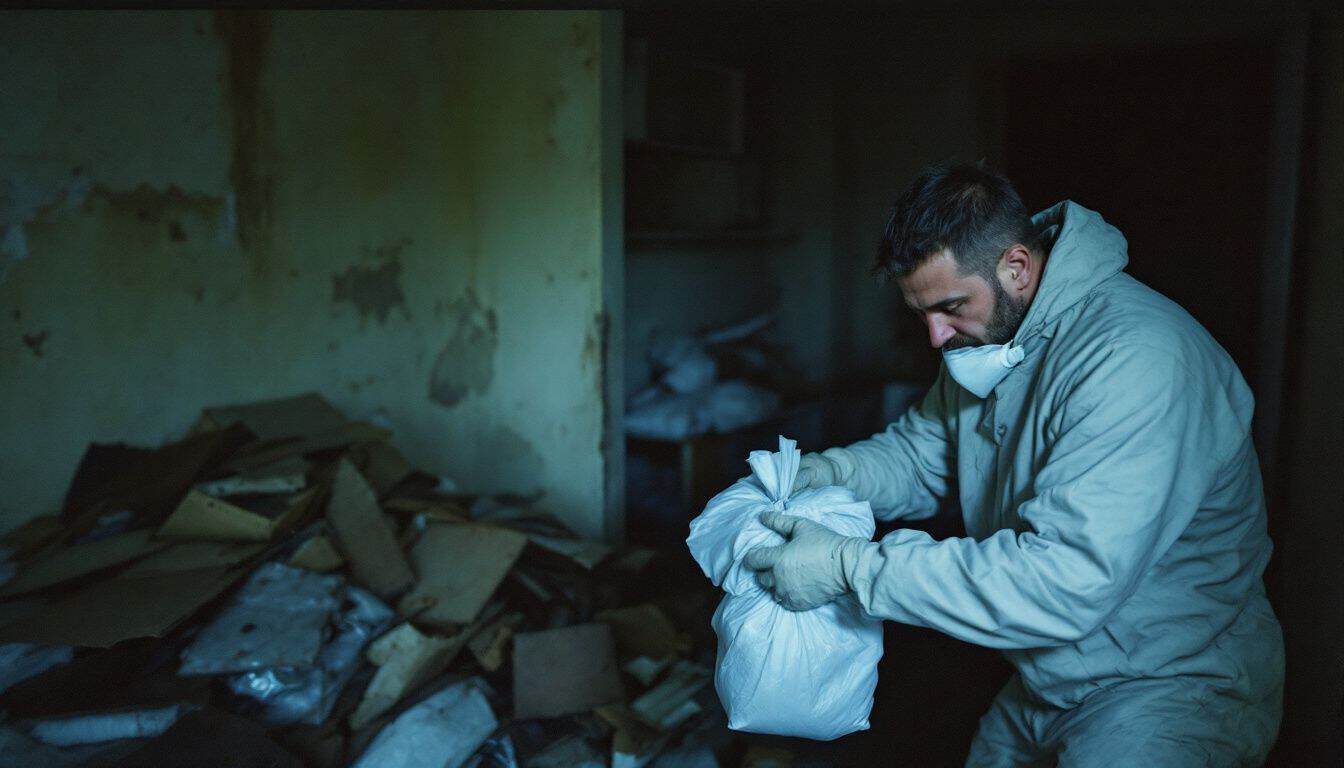
Finchley Asbestos Disposal: What You Need to Know Before You Renovate
If you’re planning a renovation in Finchley or the surrounding North London area, there’s a real chance you’ll encounter asbestos. Properties built before 2000 — particularly those from the 1950s through to the 1980s — frequently contain asbestos-containing materials (ACMs) that cannot simply be bagged up and thrown in a skip. Finchley asbestos disposal is a tightly regulated process, and getting it wrong can result in serious health consequences, legal penalties, and significant remediation costs.
This post walks you through how to identify ACMs, handle and package asbestos waste correctly, and ensure it reaches a licensed disposal site legally and safely.
Why Asbestos Is Still a Problem in Finchley Properties
Finchley has a rich mix of housing stock — Victorian terraces, 1930s semis, post-war council builds, and 1970s flat conversions. Many of these properties were constructed or significantly refurbished during the decades when asbestos use was at its peak in the UK.
Asbestos was widely used because it was cheap, fire-resistant, and an excellent insulator. It was incorporated into dozens of building materials, many of which are still present in properties across North London today. Until you disturb them, these materials may pose little immediate risk — but during renovation work, fibres can become airborne and inhaled, and that’s where the danger lies.
The three main types of asbestos found in UK buildings are:
- Chrysotile (white asbestos) — the most commonly used, found in ceiling tiles, floor tiles, and roofing materials
- Amosite (brown asbestos) — often found in thermal insulation boards and ceiling tiles
- Crocidolite (blue asbestos) — considered the most hazardous; found in spray coatings and pipe insulation
All three types are now banned in the UK, but that ban came too late to prevent their widespread installation in buildings that are still standing today.
Where Asbestos Hides in Finchley Homes and Commercial Buildings
Before any renovation work begins, you need to know what you might be dealing with. ACMs can appear in locations that aren’t immediately obvious, and visual inspection alone is never sufficient to confirm the presence of asbestos.
Common Locations in Residential Properties
- Artex and textured ceiling coatings
- Floor tiles and the adhesive used to fix them
- Roof tiles and corrugated roofing sheets
- Insulation around boilers, pipes, and heating systems
- Soffit boards, fascias, and garage roofs
- Partition walls and ceiling boards in older extensions
Common Locations in Commercial and Industrial Buildings
- Lagging on pipework and ductwork
- Sprayed coatings on structural steelwork
- Insulating boards around fire doors and service risers
- Roof and wall cladding panels
- Electrical cable insulation in older installations
If your Finchley property was built or refurbished before 2000 and you haven’t had a professional survey carried out, commission one before any demolition, drilling, or significant building work begins. A qualified asbestos survey London team will identify all suspected ACMs, assess their condition, and provide a clear management plan.
The Legal Framework Governing Finchley Asbestos Disposal
Asbestos disposal in the UK is not optional or discretionary — it is governed by a framework of legislation that places clear duties on property owners, contractors, and waste carriers alike. Understanding your obligations before work starts is essential.
The Control of Asbestos Regulations
The Control of Asbestos Regulations set out the legal requirements for managing, removing, and disposing of asbestos in the UK. Anyone likely to disturb asbestos during their work must be trained to an appropriate level.
For licensable work — which includes most removal of friable or high-risk ACMs — only a contractor holding a licence from the Health and Safety Executive (HSE) can legally carry out the work. Non-licensable work, such as minor disturbance of lower-risk materials, still requires notification and adherence to strict working practices. In either case, the waste generated must be handled and disposed of in accordance with hazardous waste regulations.
Hazardous Waste Regulations
Asbestos waste is classified as hazardous waste under UK law. This means it cannot be mixed with general construction waste, placed in a standard skip, or taken to an ordinary household waste and recycling centre.
Every consignment of asbestos waste must be accompanied by a Hazardous Waste Consignment Note, which tracks the waste from the point of collection to the licensed disposal facility. All parties — producer, carrier, and receiving facility — must retain copies for a minimum of three years.
Duty of Care Under the Environmental Protection Act
Anyone who produces, carries, or disposes of controlled waste — including asbestos — has a duty of care to ensure it is handled correctly at every stage. If you commission removal work and the contractor disposes of the waste illegally, you may still face liability as the waste producer.
Always verify that your chosen contractor holds the appropriate HSE licence and is registered as a licensed waste carrier with the Environment Agency before any work begins.
Step-by-Step Guide to Safe Finchley Asbestos Disposal
Whether you’re a homeowner, landlord, or facilities manager, understanding the correct process for asbestos disposal will help you ask the right questions and ensure the work is carried out properly.
Step 1: Commission a Professional Asbestos Survey
Before any work begins, a qualified surveyor should inspect the property. A management survey identifies the location and condition of ACMs in accessible areas and is the appropriate starting point for occupied properties where no immediate refurbishment is planned.
If you’re planning significant building work, you’ll need a demolition survey, which goes further — inspecting all areas that will be disturbed by the planned works, including within walls, floors, and ceiling voids. The survey report tells you which materials contain asbestos, their condition, and whether they need to be removed before work proceeds.
Step 2: Engage a Licensed Asbestos Removal Contractor
For licensable work, your contractor must hold a current HSE licence — ask to see it. A reputable contractor will provide a detailed method statement and risk assessment before starting, notify the relevant enforcing authority in advance, and ensure their workers are medically fit and properly trained.
Professional asbestos removal contractors will also manage the entire disposal chain, from packaging the waste correctly on site to delivering it to a licensed facility. This is the safest and most legally straightforward option for most property owners.
Step 3: Correct Packaging of Asbestos Waste on Site
Asbestos waste must be packaged at the point of removal to prevent fibre release during handling and transport. The correct procedure is:
- Double-bag all asbestos waste in heavy-duty polythene bags with a minimum thickness of 500 gauge (approximately 125 microns)
- Seal each bag securely with adhesive tape — do not rely on the bag’s own closure alone
- Place sealed bags into a second outer bag or a rigid, leak-tight container
- Label every bag and container clearly with the internationally recognised asbestos hazard warning label
- Do not compact or crush the waste, as this can cause fibre release
Larger quantities — such as from a full roof removal — will typically be placed in a sealed, lockable skip lined with polythene sheeting. The skip must be covered and locked during transport.
Step 4: Complete the Hazardous Waste Consignment Note
Before the waste leaves the site, a Hazardous Waste Consignment Note must be completed. This document records the type and quantity of waste, the producer’s details, the carrier’s details, and the destination disposal facility.
Your licensed contractor should manage this paperwork as part of their service. If they cannot produce a completed consignment note, treat this as a serious red flag.
Step 5: Transport to a Licensed Disposal Facility
Asbestos waste must be transported by a registered waste carrier to a facility that is permitted to accept hazardous waste. Not all landfill sites in the UK are licensed to accept asbestos — your contractor must confirm that the receiving facility holds the appropriate permit.
Under no circumstances should asbestos waste be fly-tipped, mixed with general waste, or taken to a site that is not licensed to receive it. In the Finchley and wider North London area, your contractor will be familiar with the permitted facilities that accept asbestos waste.
Personal Protective Equipment and Site Safety
Anyone involved in asbestos removal work — even in a supervisory capacity — must understand the PPE requirements. For licensable removal work, the minimum requirements include:
- A full-face respirator with a P3 filter, or a powered air-purifying respirator (PAPR)
- Disposable coveralls (Type 5 minimum) with hood and integrated foot covers
- Disposable gloves and overshoes
- Eye protection where required by the risk assessment
All PPE used in the asbestos removal area is itself classified as asbestos-contaminated waste and must be disposed of accordingly. Workers must pass through a decontamination unit before leaving the work area, removing and bagging their coveralls as part of the decontamination process.
Air monitoring is required during and after licensable removal work to confirm that fibre concentrations have returned to background levels before the area is reoccupied. This is typically carried out by an independent analyst working to the standards set out in HSG264 and HSE guidance.
What Happens If Finchley Asbestos Disposal Goes Wrong
The consequences of improper asbestos disposal are serious — both for health and legally. Illegally disposed asbestos waste can contaminate soil and groundwater, and if fibres become airborne, they represent a long-term cancer risk to anyone who encounters them.
Offences under the Control of Asbestos Regulations and the Environmental Protection Act can result in unlimited fines and, in the most serious cases, custodial sentences. The HSE and Environment Agency actively investigate illegal asbestos disposal, and prosecutions are not uncommon.
Fly-tipping of asbestos waste is treated particularly seriously by enforcement authorities. If you discover what appears to be illegally dumped asbestos waste in Finchley or anywhere else in London, do not disturb it — report it to the London Borough of Barnet’s environmental health team and the Environment Agency.
Managing Asbestos Across Multiple Properties
If you’re a landlord or facilities manager responsible for multiple properties, the challenge of asbestos compliance doesn’t stop at one site. Every property built before 2000 carries potential risk, and the duty to manage asbestos applies regardless of whether you’re in North London, the North West, or the Midlands.
The legal framework for asbestos disposal is consistent across England, Scotland, and Wales. The Control of Asbestos Regulations apply nationwide, and the requirement to use licensed contractors and licensed disposal facilities does not vary by location.
Working with a surveying and removal company that has national coverage makes compliance far more straightforward. Supernova Asbestos Surveys operates throughout the UK, with specialist teams covering asbestos survey Manchester and asbestos survey Birmingham commissions, ensuring consistent standards wherever your properties are located.
Choosing the Right Asbestos Contractor in Finchley
Not all asbestos contractors are equal. When selecting a company to manage your Finchley asbestos disposal project, look for the following:
- A current HSE licence — verify this on the HSE’s online register before signing any contract
- Environment Agency waste carrier registration — a legal requirement for anyone transporting asbestos waste
- UKAS-accredited laboratory analysis — for air monitoring and sample testing
- Clear documentation — method statements, risk assessments, and consignment notes should be provided as standard
- Transparent pricing — be wary of unusually low quotes, which can indicate corners being cut on waste disposal
- References and track record — a reputable contractor will have no hesitation providing evidence of previous work
Avoid any contractor who suggests that asbestos waste can be mixed with general skip waste, disposed of at a standard tip, or handled without the relevant licences. These are not minor procedural shortcuts — they are criminal offences.
Asbestos Disposal for Different Property Types in Finchley
The approach to asbestos disposal will vary depending on the type of property and the scale of work involved. Here’s how the process typically differs across common property types in Finchley.
Victorian and Edwardian Terraces
These properties predate the widespread use of asbestos, but many were significantly refurbished during the 1950s to 1970s when asbestos use was at its height. Artex ceilings, floor tiles, and pipe insulation are the most common finds. A management survey is usually the appropriate first step.
Post-War and 1970s Housing
Properties built during this period are at the highest risk of containing multiple ACMs. Asbestos cement roofing, insulating boards, and textured coatings are frequently present. A full demolition survey is advisable before any significant renovation work begins.
Commercial and Industrial Units
Commercial properties in Finchley — particularly older industrial units and office buildings — may contain asbestos in sprayed coatings, lagging, and ceiling tiles. Duty holders have a legal obligation under the Control of Asbestos Regulations to manage asbestos in non-domestic premises, and this includes maintaining an up-to-date asbestos register.
Flat Conversions and Purpose-Built Blocks
Converted flats in older buildings and purpose-built blocks from the 1960s and 1970s often contain asbestos in communal areas — stairwells, plant rooms, and roof spaces. Managing asbestos in these settings requires careful coordination between the building owner, managing agent, and any leaseholders whose properties may be affected.
Practical Tips for Homeowners Facing Asbestos During Renovation
If you’re a homeowner in Finchley about to start a renovation project, here’s what you should do before any work begins:
- Assume asbestos is present if your property was built or significantly refurbished before 2000 — don’t wait until something looks suspicious
- Commission a survey before you appoint builders — your builder is not qualified to make asbestos assessments, and many will simply proceed regardless
- Don’t disturb suspect materials — if you find something that might be asbestos, stop work and seek professional advice immediately
- Verify your removal contractor’s credentials — check their HSE licence and Environment Agency registration before signing anything
- Keep all paperwork — consignment notes, survey reports, and clearance certificates should be retained for the lifetime of the property
- Don’t accept verbal assurances — if a contractor tells you the material is fine without testing it, find someone else
Taking these steps won’t just protect your health — it will protect you legally and financially if questions arise during a future sale or insurance claim.
Frequently Asked Questions
Can I dispose of asbestos waste myself in Finchley?
In most cases, no. Licensable asbestos work — which covers the removal of most friable or high-risk ACMs — must be carried out by an HSE-licensed contractor. Even for minor, non-licensable work, asbestos waste must still be classified as hazardous waste, packaged correctly, and transported to a licensed disposal facility by a registered waste carrier. Placing asbestos in a standard skip or taking it to a household waste centre is illegal.
How much does professional asbestos disposal cost in Finchley?
Costs vary depending on the type and quantity of asbestos material, the accessibility of the removal area, and whether the work is licensable. A small domestic job — such as removing a single asbestos cement garage roof — will cost significantly less than a full commercial strip-out. Always obtain at least two or three quotes from licensed contractors, and be cautious of any quote that seems unusually low.
What is a Hazardous Waste Consignment Note and do I need one?
A Hazardous Waste Consignment Note is a legal document that tracks asbestos waste from the point of removal to the licensed disposal facility. It is required for every consignment of asbestos waste under UK hazardous waste regulations. Your licensed contractor should complete and manage this document as part of their service. All parties — producer, carrier, and receiving facility — must retain copies for a minimum of three years.
What should I do if I find asbestos during a renovation in Finchley?
Stop work immediately and ensure no one disturbs the material further. Seal off the area if possible and arrange for a qualified asbestos surveyor to inspect and sample the material. Do not attempt to remove it yourself. Once the material has been confirmed as an ACM and its condition assessed, a licensed removal contractor can advise on the appropriate course of action.
Is asbestos disposal regulated differently in London compared to the rest of the UK?
No. The Control of Asbestos Regulations and hazardous waste legislation apply uniformly across England, Scotland, and Wales. The rules governing Finchley asbestos disposal are exactly the same as those that apply in Manchester, Birmingham, or any other part of the country. What may differ is the specific licensed disposal facilities available in your area, but your contractor will manage this as part of the removal process.
Get Expert Help With Asbestos Disposal in Finchley
Supernova Asbestos Surveys has completed over 50,000 surveys nationwide and has the expertise to support every stage of your asbestos project — from initial survey through to licensed removal and compliant disposal. Our team works across North London and the wider UK, delivering consistent, legally compliant results for homeowners, landlords, and commercial clients alike.
Don’t leave asbestos disposal to chance. Call us on 020 4586 0680 or visit asbestos-surveys.org.uk to arrange a survey or discuss your removal requirements with our team.