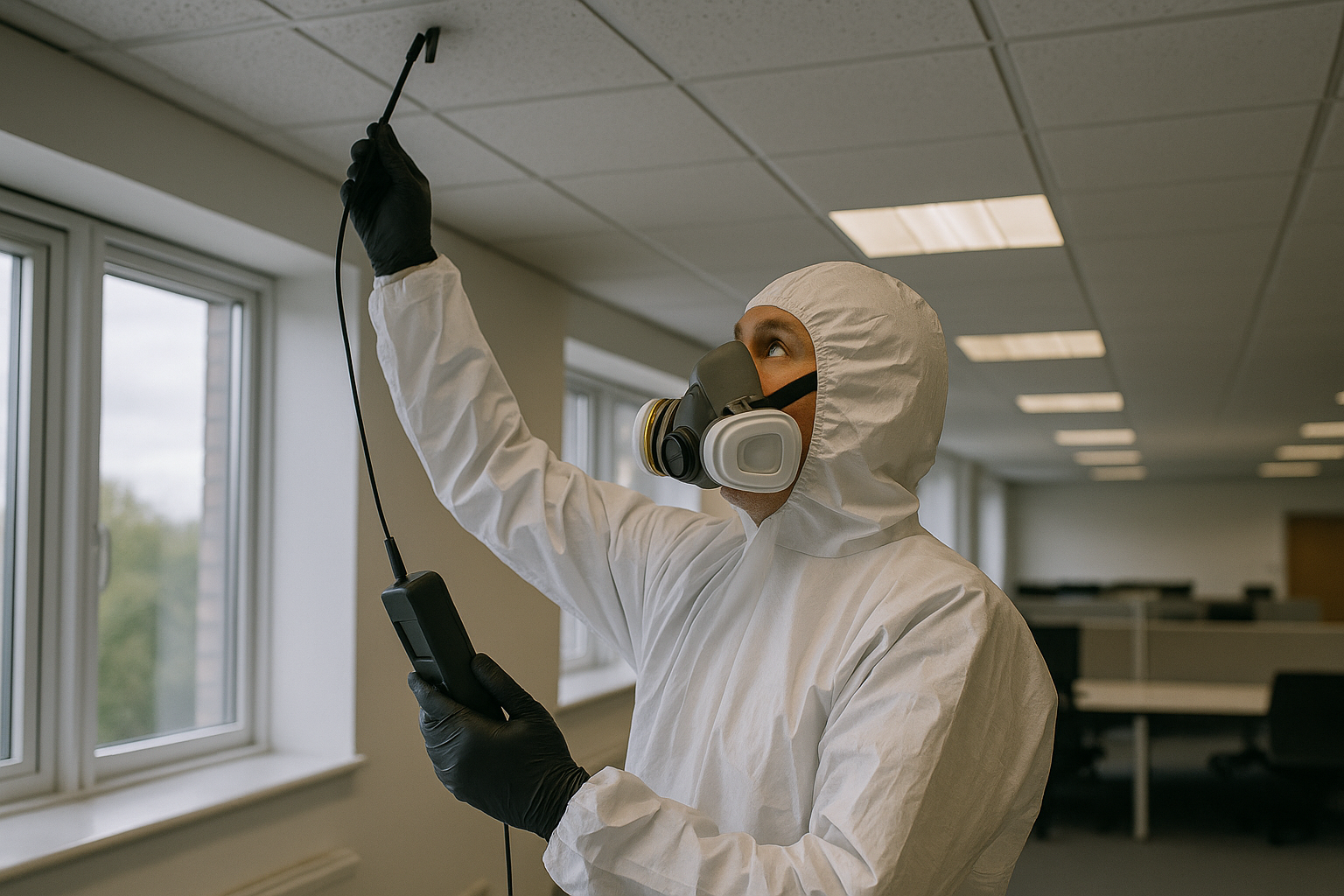
One hidden panel in a riser or a damaged board behind a boiler can turn a straightforward renovation into an asbestos incident within minutes. The risk is easy to miss at the start of a job, which is why any work in an older property should treat asbestos as a live issue until a competent survey or test proves otherwise.
That applies whether you manage a block, oversee a school estate, refurbish offices or plan works in a domestic property. Asbestos was used across a huge range of building materials in the UK, and renovation is exactly when it is most likely to be disturbed.
Why asbestos becomes a major problem during renovation
Asbestos was valued for strength, insulation and fire resistance, so it found its way into ceilings, partitions, service ducts, floor finishes, roofing products and plant insulation. Many of those materials are still present in older buildings.
If asbestos-containing materials are in sound condition and left undisturbed, the immediate risk may be low. Once refurbishment starts, that changes quickly. Drilling, sanding, cutting, breaking and stripping out can release fibres into the air without any obvious warning sign.
Common renovation tasks that can disturb asbestos include:
- Removing partitions, boxing-in or suspended ceilings
- Replacing kitchens, bathrooms and floor coverings
- Rewiring, drilling and chasing walls
- Loft conversions and roof repairs
- Heating, ventilation and plumbing upgrades
- Demolition, strip-out and structural alterations
If a building predates the full prohibition of asbestos use, checks should sit near the top of the pre-start list. Leaving asbestos enquiries until debris is already on the floor is how contamination, delays and avoidable exposure happen.
Where asbestos is commonly found in buildings
Asbestos is not limited to one product or one part of a property. It was used in decorative finishes, insulation products, fire protection and external materials, so it can appear in both obvious and unexpected places.
Typical locations include:
- Textured coatings on ceilings and walls
- Asbestos insulating board in partitions, soffits, risers and fire breaks
- Pipe lagging and thermal insulation
- Ceiling tiles and suspended ceiling panels
- Vinyl floor tiles and bitumen adhesives
- Roof sheets, gutters and downpipes made from asbestos cement
- Garage roofs and outbuildings
- Toilet cisterns, bath panels and window boards
- Boiler insulation and backing panels
- Fuse boards, service duct panels and column casings
- Fire doors and fire protection panels
You cannot confirm asbestos by sight alone. Some materials look suspicious but are harmless, while others look ordinary and still contain asbestos. That is why surveying and laboratory analysis matter.
Higher-risk and lower-risk asbestos materials
Not all asbestos-containing materials release fibres in the same way. Higher-risk materials include pipe lagging, sprayed coatings and asbestos insulating board because they are more friable and can release fibres more easily when disturbed.
Lower-risk materials such as asbestos cement are more tightly bound, but that does not make them safe to break, drill or remove casually. Weathering, damage and poor handling can still create a serious asbestos risk.
How to identify asbestos before work starts
The safest step is to identify asbestos before any intrusive work begins. For occupied premises under normal use, a management survey helps locate and manage asbestos-containing materials during routine occupation and maintenance.
For refurbishment, though, you need to think about the actual scope of works. If walls, floors, ceilings, risers, voids or service areas will be opened up, those specific areas need suitable inspection before the job starts.
A good asbestos survey should:
- Target the exact areas affected by the planned works
- Identify suspected asbestos-containing materials
- Include representative sampling where needed
- Record the extent, condition and accessibility of materials found
- Provide practical recommendations before work begins
Surveying should follow HSG264, the HSE guidance for asbestos surveys. That matters because poor survey work creates false reassurance, and false reassurance is one of the most common reasons asbestos gets disturbed during renovation.
Why an old asbestos report may not be enough
Many property managers already hold an asbestos register or a previous survey. That can be useful, but it is not automatically suitable for refurbishment.
Check whether the report actually covers the exact area and type of work planned. A report limited to communal areas, visual inspection only, or routine management purposes should not be treated as approval for intrusive refurbishment.
Before works begin, ask these questions:
- Does the report cover the exact refurbishment zone?
- Were hidden voids, risers and service areas inspected?
- Have alterations taken place since the survey?
- Are the recommendations still relevant to the planned works?
- Is further sampling or updated surveying required?
If the answer to any of those points is unclear, pause and get the asbestos information updated properly.
Asbestos testing and sample analysis
Where a material is suspected but not confirmed, professional asbestos testing provides the evidence needed to make the right call. That is far more reliable than guessing on site or relying on what a contractor thinks a board, tile or coating might be.
Laboratory analysis can confirm whether a material contains asbestos and, where relevant, identify the asbestos type. That helps determine whether the material can remain in place, needs to be protected, or should be removed before work continues.
If you already have a suspect sample and need confirmation, sample analysis can be a practical option. Sampling itself must still be carried out safely, because taking a sample incorrectly can disturb asbestos and spread dust.
For projects needing fast attendance, Supernova also offers local support through dedicated asbestos testing services for domestic, commercial and public sector properties.
When testing is especially useful
Testing is often the right next step when:
- A suspect material is uncovered during maintenance or strip-out
- An existing report is unclear or incomplete
- Contractors need confirmation before starting work
- Broken fragments or debris need to be identified
- A property transaction or planned refurbishment raises concerns
Testing supports decision-making, but it does not replace proper surveying. If the work is intrusive and the building is older, the wider asbestos picture still needs to be understood.
What to do if asbestos is found during renovations
If suspected asbestos is uncovered mid-project, stop work immediately. Do not keep going to finish the task, and do not ask someone to sweep up the debris and carry on.
The first few minutes matter. Disturbance is what turns a contained issue into an airborne asbestos problem.
Immediate actions to take
- Stop all work in the affected area at once
- Keep people out and prevent further access
- Avoid touching, moving or breaking the material
- Close doors or isolate the area where possible
- Arrange urgent assessment by a competent asbestos professional
- Review the work scope before restarting nearby activity
Do not use a domestic vacuum cleaner, dry brush or compressed air on suspected asbestos dust. Those actions can spread fibres further and make remediation more difficult.
It is also risky to ask general builders to remove the material unless they are trained, equipped and legally permitted to carry out that category of asbestos work. The wrong response can create both health risks and compliance failures.
Do you need to notify the HSE?
Whether work must be notified depends on the material, its condition and the type of asbestos work involved. Some higher-risk work must be carried out by a licensed contractor and may require notification under the Control of Asbestos Regulations.
Other tasks may fall into notifiable non-licensed work or non-licensed work, depending on the risk. The correct category should be assessed before removal starts, not guessed halfway through the job.
If there is any uncertainty, get specialist advice. Asbestos is not an area where assumptions are acceptable.
Using the right professionals for asbestos surveys, testing and removal
Renovation projects run more smoothly when each asbestos task is handled by the right specialist. Surveyors, analysts and removal contractors do different jobs, and treating them as interchangeable often leads to delay, confusion and poor decisions.
You may need:
- An asbestos surveyor to inspect and identify suspect materials
- A testing service to analyse samples in a laboratory
- A contractor for asbestos removal where materials must be taken out safely
- An analyst for air monitoring, reassurance testing or clearance procedures where required
Removal should never be treated as a routine strip-out item for a general trades team. If asbestos must be removed before refurbishment can continue, use a competent provider with the right training, controls and documentation.
Questions to ask before appointing a contractor
Before instructing anyone, ask practical questions:
- What type of asbestos work do you undertake?
- Is the work licensed, notifiable non-licensed or non-licensed?
- How will the area be controlled, cleaned and handed back?
- What waste handling arrangements are in place?
- Will air testing or clearance be required?
- Can you provide method statements and risk assessments?
A competent contractor should be able to explain the process clearly. Vague reassurance is not enough where asbestos is concerned.
Legal duties around asbestos during refurbishment
Asbestos law is not limited to heavy industry or large plant rooms. Anyone responsible for maintenance, repair or refurbishment in non-domestic premises needs to understand how legal duties apply to the building and the work.
The key framework is the Control of Asbestos Regulations. These regulations cover identifying asbestos, preventing exposure, training, licensing and safe systems of work.
For non-domestic premises, the duty to manage asbestos is central. That often affects landlords, managing agents, employers and anyone with responsibility for repair or maintenance.
In domestic settings, contractors still have duties to protect workers and others from asbestos exposure. Relevant HSE guidance, including HSG264, should shape how asbestos is surveyed and managed before refurbishment begins.
Practical compliance steps
- Check whether asbestos information already exists for the property
- Commission the correct survey before intrusive work starts
- Share asbestos information with contractors in advance
- Prevent work in affected areas until risks are controlled
- Use suitable contractors for removal or remedial works
- Keep records of findings, actions and waste documentation where relevant
If you manage multiple sites, build asbestos checks into your standard pre-start process. That saves time and reduces the chance of emergency stoppages once contractors are already on site.
Safe working practices to reduce asbestos exposure
The best way to avoid asbestos exposure is not to disturb the material at all. Once asbestos has been identified or strongly suspected, the work plan should be reviewed before anyone resumes.
Practical controls on site include:
- Briefing all contractors on asbestos findings before work starts
- Marking, isolating or protecting known asbestos-containing materials
- Restricting access to affected areas
- Using controlled methods of removal where required
- Avoiding dry sweeping, drilling or breaking suspect materials
- Ensuring asbestos waste is packaged, labelled and handled correctly
What property managers should do before a project begins
If you are overseeing refurbishment, do not wait for contractors to raise the issue. Put asbestos on the agenda at tender stage and pre-start stage.
A sensible process looks like this:
- Review the age and history of the building
- Check existing asbestos records
- Match the survey information to the planned works
- Arrange further survey or testing where gaps exist
- Share findings with everyone involved in the project
- Stop works in any area that has not been properly assessed
That approach is practical, defensible and far cheaper than dealing with contamination after the event.
Domestic, commercial and public sector properties all face asbestos risk
Asbestos is often associated with industrial sites, but the risk is much broader than that. Homes, offices, schools, shops, healthcare premises and communal residential areas can all contain asbestos if they were built or refurbished during the years when asbestos use was common.
For domestic clients, the challenge is often lack of visibility. A homeowner may not know that the backing to a fuse board, the soffit above a porch or the floor tiles in a kitchen contain asbestos until work starts.
For commercial and public sector properties, the challenge is usually scale. Multiple contractors, phased works and occupied buildings create more opportunities for asbestos information to be missed or misunderstood.
In both cases, the answer is the same: identify asbestos early, communicate clearly and do not let intrusive work begin on assumptions.
Local asbestos support for projects across the UK
Fast access to local survey support can make a real difference when a project timetable is tight. If your site is in the capital, Supernova can help with an asbestos survey London service tailored to domestic and commercial properties.
For projects in the North West, our asbestos survey Manchester team supports landlords, managing agents and businesses needing prompt asbestos inspections.
If you are planning works in the Midlands, our asbestos survey Birmingham service provides practical support before refurbishment starts.
Wherever the property is located, the principle stays the same. If the building may contain asbestos, get the right information before anyone opens up the fabric.
How to avoid costly asbestos mistakes during renovation
Most asbestos problems during refurbishment come from a handful of avoidable mistakes. The material is not identified, the survey does not match the scope of works, or site teams assume a suspect product is safe because it looks familiar.
To reduce the chance of disruption, avoid these common errors:
- Starting strip-out before asbestos checks are complete
- Relying on an old report that does not cover the work area
- Assuming domestic properties are exempt from asbestos risk
- Letting untrained trades disturb suspect materials
- Trying to clean up debris without specialist advice
- Failing to share asbestos information with contractors
Good asbestos management is not complicated, but it does require discipline. The earlier you deal with it, the easier the project becomes.
Frequently Asked Questions
Can you tell if a material contains asbestos just by looking at it?
No. Some materials have a typical asbestos appearance, but visual inspection alone cannot confirm asbestos. Proper surveying and laboratory testing are the reliable way to identify it.
Do I need an asbestos survey before renovating an older property?
If the property may contain asbestos and the planned work is intrusive, you should arrange the appropriate asbestos survey before starting. This is especially important where walls, ceilings, floors, risers or service voids will be opened up.
What should I do if builders uncover suspected asbestos during works?
Stop work immediately, keep people out of the area, avoid disturbing the material further and arrange assessment by a competent asbestos professional. Do not sweep up debris or continue the job until the risk has been properly assessed.
Is all asbestos removal licensed work?
No. Some asbestos work is licensed, some is notifiable non-licensed work and some is non-licensed work. The correct category depends on the material, its condition and the task being carried out under the Control of Asbestos Regulations.
Who is responsible for managing asbestos in non-domestic premises?
The duty to manage asbestos usually falls on the person or organisation responsible for maintenance or repair of the premises, such as a landlord, managing agent, employer or building owner. They must identify asbestos risks, share information and help prevent exposure.
If you need clear advice before renovation starts, Supernova Asbestos Surveys can help with surveys, testing, sample analysis and removal support across the UK. Call 020 4586 0680 or visit asbestos-surveys.org.uk to book the right asbestos service for your property.