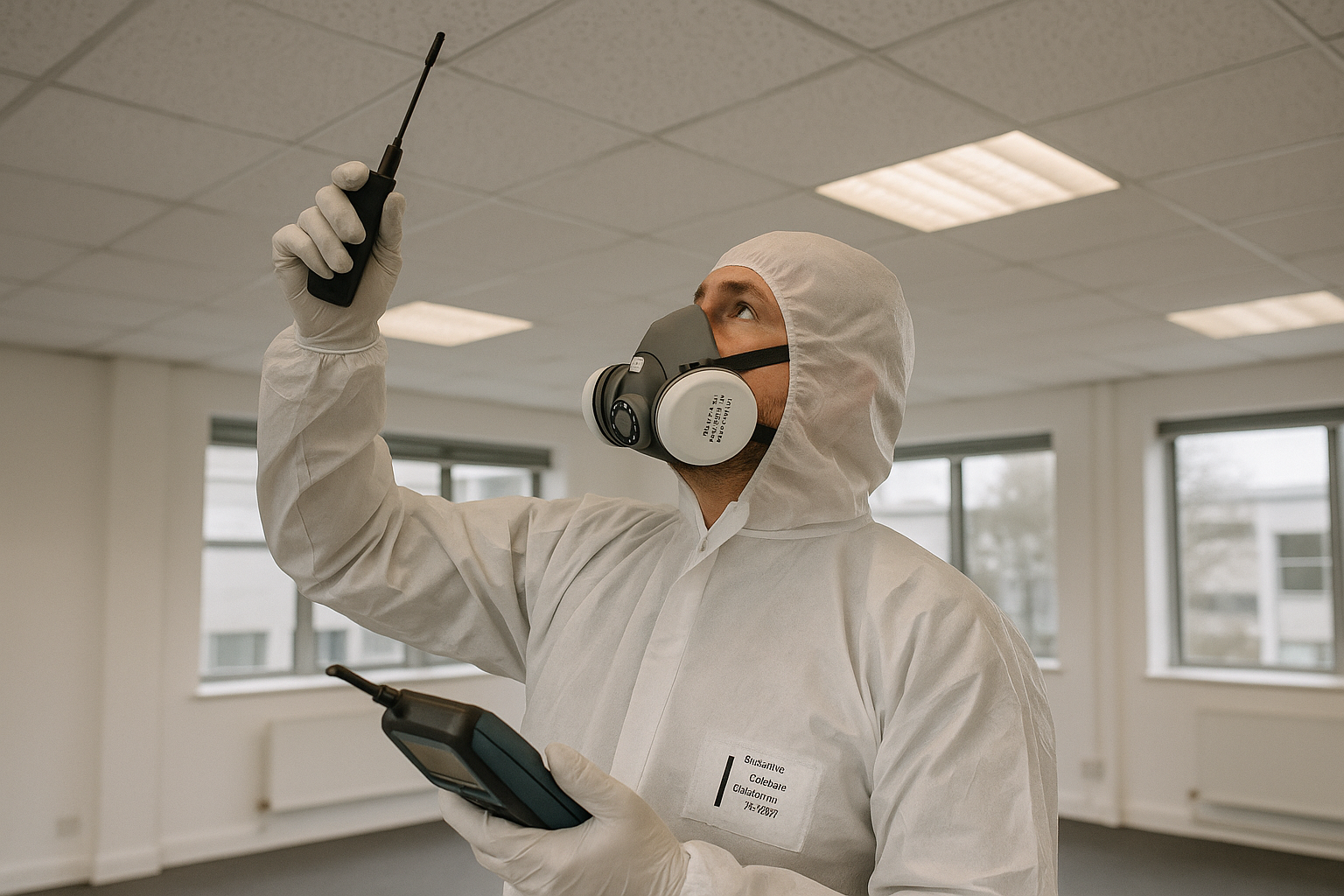
One ceiling void, one boxed-in pipe, one old adhesive under a newer floor finish — that is all it takes to turn a routine job into an asbestos incident. The phrase asbestos should not be found in buildings built after the UK ban is often repeated on site, but it is only a rule of thumb. If you manage property, instruct contractors or plan maintenance, assumptions are not enough.
Under the Control of Asbestos Regulations, dutyholders must identify and manage asbestos risks in non-domestic premises and in the common parts of some residential buildings. HSE guidance and HSG264 are clear on the point: decisions should be based on evidence, not guesswork.
Why asbestos should not be found in buildings built later is not a guarantee
People often hear that asbestos should not be found in buildings built after the ban and assume newer-looking premises are automatically safe. They are not. Buildings are altered repeatedly over decades, and older asbestos-containing materials can remain hidden behind finishes, inside risers, above ceilings or beneath replacement flooring.
Refurbishment can also leave asbestos in place where it was not directly disturbed. A plant room may have new equipment, for example, while original insulation board, gaskets or service duct linings remain untouched behind it.
That is why building age alone never answers the question. The practical approach is simple:
- Check existing asbestos records
- Inspect the building, not just the paperwork
- Consult other people who know the site history
- Arrange the right survey before work starts
- Stop work immediately if suspect materials are uncovered
Why asbestos was used in UK construction
Asbestos was used so widely because it solved several construction problems at once. It was valued for heat resistance, fire protection, insulation, strength and durability, and it could be mixed into many products at relatively low cost.
That is why asbestos appeared in homes, offices, schools, factories, hospitals and public buildings. It was not confined to one trade or one part of the building.
Common reasons it was used included:
- Fire protection around structural elements and service routes
- Thermal insulation for pipes, boilers and plant
- Acoustic and insulating performance in boards and panels
- Strengthening cement sheets and moulded products
- Improving durability in textured coatings, floor products and adhesives
Because it was built into so many materials, asbestos can still be encountered long after its use was prohibited. That is the reason the phrase asbestos should not be found in buildings built later can be misleading when applied too casually.
Why asbestos is still a problem if it is banned
Asbestos remains a live issue because banning a material does not remove it from existing buildings. If asbestos-containing materials were installed years ago and remain in place, they may still be present today.
Some materials are perfectly hidden until maintenance, refurbishment or demolition begins. Others are known but have deteriorated over time due to leaks, vibration, impact damage or poor previous work.
The risk comes when fibres are released and breathed in. Intact materials in good condition may present a lower risk, but damaged or disturbed asbestos can create a serious exposure issue very quickly.
As a property manager or dutyholder, the key point is practical: the legal duty is to manage asbestos that is present, not to rely on assumptions about what ought to be there.
Where asbestos can be found in buildings
In older premises, asbestos can appear in obvious places and in very ordinary ones. It is rarely limited to one room or one building element.
Common locations inside buildings
- Asbestos insulating board in partitions, ceiling tiles, soffits and service risers
- Pipe lagging and boiler insulation
- Textured coatings on walls and ceilings
- Vinyl floor tiles, bitumen adhesives and backing materials
- Panels inside meter cupboards and service ducts
- Fuse boards, rope seals, gaskets and plant components
- Sprayed coatings on structural steel or industrial surfaces
Common locations outside buildings
- Asbestos cement roofing sheets
- Wall cladding panels
- Gutters and downpipes
- Soffits and canopies
- Garages, stores and other outbuildings
Areas often missed during routine checks
Some of the most commonly overlooked places are the ones people pass every day without thinking about them.
- Suspended ceiling voids
- Boxing around columns and pipes
- Floor voids beneath later coverings
- Lofts, basements and undercroft areas
- Plant rooms and boiler houses
- Lift motor rooms and service shafts
If planned work will disturb any of these areas, do not rely on the idea that asbestos should not be found in buildings built later or refurbished more recently. Verify first.
The risk of asbestos in Artex ceilings
Textured coatings such as Artex are one of the materials people most often underestimate. They may look harmless because they are decorative rather than industrial, but some textured coatings can contain asbestos.
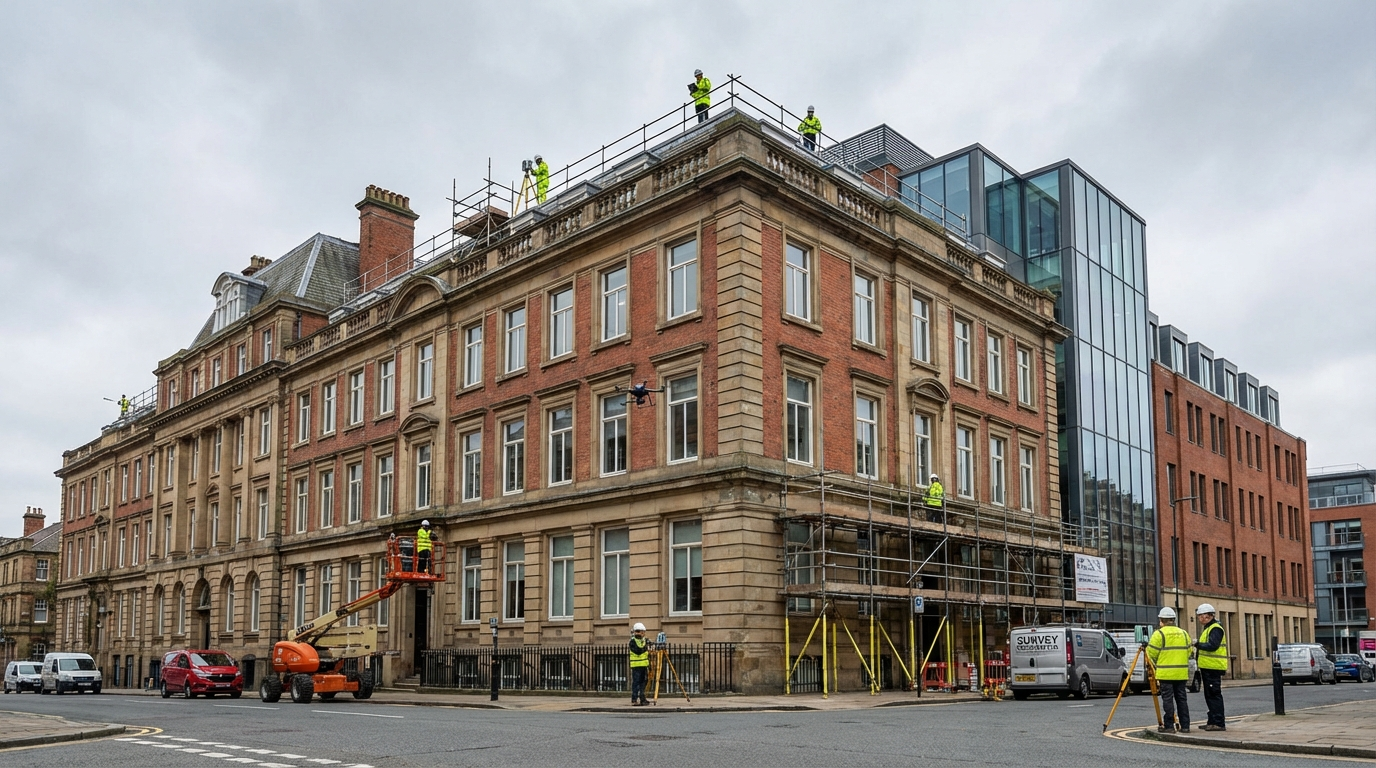
The risk is usually lower when the coating is intact and left undisturbed. The problem starts when someone sands it, drills through it, scrapes it back, removes light fittings carelessly or carries out ceiling alterations without checking first.
If you suspect asbestos in an Artex ceiling:
- Do not scrape, drill or sand the surface
- Check whether survey records already identify the material
- Arrange sampling by a competent professional if the ceiling is due to be disturbed
- Brief contractors before any electrical or refurbishment work begins
This is especially relevant in schools, offices, flats and older housing stock where textured ceilings are still common.
Inspect the building properly, not just the file
Paperwork is useful, but it is not the whole picture. Layouts change, partitions are moved, ceilings are replaced, and service routes are altered. A survey or register that once matched the building may no longer do so.
When you inspect the building, compare what is physically there with the records you hold. If there is a mismatch, treat it as a warning sign.
A sensible inspection should consider:
- The age of the original structure and any extensions
- Areas refurbished at different times
- Plant rooms, risers, lofts and basements
- Signs of water damage, wear or impact damage
- Materials likely to be disturbed during planned works
Where day-to-day occupation is continuing, a management survey is usually the right starting point. It helps locate, as far as reasonably practicable, suspect asbestos-containing materials that could be disturbed during normal occupation or routine maintenance.
Consult other people before making assumptions
Good asbestos management is rarely a one-person job. The people who know the building best often hold useful information that never made it into a formal file.
Consult other people before maintenance or fit-out works begin, including:
- Facilities managers
- Site caretakers and maintenance staff
- Long-standing contractors
- Managing agents
- Previous owners or occupiers where relevant
- Project managers involved in earlier refurbishments
Ask practical questions. Which areas were opened up before? Were any materials removed or encapsulated? Are there old plant rooms, hidden voids or disused service routes that are not obvious on drawings?
These conversations can save time, reduce paperwork chasing and help target surveys more accurately.
Photographs and diagrams make asbestos information usable
An asbestos report should not sit in a folder gathering dust. If contractors and property teams cannot quickly understand what the material is and exactly where it is, the information is far less useful than it should be.
Photographs and diagrams make asbestos management workable on real sites. A clear image, room reference and marked-up plan can prevent the wrong panel being drilled or the wrong ceiling tile being lifted.
Useful asbestos records should include:
- Clear room or area references
- Photographs from more than one angle
- Annotated plans or simple diagrams
- Condition notes and material assessments
- Updates after removal, encapsulation or refurbishment
If you take your own preliminary photographs, keep your distance and do not touch the material. The goal is to record location and condition, not to create disturbance.
Choosing the right survey for the job
The right survey depends on what is happening in the building. If the scope of work changes, the survey requirement may change with it.
Management survey
For occupied premises under normal use, a management survey is usually appropriate. It supports the duty to manage by identifying suspect materials that could be damaged or disturbed during routine occupation and maintenance.
Refurbishment survey
If intrusive work is planned, a refurbishment survey is generally required for the specific area affected. This is designed to locate hidden asbestos before refurbishment starts, because standard management-level access is not enough.
Demolition survey
If a structure is to be taken down, a demolition survey is required before demolition begins. This is fully intrusive and aims to identify asbestos-containing materials throughout the building fabric.
The phrase asbestos should not be found in buildings built later does not remove the need for a suitable survey. If the work will disturb the fabric of the building, evidence matters more than assumptions.
Spend less time on paperwork by getting your asbestos records in order
Property managers often lose time not on the survey itself, but on chasing old reports, checking room references and trying to work out whether a register still matches the current layout. The easiest way to spend less time on paperwork is to keep asbestos information clear, current and accessible.
That means one reliable record set, not five conflicting versions in different inboxes.
A practical system should include:
- The latest survey reports
- An up-to-date asbestos register
- Marked-up plans and diagrams
- Photographs linked to room references
- Records of removals, encapsulation and reinspection
- Contractor access procedures and briefing notes
If your current records are fragmented, start by reviewing the highest-risk areas first: plant rooms, service risers, ceiling voids and any locations due for maintenance. Start with the basics, then build a cleaner system around them.
Are you asbestos aware?
Awareness is not just for surveyors. Anyone who manages works, authorises contractors or enters service areas should understand the warning signs and the limits of what they can safely assume.
You are asbestos aware if you and your team know how to:
- Recognise common asbestos-containing materials
- Check the asbestos register before work starts
- Understand when a survey is missing or unsuitable
- Stop work and isolate an area if suspect materials are disturbed
- Brief contractors with accurate location information
If there is any uncertainty, pause the job. A short delay to verify information is far better than contamination, exposure concerns and emergency response after the fact.
Local support for surveys and site-specific advice
If you manage multiple sites, local knowledge helps. Building age, stock type and refurbishment history vary from one area to another, and practical site access matters when works are time-sensitive.
Supernova provides an asbestos survey London service for commercial and residential clients, along with support for regional portfolios through our asbestos survey Manchester and asbestos survey Birmingham teams.
What to do if you uncover suspect asbestos during work
If a contractor opens up a wall, accesses a ceiling void or lifts old flooring and finds a suspect material, the first response matters.
- Stop work immediately
- Keep people out of the area
- Do not drill, cut, sweep or use a standard vacuum cleaner
- Report the issue to the dutyholder or responsible manager
- Check the asbestos register and existing survey information
- Arrange professional assessment and sampling if required
If visible dust or debris has been created, isolate the area and seek urgent specialist advice. Do not restart work until the material has been properly assessed and the next steps are clear.
Recent posts like this are useful, but your building still needs its own evidence
Reading recent posts like this can help you ask better questions, spot common risk areas and understand your duties more clearly. What it cannot do is confirm what is inside your building.
Every property has its own history of repairs, upgrades, hidden voids and retained materials. The right decision always comes back to site-specific evidence, suitable surveys and accurate records.
Frequently Asked Questions
Can asbestos be found in all parts of an old building?
Not in every part, but it can be found in many different areas and materials. Older buildings may contain asbestos in ceilings, partitions, floor finishes, service risers, plant rooms, roofs, external cladding and hidden voids.
Does a refurbished building mean asbestos has been removed?
No. Refurbishment may leave asbestos in place if the work did not affect that part of the building. New finishes can also conceal older asbestos-containing materials behind or beneath them.
Is asbestos in Artex ceilings always dangerous?
The main risk arises when the coating is disturbed. An intact textured coating may present a lower risk, but sanding, scraping, drilling or removal can release fibres and should not be carried out without checking first.
What survey do I need before building work starts?
That depends on the work. A management survey is generally used for normal occupation and routine maintenance, while intrusive works usually require a refurbishment survey. Demolition requires a demolition survey before the structure is taken down.
What should I do if I think asbestos has been disturbed?
Stop work, keep people away, avoid further disturbance and check the asbestos register or survey information. If the material is damaged or dust is present, isolate the area and get professional advice immediately.
If you need clear answers rather than assumptions, Supernova Asbestos Surveys can help. We carry out management, refurbishment and demolition surveys nationwide, with practical reporting that property managers and contractors can actually use. Call 020 4586 0680 or visit asbestos-surveys.org.uk to arrange a survey or discuss the right next step for your building.