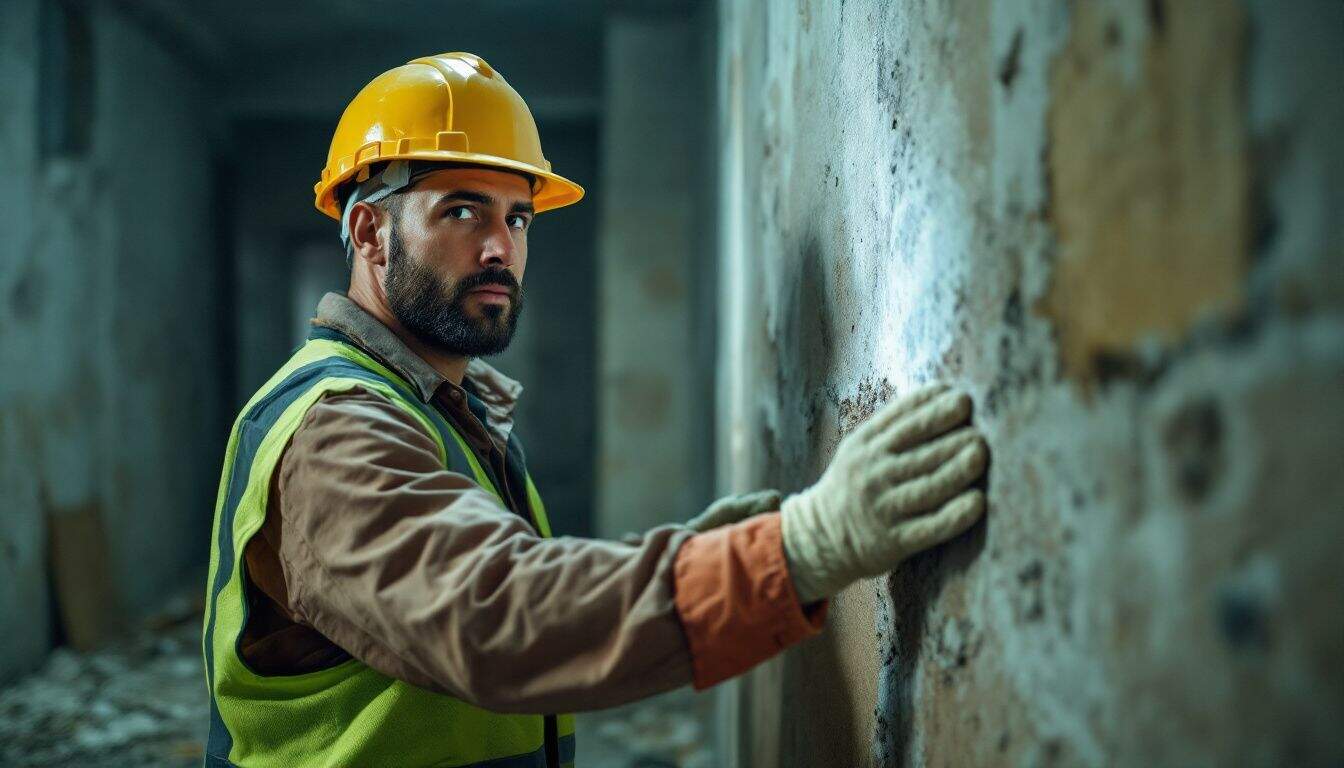
Renovating an Old Building With Asbestos? Here’s What the Law Requires — and What Could Save Lives
Asbestos doesn’t announce itself. It sits quietly inside walls, beneath floor tiles, above ceiling panels — and the moment renovation work begins, it can become one of the most serious health hazards on any UK building site. If you’re planning work on a property built before 2000, there are specific precautions to take when renovating an old building with asbestos, and getting them wrong isn’t just dangerous — it’s illegal.
Mesothelioma, asbestosis, and lung cancer are all linked to asbestos fibre inhalation. These diseases can take decades to develop, which is why so many people underestimate the risk during renovation work. The fibres are invisible to the naked eye, and disturbing asbestos-containing materials (ACMs) without the right controls in place can contaminate an entire site in minutes.
What follows is a detailed, practical breakdown of every precaution required before, during, and after renovation work in any older building.
Why Older Buildings Carry Such a High Asbestos Risk
Asbestos was widely used in UK construction from the 1950s through to the late 1990s. It was prized for its fire resistance, durability, and insulating properties — which is precisely why it ended up in so many building materials across so many different property types.
Any property constructed or refurbished before 2000 should be treated as potentially containing asbestos until proven otherwise. This applies to homes, commercial premises, schools, hospitals, and industrial buildings alike.
You won’t always be able to spot it visually. Asbestos was mixed into products rather than used in its raw form, so it can look identical to standard building materials. That textured ceiling coating, those vinyl floor tiles, the insulation lagging around the boiler — any of them could contain asbestos fibres.
Common Locations of Asbestos in Older Properties
Knowing where asbestos is likely to be found is the first step in managing the risk. Asbestos has been identified in a wide range of building components, including:
- Pipe and boiler insulation lagging
- Textured ceiling coatings (such as Artex)
- Asbestos cement roof sheets and guttering
- Floor tiles and the adhesive used beneath them
- Ceiling tiles and partition boards
- Sprayed coatings on structural steelwork
- Fire doors and door surrounds
- Electrical cable insulation and fuse boxes
- Window putty in older frames
- Heating system gaskets and rope seals
- Soffit boards and external cladding panels
- Asbestos insulating board (AIB) in wall panels and ceiling tiles
This list is not exhaustive. If you’re in any doubt about a material, treat it as suspect until it has been professionally tested.
The Specific Precautions to Take When Renovating an Old Building With Asbestos
Before any physical work begins, there are several non-negotiable steps that must be followed. These aren’t optional best practices — they are legal requirements under the Control of Asbestos Regulations. Skipping any of them exposes workers, occupants, and the dutyholder to serious legal and health consequences.
Step 1 — Commission a Professional Asbestos Survey
This is where everything starts. You cannot safely manage what you haven’t identified, and a visual inspection by an untrained person is not sufficient. A qualified surveyor will inspect the building, take samples of suspect materials, and produce a detailed report identifying all ACMs, their condition, and their risk level.
The type of survey you need depends on the nature of the work planned:
- A management survey is appropriate for routine maintenance and ongoing management of a building where ACMs will remain in place and undisturbed. It gives you a baseline picture of what’s present and where.
- A refurbishment survey is required before any renovation or refurbishment work that will disturb the building fabric. It’s more intrusive than a management survey and is specifically designed to locate all ACMs in areas where work will be carried out.
- A demolition survey is mandatory before any demolition work takes place. It covers the entire structure and must be completed before demolition contractors begin work on site.
All surveys should be carried out in accordance with HSG264, the HSE’s guidance document on asbestos surveying. Choosing a UKAS-accredited surveying company gives you confidence that the work meets the required standard.
Step 2 — Test Suspect Materials
If a survey has identified suspect materials, or if you’ve encountered something during work that wasn’t anticipated, samples must be sent to an accredited laboratory for analysis. Do not assume a material is safe because it looks intact or undamaged — condition alone tells you nothing about asbestos content.
For smaller-scale checks, an asbestos testing kit allows you to take a sample safely and send it off for professional analysis. This is particularly useful for homeowners or small contractors dealing with a single suspect material before deciding how to proceed.
Professional asbestos testing through an accredited laboratory will confirm whether asbestos is present, identify the fibre type, and provide the information needed to make informed decisions about how to manage or remove the material.
Step 3 — Conduct a Thorough Risk Assessment
Once you have survey results and test data, a formal risk assessment must be completed before work begins. This assessment should cover:
- The location and condition of all identified ACMs
- The likelihood of disturbance during the planned work
- The number of workers and others who may be exposed
- The control measures required to prevent fibre release
- Emergency procedures if ACMs are unexpectedly encountered
The risk assessment must be documented and made available to all workers on site. It should be reviewed and updated if the scope of work changes or if new ACMs are discovered during renovation.
Step 4 — Establish and Maintain an Asbestos Register
The duty to manage asbestos under the Control of Asbestos Regulations requires that anyone responsible for non-domestic premises maintains an up-to-date asbestos register. This document records the location, type, condition, and risk rating of all identified ACMs.
The register must be made available to anyone carrying out work on the building — including contractors, maintenance teams, and emergency services. During renovation, it should be reviewed before each new phase of work begins, and ACMs should be re-inspected periodically to monitor any changes in condition.
Legal Requirements You Cannot Ignore
The Control of Asbestos Regulations set out clear duties for those who own, occupy, or manage non-domestic buildings. The ‘duty to manage’ places legal responsibility on the dutyholder — typically the building owner or the person with control over the premises — to identify ACMs, assess the risk they pose, and put a management plan in place.
For renovation work specifically, the regulations require that a refurbishment or demolition survey is carried out before any work that will disturb the building fabric. It is a criminal offence to carry out notifiable licensable work without the appropriate HSE licence. Failure to comply can result in prosecution, unlimited fines, and imprisonment.
Workers who may encounter asbestos during their work — even if they’re not directly handling it — must receive appropriate asbestos awareness training. This is a legal requirement, not a recommendation. It applies to electricians, plumbers, carpenters, decorators, and any other trade working in buildings where ACMs may be present.
Personal Protective Equipment and Safe Working Practices
If ACMs must be disturbed as part of planned work, the correct controls must be in place before anyone enters the work area. PPE is the last line of defence, not the first — but it remains essential and non-negotiable.
Required PPE for Asbestos Work
- Respiratory protective equipment (RPE): A minimum of a half-face mask with a P3 filter for lower-risk work, or a full-face powered air-purifying respirator (PAPR) for higher-risk activities. Disposable FFP3 masks are not sufficient for most asbestos work.
- Disposable coveralls: Type 5 disposable overalls that prevent fibre penetration. These must be removed carefully in a decontamination unit and disposed of as asbestos waste.
- Gloves: Nitrile or rubber gloves to prevent skin contact with fibres.
- Eye protection: Safety goggles or a full-face visor where there is any risk of fibre contact with the eyes.
- Rubber boots: Easily decontaminated footwear that can be wiped down before leaving the work area.
All RPE must be fit-tested to the individual wearer. A mask that doesn’t seal correctly against the face provides little to no protection — fit testing is not optional.
Containment and Work Area Controls
Creating a controlled work environment is critical to preventing fibre spread beyond the immediate work area. The following measures should be in place before disturbance of any ACM begins:
- Seal the work area with heavy-duty polythene sheeting, covering floors, walls, and any openings
- Establish negative air pressure using an air filtration unit with HEPA filtration, so that air flows into the enclosure rather than out
- Set up a decontamination unit with separate dirty and clean areas, including an airlock
- Wet asbestos materials before disturbance to suppress dust — use a fine water mist rather than a jet, which can itself release fibres
- Use hand tools rather than power tools wherever possible — angle grinders, drills, and saws dramatically increase fibre release
- Double-bag all asbestos waste in heavy-duty, clearly labelled asbestos waste sacks
- Clean the work area using a HEPA-filtered vacuum — never a standard vacuum cleaner or by dry sweeping
When to Call in Licensed Asbestos Removal Professionals
Not all asbestos work requires a licensed contractor, but the higher-risk activities do. Licensable work includes the removal of most sprayed coatings, pipe lagging, and asbestos insulating board (AIB). These materials are more friable — meaning they break apart more easily and release fibres more readily than lower-risk materials such as asbestos cement.
For licensable work, the contractor must hold a current HSE asbestos licence. They must notify the HSE at least 14 days before work begins, workers must be medically examined, and all operatives must hold appropriate certificates of training.
Professional asbestos removal by a licensed contractor gives you the assurance that the work is being carried out to the correct standard, with appropriate controls, documentation, and waste disposal procedures in place.
When selecting a removal contractor, verify the following before any work begins:
- Current HSE licence — check the HSE’s public register
- Relevant experience with the specific type of ACM being removed
- Comprehensive insurance, including public liability cover
- A clear method statement and risk assessment for the work
- Proper waste disposal procedures using licensed carriers and approved disposal sites
Disposing of Asbestos Waste Correctly
Asbestos waste is classified as hazardous waste and must be disposed of in accordance with hazardous waste regulations. You cannot put asbestos in a general skip or take it to a standard household waste facility — doing so is a criminal offence.
All asbestos waste must be:
- Double-bagged in UN-approved, labelled asbestos waste sacks
- Transported by a licensed hazardous waste carrier
- Taken to a licensed disposal site that accepts asbestos
- Accompanied by a consignment note documenting the waste transfer
Keep copies of all waste transfer documentation. This forms part of your compliance record and may be requested by the HSE or local authority at any time.
Air Monitoring — Verifying the Work Area Is Safe
After asbestos removal work is completed, and before the enclosure is dismantled, air monitoring should be carried out to confirm that fibre levels are below the clearance indicator. This should be conducted by an independent analyst — not the removal contractor — to ensure objectivity.
For licensable work, a four-stage clearance procedure is required: a thorough visual inspection, air monitoring during enclosure, final air testing, and a certificate of reoccupation. The area must not be reoccupied until clearance has been confirmed in writing.
For lower-risk work, air monitoring remains good practice even where it is not legally mandated. It provides documented evidence that the work area is safe and protects you from future liability.
Training and Awareness for Everyone on Site
Every person who works in a building where asbestos may be present must have received appropriate asbestos awareness training. This applies to all trades — electricians, plumbers, carpenters, decorators, and general labourers alike. The training must cover what asbestos is, where it’s likely to be found, the health risks it poses, and what to do if suspect materials are encountered.
Awareness training does not qualify someone to work with or remove asbestos — it simply ensures they know how to avoid disturbing it accidentally and what steps to take if they do. Specific asbestos work requires additional, category-specific training and, for licensable work, formal certification.
If you’re managing a renovation project, make sure every contractor you appoint can demonstrate that their operatives have received appropriate training before they set foot on site.
Practical Guidance for Specific Renovation Scenarios
Domestic Renovations in Pre-2000 Homes
Homeowners carrying out DIY work are not exempt from the risks, even if they fall outside some of the formal regulatory duties that apply to employers. If you’re planning to remove a textured ceiling, knock through a wall, or replace old floor tiles in a pre-2000 property, get the materials tested first.
A testing kit can be ordered directly and allows you to take a sample safely before sending it to an accredited lab. If asbestos is confirmed, do not proceed with DIY removal — contact a licensed professional.
Commercial Refurbishment Projects
For commercial premises, the legal duties are more extensive. A refurbishment survey must be completed before any intrusive work begins, the asbestos register must be updated, and all contractors must be briefed on the findings before starting. The principal contractor or project manager carries responsibility for coordinating asbestos management across the site.
If your project is based in the capital, an asbestos survey London team can mobilise quickly and provide the survey and testing services you need to keep your project compliant and on schedule.
Renovation Projects in the North West
For projects across the North West, an asbestos survey Manchester service provides the same accredited, professional standard of surveying and testing, with local knowledge of the region’s older building stock.
Unexpected Discoveries During Renovation
If you or your contractors encounter a suspect material that wasn’t identified in the original survey, work in that area must stop immediately. The area should be vacated, access restricted, and a qualified surveyor contacted to assess the material before work resumes.
Do not attempt to clean up or remove the material yourself. Do not continue working around it. The risk of spreading fibres through an occupied building is too serious to ignore.
Choosing the Right Asbestos Survey and Testing Service
Not all asbestos surveyors are equal. When commissioning a survey, look for a company that is UKAS-accredited, employs qualified P402-certificated surveyors, and provides a detailed written report with photographic evidence and a clear risk assessment for each ACM identified.
The survey report should be clear enough that any contractor working on site can understand exactly where ACMs are located and what precautions apply. Vague or incomplete reports create risk — both to workers and to the dutyholder who commissioned the survey.
For a thorough picture of what’s in your building before any renovation work begins, professional asbestos testing and surveying services provide the foundation on which every other precaution depends.
Frequently Asked Questions
Do I need an asbestos survey before renovating an old building?
Yes — if the building was constructed or refurbished before 2000, a refurbishment survey is legally required before any work that will disturb the building fabric. This applies to both commercial and domestic properties, though the formal legal duties are more extensive for non-domestic premises. The survey must be carried out by a qualified, UKAS-accredited surveyor in accordance with HSG264.
What should I do if I find asbestos during renovation work?
Stop work in that area immediately, vacate the space, and restrict access. Do not attempt to clean up, remove, or continue working around the material. Contact a qualified asbestos surveyor to assess the find, and do not allow work to resume until the material has been tested, the risk assessed, and appropriate controls put in place.
Can I remove asbestos myself during a renovation?
It depends on the type of material and the amount involved. Some minor, non-licensable work can be carried out by a trained and competent person following strict controls. However, most higher-risk asbestos materials — including sprayed coatings, pipe lagging, and asbestos insulating board — must be removed by a contractor holding a current HSE asbestos licence. When in doubt, always use a licensed professional.
What PPE is required when working near asbestos?
At minimum, workers require a half-face mask with a P3 filter, Type 5 disposable coveralls, nitrile gloves, and appropriate eye protection. For higher-risk work, a full-face powered air-purifying respirator (PAPR) is required. All RPE must be fit-tested to the individual wearer. Standard dust masks and disposable FFP3 masks are not adequate for most asbestos work.
How do I dispose of asbestos waste from a renovation project?
Asbestos waste is classified as hazardous waste and must be double-bagged in UN-approved, labelled sacks, transported by a licensed hazardous waste carrier, and taken to a licensed disposal site. You must retain consignment notes as part of your compliance documentation. Disposing of asbestos in a general skip or household waste facility is illegal and can result in prosecution.
Get the Right Advice Before Work Begins
The specific precautions to take when renovating an old building with asbestos are not complicated, but they are non-negotiable. Every step — from commissioning the right survey to verifying air quality after removal — exists to protect the health of workers, occupants, and anyone else who comes into contact with the building.
Supernova Asbestos Surveys has completed over 50,000 surveys across the UK. Our UKAS-accredited team provides management surveys, refurbishment surveys, demolition surveys, asbestos testing, and removal coordination services for properties of all types and sizes — from domestic homes to large commercial sites.
If you’re planning renovation work and need expert guidance, call us on 020 4586 0680 or visit asbestos-surveys.org.uk to book a survey or request a quote. Don’t start work until you know what you’re dealing with.