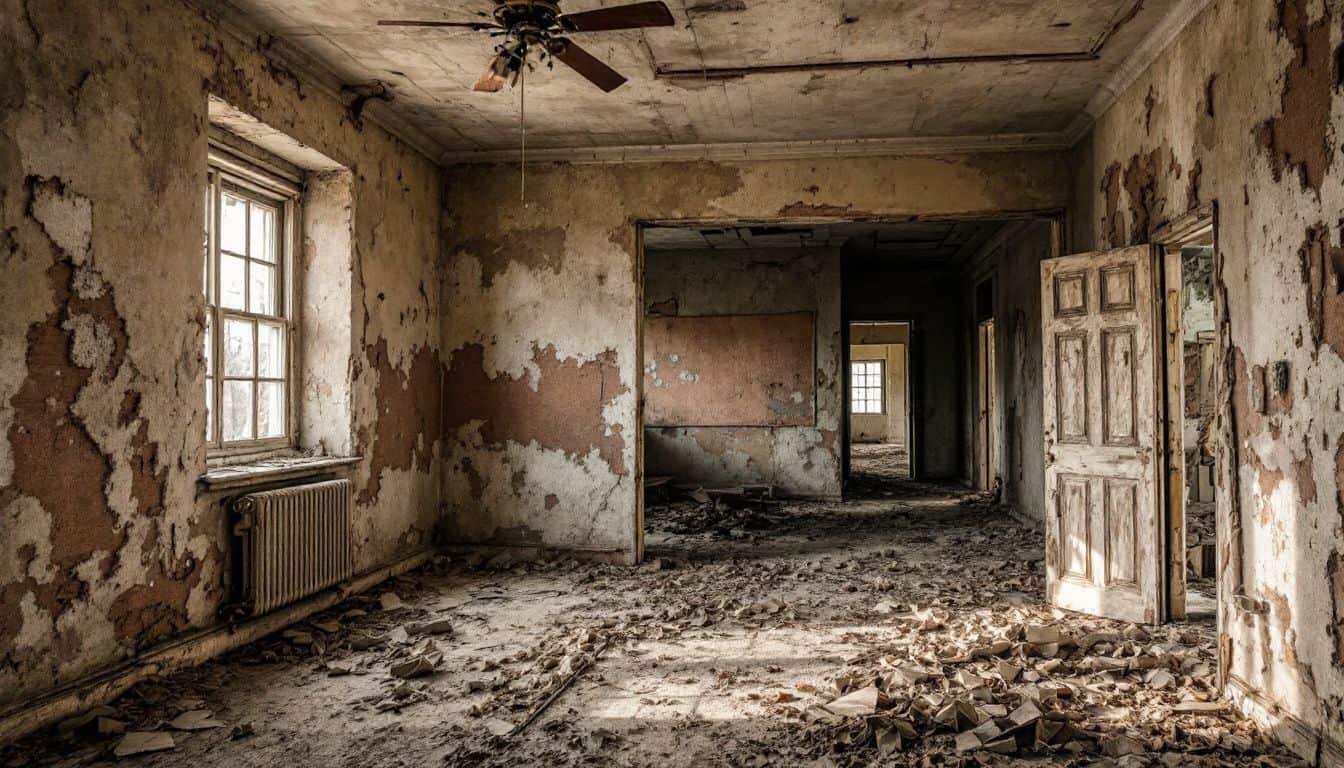
What the Law Actually Says About Asbestos in Old Buildings
If you own, manage, or occupy an older building in the UK, understanding whether there are any regulations or laws regarding asbestos in old buildings is not merely academic — it is a legal obligation with serious consequences if ignored. Asbestos was woven into the fabric of British construction throughout the twentieth century, and despite a full ban coming into force by 1999, millions of buildings across the country still contain it today.
Ignorance of the law is not a defence. The consequences of getting this wrong range from substantial fines to criminal prosecution — and more critically, exposure to asbestos fibres remains one of the leading causes of occupational death in the UK.
The Core Legal Framework: Control of Asbestos Regulations
The primary legislation governing asbestos in the UK is the Control of Asbestos Regulations, enforced by the Health and Safety Executive (HSE). These regulations set out clear duties for anyone who owns, occupies, or manages non-domestic premises — and they apply with particular force to buildings constructed before the year 2000.
The regulations cover everything from how asbestos must be identified and recorded, through to how it must be managed, handled, and ultimately removed. They are not guidance notes or best practice suggestions — they are law, and they carry real legal teeth.
Who Is Classed as a Duty Holder?
A duty holder is anyone who has responsibility for maintaining or repairing a non-domestic building. This typically includes:
- Building owners
- Landlords of commercial premises
- Facilities managers and managing agents
- Employers who control a workplace
- Local authorities responsible for public buildings
If you fall into any of these categories and your building was constructed before 2000, the regulations almost certainly apply to you. The duty to manage asbestos is not optional — it is a statutory requirement, and the HSE actively enforces it.
What Does the Duty to Manage Require?
The duty to manage asbestos requires duty holders to take a structured, documented approach to identifying and controlling asbestos risks. In practical terms, this means:
- Carrying out an asbestos survey to identify whether asbestos-containing materials (ACMs) are present
- Creating and maintaining an asbestos register that records the location, type, and condition of all ACMs
- Producing a written asbestos management plan that explains how those materials will be managed
- Sharing that information with anyone who may disturb the materials — contractors, maintenance workers, and emergency services
- Reviewing and updating the register and plan regularly, and whenever changes are made to the building
Risk assessments should be reviewed at least every six to twelve months, or sooner if there is any reason to believe conditions have changed — for example, after a flood, fire, or building works nearby.
HSE Guidance and the Role of HSG264
Alongside the regulations themselves, the HSE publishes detailed technical guidance to help duty holders understand how to comply. The key document is HSG264, which provides authoritative guidance on asbestos surveying — covering how surveys should be planned, conducted, and reported.
HSG264 makes clear that surveys must be carried out by competent, trained surveyors. It distinguishes between the different types of survey and sets out the standard to which each must be performed. Any surveyor who cannot demonstrate familiarity with HSG264 should not be conducting asbestos surveys on your behalf — full stop.
The Types of Asbestos Survey Required by Law
Not all asbestos surveys are the same, and using the wrong type for your circumstances is itself a compliance failure. The type of survey required depends on what is happening in your building and why you need the information.
Management Surveys
A management survey is the standard survey required for any building that is occupied and in normal use. Its purpose is to locate and assess ACMs that could be disturbed during everyday activities — routine maintenance, cleaning, minor repairs, and so on.
The surveyor will inspect accessible areas, take samples where necessary, and produce a report that forms the basis of your asbestos register. This is the survey most duty holders need to have in place as a matter of course, and without it, you are operating outside the law.
Refurbishment Surveys
If you are planning any building work — whether that is a fit-out, renovation, or alteration — you will need a refurbishment survey before work begins. This is a more intrusive investigation, because it needs to locate all ACMs in areas that will be disturbed by the planned work.
Carrying out refurbishment work without this survey in place is a serious breach of the regulations — and it puts workers at significant, potentially fatal, risk. No responsible contractor should begin work on a pre-2000 building without sight of a current refurbishment survey.
Demolition Surveys
Before any structure is demolished — in whole or in part — a demolition survey is legally required. This is the most thorough and intrusive type of survey, designed to locate every ACM in the building before demolition begins.
Demolition surveys involve destructive inspection techniques and must be completed before any demolition contractor sets foot on site. Skipping this step is not a shortcut — it is a criminal offence that can halt projects, trigger prosecution, and expose workers to serious harm.
Asbestos Exposure Limits and Workplace Controls
The Control of Asbestos Regulations set a control limit for asbestos exposure of 0.1 fibres per cubic centimetre of air, measured over a four-hour period. Employers must take all reasonably practicable steps to reduce exposure below this level — and where possible, to eliminate it entirely.
In practice, this means implementing a range of controls:
- Providing appropriate personal protective equipment (PPE) to any worker who may be exposed
- Ensuring adequate ventilation and air monitoring where asbestos work is carried out
- Following the Control of Substances Hazardous to Health (COSHH) regulations
- Offering medical surveillance to workers regularly exposed to asbestos
- Keeping detailed records of worker exposure
These controls are not bureaucratic box-ticking. Asbestos-related diseases — including mesothelioma, asbestosis, and lung cancer — can take decades to develop after exposure, which is precisely why the regulatory framework is so stringent.
Licensing Requirements for Asbestos Removal
Not all asbestos work can be carried out by anyone with a pair of gloves and a dust mask. The regulations divide asbestos work into three categories based on risk level, and the category determines who is legally permitted to carry out the work.
Licensed Work
High-risk asbestos work — such as removing sprayed coatings, lagging, or asbestos insulating board — must only be carried out by a contractor holding a licence issued by the HSE. This is non-negotiable. Using an unlicensed contractor for licensable work is a criminal offence, and the building owner or manager who appointed them can also face liability.
When you need asbestos removal carried out, always verify that the contractor holds a current HSE licence before any work begins. A reputable contractor will have no hesitation in showing you their credentials.
Notifiable Non-Licensed Work (NNLW)
Some lower-risk asbestos work does not require a licence, but must still be notified to the relevant enforcing authority before it starts. Workers carrying out this type of work must be appropriately trained, and employers must keep health records for those involved.
Non-Licensed Work
A small category of very low-risk asbestos work can be carried out without a licence and without notification, provided proper precautions are taken. Even here, workers must have received appropriate asbestos awareness training — there is no category of asbestos work where training is entirely irrelevant.
Training and Awareness Obligations
The regulations place clear obligations on employers to ensure that anyone who might encounter asbestos in the course of their work receives appropriate training. This is not limited to specialist asbestos workers — it includes maintenance staff, plumbers, electricians, decorators, and anyone else who works in buildings where asbestos may be present.
There are different levels of training depending on the role:
- Asbestos awareness training — for workers who might accidentally disturb asbestos but are not expected to work with it directly
- Non-licensed work training — for workers who carry out non-licensed asbestos work
- Licensed work training — for workers employed by HSE-licensed contractors
Employers must keep training records and ensure that training is refreshed regularly. Sending a worker into a building with unmanaged asbestos and no awareness of the risks is a serious breach of both the asbestos regulations and general health and safety law.
Asbestos Waste Disposal: A Legal Requirement in Its Own Right
Once asbestos has been removed, it does not simply disappear from your legal responsibilities. Asbestos waste is classified as hazardous waste under UK law, and its disposal is tightly regulated from the moment it leaves the building.
Asbestos waste must be:
- Double-bagged and clearly labelled before leaving site
- Transported only by a registered waste carrier
- Disposed of at a licensed hazardous waste facility
- Documented with a consignment note that tracks the waste from site to disposal point
Fly-tipping asbestos waste — or disposing of it through unlicensed channels — can result in prosecution under environmental legislation as well as the asbestos regulations themselves. The Environment Agency takes a serious interest in illegal asbestos disposal, and penalties can be severe.
Legal Penalties for Non-Compliance
The penalties for failing to comply with asbestos regulations are significant, and the authorities do not hesitate to use them. Duty holders who ignore their obligations face a range of consequences:
- Fines of up to £20,000 for less serious breaches heard in a magistrates’ court
- Unlimited fines for more serious breaches heard in a crown court
- Imprisonment of up to two years for the most serious violations
- Improvement notices and prohibition notices issued by HSE inspectors
- Civil liability claims from workers or occupants who suffer asbestos-related illness
- Insurers refusing to pay out on claims where regulations have not been followed
Prosecution is not reserved only for those who cause immediate harm. Simply failing to have an asbestos management plan in place, or failing to commission a survey when one is required, can itself result in enforcement action — even if no one has been exposed.
Asbestos Regulations and Residential Properties
The duty to manage asbestos under the Control of Asbestos Regulations applies specifically to non-domestic premises. Private homeowners are not subject to the same statutory duty — but this does not mean they can ignore asbestos entirely.
Landlords who rent out residential properties have duties under housing legislation to ensure their properties are safe for occupants. Any contractor working on a residential property built before 2000 must still follow the asbestos regulations in terms of how they handle and dispose of any asbestos they encounter.
If you are a homeowner planning renovation work on an older property, commissioning a survey before work begins is strongly advisable — both for your own safety and to protect the tradespeople you hire. The legal responsibility for their welfare does not disappear simply because you are a private individual.
Practical Steps for Duty Holders: Getting Compliant
If you manage an older building and are not yet fully compliant with asbestos regulations, here is a straightforward path to getting your obligations in order:
- Commission an asbestos survey — if you do not already have a current survey, this is your starting point. Use a UKAS-accredited surveying company to ensure the work meets the standard required by HSG264.
- Create your asbestos register — document all ACMs identified, including their location, type, and condition rating.
- Write an asbestos management plan — set out how you will manage each ACM, who is responsible, and what the review schedule looks like.
- Communicate the information — ensure all contractors and maintenance staff have access to the register before they begin any work on site.
- Review regularly — update the register and plan at least annually, and after any building work or significant changes to the property.
- Act on deteriorating materials — if an ACM is in poor condition or at risk of being disturbed, take prompt action rather than leaving it and hoping for the best.
Supernova Asbestos Surveys operates across the UK, with experienced local teams available for an asbestos survey in London, an asbestos survey in Manchester, and an asbestos survey in Birmingham, as well as nationwide coverage across England, Scotland, and Wales.
Get Expert Help with Asbestos Compliance
Navigating the regulations around asbestos in old buildings is not something you should have to do alone. Supernova Asbestos Surveys has completed over 50,000 surveys across the UK, working with building owners, facilities managers, landlords, and local authorities to ensure full compliance with the Control of Asbestos Regulations.
Whether you need a management survey to establish your baseline position, a refurbishment survey before planned works, or specialist removal by an HSE-licensed team, our surveyors are ready to help. Call us on 020 4586 0680 or visit asbestos-surveys.org.uk to book your survey or request a quote.
Frequently Asked Questions
Are there any regulations or laws regarding asbestos in old buildings in the UK?
Yes. The primary legislation is the Control of Asbestos Regulations, enforced by the HSE. These regulations require duty holders — building owners, landlords, and managers of non-domestic premises — to identify, manage, and control asbestos-containing materials in buildings constructed before 2000. Failure to comply can result in substantial fines, unlimited penalties in a crown court, and in the most serious cases, imprisonment.
Do the asbestos regulations apply to residential properties?
The statutory duty to manage asbestos under the Control of Asbestos Regulations applies to non-domestic premises. However, residential landlords have obligations under housing legislation to keep properties safe, and any contractor working on a pre-2000 home must still comply with asbestos regulations when handling or disposing of ACMs. Private homeowners undertaking renovation work are strongly advised to commission a survey before work begins.
What type of asbestos survey do I need for my building?
The type of survey depends on your circumstances. A management survey is required for occupied buildings in normal use and forms the basis of your asbestos register. A refurbishment survey is needed before any renovation or alteration work. A demolition survey is required before any demolition takes place. Using the wrong survey type for your situation is itself a compliance failure.
Can I remove asbestos myself, or do I need a licensed contractor?
It depends on the type and quantity of asbestos involved. High-risk materials — such as sprayed coatings, lagging, and asbestos insulating board — must only be removed by an HSE-licensed contractor. Some lower-risk work falls into the category of notifiable non-licensed work, which requires notification but not a licence. Only a very small category of very low-risk work can be carried out without either. Always seek professional advice before attempting any asbestos removal.
What happens if I ignore asbestos regulations in my building?
The consequences of non-compliance are serious. HSE inspectors can issue improvement and prohibition notices, halting operations in your building. Fines can reach £20,000 in a magistrates’ court and are unlimited in a crown court. The most serious breaches can result in imprisonment. Beyond the regulatory penalties, you also face civil liability if workers or occupants suffer harm as a result of your failure to manage asbestos correctly.