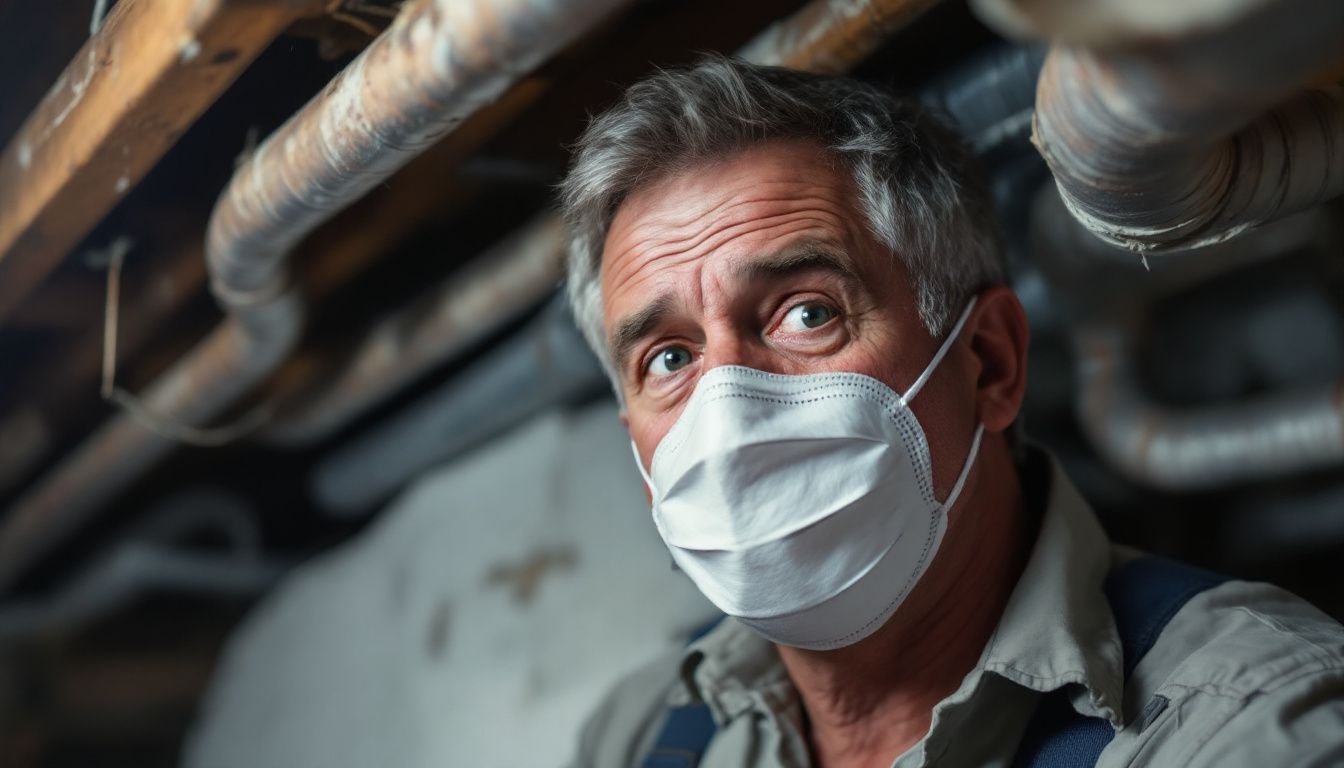
Why an Asbestos Survey Before Home Refurbishment Could Save Your Life
Picking up a drill or knocking through a wall feels satisfying — until you realise the dust you’ve just sent into the air might be asbestos. If your home was built before 2000, an asbestos survey before home refurbishment isn’t just a sensible precaution. In many circumstances, it’s a legal requirement.
Understanding what’s hiding inside your walls, floors, and ceilings before you start any renovation work is the single most important step you can take to protect yourself, your family, and any tradespeople you bring in.
The Scale of the Problem in UK Homes
Asbestos was used extensively in UK construction from the 1940s right through to 1999, when it was finally banned. That means millions of properties across the country — houses, flats, extensions, and outbuildings — still contain asbestos-containing materials (ACMs) in one form or another.
The material itself isn’t always dangerous when left undisturbed. The risk comes when you start cutting, drilling, sanding, or breaking into materials that contain it. At that point, microscopic fibres become airborne, and once inhaled, they can lodge permanently in the lungs.
Asbestos-related diseases including mesothelioma, asbestosis, and lung cancer claim thousands of lives in the UK every year. These illnesses can take decades to develop after exposure, which is precisely why so many people underestimate the risk — you won’t feel ill the day after breathing in fibres, but the damage is already done.
Where Asbestos Hides in Older UK Homes
One of the biggest challenges with asbestos is that it’s rarely obvious. It was blended into a wide variety of building materials specifically because of its durability, heat resistance, and insulating properties. That versatility means it can turn up almost anywhere in a pre-2000 property.
Common locations in domestic properties include:
- Textured coatings — Artex and similar spray or trowel-applied ceiling and wall finishes were frequently made with asbestos
- Floor tiles — vinyl floor tiles and the adhesive used to fix them often contained asbestos
- Pipe lagging and insulation — particularly in older boiler rooms, airing cupboards, and around hot water pipes
- Insulation boards — used behind fireplaces, in partition walls, and around boilers
- Roof materials — cement roof sheets and soffit boards in garages and outbuildings are a frequent source
- Ceiling tiles — suspended ceiling tiles in older properties may contain asbestos
- Joint compounds and fillers — used between plasterboard sheets in walls and ceilings
The difficulty for any homeowner is that these materials often look entirely normal. There’s no reliable way to identify asbestos by sight alone. A grey insulation board looks like any other board. Textured ceiling paint looks like textured ceiling paint. Only laboratory analysis of a sample can confirm whether asbestos is present — which is exactly why professional surveys exist.
What the Law Says About Asbestos Surveys for Home Refurbishment
The Control of Asbestos Regulations set out the legal framework for managing asbestos in the UK. While the duty to manage asbestos primarily applies to non-domestic premises, the regulations still have significant implications for anyone carrying out refurbishment or demolition work — including in domestic properties.
The HSE’s guidance document HSG264 is the definitive reference for asbestos surveys. It defines the types of surveys required and the standards surveyors must meet. Any surveyor you instruct should be working to HSG264 and should hold UKAS accreditation, which demonstrates they meet the required standards for inspection and testing.
For any significant refurbishment project — particularly one involving structural changes, removal of walls, work on ceilings, or disturbance of insulation — the expectation is clear: a proper survey should be carried out before work begins. Failing to do so doesn’t just put health at risk. It can expose property owners and contractors to serious legal liability.
What Happens If You Don’t Survey Before Refurbishment?
If asbestos is disturbed during renovation work without proper controls in place, the consequences can be severe. Contractors working on a site where asbestos has been disturbed without a prior survey may face enforcement action from the HSE.
Property owners who commission work without ensuring the legal requirements have been met may also carry liability. Beyond the legal dimension, the human cost is real — tradespeople who unknowingly work with asbestos-containing materials are at serious risk, as are the occupants of the property during and after the work.
The Different Types of Asbestos Survey Explained
Not every survey is the same, and choosing the right type matters. HSG264 defines distinct survey types for different situations, and instructing the wrong one could leave you without the information you actually need.
Management Survey
A management survey is designed for properties that are in normal occupation and use. Its purpose is to locate and assess the condition of any ACMs that could be disturbed during routine activities — maintenance, minor repairs, and day-to-day use of the building.
This type of survey is not intrusive. The surveyor will inspect accessible areas, take samples where appropriate, and produce a report that allows the property owner to manage any asbestos in place safely. It’s the right choice if you’re not planning significant building work but want to understand what’s in your property.
Refurbishment Survey
If you’re planning any work that involves disturbing the fabric of the building — removing walls, replacing floors, stripping ceilings, or undertaking any significant renovation — you need a refurbishment survey before work begins.
This is a more intrusive survey. The surveyor will access areas that wouldn’t normally be disturbed, including inside wall cavities, above suspended ceilings, and beneath floor coverings. The aim is to identify all ACMs in the areas where work is planned, so that they can be safely removed or managed before any refurbishment activity starts.
A refurbishment survey must be carried out before the work begins — not during it. This is a critical point that some homeowners overlook. Once a contractor has already started opening up walls or ceilings, the opportunity to survey safely has passed.
Demolition Survey
If a building or part of a building is to be demolished entirely, a demolition survey is required. This is the most thorough and intrusive type of survey, covering the entire structure to ensure that all ACMs are identified and removed before demolition proceeds.
Demolition surveys are destructive by nature — surveyors will need to access all parts of the structure, including those that cannot be reached without breaking into the fabric of the building. This survey must be completed, and any identified asbestos removed, before demolition work begins.
DIY Testing Kits: What They Can and Cannot Tell You
It’s understandable that some homeowners look for a lower-cost option before committing to a professional survey. An asbestos testing kit is available for home use and allows you to collect a sample and send it to a laboratory for analysis.
A testing kit can confirm whether a specific material contains asbestos — and that’s genuinely useful information. If you’re concerned about a particular ceiling tile, a section of floor, or a pipe covering, a kit gives you a definitive answer about that one sample.
However, there are important limitations to understand:
- A testing kit only tests the material you sample — it tells you nothing about other materials elsewhere in the property
- Collecting a sample incorrectly — without wetting the material, without proper containment, without appropriate PPE — can itself release fibres
- A kit cannot produce the kind of comprehensive survey report that contractors and local authorities may require before refurbishment work can proceed
- It won’t identify materials in inaccessible areas such as wall cavities or beneath floor screeds
For a targeted check on a single material you’re curious about, asbestos testing via a kit is a reasonable starting point. For any planned refurbishment work, it is not a substitute for a professional survey.
The Health Consequences of Getting It Wrong
It’s worth being direct about what’s at stake here, because the consequences of asbestos exposure are not minor or reversible.
Mesothelioma is a cancer of the lining of the lungs and other organs, caused almost exclusively by asbestos exposure. It is incurable, and the prognosis following diagnosis is poor. The disease typically takes between 20 and 50 years to develop after exposure, which means people being diagnosed today were often exposed decades ago.
Asbestosis is a chronic lung condition caused by scarring of lung tissue from inhaled asbestos fibres. It causes progressive breathlessness and has no cure.
Lung cancer linked to asbestos exposure is also well established, particularly in those who have had prolonged or heavy exposure.
What makes asbestos particularly insidious in a home renovation context is that a single significant exposure event — spending an afternoon sanding down an Artex ceiling, for example, without knowing it contains asbestos — can be enough to cause harm. You don’t need years of occupational exposure. A DIY project gone wrong can have lifelong consequences.
Practical Steps Before You Start Any Home Refurbishment
If you’re planning renovation work on a property built before 2000, here’s what you should do before anyone picks up a tool:
- Establish the age of the property. If it was built before 2000, assume asbestos may be present until proven otherwise.
- Identify the scope of your planned work. Are you disturbing walls, ceilings, floors, or insulation? If yes, a refurbishment survey is required.
- Commission a survey from a UKAS-accredited surveyor. Check credentials before instructing anyone. The surveyor should be working to HSG264.
- Review the survey report carefully. Understand where ACMs have been found, their condition, and what action is recommended before work proceeds.
- Ensure any identified asbestos is removed by a licensed contractor before refurbishment work begins in those areas. Professional asbestos removal is not optional — attempting to remove certain ACMs yourself without the correct licensing and controls is illegal and extremely dangerous.
- Keep the survey report on file. Share it with any contractors working on the property. This is a legal requirement in non-domestic settings and best practice in all circumstances.
If you’re a DIY enthusiast who likes to do as much as possible yourself, that’s entirely reasonable — but the survey and any asbestos removal must be left to qualified professionals. This is one area where cutting corners isn’t just inadvisable; it can be fatal.
What to Expect From a Professional Asbestos Survey
Many homeowners aren’t sure what a professional survey actually involves, which can make the process feel daunting. In practice, it’s straightforward.
A qualified surveyor will visit the property, inspect the relevant areas, and take samples of any materials suspected to contain asbestos. Those samples are sent to a UKAS-accredited laboratory for analysis.
You’ll receive a written report detailing every material tested, whether asbestos was found, the type of asbestos identified, the condition of the material, and a risk assessment. For a refurbishment survey, the process is more intrusive — the surveyor may need to lift floor coverings, open up wall cavities, or access ceiling voids.
The property should ideally be vacated during this type of survey, and you should expect some minor disturbance to the fabric of the building. A good surveyor will make good any access points and leave the property in a reasonable condition.
Turnaround times vary, but most laboratory results are returned within a few working days. Some providers offer faster turnaround if your project timeline is tight. The full written report follows once all results are confirmed.
How to Choose the Right Surveyor
Not all surveyors are equal. When selecting a company to carry out your asbestos survey before home refurbishment, look for the following:
- UKAS accreditation for both the survey company and the laboratory analysing samples
- Surveyors who operate to HSG264 — ask them directly if you’re unsure
- Clear written quotes that specify the type of survey being carried out
- A track record of domestic surveys — not just commercial or industrial work
- Willingness to explain findings clearly and answer your questions
If you’re based in or around London, an asbestos survey London service from a specialist provider ensures you get the right survey type for your property. For those in the north-west, an asbestos survey Manchester service is available with the same standards applied nationwide.
Asbestos in Specific Renovation Scenarios
Different renovation projects carry different levels of risk. Understanding which activities are most likely to disturb ACMs helps you prioritise where to focus your survey.
Kitchen and Bathroom Refurbishments
These are among the highest-risk renovation projects in older homes. Floor tiles and their adhesive, pipe lagging behind panels, and textured finishes on ceilings and walls are all commonly disturbed during kitchen and bathroom work. A refurbishment survey covering these specific areas is essential before any work begins.
Loft Conversions and Extensions
Loft spaces in older properties frequently contain asbestos insulation board around water tanks, in eaves, and as part of the roof structure. Any loft conversion or extension that involves disturbing these materials requires a survey — and potentially specialist removal — before structural work can proceed safely.
Removing Artex Ceilings
Artex and similar textured coatings applied before 2000 are one of the most commonly encountered sources of asbestos in domestic properties. The material can contain chrysotile (white asbestos), and sanding, scraping, or wet stripping it without knowing whether asbestos is present is extremely hazardous. Asbestos testing of a sample before any ceiling work is a minimum precaution, and a full refurbishment survey is recommended if wider ceiling or wall work is planned.
Garage Demolition or Conversion
Garages built before 2000 are particularly likely to contain asbestos cement roofing sheets and soffit boards. These materials are fragile and release fibres readily when broken or cut. Whether you’re converting a garage into living space or demolishing it entirely, a survey is a non-negotiable first step.
The Cost of Getting a Survey Versus the Cost of Not Getting One
Some homeowners baulk at the cost of a professional survey and try to proceed without one. This is a false economy in almost every case.
The cost of a professional asbestos survey for a domestic property is modest relative to the cost of most renovation projects. If asbestos is found and needs to be removed, that removal can be planned and budgeted for before work begins — rather than discovered mid-project, causing delays, additional expense, and potential health consequences.
If asbestos is disturbed during renovation without prior identification, the remediation costs — decontaminating the property, disposing of affected materials, and potentially rehousing occupants — can be substantial. That’s before any legal liability is considered.
A survey also gives you certainty. If no asbestos is found, you can proceed with confidence. If it is found, you know exactly what you’re dealing with and can take the right steps to manage it safely.
Frequently Asked Questions
Do I legally need an asbestos survey before home refurbishment?
For non-domestic properties, the Control of Asbestos Regulations place a clear duty to carry out a refurbishment survey before any work that disturbs the fabric of the building. For domestic properties, the legal position is more nuanced, but the HSE’s guidance is unambiguous: a refurbishment survey should be carried out before any significant renovation work on a pre-2000 property. Contractors working on domestic sites also have duties under health and safety legislation, and many will refuse to begin work without a survey report in place.
Can I use a DIY asbestos testing kit instead of a professional survey?
A DIY testing kit can tell you whether a specific material contains asbestos, which is useful for a targeted check. However, it cannot replace a professional refurbishment survey. A kit only tests the single sample you collect, it won’t identify ACMs in inaccessible areas, and it doesn’t produce the formal survey report that contractors and authorities may require before refurbishment work proceeds.
How long does an asbestos survey take?
For a standard domestic property, the on-site inspection for a management survey typically takes two to four hours. A refurbishment survey may take longer depending on the size of the property and the areas being inspected. Laboratory results are usually returned within a few working days, and the full written report follows shortly after. If your project has a tight timeline, ask your surveyor about expedited laboratory turnaround options.
What happens if asbestos is found during the survey?
Finding asbestos doesn’t mean your renovation has to stop — it means it needs to be managed properly. Your survey report will detail the type of asbestos found, its condition, and the recommended course of action. In many cases, ACMs in good condition can be left in place and managed safely. Where materials need to be removed before work proceeds, a licensed asbestos removal contractor must carry out the work. Your surveyor can advise on the appropriate next steps for your specific situation.
How do I find a qualified asbestos surveyor?
Look for surveyors who hold UKAS accreditation and operate to the HSE’s HSG264 guidance. Ask for evidence of accreditation before instructing anyone. Supernova Asbestos Surveys operates nationwide with UKAS-accredited surveyors and laboratories, covering both domestic and commercial properties. You can reach the team on 020 4586 0680 or visit asbestos-surveys.org.uk to book a survey or request a quote.
Book Your Asbestos Survey Before Refurbishment Work Begins
Supernova Asbestos Surveys has completed over 50,000 surveys across the UK, working with homeowners, landlords, and contractors on properties of every type and age. Whether you need a management survey to understand what’s in your property, a refurbishment survey ahead of planned renovation work, or a demolition survey for a full structural project, the team has the accreditation, experience, and national coverage to help.
Don’t start refurbishment work without the information you need. Call 020 4586 0680 or visit asbestos-surveys.org.uk to book your survey today.