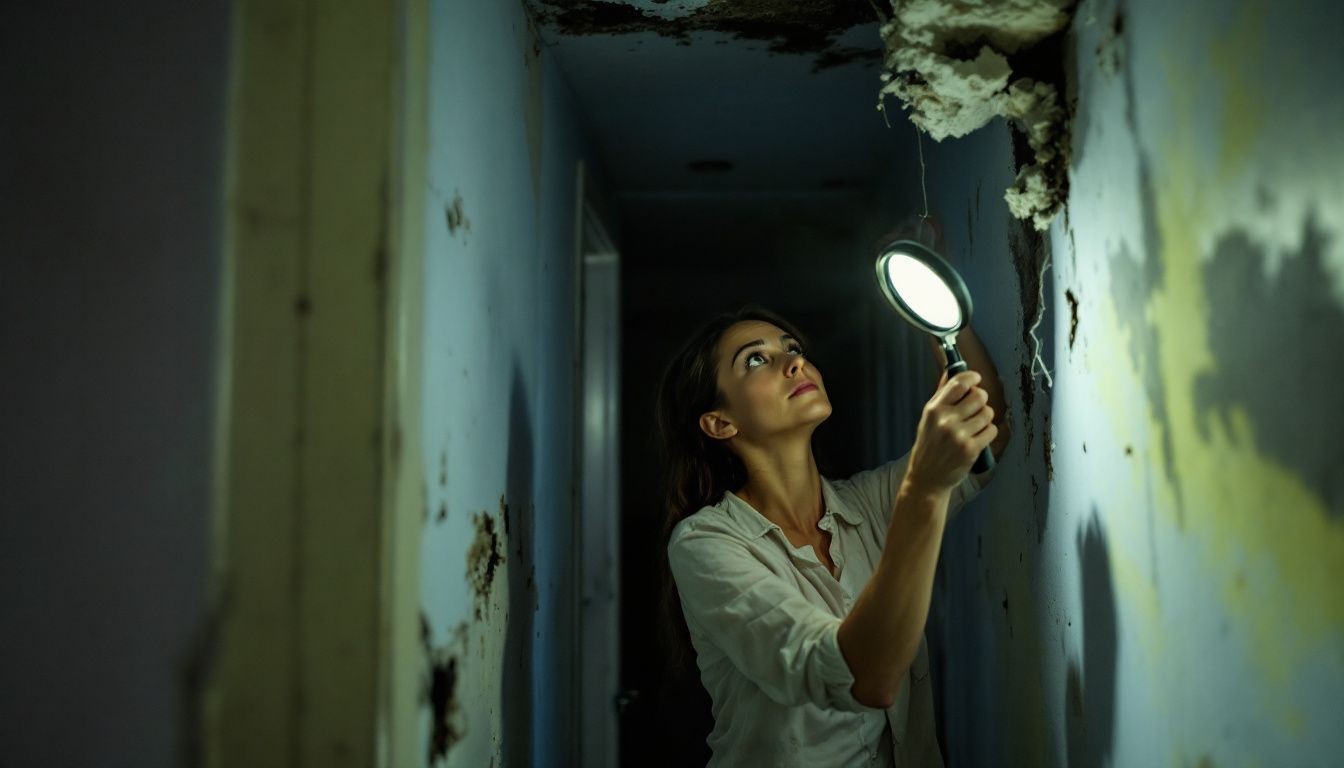
Artex Ceilings and Asbestos: What Every Homeowner Must Know Before Touching Them
That swirling, textured ceiling in your 1970s semi-detached might look like a straightforward weekend job — scrape it off, skim it flat, done. But if your home was built or renovated before 2000, knowing how to get rid of artex ceiling safely is far more involved than hiring a plasterer and getting stuck in.
Artex and similar textured coatings applied before the mid-1980s frequently contained asbestos fibres. Disturbing them without proper checks can release those fibres into the air your family breathes. This is not scaremongering — it is a genuine legal and health issue that catches thousands of UK homeowners off guard every year.
Why Artex Ceilings Can Be Dangerous
Artex was the go-to decorative coating for ceilings and walls throughout the 1960s, 70s, and into the 1980s. It was cheap, quick to apply, and hid a multitude of plastering sins. The problem is that many formulations used during this period contained chrysotile (white asbestos) as a binding and strengthening agent.
When artex is in good condition and left undisturbed, the risk is relatively low — the fibres are locked within the matrix of the coating. The danger comes when you sand it, scrape it, drill through it, or apply steam to it.
All of these are methods commonly used to remove textured coatings, and all of them can release microscopic asbestos fibres into the air. Once airborne, those fibres can be inhaled and lodge permanently in lung tissue. Asbestos-related diseases — including mesothelioma and asbestosis — can take decades to develop after exposure, and there is no safe level of asbestos fibre inhalation.
How to Tell If Your Artex Contains Asbestos
You cannot tell by looking at it. Artex with and without asbestos looks identical — the same swirled patterns, the same chalky texture, the same off-white finish.
Age is your first indicator. If your home was built or last decorated before 1985, the likelihood of asbestos in the artex is significantly higher. Coatings applied between 1985 and 1999 carry a lower but still real risk.
The only reliable way to confirm whether your artex contains asbestos is through laboratory analysis of a physical sample. The process works like this:
- A qualified surveyor takes a small sample from the ceiling
- The sample is sent to an accredited laboratory
- Results confirm the presence or absence of asbestos fibres
Do not attempt to take a sample yourself if you suspect asbestos. Even collecting a sample incorrectly can release fibres. A professional surveyor will use the correct PPE and containment procedures to do this safely.
Our sample analysis service provides accredited laboratory results so you know exactly what you are dealing with before any work begins.
How to Get Rid of Artex Ceiling Safely: Your Options Explained
Once you have confirmed whether asbestos is present — or if your property is old enough that you cannot rule it out — you have several options. The right one depends on the test results, the condition of the ceiling, and your budget.
Option 1: Overboard (Cover It)
If the artex is in good condition and testing has confirmed low risk or no asbestos, the simplest approach is to overboard the ceiling. This means fixing new plasterboard directly over the existing textured surface, then skimming it smooth.
This approach is widely used by builders and plasterers because it is quick, cost-effective, and avoids any disturbance of the existing coating. It does add a small amount of weight to the ceiling, so a structural check is sensible for older properties, but it is generally the preferred solution for domestic ceilings.
Option 2: Encapsulation
If asbestos is confirmed but the artex is in stable condition, encapsulation is another legitimate option. This involves applying a specialist sealant or heavy-duty paint over the artex, which binds the fibres and prevents them from becoming airborne.
Encapsulation does not remove the asbestos — it manages it in place. This is a valid, HSE-recognised approach for asbestos-containing materials that are not deteriorating. The ceiling must be monitored periodically to ensure the encapsulant remains intact, and any future work on the ceiling will still require professional assessment.
Option 3: Professional Removal
If the artex is damaged, deteriorating, or you need full removal for structural reasons, asbestos removal by a licensed contractor is the only legal and safe route when asbestos is confirmed present.
Licensed removal involves:
- Isolating the work area with sealed plastic sheeting
- Setting up negative air pressure units with HEPA filtration to prevent fibre spread
- Removing the artex using controlled wet methods to suppress dust
- Double-bagging all waste in clearly labelled asbestos waste sacks
- Carrying out a four-stage clearance procedure including air testing before the area is handed back
- Disposing of waste at a licensed hazardous waste facility
This work must be carried out by a contractor licensed by the Health and Safety Executive (HSE) under the Control of Asbestos Regulations. Attempting DIY removal of confirmed asbestos-containing artex is illegal and puts everyone in the property at serious risk.
The Legal Position for UK Homeowners
Many homeowners assume that asbestos regulations only apply to commercial properties or landlords. This is a common and potentially costly misunderstanding.
The Control of Asbestos Regulations place duties on anyone who manages or works on a building. For domestic properties, the key points are:
- You cannot legally hire an unlicensed contractor to remove asbestos-containing artex
- DIY removal of asbestos-containing materials is not permitted and carries the risk of prosecution
- Asbestos waste must be disposed of at a licensed hazardous waste site — it cannot go in a skip or general waste bin
- Records of asbestos surveys and removal work should be retained
HSE guidance under HSG264 sets out the standards for asbestos surveying. Any survey carried out before intrusive work should meet these standards to ensure it is thorough and legally defensible.
Landlords have additional duties. If you rent out a property, you have a legal obligation to manage asbestos risks and inform contractors of any known asbestos-containing materials before they begin work. An management survey is the appropriate starting point for landlords who need to understand and document asbestos risk across their property portfolio.
What Happens If You Skip the Survey and Just Start Work?
It is tempting to assume that because your ceiling looks fine, there is no risk. But the consequences of getting this wrong are serious and long-lasting.
If a contractor disturbs asbestos-containing artex without prior identification, fibres can spread throughout the property via the ventilation system, on clothing, and through air movement. Decontaminating a property after uncontrolled asbestos release is expensive, disruptive, and deeply distressing — costs can run into tens of thousands of pounds.
Beyond the financial impact, there are genuine health consequences for anyone in the property during or after the disturbance. Children and elderly occupants are particularly vulnerable.
From a legal standpoint, if you knowingly allowed work to proceed without an asbestos survey on a pre-2000 property, you could face enforcement action from the HSE. Contractors who disturb asbestos without the correct licences and procedures also face significant penalties.
Getting an Asbestos Survey Before Any Ceiling Work
The correct starting point for anyone wondering how to get rid of artex ceiling in a pre-2000 property is to commission a professional asbestos survey. Specifically, you need a survey designed for the area where work will take place.
A refurbishment survey, as defined under HSG264, involves intrusive inspection of the materials that will be disturbed. It is more thorough than a standard management survey and is specifically designed to identify all asbestos-containing materials prior to refurbishment work.
A good survey will:
- Identify all suspect materials in the work area
- Take samples for laboratory analysis
- Assess the condition and risk level of any asbestos found
- Provide a written report with clear recommendations
- Give your contractor the information needed to plan work safely
If the scope of work is more extensive — for example, a full property renovation or planned demolition — a demolition survey may be required instead. Your surveyor will advise on the correct type based on the scale of the project.
If you are based in the capital, an asbestos survey London can be arranged quickly, with results typically available within a few working days of the laboratory receiving samples. For those in the North West, an asbestos survey Manchester provides the same thorough, accredited service. And if you are in the Midlands, an asbestos survey Birmingham gives you a clear picture of what is in your ceiling before any plasterer or builder sets foot on a ladder.
Choosing the Right Contractor for Artex Removal
If your survey confirms asbestos in the artex, you need a licensed asbestos removal contractor. Not a general builder. Not a plasterer. A contractor specifically licensed by the HSE to handle and remove asbestos-containing materials.
When choosing a contractor, check the following:
- HSE licence: Verify the contractor holds a current HSE asbestos removal licence. You can check this on the HSE website.
- Insurance: Ensure they hold adequate public liability insurance that covers asbestos work.
- Method statement and risk assessment: Any reputable contractor will provide these before work begins.
- Clearance certificate: After removal, a four-stage clearance should be carried out by an independent analyst — not the removal contractor themselves.
- Waste transfer note: You should receive documentation confirming the asbestos waste has been disposed of at a licensed facility.
Be wary of contractors who offer to remove artex cheaply without asking about an asbestos survey. This is a clear red flag that they are not following correct procedures.
After the Artex Is Gone: Making Good
Once the artex has been safely removed and the clearance certificate issued, the ceiling can be made good in the usual way. A plasterer can apply a fresh skim coat to create a smooth, flat surface ready for decoration.
If you chose the overboarding route, the new plasterboard will be skimmed directly, giving you an equally clean result without any disturbance of the original material. Either way, the end result is the same: a smooth ceiling, a safer home, and the peace of mind that comes from knowing the work was done correctly and legally.
The process does not need to be complicated or drawn out. With the right survey in place and a licensed contractor confirmed, most domestic artex removal projects are completed within a matter of days. The survey and testing stage is where patience pays off — rushing past it is where homeowners get into serious trouble.
Ready to Deal With Your Artex Ceiling the Right Way?
Supernova Asbestos Surveys has completed over 50,000 surveys across the UK. Whether you need a refurbishment survey before ceiling work, sample analysis to confirm what is in your artex, or guidance on the next steps after a positive result, our team is ready to help.
Call us on 020 4586 0680 or visit asbestos-surveys.org.uk to book your survey or request a quote. Do not start work on that ceiling until you know what is in it.
Frequently Asked Questions
Can I remove artex myself if I think it does not contain asbestos?
Unless you have a laboratory-confirmed test result proving no asbestos is present, you should not attempt DIY removal of artex in a pre-2000 property. Even if you are confident the property is newer, it is worth confirming before starting. If asbestos is confirmed, DIY removal is illegal under the Control of Asbestos Regulations. If no asbestos is found, a plasterer or specialist can remove it safely using conventional methods.
How much does it cost to get artex tested for asbestos?
The cost of an asbestos survey including laboratory sample analysis varies depending on the size of the property and the number of samples required. A refurbishment survey for a domestic ceiling area typically starts from a few hundred pounds. This is a small cost compared to the expense and disruption of dealing with uncontrolled asbestos release, which can run into tens of thousands of pounds.
Is artex still being used in new builds?
Artex and similar textured coatings are rarely used in modern construction. The primary concern is properties built or decorated before 2000, particularly those where work was carried out before 1985. If your property was built after 2000, the risk of asbestos in textured coatings is negligible — but if you are uncertain about the age of any coating, testing remains the only way to be sure.
What is the difference between a refurbishment survey and a management survey for artex work?
A management survey is designed to locate and assess asbestos-containing materials that could be disturbed during normal occupation and routine maintenance. A refurbishment survey is more intrusive and is specifically required before any renovation or improvement work — including ceiling removal. If you are planning to remove or disturb artex, a refurbishment survey is the correct type to commission, as it will involve sampling the materials that will actually be worked on.
Can I sell my house if it has asbestos artex?
Yes — having asbestos artex in a property does not prevent you from selling it. However, you are required to disclose known asbestos-containing materials to buyers, and any survey reports or removal records should be passed on as part of the conveyancing process. Many buyers will request an asbestos survey before exchange, particularly on pre-2000 properties. Having a current survey report available can actually speed up the sale by giving buyers confidence that the risk has been properly assessed.