Why You Need an Asbestos Survey Before Renovation Work Begins
Knocking through a wall, ripping up old floor tiles, or stripping back a ceiling — these are the moments when asbestos becomes genuinely dangerous. If your property was built before 2000, there is a real possibility that asbestos-containing materials are hidden within its structure, and disturbing them without knowing they’re there can have devastating consequences.
Commissioning an asbestos survey before renovation is not just a sensible precaution — in many cases, it is a legal requirement. Here is everything you need to know before a single tool is picked up.
What Is an Asbestos Survey and What Does It Involve?
An asbestos survey is a structured inspection of a building carried out by a trained professional. Its purpose is to locate, identify, and assess any materials that contain or are likely to contain asbestos.
The surveyor examines accessible and, depending on the survey type, inaccessible areas of the building. They take physical samples of suspect materials, which are then sent to an accredited laboratory for analysis. The results are compiled into a formal report that records the location, type, and condition of any asbestos found, along with a risk rating and recommended actions.
This report forms the foundation of any safe renovation plan. Without it, builders and tradespeople are working blind.
Which Type of Survey Do You Need Before Renovation?
There are three main types of asbestos survey, and choosing the right one matters enormously when renovation work is planned. The type of survey you need depends on the scale and nature of the work being carried out.
Management Survey
A management survey is designed for buildings that are in normal use. It identifies asbestos-containing materials in areas that are likely to be disturbed during routine maintenance or occupancy. It does not involve significant intrusion into the building fabric.
This type of survey is appropriate for ongoing monitoring and compliance, but it is not sufficient on its own if you are planning substantial renovation work. It will not locate asbestos hidden behind walls, beneath floors, or inside structural elements.
Refurbishment Survey
Before any significant renovation work, you need a refurbishment survey. This is a more intrusive inspection that involves accessing areas which will be disturbed during the planned works. Surveyors may open up wall cavities, lift floor coverings, and inspect areas above suspended ceilings.
The refurbishment survey must be completed before work begins in the affected area. It is specifically designed to find all asbestos that could be disturbed, giving contractors the information they need to work safely or arrange for removal before the project starts.
This is the survey most homeowners and property managers need when planning building work on a pre-2000 property.
Demolition Survey
If the building or a significant portion of it is being demolished, a demolition survey is required. This is the most thorough and intrusive type of survey, designed to locate all asbestos-containing materials throughout the entire structure before demolition begins.
A demolition survey often involves destructive investigation techniques and must be completed before any demolition contractor begins work. The HSE is clear that no demolition should proceed on a pre-2000 building without this survey being undertaken first.
Where Is Asbestos Commonly Found in Homes and Buildings?
Asbestos was used extensively in UK construction from the 1950s through to 1999, when it was finally banned. It was valued for its fire resistance, durability, and insulating properties, which means it was incorporated into a remarkably wide range of building materials.
When planning a renovation, the following areas deserve particular attention:
- Ceiling tiles and textured coatings — Artex and similar textured ceiling finishes applied before 2000 frequently contain chrysotile (white asbestos)
- Floor tiles and adhesives — Vinyl floor tiles and the black bitumen adhesive used to fix them are a common source
- Pipe lagging and boiler insulation — Older heating systems are a high-risk area, particularly in commercial and industrial properties
- Insulating board — Used in partition walls, ceiling panels, fire doors, and around boilers and fireplaces
- Roof sheeting and guttering — Asbestos cement was widely used in garages, outbuildings, and flat roofs
- Soffit boards and fascias — External asbestos cement boards remain on many pre-2000 properties
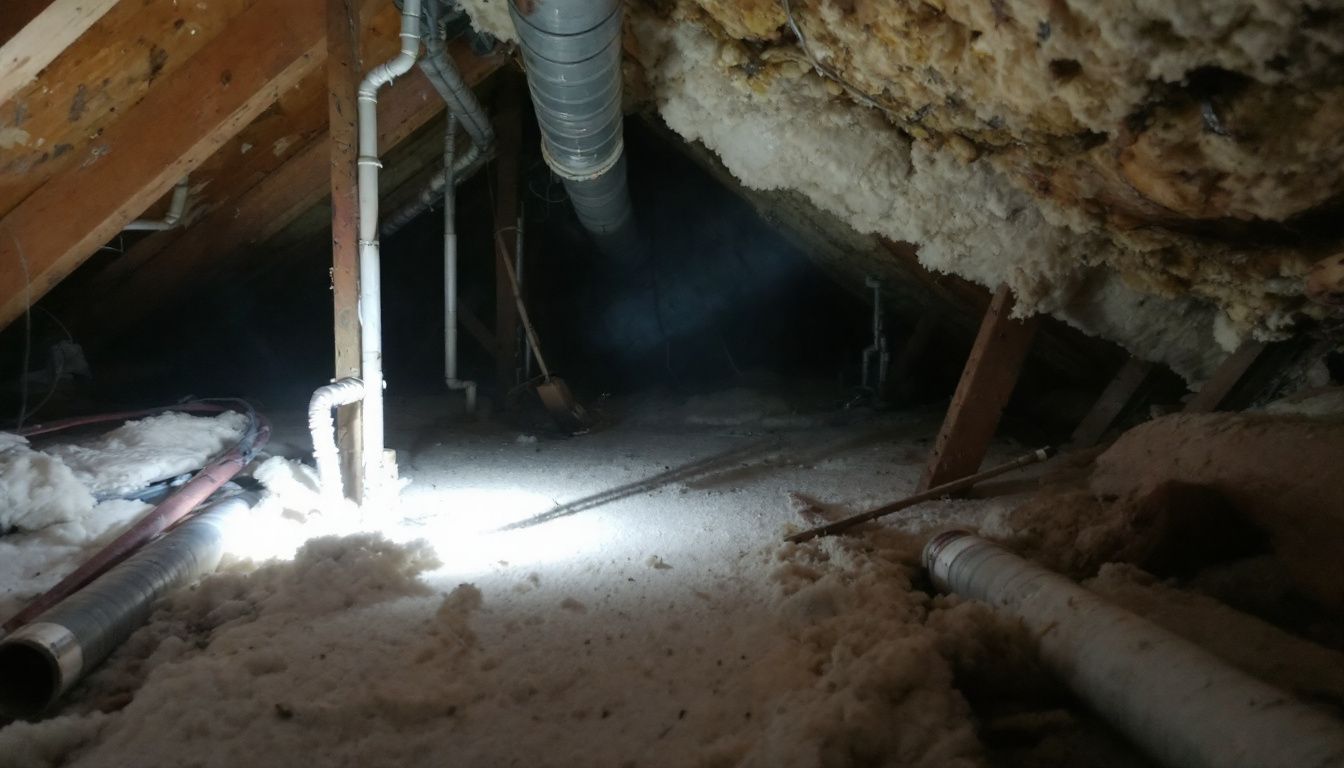
- Loose fill insulation — Found in roof spaces and cavity walls, this is among the most hazardous forms
The challenge is that many of these materials look completely ordinary. Without professional asbestos testing, there is no reliable way to identify them by sight alone.
The Health Risks of Disturbing Asbestos During Renovation
Asbestos fibres are microscopic. When asbestos-containing materials are cut, drilled, sanded, or broken, those fibres become airborne. They are invisible to the naked eye, and they can remain suspended in the air for hours.
Once inhaled, asbestos fibres lodge in the lungs and cannot be expelled by the body. Over time — often decades later — they cause serious and frequently fatal diseases:
- Mesothelioma — A cancer of the lining of the lungs, abdomen, or heart, almost exclusively caused by asbestos exposure. It is incurable.
- Asbestosis — Scarring of the lung tissue that causes progressive breathlessness and significantly reduces quality of life
- Lung cancer — Asbestos exposure substantially increases the risk, particularly in smokers
- Pleural thickening — Thickening of the membrane surrounding the lungs, causing breathlessness
The long latency period — symptoms may not appear for 20 to 40 years after exposure — means people often do not connect their illness to a renovation project carried out decades earlier. This delay also makes it easy to underestimate the real risk during the work itself.
Renovation workers, including plumbers, electricians, carpenters, and decorators, are among the trades most frequently exposed to asbestos. Homeowners carrying out DIY work are equally at risk.
The Legal Position: When Is an Asbestos Survey Required by Law?
The Control of Asbestos Regulations set out clear legal duties for those responsible for non-domestic premises. Under these regulations, the duty holder — typically the building owner or employer — must manage asbestos in the building and ensure that anyone who might disturb it is made aware of its location and condition.
For refurbishment and demolition work, the regulations are explicit: a suitable survey must be carried out before work begins. This applies to commercial, industrial, and public buildings. For domestic properties, the legal position is slightly different — private homeowners are not subject to the same duty to manage — but contractors working in domestic settings are still bound by health and safety law and must take reasonable steps to identify asbestos before work that could disturb it.
In practical terms, this means any reputable contractor should be asking about asbestos surveys before starting work on a pre-2000 home. If they are not, that is a warning sign.
The HSE’s guidance document HSG264 provides the technical standard for asbestos surveys and sets out what a competent surveyor must do. Surveys must be carried out by appropriately trained and accredited professionals — not by the contractor doing the building work.
What Happens If You Skip the Survey?
The consequences of proceeding without an asbestos survey before renovation can be severe, and they fall into three distinct categories.
Health Consequences
The most serious risk is to human health. Workers and occupants can be exposed to asbestos fibres without knowing it, with potentially fatal long-term consequences. The diseases caused by asbestos exposure are irreversible — there is no treatment that reverses the damage once fibres are embedded in lung tissue.
Legal and Financial Penalties
Failing to comply with the Control of Asbestos Regulations can result in prosecution by the HSE, substantial fines, and in serious cases, imprisonment. Duty holders who knowingly allow workers to be exposed to asbestos face significant personal liability.
If asbestos is discovered mid-project — because no survey was done beforehand — work must stop immediately. An emergency survey and subsequent removal can cost many times more than a planned survey would have. Insurance policies may also be invalidated if legal requirements were not followed.
Project Delays and Cost Overruns
Discovering asbestos halfway through a renovation is a contractor’s nightmare. The site must be secured, a specialist survey commissioned, and licensed removal arranged before any other work can resume. This can add weeks to a project timeline and thousands of pounds to the budget — all of which could have been avoided with an upfront survey.
DIY Renovation and Asbestos: A Particular Risk
Homeowners tackling their own renovation work are in a particularly vulnerable position. Unlike professional contractors, they may have no training in recognising asbestos-containing materials, no access to protective equipment, and no understanding of the legal framework that applies.
Common DIY tasks that carry significant asbestos risk include:
- Drilling into walls or ceilings to hang shelves, radiators, or light fittings
- Sanding or scraping textured coatings such as Artex
- Removing old floor tiles or carpet underlay
- Breaking through walls to create openings or extensions
- Working in roof spaces or around old boilers and pipework
If your home was built before 2000, getting an asbestos survey before renovation work — even relatively minor work — is the responsible approach. The cost of a professional survey is modest compared to the potential consequences of exposure.
How to Choose a Qualified Asbestos Surveyor
Not all asbestos surveys are equal. To ensure the survey is legally compliant and technically reliable, you should use a surveyor who meets the following criteria:
- UKAS accreditation — The survey organisation should hold United Kingdom Accreditation Service (UKAS) accreditation for asbestos surveying
- P402 qualified surveyors — Individual surveyors should hold the relevant BOHS (British Occupational Hygiene Society) qualification for building surveys and bulk sampling
- Independent laboratory analysis — Samples should be analysed by a UKAS-accredited laboratory, not assessed in the field
- Clear, detailed reporting — The survey report should include an asbestos register, photographs, sample results, risk assessments, and recommended actions
Be cautious of any surveyor who offers unusually low prices, cannot demonstrate accreditation, or promises same-day results without laboratory analysis. Cutting corners on an asbestos survey is not a saving — it is a liability.
What to Expect During the Survey Process
Understanding what happens during a survey helps you prepare properly and ensures the surveyor can do their job effectively.
Before the survey, you should:
- Provide the surveyor with any existing asbestos information for the property, including previous survey reports
- Give clear access to all areas of the building, including loft spaces, basements, and service areas
- Move furniture or stored items away from areas the surveyor will need to inspect
- Inform the surveyor of the planned scope of renovation work so they can focus their inspection appropriately
During the survey, the surveyor will visually inspect the property, take physical samples of suspect materials, and record their findings. For a refurbishment survey, this will involve some minor intrusive investigation — small holes may be made in walls or ceilings, which will be made good afterwards.
After the survey, you will receive a written report, typically within a few working days. This report should be shared with your contractor and kept on file as part of the property’s asbestos management records. If asbestos is identified in areas that will be disturbed, it must be removed by a licensed contractor before renovation work proceeds. Further information on the asbestos testing process can help you understand what the laboratory analysis involves and what the results mean.
Supernova Asbestos Surveys: Expert Surveys Nationwide
Supernova Asbestos Surveys has completed over 50,000 surveys across the UK, working with homeowners, property managers, developers, and contractors. Our UKAS-accredited surveyors carry out management, refurbishment, and demolition surveys to the standards set out in HSG264, with clear reporting and fast turnaround times.
We operate across the country, including dedicated teams for asbestos survey London, asbestos survey Manchester, and asbestos survey Birmingham — as well as hundreds of other locations nationwide.
If you are planning renovation work on a pre-2000 property, do not start without the right survey in place. Call us on 020 4586 0680 or visit asbestos-surveys.org.uk to book your survey or get a quote.
Frequently Asked Questions
Do I legally need an asbestos survey before renovating my home?
For domestic properties, private homeowners are not directly subject to the duty to manage asbestos under the Control of Asbestos Regulations. However, any contractor you hire is bound by health and safety law and must take reasonable steps to identify asbestos before carrying out work that could disturb it. In practice, a refurbishment survey is strongly recommended — and often required by contractors — before any significant work on a pre-2000 home.
What type of asbestos survey do I need for a home renovation?
For most renovation projects, you will need a refurbishment survey. This is a more intrusive inspection than a standard management survey and is designed to locate asbestos in the specific areas that will be disturbed by the planned work. If the building is being demolished, a demolition survey is required instead.
How much does an asbestos survey cost?
Survey costs vary depending on the size of the property, the type of survey required, and the extent of the planned works. A refurbishment survey for a typical domestic property is generally a modest investment relative to the cost of the renovation itself — and far less expensive than the emergency removal and project delays that result from discovering asbestos mid-project. Contact Supernova Asbestos Surveys for a tailored quote.
How long does an asbestos survey take?
The physical inspection of a typical domestic property usually takes between one and three hours, depending on its size and the scope of the survey. Laboratory analysis of samples typically takes two to five working days, after which the surveyor will issue the formal report. Faster turnaround options are available where projects are time-sensitive.
Can I carry out DIY renovation work if asbestos is found?
No. If asbestos-containing materials are identified in areas where you plan to work, those materials must be either left undisturbed or removed by a licensed asbestos removal contractor before any renovation work begins. Attempting to remove or work around asbestos yourself is illegal in most circumstances and poses serious health risks. Your survey report will advise on the appropriate course of action for each material identified.