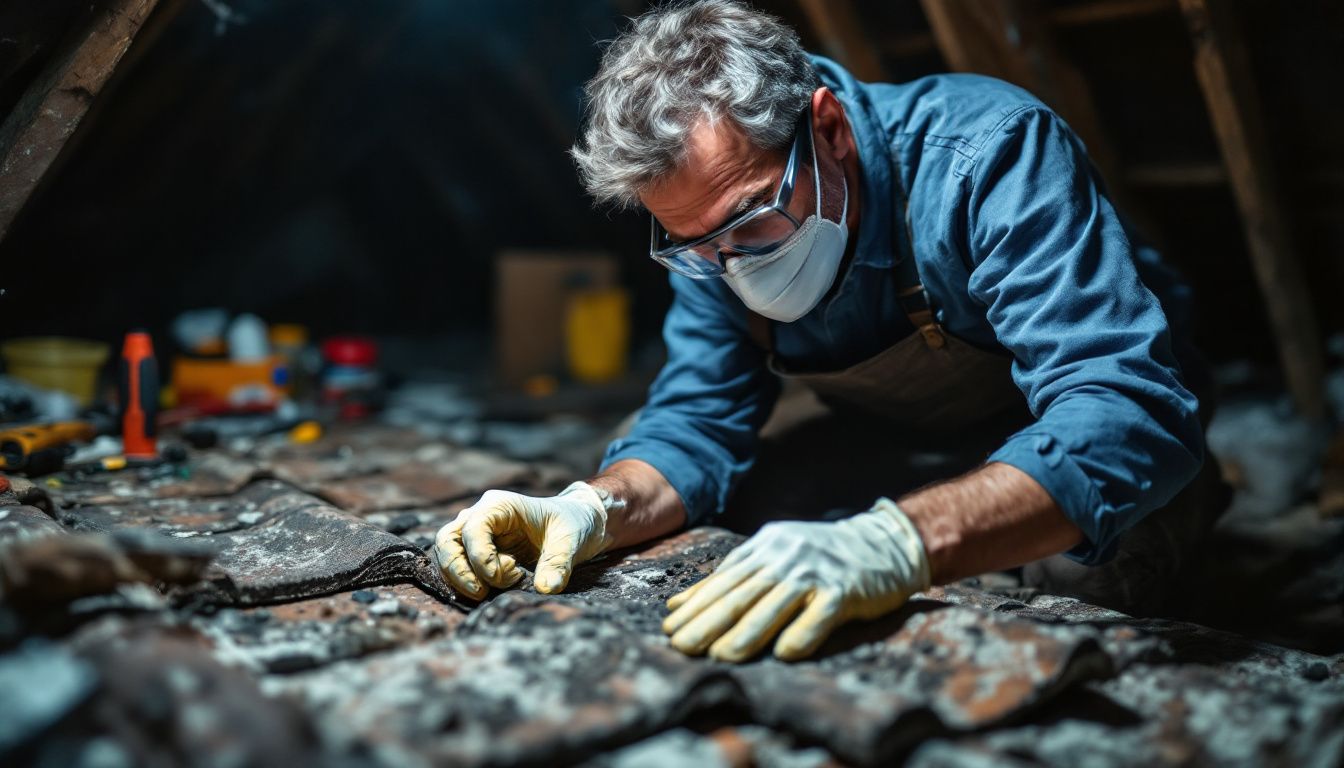
Think You Might Have Asbestos? Here’s How to Test for It Safely
If your home was built before 2000, there’s a real chance asbestos-containing materials are lurking somewhere inside it. The problem is, you can’t tell by looking. Asbestos fibres are invisible to the naked eye, and many of the materials that contain them look completely ordinary — textured ceilings, floor tiles, pipe lagging, even old bath panels.
Knowing how to test for asbestos before you pick up a drill or start pulling down walls could be the difference between a safe renovation and a serious health risk. This post walks you through everything you need to know — from spotting suspect materials to understanding your testing options and what the results mean for your project.
Why Asbestos Testing Matters Before Any DIY Work
Asbestos was used extensively in UK construction right up until it was fully banned in 1999. That means millions of homes, flats, garages, and outbuildings could still contain it. The fibres themselves are harmless if left undisturbed — but the moment you start cutting, sanding, or drilling into asbestos-containing materials, those fibres become airborne.
Once inhaled, asbestos fibres lodge in the lungs and can cause mesothelioma, asbestosis, and lung cancer — diseases that can take decades to develop but are often fatal. There is no safe level of exposure.
That’s why testing before you start work is not just sensible — it’s essential. The good news is that asbestos testing is straightforward when done correctly, and it gives you clear answers about what you’re dealing with before any work begins.
Where Asbestos Hides in Older UK Homes
Before you can test for asbestos, you need to know where to look. In homes built before 2000, asbestos-containing materials can turn up in a surprising number of places — many of which look completely unremarkable.
Common Locations to Check
- Textured coatings — Artex ceilings and walls applied before 2000 frequently contained asbestos. Swirled, stippled, or patterned finishes are the ones to watch.
- Floor tiles — Vinyl floor tiles from the 1950s to 1980s, particularly 23cm or 9-inch square tiles with black adhesive underneath, may contain asbestos in the tile or the backing.
- Pipe lagging — White or grey wrapping around pipes in airing cupboards, boiler rooms, and under floors was commonly made from asbestos-based materials.
- Insulation boards — Found behind fuse boxes, around boilers, and as fire protection in older properties. These can look like ordinary boards but may be highly friable.
- Cement sheets — Corrugated roofing and flat sheets on garages, sheds, and outbuildings are often asbestos cement, particularly if they were installed before the late 1990s.
- Roof gutters and downpipes — Older grey guttering and downpipes on pre-1990 buildings can be asbestos cement.
- Bath panels and water tanks — Older properties sometimes used asbestos cement for these components.
- Fire doors — Asbestos was used as fire-resistant infill in older internal doors.
- Sprayed coatings — Applied to structural steelwork, beams, and ceilings for fire and acoustic protection. Often found in converted commercial properties.
- Loft insulation — Loose-fill insulation in homes built before the mid-1980s may include asbestos fibres.
If your property falls within the pre-2000 bracket, treat any of these materials as suspect until proven otherwise.
How to Test for Asbestos: Your Options Explained
There are two main routes for testing: professional laboratory analysis carried out by a qualified surveyor, or a DIY testing kit. Both involve taking a sample of the suspect material and having it analysed — but they differ significantly in accuracy, legal standing, and safety.
Option 1: Professional Asbestos Survey and Testing
A professional asbestos survey is the most reliable way to find out whether asbestos is present in your property. A qualified surveyor will inspect the building, identify suspect materials, take samples safely using proper containment procedures, and send those samples to a UKAS-accredited laboratory for analysis.
Results from a professional survey carry legal weight. If you’re a landlord, employer, or managing agent, you may have a legal duty under the Control of Asbestos Regulations to hold a current asbestos management plan — and that requires professional assessment.
For homeowners planning significant renovation work, a professional survey gives you documentation that protects you, your contractors, and your insurer. There are two types of professional survey:
- Management survey — Used to locate and assess asbestos-containing materials that could be disturbed during normal occupation or minor maintenance. Suitable for most residential and commercial properties.
- Demolition survey — Required before any major renovation, extension, or demolition work. More intrusive, as it involves accessing all areas that could be disturbed by the planned work.
Professional testing typically returns results within 24 to 48 hours of sample submission. Surveyors follow HSG264 guidance — the HSE’s definitive document on asbestos surveying — to ensure sampling and analysis meet the required standard.
Option 2: DIY Asbestos Testing Kit
A DIY asbestos testing kit allows you to collect a sample yourself and send it to a laboratory for analysis. These kits are widely available and can be a reasonable starting point for homeowners who want a quick answer about a specific material.
However, there are important limitations to understand:
- Collecting the sample yourself carries risk. Even a small disturbance of asbestos-containing material can release fibres. If you don’t use the correct technique — dampening the material, wearing appropriate PPE, double-bagging the sample — you could expose yourself and others.
- DIY kits only test the specific sample you’ve collected. They won’t identify asbestos elsewhere in the property.
- The results carry no legal standing for regulatory or insurance purposes.
- If the material is in poor condition or in a high-risk location, sampling it yourself is not advisable regardless of the kit instructions.
A testing kit can be useful for testing a single, accessible, undamaged material where professional access is impractical. For anything more complex, or where results will inform a major project, professional testing is the right choice.
How to Take a Sample Safely If You’re Using a DIY Kit
If you decide to use a home testing kit, safety must come first. Follow these steps carefully — cutting corners when sampling suspect asbestos-containing materials is not worth the risk.
Equipment You’ll Need
- FFP3-rated disposable face mask (not a standard dust mask)
- Disposable coveralls
- Nitrile or rubber gloves
- Safety goggles
- Spray bottle with water and a few drops of washing-up liquid
- Sharp knife or chisel
- Sealable plastic bags (two per sample)
- Duct tape
Step-by-Step Sampling Process
- Put on all PPE before you approach the material. Everything should be on before you get close.
- Dampen the surface of the suspect material with your water and detergent spray. This helps suppress any fibres that might be released.
- Carefully cut or scrape a small sample — roughly the size of a 50p coin is sufficient. Work slowly and avoid creating dust.
- Place the sample immediately into the first sealable plastic bag and seal it. Then place that bag into a second bag and seal that too.
- Wipe the area where you took the sample with a damp cloth, then seal the cloth in a separate bag.
- Remove your PPE carefully, turning coveralls inside out as you remove them to avoid shaking off any fibres. Dispose of PPE in a sealed bag.
- Wash your hands and face thoroughly.
- Label the sample bag and send it to the laboratory as instructed in your kit.
Never dry-scrape or sand a suspect material. Never take samples from materials that are visibly damaged or crumbling — those should be assessed by a professional before anyone goes near them.
Understanding Your Test Results
Whether you’ve used a professional surveyor or a DIY kit, the laboratory will return one of three results:
- No asbestos detected — The sample did not contain asbestos fibres. You can proceed with your work, though bear in mind that only the tested material has been cleared.
- Asbestos present — good condition — The material contains asbestos but is not damaged or friable. In many cases, the recommendation will be to leave it in place, monitor it, and manage it rather than remove it immediately.
- Asbestos present — poor condition — The material is damaged, deteriorating, or likely to be disturbed. This usually requires professional remediation before any other work proceeds.
If asbestos is confirmed, don’t panic. The presence of asbestos doesn’t automatically mean danger — it depends on the type, condition, and whether it’s likely to be disturbed. A professional surveyor can advise you on the appropriate next steps.
What Happens After a Positive Test Result
A positive result for asbestos means your options are broadly: leave it in place and manage it, encapsulate it, or have it removed. The right choice depends on the type of asbestos, its condition, and what you’re planning to do with the property.
Leaving Asbestos in Place
If the material is in good condition and won’t be disturbed, leaving it in place is often the safest option. Asbestos that isn’t damaged or disturbed doesn’t release fibres. You should document its location, monitor its condition regularly, and make sure anyone working in the property knows it’s there.
Encapsulation
Encapsulation involves sealing the asbestos-containing material with a specialist coating or covering it with another material to prevent fibre release. This is sometimes used for textured coatings or insulation boards that are in reasonable condition. It’s not a permanent solution and still requires ongoing monitoring.
Removal
If the material is in poor condition, in an area that will be disturbed by renovation work, or if you simply want it gone, asbestos removal must be carried out correctly. For most types of asbestos-containing material, this means using a licensed contractor.
Under the Control of Asbestos Regulations, certain high-risk materials — including sprayed coatings, pipe lagging, and asbestos insulation board — can only be removed by a contractor licensed by the HSE. Unlicensed removal of these materials is illegal.
For lower-risk materials such as asbestos cement sheets or floor tiles in good condition, a licensed contractor is not always legally required — but it is still strongly recommended. Improper removal can expose you, your family, and your neighbours to serious risk.
Legal Duties Around Asbestos Testing in the UK
For private homeowners carrying out their own DIY work, the legal requirements around asbestos are less prescriptive — but the health risks are identical. The Control of Asbestos Regulations place a specific duty to manage asbestos on those who own or manage non-domestic premises.
If you’re a landlord, this applies to you. For residential landlords, the duty to manage includes identifying whether asbestos is present in common areas, assessing its condition, and putting a management plan in place. Failure to do so can result in enforcement action by the HSE.
For anyone commissioning refurbishment or demolition work on any building type, a refurbishment and demolition survey is required before work begins. Contractors have their own duties under the regulations and cannot proceed with work that might disturb asbestos without knowing the asbestos status of the area.
HSE guidance — particularly HSG264 — sets out the standards for surveying and sampling in detail. Any professional you engage should be working to this standard. If you want to understand more about what professional asbestos testing involves and what to expect from the process, it’s worth reviewing what a full survey covers before you book.
Asbestos Testing Across the UK — We Cover Nationwide
Supernova Asbestos Surveys provides professional asbestos testing and surveying services across the whole of the UK. Whether you’re a homeowner preparing for a renovation, a landlord meeting your legal obligations, or a contractor who needs asbestos clearance before work begins, our qualified surveyors can help.
We operate in every major city and region. If you’re based in the capital, our team carries out asbestos survey London work across all boroughs. For clients in the North West, we provide asbestos survey Manchester services covering the wider Greater Manchester area. And in the West Midlands, our asbestos survey Birmingham team handles everything from domestic properties to large commercial sites.
With over 50,000 surveys completed nationwide, we have the experience and accreditation to give you reliable results quickly. Our laboratories are UKAS-accredited, our surveyors follow HSG264 guidance, and we work to turnaround times that keep your project moving.
To book a survey or request a quote, call us on 020 4586 0680 or visit asbestos-surveys.org.uk. Don’t start work until you know what you’re dealing with.
Frequently Asked Questions
How do I know if I need to test for asbestos before starting DIY work?
If your property was built or refurbished before 2000, you should treat any suspect materials as potentially containing asbestos before drilling, cutting, or demolishing anything. This includes textured ceilings, old floor tiles, pipe lagging, and insulation boards. Testing before you start work is the only way to get a definitive answer.
Can I test for asbestos myself at home?
You can use a DIY asbestos testing kit to collect a sample and send it to a laboratory. However, sampling carries risk — disturbing asbestos-containing material can release fibres. DIY kits are only suitable for single, accessible, undamaged materials. For anything more extensive, or where results carry legal weight, professional testing is the right approach.
How long does asbestos testing take to get results?
Professional laboratory analysis typically returns results within 24 to 48 hours of the sample being submitted. Some laboratories offer same-day or priority turnaround for urgent cases. DIY kit timescales depend on the specific service you use and how quickly the sample reaches the lab.
What should I do if asbestos is found in my home?
Finding asbestos doesn’t automatically mean it needs to be removed. If the material is in good condition and won’t be disturbed, leaving it in place and monitoring it is often the safest option. If it’s damaged or in an area affected by planned work, you’ll need to arrange professional remediation — either encapsulation or removal by a licensed contractor — before proceeding.
Is asbestos testing a legal requirement for homeowners?
For private homeowners doing their own DIY work, there is no specific legal obligation to test for asbestos — but the health risks are real regardless. For landlords, the Control of Asbestos Regulations impose a duty to manage asbestos in non-domestic premises and common areas. For any refurbishment or demolition project, a professional survey is required before work begins, regardless of the building type.