
Miss an issue during asbestos inspections and the fallout can be immediate: unsafe maintenance work, exposed contractors, delayed projects, enforcement action and a flood of avoidable costs. In commercial buildings, asbestos is not just a historic problem sitting quietly in the fabric of the property. It is a live compliance issue that needs clear ownership and regular review.
If you own, manage, lease or maintain non-domestic premises, the question is rarely whether asbestos inspections matter. The real question is who is responsible for arranging them, how often they should happen, and what you need to do once the report lands in your inbox.
Who is responsible for asbestos inspections in commercial buildings?
In most cases, responsibility sits with the duty holder. Under the Control of Asbestos Regulations, that is the person or organisation with responsibility for maintenance or repair of non-domestic premises, or control of that part of the building.
That could be one party, or it could be several. The answer depends on the lease, service contracts and how the building is actually managed day to day.
- The freeholder or property owner
- A landlord
- A managing agent
- An employer occupying the premises
- A facilities management company with contractual control
- A tenant, where the lease places repair or maintenance duties on them
If the paperwork is unclear, the duty does not disappear. It usually means responsibility is shared, and that is exactly where asbestos risks get missed.
How to identify the duty holder
Start with the practical reality of who controls maintenance and repair. Do not rely on job titles or assumptions.
Check who is responsible for:
- Walls, ceilings, risers, voids and plant rooms
- Common parts and shared services
- Access for contractors
- Health and safety procedures on site
- Building records, including the asbestos register
- Authorising repairs, fit-outs and intrusive works
In multi-let offices, retail schemes, industrial estates and mixed-use buildings, it is common for responsibility to be split. If that applies to your property, confirm the arrangement in writing and make sure there is a named owner for the asbestos register and management plan.
What the duty to manage asbestos means in practice
The duty to manage is ongoing. Arranging asbestos inspections once and filing the report away is not enough.
If asbestos-containing materials are present, or presumed to be present, they must be managed so no one is exposed to fibres. That means the duty holder needs a working system, not just a survey PDF.
In practice, this usually means you must:
- Find out whether asbestos is present, or presume it is present unless there is strong evidence otherwise
- Assess the risk from identified or presumed materials
- Keep an up-to-date asbestos register
- Prepare and implement an asbestos management plan
- Share information with anyone liable to disturb asbestos
- Monitor the condition of known materials
- Arrange further asbestos inspections when needed
For property managers, the practical test is simple. Can a contractor arriving on site quickly access accurate asbestos information before starting work? If the answer is no, your system needs tightening up.
Where HSG264 fits in
HSG264 sets out how asbestos surveys should be planned, scoped and carried out. It explains survey types, access issues, sampling, reporting and limitations.
That matters because not all asbestos inspections are equal. A survey that is suitable for day-to-day occupation may be completely wrong for a strip-out project. HSE guidance is clear that survey information must be suitable and sufficient for the purpose it is being used for.
When you commission a survey, ask what type is being provided, what areas will be accessed, what the limitations are and whether the result is suitable for the work you have planned.
Types of asbestos inspections and when each one is needed
Choosing the wrong survey is one of the most common causes of asbestos problems in commercial property. If hidden asbestos is missed because the inspection type was too limited, the issue often shows up when contractors start opening up the building.
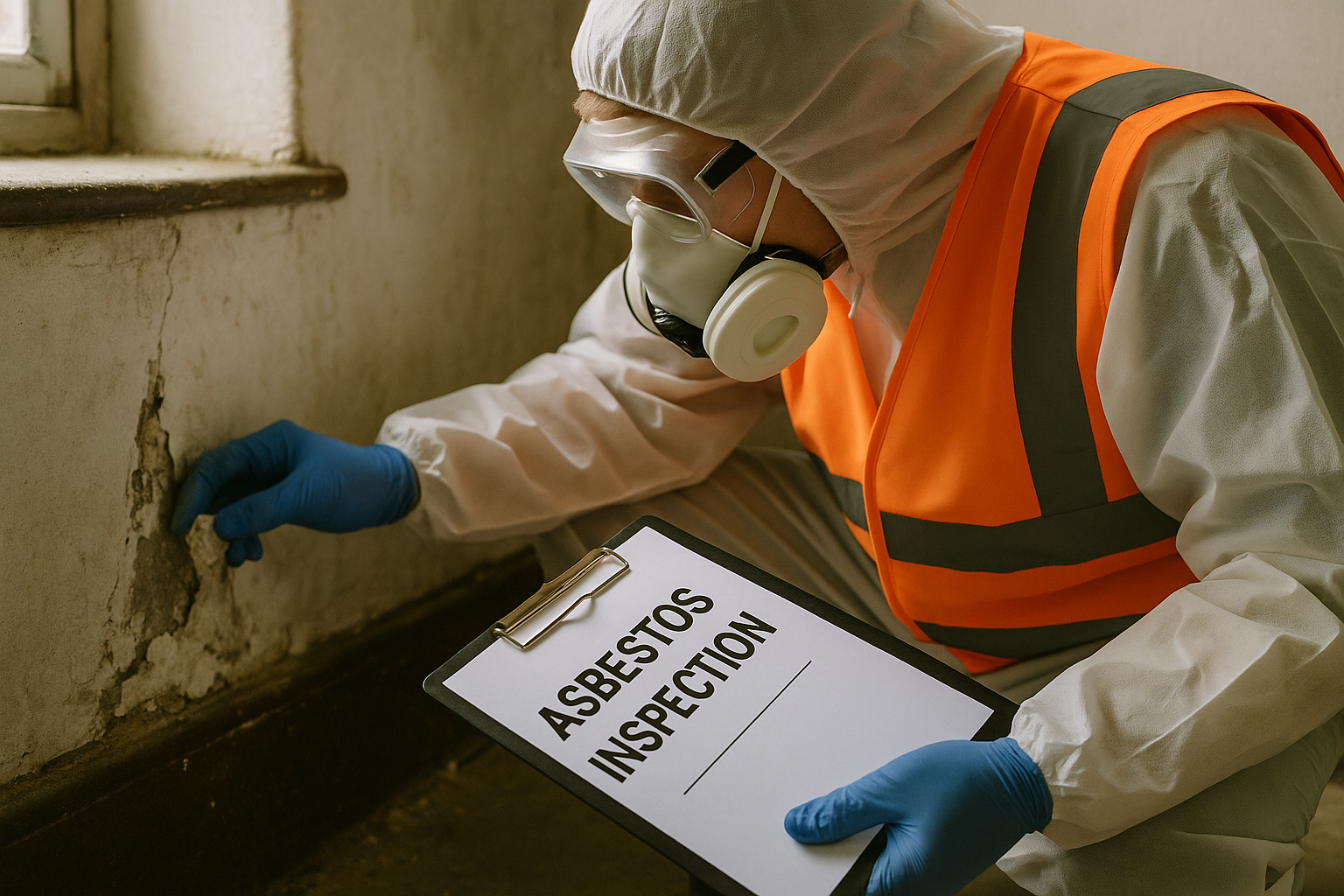
That usually means work stops, costs climb and the compliance spotlight lands on the duty holder.
Management survey
A management survey is the standard survey for an occupied building in normal use. Its purpose is to locate, as far as reasonably practicable, any asbestos-containing materials that could be damaged or disturbed during everyday occupation, routine maintenance or minor installation work.
This survey is usually the foundation of the asbestos register and management plan. For many offices, warehouses, schools, shops and communal areas, it is the starting point for ongoing asbestos inspections and control.
You are likely to need a management survey if:
- The building is older and asbestos may be present
- There is no reliable asbestos information on file
- You need a register for routine maintenance and contractor control
- The premises remain occupied during normal use
Refurbishment survey
A refurbishment survey is needed before intrusive work, major maintenance or refurbishment. It is more invasive than a management survey because it is designed to find asbestos in areas that will be disturbed during the works.
That can include opening up ceilings, floors, boxing, risers, service voids and wall linings. The area being refurbished may need to be vacated so the inspection can be completed properly.
Typical triggers include:
- Office fit-outs
- Toilet and kitchen refurbishments
- HVAC upgrades
- Electrical rewiring
- Replacing ceilings, partitions or floor finishes
The key point is timing. This survey must happen before work starts, not after contractors have arrived with tools in hand.
Demolition survey
A demolition survey is required before demolition of a building, or part of one. This is the most intrusive of the asbestos inspections because it aims to identify all asbestos-containing materials, as far as reasonably practicable, so they can be dealt with before demolition proceeds.
These surveys usually require the area to be vacant and access to be unrestricted. If parts of the structure are inaccessible, make sure that limitation is addressed before demolition planning moves forward.
Re-inspection survey
If asbestos has already been identified and left in place, its condition needs to be checked at suitable intervals. A re-inspection survey reviews known or presumed asbestos-containing materials to confirm whether they remain in a stable condition and whether the management plan is still appropriate.
There is no single fixed interval that suits every property. The right frequency depends on the type of material, its location, how accessible it is and how likely it is to be disturbed.
As a practical approach, review your asbestos register regularly and set re-inspection dates based on actual risk. A riser cupboard used by contractors every week needs closer attention than a sealed void with no routine access.
What happens during professional asbestos inspections?
Good asbestos inspections are structured, planned and evidence-based. A competent surveyor does much more than walk around the building and note obvious materials.
Before the inspection
The survey should be scoped properly. That means gathering background information and understanding how the building is used.
This usually includes:
- Building age and layout
- Previous survey reports
- Refurbishment and maintenance history
- Planned works
- Access restrictions
- Occupancy arrangements
- Known high-risk areas such as plant rooms, risers and service voids
If the scope is weak, the report will often come back with too many caveats, inaccessible areas or gaps. Those gaps tend to become expensive later.
During the inspection
The surveyor will inspect accessible areas relevant to the survey type, identify suspect materials, assess their condition and take samples where needed. Depending on the building, that may include insulating board, textured coatings, pipe lagging, cement products, floor tiles, bitumen materials, sprayed coatings and insulation debris.
Sampling should be controlled, recorded and made safe. Any minor damage caused during sample collection should be sealed or repaired at the time.
Laboratory analysis and reporting
Samples should be analysed by a UKAS-accredited laboratory. If you need confirmation of whether a material contains asbestos, professional asbestos testing is the reliable route.
There are also situations where standalone asbestos testing makes sense, such as checking one suspect material before minor works or after accidental damage.
A good report should clearly show:
- The location of known or presumed asbestos-containing materials
- Material assessment details
- Photographs and plans where appropriate
- Any inaccessible areas or limitations
- Recommendations for management, re-inspection or further action
If the report is difficult to interpret, ask for clarification before anyone starts work. Survey information only protects people if it is actually understood and used.
The responsibilities of landlords, managing agents, employers and tenants
Asbestos inspections are rarely a one-person issue. One party may commission the survey, but several parties often need to act on the findings.
Landlords and property owners
Landlords and owners often hold the main duty for common parts and retained areas. They should ensure suitable survey information exists, maintain the asbestos register and provide relevant information to occupiers and contractors.
They also need a clear process for dealing with damage reports, maintenance requests and planned works. If a contractor is attending site, asbestos information should be issued before work begins, not halfway through the job.
Managing agents and facilities managers
Managing agents are often the link between compliance paperwork and what actually happens on site. If you oversee multiple properties, asbestos inspections should be tracked just as closely as fire safety, water hygiene and statutory maintenance.
Useful controls include:
- A central register of survey dates and review dates
- Flags for buildings with access limitations
- Checks before authorising intrusive works
- Contractor sign-off to confirm the asbestos register has been reviewed
- A process for updating records after removal, repairs or damage
Employers
Employers have separate health and safety duties to protect staff and others affected by their work. Even if you do not own the building, you must not expose employees to asbestos.
That means:
- Checking asbestos information before maintenance or fit-out work
- Providing asbestos awareness training where relevant
- Stopping work immediately if suspect materials are found
- Using competent specialists for surveying, sampling and remedial work
Tenants
Tenants often assume asbestos is entirely the landlord’s problem. That can be a costly mistake. If your lease gives you repair duties or control over alterations, you may hold part of the duty.
Tenants should:
- Review lease responsibilities carefully
- Request the asbestos register before carrying out works
- Report damaged suspect materials immediately
- Never drill, cut, sand or remove suspect materials without proper checks
How often should asbestos inspections be carried out?
There is no universal timetable that fits every building. The right frequency depends on risk, occupancy, material condition and the likelihood of disturbance.
What matters is that the inspection regime is suitable for the property and supported by the management plan.
As a rule of thumb:
- Known asbestos left in place should be re-inspected at intervals based on risk
- Buildings with frequent contractor access need tighter control
- Any planned refurbishment or demolition requires the correct survey before work begins
- Accidental damage, water leaks or changes in use should trigger a review
If you are unsure whether your current survey information is still fit for purpose, treat that as a warning sign. Old reports, inaccessible areas and undocumented alterations are common reasons to revisit asbestos inspections.
Maintaining the asbestos register after inspections
The asbestos register is one of the most important outputs from asbestos inspections. It should record known or presumed asbestos-containing materials and be available to anyone who could disturb them.
Just as importantly, it must stay current. A register that has not been updated after removal works, damage, encapsulation or re-inspection quickly becomes unreliable.
What a workable asbestos register should include
- Material location
- Description of the product or material
- Extent and accessibility
- Condition at the time of inspection
- Whether asbestos was confirmed or presumed
- Actions required
- Dates of review or re-inspection
Link the register to your contractor control process. Before any intrusive task is approved, the person authorising the work should check whether the planned area has been surveyed adequately for that activity.
If not, stop and arrange the right inspection first. That one decision can prevent accidental fibre release, emergency remediation and site shutdowns.
When asbestos should be managed and when it should be removed
Finding asbestos does not automatically mean it has to be removed. In many cases, asbestos-containing materials in good condition can remain in place and be managed safely.
Removal is usually considered when the material is damaged, likely to be disturbed, difficult to protect, or affected by planned works.
Asbestos may be suitable for management in place when:
- It is in good condition
- It is sealed, enclosed or otherwise protected
- It is in a low-disturbance location
- There is a clear management plan and regular review
Removal may be necessary when:
- The material is damaged or deteriorating
- It is in an area prone to impact or disturbance
- Refurbishment or demolition will affect it
- Encapsulation or protection is not practical
This decision should be based on the survey findings, the condition of the material and the planned use of the space. If removal is needed, use competent licensed or non-licensed contractors as appropriate to the material and task.
Common mistakes that undermine asbestos compliance
Most asbestos failures in commercial property are not caused by a total lack of awareness. They happen because information is incomplete, out of date or not shared with the right people.
Watch out for these common problems:
- Assuming the landlord is always responsible
- Using a management survey for refurbishment works
- Failing to review inaccessible areas later
- Keeping an asbestos register that no contractor ever sees
- Not updating records after removal or remedial work
- Letting small maintenance jobs proceed without checking asbestos information
- Treating old survey reports as permanently valid despite building changes
If any of those sound familiar, your next step is straightforward. Review the existing survey information, check the scope against the work being planned and close any gaps before they become incidents.
Practical advice for property managers arranging asbestos inspections
If you manage commercial property, speed and clarity matter. The best asbestos systems are the ones people can actually use during busy day-to-day operations.
Here are practical ways to tighten control:
- Audit your records and identify buildings with missing, outdated or limited survey information.
- Match the survey type to the task so routine occupation, refurbishment and demolition are treated differently.
- Check access limitations in old reports and plan follow-up inspections where needed.
- Make the asbestos register easy to find for site teams, contractors and permit issuers.
- Build asbestos checks into work approval so intrusive jobs cannot start without review.
- Set re-inspection reminders based on risk, not habit.
- Update records promptly after removal, encapsulation, sampling or damage.
If your portfolio includes multiple sites, consistency is key. A standard process for commissioning asbestos inspections and reviewing findings will save time and reduce risk across the board.
Local support for asbestos inspections
If your building is in the capital, arranging an asbestos survey London service can help you move quickly when maintenance, fit-out or compliance deadlines are pressing.
For sites in the North West, a dedicated asbestos survey Manchester option makes it easier to coordinate inspections across offices, industrial units and mixed-use premises.
If you manage property in the Midlands, booking an asbestos survey Birmingham service can help keep projects on track and survey information current.
Frequently Asked Questions
Who is the duty holder for asbestos in a commercial building?
The duty holder is the person or organisation with responsibility for maintenance or repair of the premises, or control of that part of the building. This could be a landlord, owner, managing agent, employer or tenant, depending on the lease and management arrangements.
How often should asbestos inspections be carried out?
There is no fixed interval that applies to every property. Re-inspection frequency should reflect the type, condition and location of the material, along with how likely it is to be disturbed. Planned refurbishment or demolition always requires the correct survey before work starts.
Can a management survey be used before refurbishment works?
No, not usually. A management survey is for normal occupation and routine maintenance. If the work is intrusive, you will normally need a refurbishment survey so hidden asbestos in the affected area can be identified before the project begins.
Does asbestos always need to be removed if it is found?
No. If asbestos-containing materials are in good condition and unlikely to be disturbed, they can often be managed safely in place. Removal is generally considered when materials are damaged, deteriorating or likely to be affected by planned works.
What should contractors see before starting work?
Contractors should be given relevant asbestos information before they begin. That usually means access to the asbestos register, survey findings for the work area and any site-specific controls needed to prevent disturbance.
Need reliable asbestos inspections for a commercial property, planned refurbishment or ongoing compliance programme? Supernova Asbestos Surveys provides management surveys, refurbishment surveys, demolition surveys, re-inspections and asbestos testing nationwide. Call 020 4586 0680 or visit asbestos-surveys.org.uk to arrange the right survey for your building.