Commercial Asbestos Survey: Legal Requirements and Best Practice for Leased Properties
If you’re leasing a commercial property built before 2000, asbestos is almost certainly part of the picture. A commercial asbestos survey isn’t optional — it’s a legal requirement under the Control of Asbestos Regulations, and getting it right protects your people, your business, and your compliance standing from day one.
Whether you’re a landlord preparing a building for new tenants or a business taking on a full repairing and insuring lease, understanding your obligations — and acting on them — is non-negotiable.
Legal Requirements for a Commercial Asbestos Survey
The Control of Asbestos Regulations place a clear duty on those who manage or control non-domestic premises. If your building was constructed before 2000, you must establish whether asbestos-containing materials (ACMs) are present, assess the risk they pose, and put a management plan in place.
The Health and Safety Executive (HSE) expects this to be done through a formal survey carried out by a competent surveyor — not a visual inspection by a contractor or a general building surveyor. The results must be documented in an asbestos register, kept up to date, and made accessible to anyone who might disturb those materials.
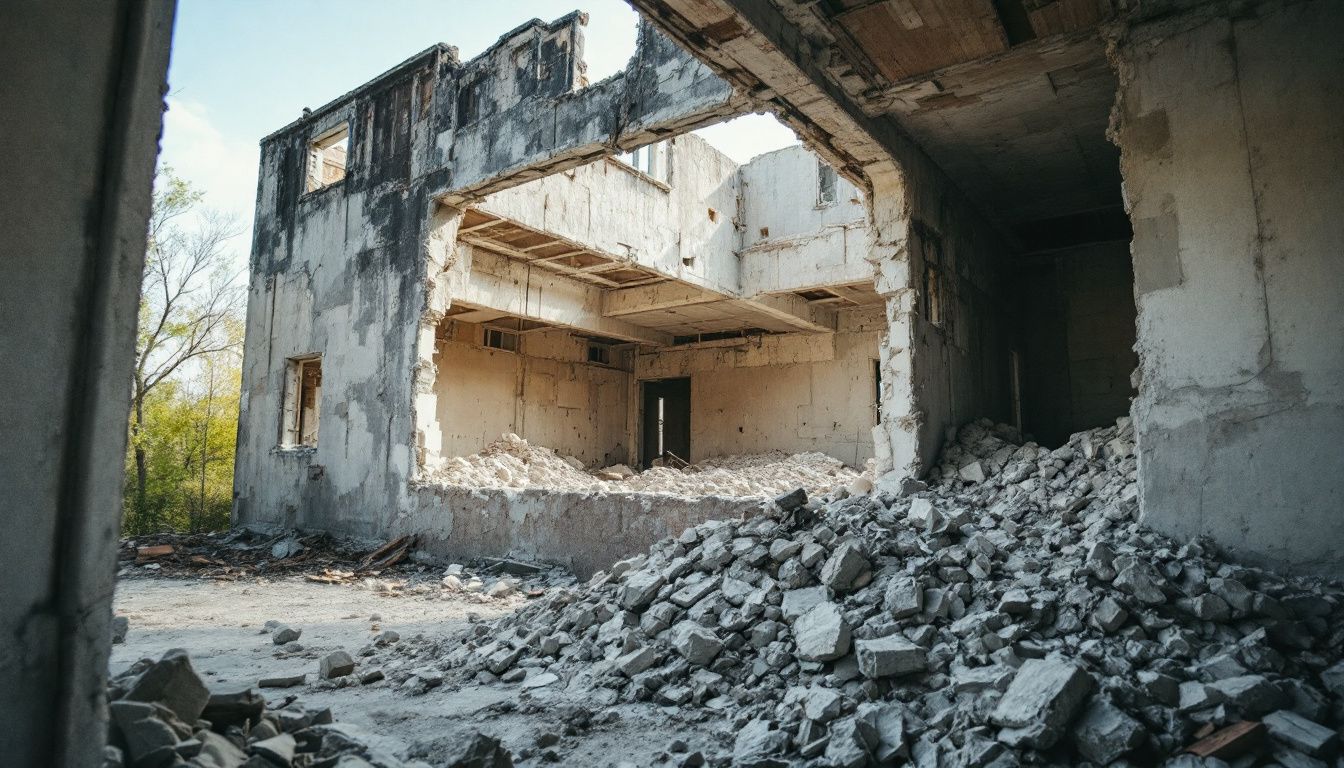
If you’re planning refurbishment or demolition work, the requirements go further. A refurbishment and demolition survey must be completed before any work begins — regardless of how minor the project appears. This is a legal requirement, not a recommendation.
Failure to comply can result in HSE enforcement action, improvement or prohibition notices, prosecution, and unlimited fines. In the most serious cases, custodial sentences have been imposed.
Landlord and Tenant Responsibilities: Who Does What?
Asbestos duty doesn’t fall on one party by default — it depends on who controls the relevant part of the building. Leases vary considerably, so both landlords and tenants need to understand their specific obligations before signing anything.
Landlord Responsibilities
Where a landlord retains control of the structure, common areas, or mechanical systems, they are typically the duty holder for those spaces. They should provide an up-to-date management survey before the lease commences and ensure the asbestos register is current.
If a landlord fails to disclose known ACMs or provides no survey at all, they may remain liable for undisclosed risks even after the tenant takes occupation. Handing over documentation in writing — and keeping a record of that handover — is essential good practice.
Tenant Responsibilities
In a full repairing and insuring (FRI) lease, the tenant typically assumes responsibility for the demised premises, including asbestos management within their occupied space. That means running the asbestos management plan, arranging re-inspections, and ensuring contractors are briefed on ACM locations before any maintenance or fit-out work.
Tenants should always request and review the asbestos report before signing a lease. If no survey has been carried out, seek one before committing. Inheriting an unmanaged asbestos problem is a significant legal and financial risk.
Shared Responsibilities in Multi-Let Buildings
In multi-tenanted buildings, landlords typically retain responsibility for shared areas — plant rooms, corridors, roofs, and external fabric. Each tenant manages their own demised space.
Clarity in the lease about where each party’s obligations begin and end is critical to avoiding disputes and compliance gaps. Both parties should also ensure their areas have a current fire risk assessment in place — this is a separate but equally important legal obligation for commercial premises.
Types of Commercial Asbestos Survey Explained
Not every survey is the same. The type of commercial asbestos survey you need depends on how the building is being used and what work is planned. A qualified surveyor will advise on the right approach, but here’s a clear breakdown.
Asbestos Management Survey
The asbestos management survey is the standard survey for occupied commercial buildings. It locates and assesses ACMs in areas that are routinely accessed during normal use — rooms, corridors, plant areas, basements, lofts where safe, and exterior fabric.
Surveyors take samples where materials are suspected to contain asbestos and send them to a UKAS-accredited laboratory for analysis. The resulting report forms your asbestos register and provides the foundation for your management plan.
This type of survey is relatively low-intrusion. It doesn’t involve opening up voids or lifting floors — it’s designed to support ongoing safe occupation, not pre-construction investigation. It follows HSE guidance set out in HSG264, the definitive guide to asbestos surveying in the UK.
Refurbishment and Demolition Survey
If you’re planning any structural work — a fit-out, office reconfiguration, loft conversion, or full demolition — you need a demolition survey before work starts. This applies to any pre-2000 building, regardless of the scale of the project.
This survey is more intrusive by design. Surveyors may lift floor coverings, open up wall cavities, access ceiling voids, and investigate areas not visible during a management survey. The goal is to identify every ACM that could be disturbed during the planned works — before a single tool is picked up.
The report will include laboratory-confirmed results, mapped ACM locations, and recommendations. You may need to arrange asbestos removal before works can proceed safely. Have your floor plans, room counts, and details of access restrictions ready when booking — this speeds up the process considerably.
Which Survey Do You Need?
- Routine occupation and maintenance: Management survey
- Pre-refurbishment or fit-out: Refurbishment and demolition survey
- Pre-demolition: Refurbishment and demolition survey covering the whole structure
- Loft conversion or structural alteration: Refurbishment and demolition survey for affected areas
If you’re unsure, a competent surveyor will assess your situation and recommend the appropriate approach. Don’t rely on an existing management survey to cover planned refurbishment work — it won’t satisfy the legal requirement.
Step-by-Step: Achieving and Maintaining Compliance
Compliance isn’t a one-off task. It’s an ongoing process that requires the right surveys, proper documentation, and regular review. Here’s how to approach it systematically.
Step 1: Commission the Right Survey
Appoint a UKAS-accredited surveying organisation. Accreditation matters — it demonstrates that the surveyor meets the competency standards required under HSE guidance and HSG264. Always check credentials before booking.
Provide the surveyor with as much information as possible: the year of construction, floor plans, any previous survey reports, and details of areas with restricted access. This helps ensure the survey is thorough and the report is accurate.
Step 2: Review the Asbestos Report
Once the survey is complete, you’ll receive a formal asbestos report. This should include the location of all identified or presumed ACMs, their type and condition, a risk assessment for each item, and clear recommendations for management or removal.
Read it carefully. If anything is unclear, ask the surveyor to explain. This report is a legal document — it forms your asbestos register and underpins your management plan.
Step 3: Build Your Asbestos Management Plan
Use the survey findings to create a written asbestos management plan. This should cover:
- A complete asbestos register listing each ACM, its location, condition, and risk rating
- Responsibilities — who manages the plan, who carries out re-inspections
- Labelling arrangements for ACMs in accessible locations
- Permit-to-work procedures for any work near ACMs
- Training requirements for staff and contractors
- Emergency procedures if ACMs are accidentally disturbed
- A schedule for annual re-inspections
The plan must be accessible to anyone who could disturb ACMs — that includes maintenance teams, contractors, and emergency services.
Step 4: Arrange Annual Re-Inspections
ACMs in good condition can often be safely managed in place, but their condition can deteriorate. The HSE expects annual re-inspections to check for changes and update the register accordingly.
If the condition of any ACM worsens, your plan must be updated and appropriate action taken promptly. Don’t treat re-inspections as a box-ticking exercise — they’re your early warning system.
Step 5: Act on Findings Without Delay
If the survey identifies damaged or high-risk ACMs, don’t delay. Arrange removal by a licensed contractor, implement interim controls, and update your documentation.
Never attempt to remove or disturb ACMs yourself — this requires specialist training, equipment, and in many cases a licensed contractor under the Control of Asbestos Regulations.
What Happens If You Don’t Comply?
The consequences of failing to carry out a commercial asbestos survey — or failing to act on the findings — are serious. The HSE has wide enforcement powers and uses them.
Inspectors can issue improvement notices, prohibition notices, or refer cases for prosecution. Courts can impose unlimited fines for breaches of the Control of Asbestos Regulations. In cases where negligence has led to asbestos exposure, custodial sentences are possible.
Beyond the legal penalties, businesses face reputational damage, civil claims from affected workers, and significant operational disruption. The cost of getting a commercial asbestos survey done properly is a fraction of the cost of enforcement action, remediation under pressure, or litigation. There’s no rational case for cutting corners here.
The Practical Benefits of Getting It Right
A good commercial asbestos survey does more than tick a legal box. It gives you a clear, accurate picture of what’s in your building — and that information has real practical value.
- Safer maintenance: Contractors know exactly where ACMs are before they start work, eliminating the risk of accidental disturbance
- Smoother leasing: A current asbestos register and management plan supports lease negotiations and reassures incoming tenants
- Better project planning: Refurbishment and demolition surveys prevent costly mid-project surprises
- Insurance and valuation support: Documented asbestos management strengthens your position with insurers and valuers
- Reduced liability: Clear records demonstrate due diligence if your compliance is ever questioned
Regular re-inspections also reduce the likelihood of emergency spend. Finding and managing a deteriorating ACM proactively is far less disruptive — and less expensive — than dealing with an accidental release.
What to Look for When Choosing a Surveying Company
Not all asbestos surveyors are equal. When commissioning a commercial asbestos survey, there are specific things you should check before appointing anyone.
First, confirm that the company holds UKAS accreditation for asbestos surveying. This is the benchmark standard in the UK and confirms that the organisation operates to a recognised quality management system. Without it, the survey may not be accepted by insurers, solicitors, or the HSE.
Second, ask about the laboratory they use for sample analysis. Samples should be analysed by a UKAS-accredited laboratory — not processed in-house by an unaccredited facility. The chain of custody for samples matters for the legal integrity of your report.
Third, check that the surveyor has relevant experience with your property type. A surveyor experienced in office blocks may need a different approach for a warehouse, a school, or a listed building. Ask about comparable projects they’ve completed.
Finally, make sure the report format will meet your needs. A good asbestos report should be clear, well-structured, and usable by non-specialists. If you’re sharing it with contractors or tenants, it needs to be readable — not buried in technical jargon.
Asbestos Surveys Across the UK
Supernova Asbestos Surveys carries out commercial asbestos surveys across the UK, including major commercial centres. If you need an asbestos survey London businesses can rely on, our accredited surveyors cover the full capital region.
We also provide an asbestos survey Manchester and surrounding areas, as well as an asbestos survey Birmingham and across the West Midlands.
With over 50,000 surveys completed nationwide, we have the experience and accreditation to support landlords, tenants, and facilities managers at every stage — from initial management surveys through to refurbishment and demolition surveys and licensed removal.
Alongside asbestos services, our team also delivers fire risk assessments for commercial premises, helping you manage multiple compliance obligations through a single trusted provider.
To book a survey or discuss your requirements, call us on 020 4586 0680 or visit asbestos-surveys.org.uk. Our team will advise on the right survey type, provide a clear quote, and arrange an inspection at a time that suits your building’s operational needs.
Frequently Asked Questions
Do I need a commercial asbestos survey if I’m only taking a short-term lease?
Yes. The legal duty to manage asbestos applies regardless of lease length. If you control or manage a non-domestic space in a pre-2000 building, the obligations under the Control of Asbestos Regulations apply to you. A short-term lease doesn’t reduce your duty of care to employees, contractors, or visitors.
Can I use an existing asbestos survey from a previous tenant or owner?
Possibly, but only if it’s recent, complete, and covers the areas you’ll be occupying and managing. An outdated survey, or one that doesn’t cover your demised space fully, won’t satisfy your legal obligations. A competent surveyor can review an existing report and advise whether a new survey or partial re-inspection is needed.
What’s the difference between a management survey and a refurbishment and demolition survey?
A management survey is designed for occupied buildings undergoing normal use. It identifies ACMs that could be disturbed during routine maintenance. A refurbishment and demolition survey is more intrusive and is required before any structural work begins. It investigates areas — such as wall cavities and ceiling voids — that wouldn’t be examined during a management survey. Using a management survey in place of a refurbishment survey before construction work is a breach of the regulations.
How long does a commercial asbestos survey take?
It depends on the size and complexity of the building. A straightforward single-floor office may take a few hours. A large multi-storey commercial building with plant rooms, basements, and restricted areas could take a full day or more. Laboratory analysis of samples typically adds five to ten working days before the final report is issued, though faster turnaround options are often available.
What happens if asbestos is found during the survey?
Finding asbestos doesn’t automatically mean it needs to be removed. ACMs in good condition and in low-risk locations are often safely managed in place under a written management plan. Where materials are damaged, deteriorating, or in a location where disturbance is likely, removal by a licensed contractor will be recommended. Your surveyor will advise on the appropriate course of action based on the type, condition, and location of each ACM identified.