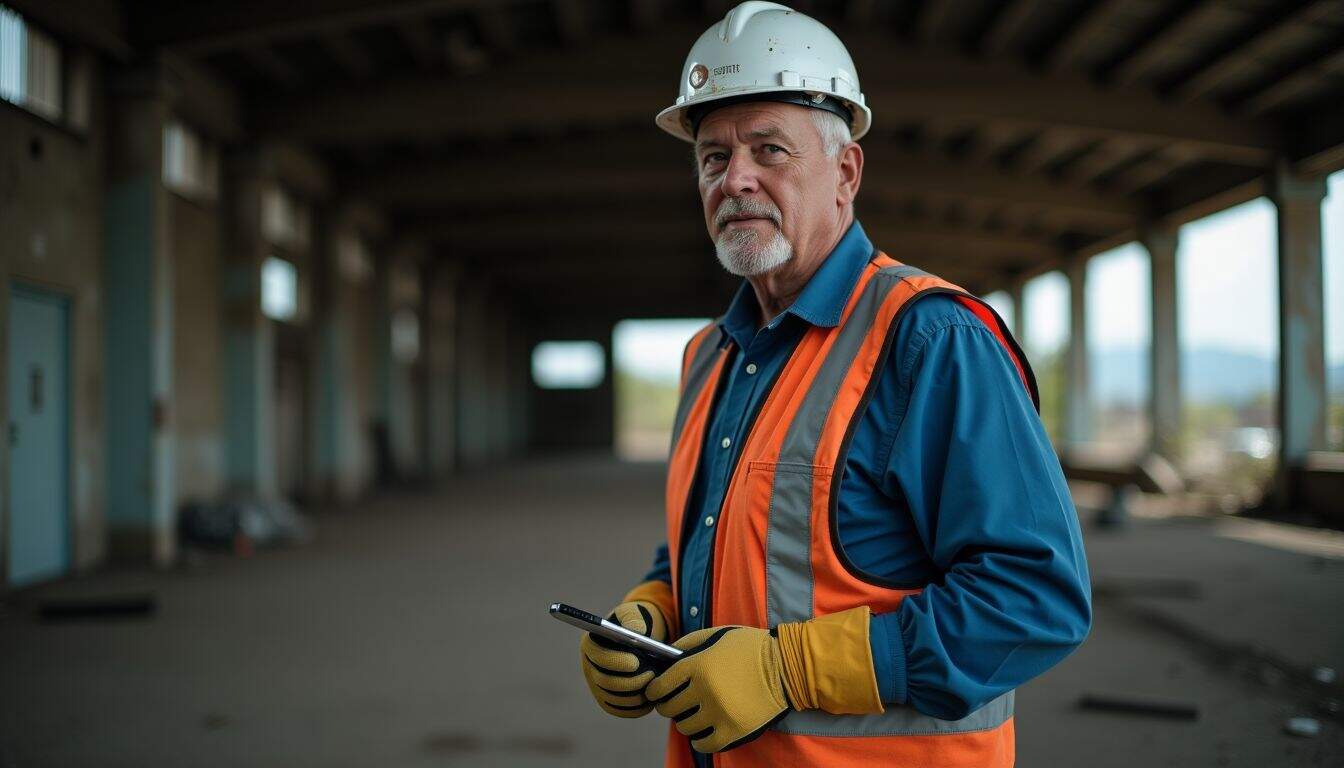
Why Asbestos Was Used in Building Products: The Full Story Every Property Manager Needs to Know
For most of the 20th century, asbestos was not a dirty word — it was a selling point. Builders specified it, engineers praised it, and contractors installed it without a second thought. Understanding why asbestos was used in building products is not simply an exercise in industrial history. If you own, manage, or work in any building constructed before 2000, this knowledge underpins your legal duty and your responsibility to every person inside that building.
What Exactly Is Asbestos?
Asbestos is not a single substance. It is a collective term for a group of naturally occurring silicate minerals, each composed of microscopic fibres — far finer than a human hair. Six types exist in nature, but three are most commonly encountered in UK buildings:
- Chrysotile (white asbestos) — the most widely used variety, found in roofing sheets, insulation boards, and ceiling tiles
- Amosite (brown asbestos) — frequently used in thermal insulation and ceiling tiles
- Crocidolite (blue asbestos) — the most hazardous type, used in spray coatings and pipe insulation
All three types are dangerous. The persistent myth that white asbestos is somehow safe has, frankly, cost lives. What makes asbestos fibres so harmful is their behaviour when disturbed — they become airborne and invisible to the naked eye, and once inhaled, the body cannot expel them.
Why Asbestos Was Used in Building Products: The Real Reasons
Human use of asbestos stretches back thousands of years. Ancient civilisations wove it into lamp wicks and textiles, and historical accounts record that workers who handled it developed respiratory problems. The warnings were there early. They were simply ignored.
The real explosion in use came with industrialisation. Throughout the late 19th century and well into the 20th, demand for a cheap, fire-resistant, and durable building material was enormous. Asbestos met that demand entirely — and then some.
Its Physical Properties Were Genuinely Remarkable
It is worth understanding just how impressive asbestos appeared to the engineers and builders who first worked with it. No synthetic alternative available at the time could match its combination of properties:
- Fire resistance — asbestos fibres do not burn, making them ideal for fireproofing structural steelwork, fire doors, and insulation around boilers and pipes
- Thermal insulation — it resisted heat transfer effectively, reducing energy loss in both industrial and domestic settings
- Tensile strength — asbestos fibres are extraordinarily strong relative to their size, which is why they were mixed into cement, boards, and tiles to add structural integrity
- Chemical resistance — it did not corrode or degrade when exposed to acids, alkalis, or seawater, making it invaluable in shipbuilding and chemical plants
- Electrical insulation — it was used extensively around wiring, switchgear, and electrical panels
- Versatility — it could be woven, sprayed, moulded, or mixed with cement, vinyl, bitumen, or plaster
- Cost — it was cheap to mine, process, and ship at industrial scale
No other material available at the time offered all of these properties simultaneously. That is the honest answer to why asbestos was used in building products so extensively — it genuinely worked, and it worked cheaply.
The Scale of Industrial Demand
Industries from shipbuilding to power generation depended on asbestos. The Royal Navy used it extensively in vessel construction. Power stations required it for insulating turbines and pipework. Schools, hospitals, offices, factories, and homes all incorporated it as standard.
By the mid-20th century, asbestos was not considered a specialist or luxury material. It was the default. Builders and contractors used it without question because that is what the specifications called for — and because nobody in authority was telling them to stop.
How Asbestos Was Used Throughout Buildings
The sheer variety of applications is a large part of what makes asbestos such a challenge for building managers today. It was not confined to one or two locations — it was integrated throughout entire structures, often in ways that are not immediately obvious.
Insulation
- Pipe lagging and boiler insulation
- Spray-applied insulation on structural steelwork
- Loose-fill insulation in cavity walls and loft spaces
- Insulation around heating systems, ducts, and flues
Ceiling and Wall Materials
- Asbestos insulating board (AIB) in ceiling tiles, wall panels, and partition boards
- Textured coatings such as Artex applied to ceilings and walls
- Soffit boards and fascias on external elevations
Flooring
- Vinyl floor tiles — and critically, the adhesive used to fix them
- Bitumen floor tiles in commercial and industrial buildings
Roofing and External Cladding
- Corrugated asbestos cement roof sheets — still found on thousands of agricultural and industrial buildings
- Roof slates, guttering, and downpipes
- External wall cladding panels
Other Common Locations
- Fire doors and fire-resistant panels
- Electrical switchgear and meter cupboards
- Gaskets and rope seals in heating systems
- Decorative plaster and textured finishes
The critical point is that asbestos-containing materials (ACMs) are not always obvious. You cannot identify asbestos by looking at it. Only laboratory analysis of a physical sample can confirm its presence — which is precisely why professional surveying matters so much. If you have a suspect material and want a quick, definitive answer, our sample analysis service provides laboratory confirmation quickly and affordably.
Why Is Asbestos So Dangerous?
Asbestos is not dangerous simply by existing in a building. Intact, undisturbed ACMs in good condition pose a relatively low risk. The danger begins when materials are damaged, disturbed, or deteriorate — releasing fibres into the air that can then be inhaled.
Once asbestos fibres lodge in the lungs or surrounding tissues, the body cannot break them down or remove them. Over time — often decades — this causes severe and life-threatening disease.
Mesothelioma
Mesothelioma is a cancer of the mesothelium — the thin tissue lining surrounding the lungs, abdomen, and heart. It is almost exclusively caused by asbestos exposure. It is aggressive, very difficult to treat, and carries a poor prognosis. The latency period between exposure and diagnosis is typically between 20 and 50 years, meaning people diagnosed today may have been exposed decades ago.
Asbestos-Related Lung Cancer
Asbestos exposure significantly increases the risk of lung cancer, particularly in those who also smoked. This form of lung cancer is directly attributable to fibre inhalation, even though it is clinically indistinguishable from other lung cancers.
Asbestosis
Asbestosis is a chronic, progressive scarring of the lung tissue caused by prolonged, heavy asbestos exposure. It leads to worsening breathlessness and reduced lung function. There is no cure.
Pleural Plaques and Pleural Thickening
These are non-cancerous conditions affecting the lining of the lungs. While not immediately life-threatening, they are markers of significant past exposure and can cause discomfort and breathing difficulties over time.
The UK has one of the highest rates of mesothelioma in the world — a direct consequence of the country’s industrial history and the widespread use of asbestos throughout the 20th century. People are still being diagnosed today as a result of exposures that occurred decades ago on construction sites, in shipyards, and in schools and hospitals.
Who Is Most at Risk Today?
Historically, those most heavily exposed worked in industries where asbestos was handled directly — shipbuilding, construction, plumbing, electrical work, carpentry, and boiler maintenance. Many had daily, prolonged exposure over years or decades before the risks were properly regulated.
Today, the greatest occupational risk falls on:
- Construction and refurbishment workers — particularly those working on pre-2000 buildings without current survey information in place
- Maintenance and facilities staff — drilling, cutting, or disturbing materials without knowing what they contain
- Heating engineers and electricians — working around legacy pipe insulation and switchgear
- Demolition contractors — who can encounter ACMs throughout an entire structure
Secondary exposure is also a documented risk. Family members of workers who brought asbestos dust home on their clothing have developed mesothelioma. If you believe you have had significant past exposure, speak to your GP — given the long latency period, it is always worth raising even if the exposure happened many years ago.
Why Did the UK Stop Using Asbestos?
The health risks were recognised long before any ban came into force. Medical literature from the early 20th century documented lung disease in asbestos workers, and by the 1930s the UK government had introduced limited workplace regulations around asbestos dust. But the material remained commercially dominant for decades.
Economic interests, combined with a slow-moving regulatory response, meant asbestos continued to be used in buildings well into the 1980s. The most hazardous forms — blue and brown asbestos — were banned in the UK in 1985. White asbestos (chrysotile) remained in use until 1999, when a comprehensive ban on the import, supply, and use of all asbestos-containing products was introduced.
This is why 1999 — not 1985 — is the critical cut-off date used in UK asbestos regulations. Any building constructed or substantially refurbished before the year 2000 must be assumed to contain asbestos until proven otherwise.
What Does UK Law Require from Building Managers?
The Control of Asbestos Regulations place a legal duty on those who manage non-domestic buildings to identify, manage, and monitor any asbestos-containing materials present. This is known as the duty to manage. HSE guidance document HSG264 sets out in detail how surveys should be planned and conducted.
In practical terms, compliance means:
- Commissioning a suitable and sufficient management survey to identify ACMs throughout the building
- Producing and maintaining an asbestos register
- Implementing a written asbestos management plan
- Sharing information with anyone likely to disturb ACMs — contractors, maintenance staff, and emergency services
- Regularly re-inspecting known ACMs to monitor their condition
For any refurbishment or demolition work, a more intrusive refurbishment survey or demolition survey is required before work begins. A management survey alone is not sufficient for this purpose.
Failure to comply with these duties is a criminal offence. More importantly, it puts people’s lives at risk.
What Should You Do If You Manage a Pre-2000 Building?
The single most important step is to commission a professional asbestos survey if you do not already have one. This gives you the information you need to fulfil your legal duty and protect everyone who enters the building.
If you already have a survey in place, ask yourself:
- Has it been reviewed through a re-inspection survey within the last 12 months?
- Are your contractors and maintenance staff aware of the asbestos register?
- Is your management plan up to date and actively being followed?
- Are any ACMs showing signs of deterioration that would require asbestos removal or encapsulation?
If you are planning any building work — even something as routine as drilling into a wall or replacing floor tiles — ensure your contractors are working from current survey information. Disturbing hidden ACMs without proper precautions is one of the most common causes of avoidable asbestos exposure in the UK today.
If you want to test a specific suspect material without commissioning a full survey, you can order a testing kit directly and send your sample for laboratory analysis. It is a straightforward, cost-effective way to get a definitive answer quickly.
Supernova Asbestos Surveys: Nationwide Coverage, Expert Results
Supernova Asbestos Surveys operates across the length and breadth of the UK, with local expertise in every major region. Whether you need an asbestos survey London, an asbestos survey Manchester, or an asbestos survey Birmingham, our UKAS-accredited surveyors are ready to help.
With over 50,000 surveys completed nationwide, we have the experience to handle everything from a single-room residential assessment to a complex multi-site commercial portfolio. Every survey is conducted to HSG264 standards, with clear, actionable reports delivered promptly.
Do not leave your legal compliance to chance. Call us today on 020 4586 0680 or visit asbestos-surveys.org.uk to book your survey or request a quote.
Frequently Asked Questions
Why was asbestos used in building products if it was known to be harmful?
The health risks were understood by some researchers from the early 20th century, but commercial and economic pressures meant this knowledge was not acted upon quickly. Asbestos offered a combination of fire resistance, thermal insulation, strength, and low cost that no alternative could match at the time. Regulatory action came slowly, and the material continued to be used in UK buildings until 1999.
How do I know if my building contains asbestos?
You cannot tell by looking. Any building constructed or substantially refurbished before the year 2000 should be treated as potentially containing asbestos until a professional survey has been carried out. A management survey will identify the location, type, and condition of any asbestos-containing materials present.
Is asbestos always dangerous if it is in my building?
Not necessarily. Asbestos-containing materials that are in good condition and left undisturbed present a relatively low risk. The danger arises when materials are damaged, deteriorating, or disturbed during maintenance or refurbishment work, releasing fibres into the air. Managing ACMs safely — and monitoring their condition regularly — is the key to controlling risk.
What types of asbestos survey do I need?
The type of survey you need depends on what you are doing with the building. A management survey is required for ongoing occupation and routine maintenance. A refurbishment survey is needed before any intrusive work begins. A demolition survey is required before a building is demolished. A re-inspection survey should be carried out periodically to monitor the condition of known ACMs.
When was asbestos banned in the UK?
Blue and brown asbestos were banned in the UK in 1985. White asbestos was not banned until 1999, when a comprehensive prohibition on the import, supply, and use of all asbestos-containing products came into force. This is why any building built or refurbished before 2000 must be assessed for asbestos.
Leave a Reply