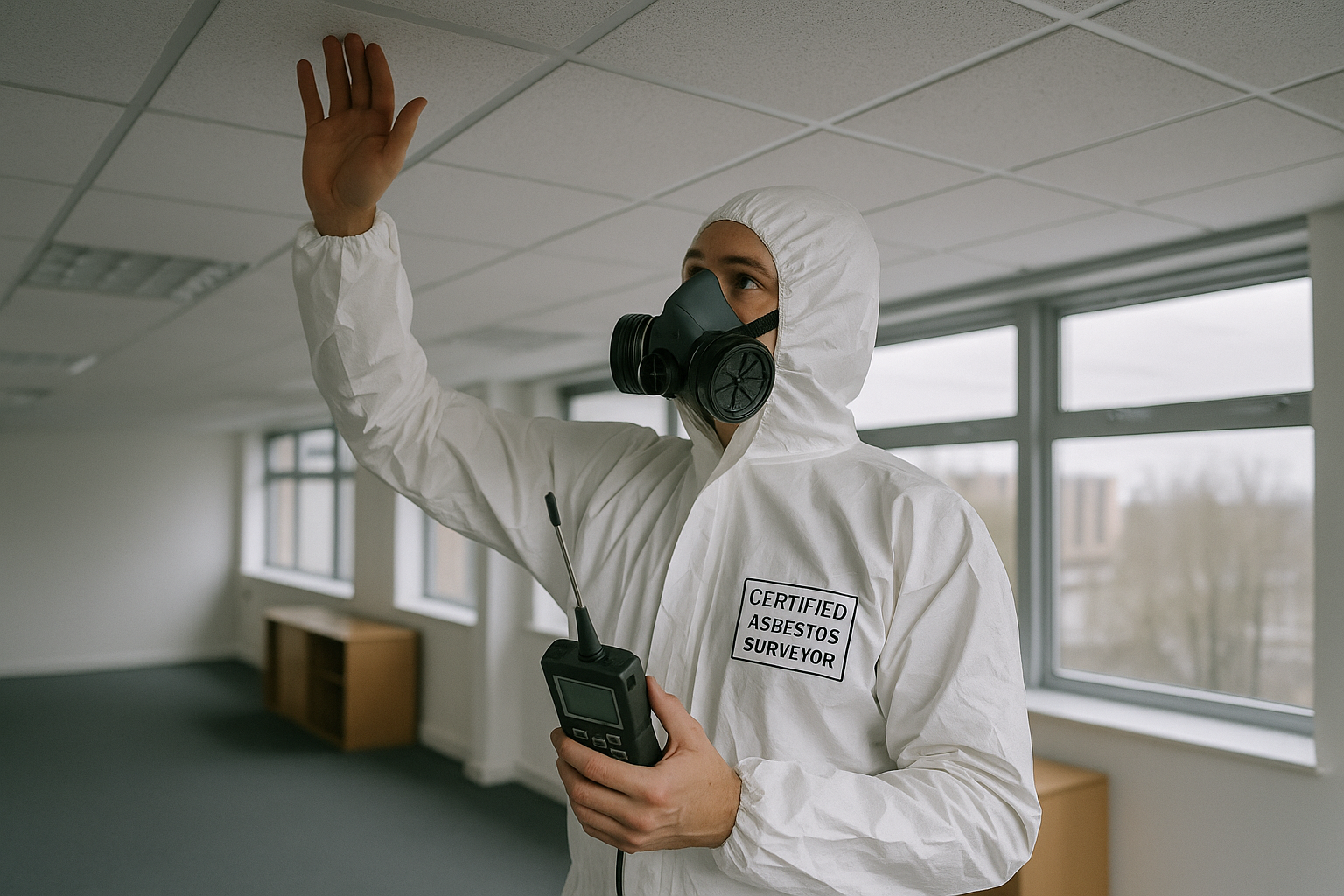
Asbestos is still one of the most common hidden risks in UK property. It sits quietly in ceilings, risers, floor finishes, pipe insulation and roof sheets, and the real problem starts when someone drills, strips out or damages a material without knowing what it is.
For property managers, landlords, contractors and dutyholders, asbestos is not a historical issue. It is a live compliance, health and project-planning issue in any building built or refurbished before 2000. If you are responsible for a premises, you need to know where asbestos may be found, which materials are more likely to release fibres, and what action to take before work begins.
What is asbestos and why is it still a risk?
Asbestos is the name given to a group of naturally occurring fibrous minerals. Those fibres are strong, heat resistant and chemically durable, which is exactly why asbestos was used so widely in construction, plant, insulation and fire protection.
Those same properties also make asbestos dangerous. When asbestos-containing materials are damaged or disturbed, fibres can be released into the air and breathed in. Once inhaled, the fibres can lodge deep in the lungs and remain there for years.
Exposure to asbestos is linked to serious diseases including mesothelioma, asbestos-related lung cancer and asbestosis. The health effects often take decades to develop, which is why asbestos remains such a serious issue long after its use was banned.
Main types of asbestos found in UK buildings
There are six recognised asbestos minerals, but three are most commonly encountered in UK buildings and industrial settings:
- Chrysotile – often called white asbestos
- Amosite – often called brown asbestos
- Crocidolite – often called blue asbestos
From a practical property management point of view, all asbestos should be treated seriously. The question is not whether one type sounds less alarming than another. The question is whether the material is present, what condition it is in, and whether planned activity could disturb it.
The history of asbestos in UK buildings
Asbestos has been used for far longer than most people realise. Ancient civilisations valued it because it would not readily burn, and small-scale uses appeared in pottery, cloth and heat-resistant items.
The major expansion came with industrialisation. As factories, shipyards, railways, power stations and large building programmes grew, asbestos became a cheap and versatile answer to several problems at once. It offered insulation, fire resistance, durability and reinforcement.
In the UK, asbestos use became especially widespread across the twentieth century. It was built into homes, schools, hospitals, offices, warehouses, factories and public buildings. That legacy is why asbestos is still found in so many premises today.
The health risks were not discovered overnight. Evidence built up over many years, particularly among workers in insulation, manufacturing, shipbuilding, construction and maintenance. The lesson for modern dutyholders is simple: asbestos may be old, but the risk is current wherever those materials remain in place.
Which construction materials may contain asbestos?
One of the biggest challenges with asbestos is how many different products contained it. It was not limited to one obvious material. It appeared in high-risk insulation products, bonded boards, cement sheets, coatings, floor finishes and service components.
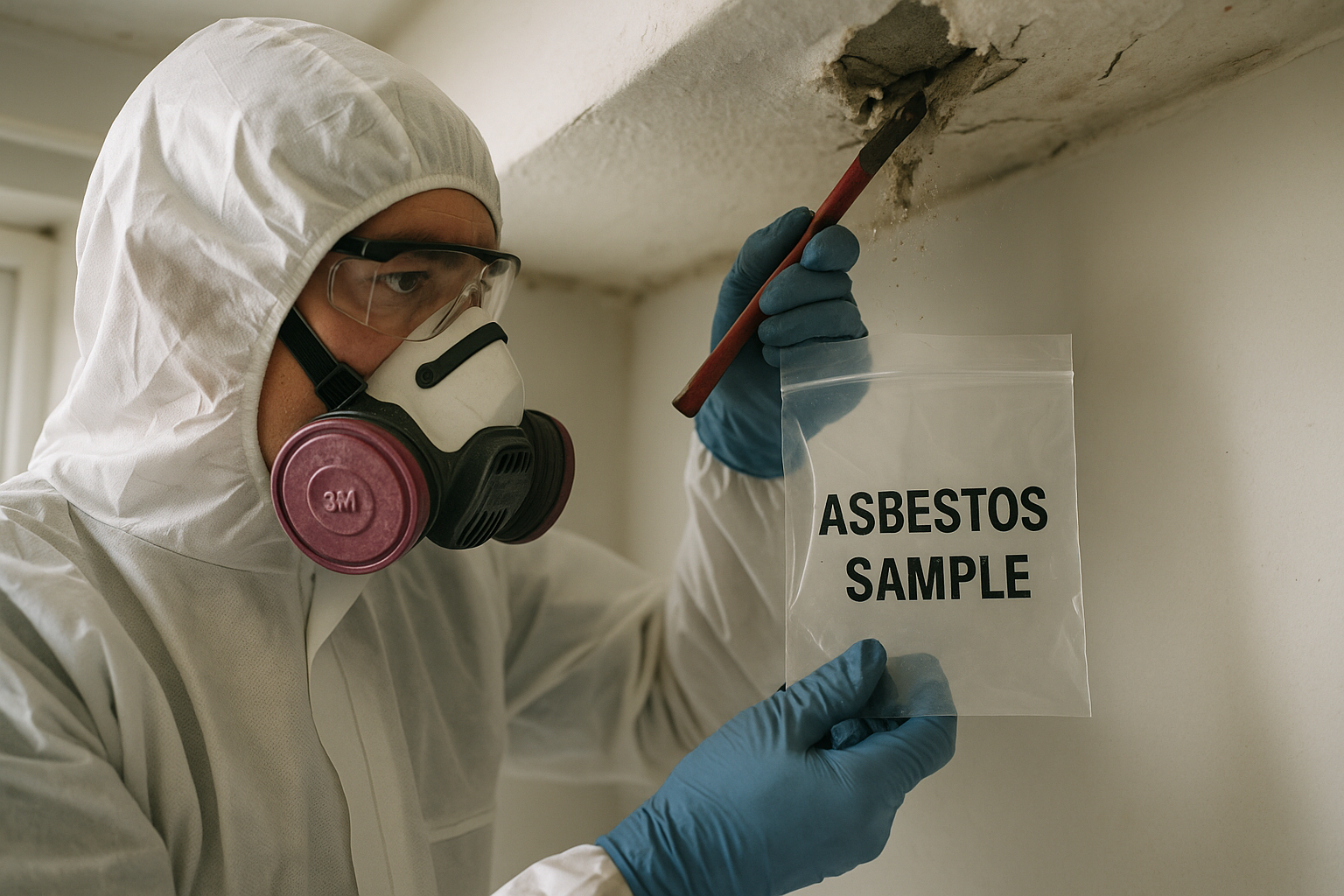
If a building was constructed or refurbished before 2000, asbestos may be present in visible areas and in concealed voids. You cannot confirm asbestos by eye alone, and you should never rely on age or appearance as proof that a material is safe.
Common asbestos-containing materials in buildings
- Pipe lagging and thermal insulation
- Sprayed coatings on ceilings, walls and structural steel
- Asbestos insulating board in partitions, ceiling tiles, risers and fire breaks
- Textured coatings on walls and ceilings
- Vinyl floor tiles and bitumen adhesives
- Asbestos cement roof sheets, wall cladding and corrugated panels
- Soffits, gutters and downpipes
- Boiler insulation, gaskets and rope seals
- Fire doors and fire protection panels
- Toilet cisterns, bath panels and window infill panels
- Electrical backing boards and fuse panel components
- Lift shaft linings and plant room materials
Some asbestos-containing materials are more friable than others. Pipe lagging, loose insulation and damaged insulating board generally present a higher risk because they can release fibres more easily. By contrast, intact asbestos cement is usually more tightly bound, but it can still become hazardous if broken, drilled, cut or badly weathered.
Asbestos as a contaminant in other products
In some cases, asbestos has also appeared as a contaminant in mineral-based products where the source material came from deposits close to asbestos-bearing rock. That is not the same as deliberate inclusion in mainstream construction products, but it reinforces the same practical point: if a material is suspect, it needs proper assessment, not guesswork.
Where asbestos is commonly found in buildings
Asbestos turns up in places that are easy to overlook. The highest-risk situations often arise when maintenance teams or contractors open up hidden areas without checking survey information first.
Common locations include:
- Ceilings and ceiling voids: insulating board, sprayed coatings, textured coatings
- Walls and partitions: AIB panels, fire breaks, service duct linings
- Floors: vinyl tiles, bitumen adhesive, insulation beneath finishes
- Roofs and exteriors: cement sheets, soffits, rainwater goods
- Heating systems: pipe lagging, boiler insulation, gaskets and rope seals
- Plant and services: electrical backing boards, panels and duct materials
- Outbuildings and industrial units: corrugated roofing, cladding and cement products
Plant rooms, boiler rooms, service risers, roof spaces, lift shafts, undercroft areas and external stores are all common asbestos locations. Never assume a low-traffic area is low risk. In practice, those are often the spaces where asbestos remains undisturbed for years until work starts.
Industries and property types where asbestos was widely used
Asbestos was used across a huge range of sectors, which is why it still appears in so many types of property. It is not just an issue for heavy industry or large commercial sites.

You may encounter asbestos in:
- Office buildings
- Retail units and shopping parades
- Schools, colleges and universities
- Hospitals and healthcare premises
- Council buildings and public sector estates
- Factories, workshops and warehouses
- Transport depots and railway properties
- Agricultural buildings and outbuildings
- Mixed-use developments
- Common parts of residential blocks
That is why asbestos planning should form part of routine property management, not just major capital works. If your organisation manages a varied estate, each building should be assessed on its own age, construction type, refurbishment history and current use.
How asbestos risk changes depending on the material
Not all asbestos-containing materials present the same level of risk at the same time. Risk depends on several factors, including the type of product, its condition, whether it is sealed or damaged, and the likelihood of disturbance.
A board in poor condition inside a busy service riser may need urgent action. A cement sheet in good condition on a roof may be suitable for management in place, provided it is inspected and not disturbed. The material itself matters, but context matters just as much.
Factors that affect asbestos risk
- How easily the material releases fibres
- Its current condition
- Whether it has been damaged, drilled or broken
- Its location and accessibility
- The type of work planned nearby
- Whether people regularly pass through or work in the area
This is why accurate surveying and material assessment are essential. A label saying “asbestos present” is not enough on its own. You need to know what is there, where it is, what state it is in and how it should be managed.
What to do if you suspect asbestos
If you suspect asbestos, stop work immediately. Do not drill, cut, sand, scrape, remove or break the material to “see what is underneath”. That is exactly how exposure incidents happen.
The safest approach is:
- Assume the material may contain asbestos until proven otherwise.
- Stop any work that could disturb it.
- Keep people away from the area if there is a risk of damage or dust release.
- Check the asbestos register and any existing survey information.
- Arrange a competent inspection, sampling or survey.
- Decide on management, encapsulation, repair or removal based on professional advice.
If asbestos has already been accidentally disturbed, isolate the area as far as possible and report it straight away to the responsible person. Avoid sweeping debris or using a standard vacuum cleaner, as that can spread contamination.
Choosing the right asbestos survey
One of the most common mistakes in asbestos management is using the wrong survey type for the work planned. A survey must match the actual use of the building and the level of intrusion expected.
For occupied premises, a management survey is used to locate and assess asbestos-containing materials that could be disturbed during normal occupation, routine maintenance or simple installation work.
Where major upgrades, strip-out or intrusive works are planned, a refurbishment survey is required before the work begins. This type of survey is designed to identify asbestos in the specific area affected by the project, including hidden materials.
If a building is due to be taken down, a demolition survey must be completed before demolition starts. This is a fully intrusive survey intended to locate asbestos throughout the structure so it can be dealt with safely in advance.
Using the wrong survey can leave hidden asbestos directly in the path of contractors. That creates avoidable health risk, project delays, contamination incidents and legal exposure for the dutyholder.
Practical advice for workers and contractors
Workers do not need to remove asbestos to be exposed to it. Electricians, plumbers, joiners, telecoms engineers, decorators, roofers, caretakers and general maintenance teams can all disturb asbestos during routine tasks.
If you work in pre-2000 premises, build these checks into every job:
- Review the asbestos register before starting work
- Read the survey information for the exact area you will enter
- Do not assume familiar-looking boards or tiles are safe
- Stop immediately if you uncover unexpected lagging, insulation, board material or dust
- Report damage to asbestos-containing materials without delay
- Never use power tools on suspect materials unless the task has been properly assessed and controlled
- Do not sweep asbestos debris or use ordinary vacuum cleaners
- Keep asbestos awareness training current if your role could disturb asbestos
For property managers, the practical lesson is just as clear. Do not hand contractors keys and expect them to “be careful”. Make sure they have the relevant asbestos information before they start, and confirm that the scope of work matches the survey coverage.
Legal duties for managing asbestos
Asbestos management in the UK is governed by the Control of Asbestos Regulations, supported by HSE guidance and survey standards set out in HSG264. For dutyholders, this is not optional paperwork. It is a legal framework for identifying asbestos risk and controlling it properly.
What dutyholders are expected to do
- Find out whether asbestos is present in non-domestic premises
- Assess the risk from asbestos-containing materials
- Keep up-to-date records of location and condition
- Prepare and implement an asbestos management plan where required
- Provide information to anyone liable to disturb asbestos
- Review and update arrangements as conditions change
HSG264 sets out the recognised approach to asbestos surveying, including survey types, planning, inspection, sampling and reporting. HSE guidance also makes clear that survey information must be suitable, accessible and relevant to the work being carried out.
If you manage non-domestic premises, or the common parts of certain residential buildings, you should be able to answer three questions at any time:
- Do we know whether asbestos is present?
- Do we know where it is and what condition it is in?
- Do the people working here have the information they need?
If the answer to any of those is no, your asbestos arrangements need attention.
Managing asbestos in place
Finding asbestos does not automatically mean it must be removed. In many cases, asbestos can be managed safely in place if it is in good condition, unlikely to be disturbed and subject to proper control measures.
Management in place may involve:
- Clearly recording the material in the asbestos register
- Labelling or otherwise identifying the location where appropriate
- Restricting access to vulnerable areas
- Encapsulating or sealing damaged surfaces
- Inspecting the material periodically
- Updating contractors and maintenance teams before work starts
This approach only works if the information is accurate and actively used. A register stored in a drawer is not asbestos management. The register needs to inform day-to-day decisions, permits to work, maintenance planning and contractor control.
When asbestos removal may be necessary
Removal may be the right option where asbestos is damaged, deteriorating, repeatedly at risk of disturbance or directly affected by planned works. The decision should be based on risk assessment, survey findings and the scope of the project.
In practice, removal is often considered when:
- The material is in poor condition
- Repair or encapsulation is not suitable
- Refurbishment or demolition will disturb it
- The location makes ongoing management impractical
- There is a history of repeated accidental damage
Some asbestos work must be carried out by licensed contractors, and all asbestos work needs the correct controls. Property managers should never treat asbestos removal as a general building task. It requires specialist planning, competent contractors and proper clearance arrangements where applicable.
How to reduce asbestos risk across a property portfolio
If you manage multiple sites, consistency matters. A reactive approach leads to missed information, duplicated surveys and avoidable incidents.
A stronger asbestos system usually includes:
- A clear asset register showing which buildings may contain asbestos
- Survey records linked to exact locations and building plans
- Regular reinspection of known asbestos-containing materials
- A contractor control process that checks survey coverage before works
- Escalation procedures for accidental disturbance
- A review process after refurbishment, strip-out or removal works
It also helps to work with a surveying company that understands how property teams actually operate. Survey reports should be clear, practical and easy to use on live sites, not just technically correct.
Local asbestos survey support
If your building is in the capital, arranging an asbestos survey London service can help you assess risk before maintenance, fit-out or compliance reviews.
For sites in the North West, an asbestos survey Manchester can identify suspect materials and support safer project planning.
If you manage property in the Midlands, an asbestos survey Birmingham can provide the survey information needed before routine works or major changes.
Common mistakes that lead to asbestos exposure
Most asbestos incidents are avoidable. They usually happen because information was missing, ignored or not shared with the right people.
Watch out for these common failures:
- Starting work before checking the asbestos register
- Relying on an old survey that does not cover the work area
- Assuming a domestic-looking material cannot contain asbestos
- Using a management survey for intrusive refurbishment work
- Failing to brief contractors properly
- Leaving damaged materials unreported
- Keeping records that are out of date after works
Each of these problems can be prevented with better planning. Before any work starts, ask what is known about asbestos in that exact area, whether the survey is suitable for the planned task, and who has been briefed.
Frequently Asked Questions
What buildings are most likely to contain asbestos?
Any building built or refurbished before 2000 may contain asbestos. That includes offices, schools, shops, warehouses, factories, hospitals, public buildings and common parts of residential blocks.
Can you identify asbestos just by looking at it?
No. Many asbestos-containing materials look similar to non-asbestos products. Reliable identification usually requires a suitable survey, and where necessary, sampling and laboratory analysis.
Does asbestos always need to be removed?
No. If asbestos is in good condition and unlikely to be disturbed, it can often be managed safely in place. The right approach depends on the material, its condition, its location and any planned work nearby.
What is the difference between a management survey and a refurbishment survey?
A management survey is used to locate asbestos that could be disturbed during normal occupation and routine maintenance. A refurbishment survey is needed before intrusive building work so hidden asbestos in the work area can be identified.
What should I do if asbestos is accidentally disturbed?
Stop work immediately, keep people away from the area, avoid spreading dust and report the incident to the responsible person. The area should then be assessed by competent specialists so the right cleaning, testing and next steps can be arranged.
Need expert help with asbestos?
Supernova Asbestos Surveys has completed more than 50,000 surveys nationwide, helping property managers, landlords, contractors and dutyholders identify asbestos and stay compliant with the Control of Asbestos Regulations, HSG264 and HSE guidance.
If you need a management survey, refurbishment survey, demolition survey, sampling or practical advice on asbestos in your building, call 020 4586 0680 or visit asbestos-surveys.org.uk to arrange expert support.