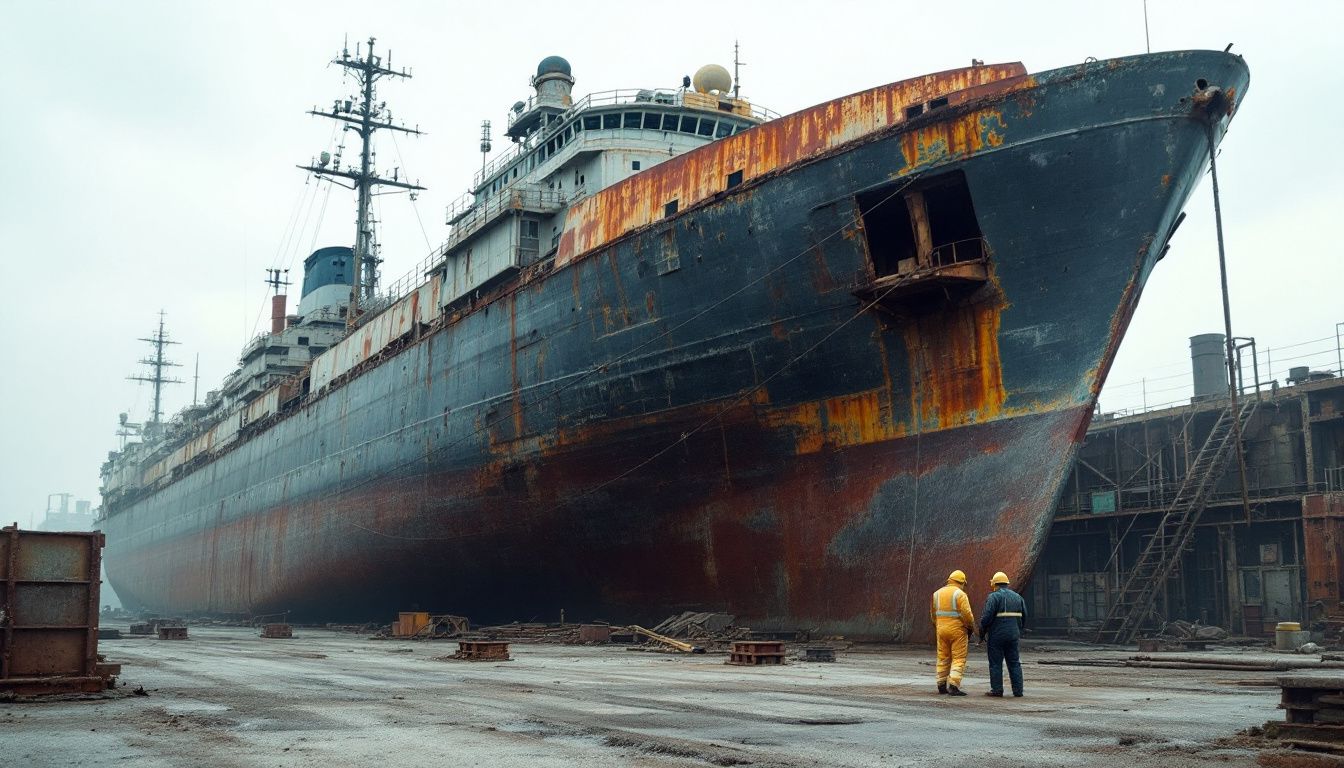
Why a Maritime Asbestos Survey Could Be the Most Important Safety Step You Take
Asbestos and shipbuilding have a long, dangerous history. For decades, the material was used throughout vessels because of its heat resistance, durability, and low cost — and the consequences for those who worked in and around ships have been severe. A thorough maritime asbestos survey is the first line of defence against exposure, whether you are managing an active shipyard, overseeing vessel maintenance, or preparing a ship for recycling.
This is not a theoretical risk. Mesothelioma and other asbestos-related diseases continue to claim lives across the UK, and the maritime industry remains one of the highest-risk sectors. Understanding what surveys involve, what the law requires, and how to protect your workforce is where responsible management begins.
What Is a Maritime Asbestos Survey?
A maritime asbestos survey is a structured inspection of a vessel or shipyard facility to identify, locate, and assess asbestos-containing materials (ACMs). Unlike surveys carried out in standard commercial or residential buildings, maritime surveys must account for the unique construction of ships — cramped engine rooms, layered insulation, complex pipe systems, and materials that were often installed decades ago.
There are two primary types of survey relevant to maritime settings:
- A management survey — used to locate and assess ACMs that could be disturbed during normal operations and routine maintenance
- A demolition survey — required before any significant repair, conversion, or ship recycling work begins
Both types follow the principles set out in HSG264, the HSE’s guidance document on asbestos surveys. In a maritime context, these surveys also feed directly into the vessel’s Inventory of Hazardous Materials (IHM), which is a legal requirement under several regulatory frameworks.
Where Asbestos Hides on Ships
Asbestos was considered an ideal shipbuilding material for much of the twentieth century. It was fire-resistant, chemically stable, and capable of withstanding the extreme conditions found in engine rooms and boiler spaces. As a result, it was used extensively — and often in ways that are not immediately obvious during routine inspection.
Common Asbestos-Containing Materials in Vessels
Surveyors carrying out a maritime asbestos survey will typically examine the following areas and materials:
- Thermal insulation on pipes, boilers, and steam systems
- Insulating boards used in bulkheads, deckheads, and partitions
- Gaskets and packing materials in engine rooms
- Electrical cable insulation and switchgear
- Deck tiles and adhesives
- Fire-resistant coatings and spray insulation
- Rope seals and lagging on exhaust systems
- Paint and textured coatings in older vessels
Many of these materials are in poor condition on older vessels, making disturbance — and therefore fibre release — a real and immediate risk. The danger is compounded by the confined spaces typical of ship interiors, where ventilation is limited and fibre concentrations can build rapidly.
High-Risk Roles in the Maritime Sector
Not all shipyard workers face equal exposure. Those at greatest risk include:
- Shipbuilders and repair engineers working on older vessels
- Pipefitters and laggers who work directly with insulated systems
- Electricians working inside cable runs and switchgear compartments
- Navy and merchant navy personnel who spent years aboard asbestos-laden ships
- Ship recycling workers who dismantle vessels without adequate hazard information
Navy service has historically been associated with a significant proportion of UK mesothelioma cases, reflecting just how widespread asbestos use was in military vessels. A properly conducted maritime asbestos survey helps ensure that today’s workers are not exposed to the same risks as previous generations.
The Legal Framework: What UK Regulations Require
Several pieces of legislation govern asbestos management in the maritime sector. Compliance is not optional — failure to meet these requirements can result in enforcement action, substantial fines, and, most critically, preventable harm to workers.
Control of Asbestos Regulations
The Control of Asbestos Regulations apply across all workplaces in Great Britain, including shipyards and vessels used as workplaces. They set out the duty to manage asbestos, the requirement to carry out suitable surveys before work begins, and the obligation to use licensed contractors for higher-risk asbestos work.
Under these regulations, employers must not allow work to proceed in areas where ACMs may be disturbed unless a suitable survey has been completed and the findings acted upon. This applies equally to a dry dock repair as it does to an office refurbishment.
Merchant Shipping (Ship Recycling) Regulations
These regulations implement the requirements of the EU Ship Recycling Regulation for UK-flagged vessels. They require ships to carry and maintain an Inventory of Hazardous Materials (IHM), which must include a thorough record of all ACMs on board.
The IHM must be certified and kept up to date throughout the vessel’s operational life. A maritime asbestos survey is central to producing a compliant IHM. Without accurate survey data, the inventory is incomplete — and an incomplete IHM exposes ship owners to legal liability and puts recycling yard workers at risk.
Health and Safety at Work etc. Act
The overarching duty on employers under this Act is to ensure, so far as is reasonably practicable, the health, safety, and welfare of all employees. In a shipyard context, this means identifying hazards — including asbestos — before work begins, providing appropriate training and protective equipment, and maintaining records that demonstrate due diligence.
Shipyard operators who rely on outdated or incomplete asbestos records are not meeting this duty. A current, site-specific maritime asbestos survey is the foundation of a defensible safety management system.
The Hong Kong International Convention
Although not yet in force globally, the Hong Kong International Convention for the Safe and Environmentally Sound Recycling of Ships has shaped national and regional legislation, including the EU Ship Recycling Regulation. It establishes the IHM framework and sets standards for how vessels must be prepared before recycling.
UK shipowners operating internationally should be aware of how these requirements interact with domestic law and ensure their survey documentation is consistent with both frameworks.
The Inventory of Hazardous Materials: What Surveyors Need to Produce
The IHM is a structured document that records all hazardous materials on board a vessel, including ACMs, ozone-depleting substances, heavy metals in paints, and other regulated materials. For the purposes of a maritime asbestos survey, the focus is on Part I of the IHM, which covers materials present in the ship’s structure and equipment.
What a Compliant IHM Requires
To produce a compliant IHM, the surveying team must:
- Conduct a thorough visual inspection of all accessible areas of the vessel
- Take representative samples from suspected ACMs and submit them for laboratory analysis
- Produce detailed drawings or plans showing the location of all identified ACMs
- Assess the condition of each ACM and its risk of fibre release
- Document all findings in a format consistent with the applicable regulatory requirements
- Recommend appropriate management or remediation actions
Only qualified and experienced surveyors should produce IHM documentation. The consequences of an inaccurate or incomplete IHM — for workers, for ship owners, and for the environment — are too serious to cut corners on.
Keeping the IHM Current
The IHM is not a one-off document. It must be updated whenever the vessel undergoes significant repair, modification, or change of materials.
A maritime asbestos survey should therefore be viewed as part of an ongoing management process, not a box-ticking exercise carried out once and filed away. Regular reviews and condition assessments are an integral part of responsible vessel management.
Health Consequences of Asbestos Exposure in Shipyards
The diseases caused by asbestos exposure are well established and, in most cases, fatal. There is no safe level of exposure, and the latency period between first exposure and diagnosis can be forty years or more — meaning workers exposed in the 1980s are still being diagnosed today.
The principal asbestos-related diseases include:
- Mesothelioma — an aggressive cancer of the lining of the lungs or abdomen, almost exclusively caused by asbestos exposure
- Asbestosis — progressive scarring of the lung tissue that causes severe breathlessness
- Lung cancer — risk is significantly increased by asbestos exposure, particularly in those who also smoke
- Pleural thickening — scarring of the membrane surrounding the lungs, which can cause chronic pain and reduced lung function
For shipyard workers, the risk is acute. Confined spaces, poor ventilation, and the physical disturbance of aged and degraded materials create conditions where fibre concentrations can reach dangerous levels very quickly. A maritime asbestos survey identifies these risk areas before work begins, giving safety teams the information they need to protect their workforce.
Practical Steps for Shipyard Operators
If you manage a shipyard, oversee vessel maintenance, or are responsible for health and safety in a maritime environment, the following actions should be on your radar.
Before Any Work Begins
- Commission a refurbishment and demolition survey if any intrusive work is planned
- Ensure the vessel’s IHM is current and reflects any recent changes to the ship’s structure or equipment
- Brief all workers and contractors on the findings of the survey before they enter the vessel
- Confirm that any contractor engaged to remove or disturb ACMs holds the appropriate HSE licence
During Ongoing Operations
- Maintain a live asbestos register that is accessible to all relevant staff
- Carry out regular condition assessments of known ACMs to identify deterioration
- Ensure that any work that may disturb ACMs is carried out only by licensed contractors
- Provide appropriate respiratory protective equipment and training to all workers who may encounter ACMs
Worker Training and Awareness
- All workers should receive asbestos awareness training as a minimum requirement
- Those who may work with ACMs directly require more detailed training under the Control of Asbestos Regulations
- Regular toolbox talks and safety briefings reinforce awareness and help workers identify warning signs early
Health surveillance is also strongly recommended for workers with a history of asbestos exposure. Early identification of disease gives individuals the best possible chance of accessing treatment and legal support.
Maritime Asbestos Surveys Across the UK
Shipyards and maritime facilities are spread across the country, from major port cities to inland waterways and dry docks. Supernova Asbestos Surveys operates nationwide, providing maritime asbestos survey services wherever they are needed.
For clients in the capital, our team provides a full asbestos survey London service covering all property and vessel types, including maritime and industrial facilities along the Thames and surrounding areas.
In the north-west, where shipbuilding and maritime industry have deep historical roots, our asbestos survey Manchester service covers the Greater Manchester area and surrounding regions, including facilities with links to the Manchester Ship Canal.
In the Midlands, our asbestos survey Birmingham team serves industrial and commercial clients across the region, including those with connections to inland waterway infrastructure and historic manufacturing sites.
Wherever you are based, our surveyors are trained to work in complex, hazardous environments and to produce survey reports that meet both HSG264 standards and the specific requirements of maritime regulatory frameworks.
Choosing the Right Surveying Partner for Maritime Work
Maritime environments present challenges that standard building surveyors are not equipped to handle. Vessels are complex structures with unique materials, confined access points, and layered construction that can conceal ACMs even from experienced eyes.
When selecting a surveying company for maritime work, look for the following:
- Surveyors with demonstrable experience in shipyard and vessel environments
- UKAS-accredited laboratory analysis for all samples taken
- Clear reporting that meets HSG264 standards and IHM requirements
- The ability to produce or contribute to a compliant Inventory of Hazardous Materials
- Nationwide coverage with the capacity to mobilise quickly to port locations
A maritime asbestos survey is only as good as the team carrying it out. Cutting costs at this stage can create far greater liabilities down the line — both in terms of regulatory penalties and, far more seriously, the health of your workforce.
Frequently Asked Questions
What is a maritime asbestos survey and when is one required?
A maritime asbestos survey is a formal inspection of a vessel or shipyard facility to identify and assess asbestos-containing materials. One is required before any intrusive maintenance, repair, or recycling work begins on a vessel, and as part of producing or updating a vessel’s Inventory of Hazardous Materials under the Merchant Shipping (Ship Recycling) Regulations.
Does the Control of Asbestos Regulations apply to ships and shipyards?
Yes. The Control of Asbestos Regulations apply to all workplaces in Great Britain, including shipyards and vessels that are used as workplaces. Employers in the maritime sector are subject to the same duty to manage asbestos as those in any other industry, including the requirement to carry out suitable surveys before work commences.
What is an Inventory of Hazardous Materials and how does a survey contribute to it?
An Inventory of Hazardous Materials (IHM) is a document required for UK-flagged vessels that records all hazardous materials on board, including asbestos-containing materials. A maritime asbestos survey provides the data needed to compile Part I of the IHM accurately. Without a thorough survey, the IHM will be incomplete and non-compliant, exposing ship owners to legal risk.
How often should a maritime asbestos survey be updated?
The IHM — and the survey data underpinning it — must be updated whenever a vessel undergoes significant repair, modification, or change of materials. Beyond these trigger points, regular condition assessments of known ACMs should be carried out to identify deterioration that may increase the risk of fibre release.
Can any asbestos surveyor carry out a maritime survey?
Not all surveyors have the experience needed for maritime environments. Vessels present unique challenges including confined access, layered construction, and materials not typically found in buildings. You should select a surveying company with proven experience in shipyard and vessel inspections, UKAS-accredited laboratory support, and the ability to produce IHM-compliant documentation.
Get a Maritime Asbestos Survey from Supernova
Supernova Asbestos Surveys has completed over 50,000 surveys across the UK, working with clients in some of the most demanding and complex environments in the country. Our surveyors understand the specific challenges of maritime settings and produce reports that meet both HSG264 requirements and the demands of ship recycling legislation.
Whether you need a management survey for ongoing vessel operations, a demolition survey ahead of major repair work, or support in producing a compliant Inventory of Hazardous Materials, our team is ready to help.
Call us on 020 4586 0680 or visit asbestos-surveys.org.uk to discuss your requirements and arrange a survey.