Asbestos in Shipbuilding: The Hidden Danger That Still Shapes Occupational Health Today
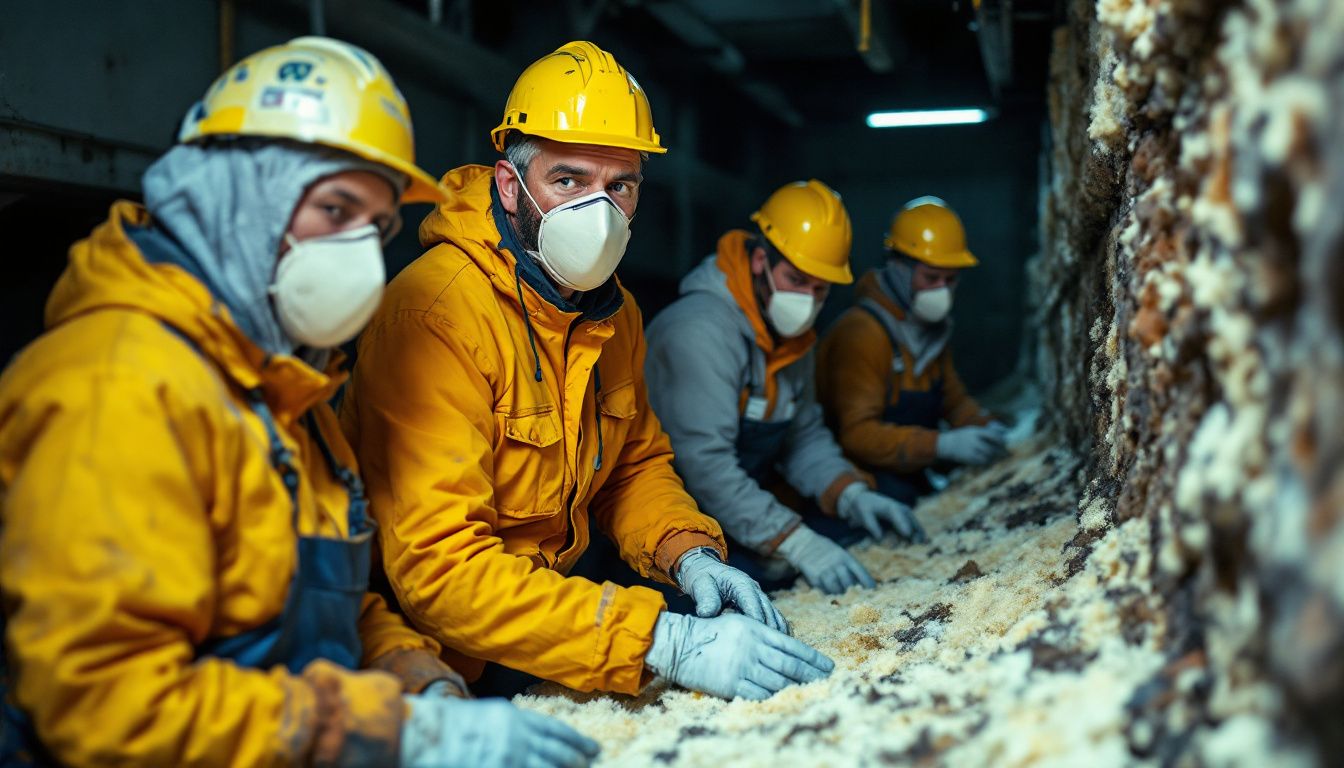
Shipyard workers carry one of the heaviest asbestos burdens of any industrial workforce in the UK. For decades, asbestos was woven into the very fabric of ship construction — and the consequences are still being felt by workers, surveyors, and vessel owners across the country. Asbestos in shipbuilding is not a matter of historical curiosity; it is a live occupational health issue that demands proper risk management, rigorous surveying, and strict compliance with UK regulations.
Why Asbestos Was So Widely Used in Shipbuilding
Ships are extraordinarily demanding environments. They face extreme heat, constant vibration, saltwater corrosion, and an ever-present risk of fire. Asbestos ticked every box for shipbuilders — it was cheap, durable, fire-resistant, and an excellent thermal insulator.
Builders used asbestos extensively throughout vessels in materials including:
- Pipe lagging and thermal insulation
- Boiler cladding and engine room linings
- Deck tiles and floor coverings
- Gaskets, seals, and brake linings
- Bulkhead and deckhead panels
- Electrical insulation boards
- Fire doors and partitioning
Many of these materials were applied in confined, poorly ventilated spaces — exactly the conditions that maximise fibre inhalation. Laggers, plumbers, electricians, and engineers all worked in close proximity to asbestos-containing materials (ACMs) for years at a time.
A significant proportion of vessels still in operation today contain asbestos in some form, particularly those built before the UK’s general asbestos ban came into force. The risk has not disappeared — it has simply shifted from new installation to maintenance, repair, and demolition work.
The Health Consequences of Asbestos Exposure in Shipyards
The diseases caused by asbestos exposure are serious, progressive, and in most cases fatal. What makes asbestos particularly dangerous in shipbuilding contexts is the latency period — symptoms can take between 20 and 60 years to develop after initial exposure.
Conditions associated with asbestos exposure include:
- Mesothelioma — a cancer of the lining of the lungs, heart, or abdomen with no cure
- Asbestosis — progressive scarring of lung tissue that reduces breathing capacity
- Lung cancer — with risk significantly elevated when combined with smoking
- Pleural plaques and thickening — changes to the lung lining that can cause breathlessness
The enclosed nature of ships, combined with the sheer volume of ACMs installed throughout a vessel, created conditions where fibre concentrations could reach dangerous levels rapidly. Workers exposed during the 1960s, 1970s, and 1980s are only now being diagnosed with asbestos-related diseases.
This is not a closed chapter. It is an ongoing public health concern that the industry cannot afford to ignore.
UK Regulations Governing Asbestos in Shipbuilding
The regulatory framework for asbestos in the UK maritime sector is robust, but it requires employers and vessel owners to take an active role in compliance. Two key pieces of legislation govern this area.
The Control of Asbestos Regulations
The Control of Asbestos Regulations apply broadly across workplaces in the UK, including shipyards and vessels operating in inland and coastal waters. They establish the core duties for managing asbestos: identifying ACMs, assessing risk, preventing or reducing exposure, and maintaining proper records.
Under these regulations, the exposure limit for asbestos fibres is set at 0.1 fibres per cubic centimetre, measured over a four-hour period. Employers must ensure that airborne fibre concentrations remain below this threshold at all times.
The regulations also require that any licensable asbestos work — which includes most work involving friable or high-risk ACMs — is carried out only by contractors licensed by the HSE. Notification to the relevant authority must be submitted at least 14 days before licensed work begins.
The Merchant Shipping and Fishing Vessels (Health and Safety at Work) (Asbestos) Regulations
These regulations extend asbestos protections specifically to maritime workers aboard UK-registered vessels. They mirror many of the protections in the land-based Control of Asbestos Regulations but apply to ships at sea and in inland waters.
Key requirements include:
- Prohibition on spraying asbestos or installing low-density asbestos insulation
- Mandatory risk assessments before any work that may disturb ACMs
- Notification to the Secretary of State at least 14 days before asbestos work commences
- Provision of appropriate personal protective equipment (PPE) to all workers
- Medical surveillance for workers who are regularly exposed to asbestos
- Maintenance of health records for a minimum of 40 years following the end of exposure
- Annual training for all workers who may encounter asbestos in the course of their duties
These regulations apply to vessels built before and after the relevant cut-off dates, recognising that legacy asbestos in older ships remains a live hazard during repair and maintenance operations.
Prohibited Activities Under UK Maritime Asbestos Law
Certain activities involving asbestos are outright banned in the UK maritime sector. These include:
- Spraying asbestos-containing materials in any form
- Installing new asbestos-containing insulation products on vessels
- Cutting, drilling, grinding, or sanding ACMs without full enclosure and extraction controls
- Disturbing friable asbestos without a licensed contractor and a written plan of work
- Cleaning asbestos-contaminated areas using compressed air
- Storing loose asbestos waste in unsealed or unlabelled containers
Breaches of these requirements can result in enforcement action by the HSE or the Maritime and Coastguard Agency, as well as significant civil liability if workers are harmed.
The Role of Asbestos Surveys in Shipbuilding and Vessel Maintenance
Before any maintenance, repair, refurbishment, or demolition work begins on a vessel, a thorough asbestos survey is essential. In most circumstances, it is also a legal requirement.
A management survey identifies the location and condition of ACMs that could be disturbed during normal use or routine maintenance. A demolition survey goes further, providing a comprehensive picture of all ACMs before intrusive or structural work begins.
Professional surveyors working in maritime environments will:
- Inspect all accessible areas of the vessel systematically
- Take bulk samples of suspected ACMs for laboratory analysis
- Assess the condition and risk rating of identified materials
- Produce a written report and asbestos register for the vessel
- Recommend appropriate management or remediation actions
Without an up-to-date asbestos register, maintenance workers are effectively operating blind. They may disturb ACMs without knowing it, putting themselves and colleagues at serious risk.
If your operations are based in or around the capital, our asbestos survey London service covers shipyards, dry docks, and maritime facilities across the city and surrounding area. For operations in the north-west, our asbestos survey Manchester team is on hand to support vessel owners and shipyard managers across the region.
Risk Assessment: Identifying and Evaluating Asbestos Hazards on Vessels
A risk assessment for asbestos in a shipbuilding or vessel repair context must be thorough and site-specific. Generic assessments are not sufficient — the layout of the vessel, the type of work being carried out, and the condition of existing ACMs all need to be factored in.
Identifying Hazardous Areas
Surveyors and safety managers should pay particular attention to:
- Engine rooms and boiler spaces — historically the heaviest users of asbestos insulation
- Pipe runs and valve housings throughout the vessel
- Accommodation areas in older vessels — particularly ceiling tiles and partition boards
- Electrical switchgear rooms, where asbestos boards were commonly used
- Deck areas with original tile or coating materials
Old ship plans and construction records can help identify where asbestos was originally specified, but they should never be relied upon in isolation. Materials may have been added, replaced, or disturbed during previous maintenance cycles without proper documentation.
Air Quality Monitoring
During any work that may disturb ACMs, continuous air monitoring is required. Sampling equipment should be positioned at worker breathing zones and at the perimeter of any enclosed work area.
Results must be measured against the control limit of 0.1 fibres per cubic centimetre over four hours. If levels approach or exceed this threshold, work must stop immediately and the area must be re-assessed.
All monitoring data must be recorded and retained. This documentation forms part of the evidence trail that demonstrates regulatory compliance and protects employers in the event of a future health claim.
Practical Safety Measures for Shipyard Asbestos Work
Good risk assessment must translate into practical controls on the ground. The hierarchy of control — eliminate, substitute, engineer, administer, protect — applies just as much in a shipyard as anywhere else.
Engineering Controls
Where asbestos work cannot be avoided, engineering controls should be the first line of defence:
- Enclosures with negative pressure ventilation to contain fibres within the work area
- Local exhaust ventilation (LEV) systems positioned at the point of dust generation
- HEPA-filtered vacuum equipment for cleaning — never dry sweeping or compressed air
- Wet suppression methods to dampen ACMs before and during removal
- Airlock systems between the work area and clean zones
Personal Protective Equipment
PPE is the last line of defence, not the first. Where engineering controls cannot reduce exposure to below the control limit, workers must be provided with:
- Respiratory protective equipment (RPE) — typically a half-face or full-face respirator with P3 filters
- Disposable coveralls (Type 5 minimum) to prevent fibre contamination of clothing
- Gloves and boot covers appropriate to the work being carried out
Workers must be fit-tested for any tight-fitting RPE. An ill-fitting mask provides no meaningful protection and creates a dangerous false sense of security.
Decontamination Procedures
Decontamination is a critical step that is sometimes underestimated in shipyard environments. Workers must:
- Remove and bag contaminated coveralls within the work enclosure before exiting
- Shower thoroughly before leaving the work area
- Keep work clothing separate from personal clothing at all times
- Never take potentially contaminated clothing home
Employers must provide adequate welfare facilities, including showers, where asbestos work is being carried out. This is a regulatory requirement under the Control of Asbestos Regulations, not an optional extra.
Ship Demolition and the Asbestos Challenge
Ship recycling and demolition present some of the most complex asbestos challenges in the industry. Vessels built before the widespread ban on asbestos can contain substantial quantities of ACMs distributed throughout their entire structure.
Before any demolition work begins, a full refurbishment and demolition survey must be completed. All ACMs must be identified, quantified, and scheduled for removal by a licensed contractor before structural demolition commences.
The Inventory of Hazardous Materials (IHM) requirement under international maritime regulations adds another layer of obligation for vessel owners. UK-flagged ships above certain tonnage thresholds are required to maintain an up-to-date inventory of hazardous materials, including asbestos, throughout the vessel’s operational life.
If your shipyard or maritime facility is in the Midlands, our asbestos survey Birmingham team can provide the specialist surveys needed to support demolition planning and regulatory compliance.
Medical Surveillance and Worker Health Records
Medical surveillance is a legal requirement for workers who are regularly exposed to asbestos. Under both the Control of Asbestos Regulations and the maritime-specific regulations, employers must arrange for workers to undergo health assessments carried out by an appointed doctor.
These assessments must take place before the worker begins asbestos work and at regular intervals thereafter. The purpose is to detect early signs of asbestos-related disease and to ensure the worker remains fit to carry out the work safely.
Health records must be maintained for a minimum of 40 years following the end of the worker’s exposure. Given the long latency period of asbestos-related diseases, this extended record-keeping requirement is not bureaucratic excess — it is a practical necessity that protects both workers and employers.
Workers also have the right to access their own health records on request. Employers should ensure that record-keeping systems are robust, secure, and easily retrievable.
Training Requirements for Shipyard Workers
Anyone who may encounter asbestos in the course of their work in a shipyard or on a vessel must receive appropriate training. This is not a one-off obligation — training must be refreshed annually.
Training should cover:
- What asbestos is, where it is likely to be found on vessels, and why it is dangerous
- How to recognise potentially ACM-containing materials
- The correct procedures for reporting suspected ACMs
- The legal duties of both employers and workers under UK asbestos regulations
- How to use PPE and RPE correctly, including donning, doffing, and storage
- Emergency procedures in the event of accidental ACM disturbance
Training records must be kept and made available to the HSE or Maritime and Coastguard Agency on request. Supervisors and safety officers should receive more detailed training than general operatives, reflecting their greater responsibility for managing risk on site.
Managing the Asbestos Register on an Active Vessel
An asbestos register is not a document that gets filed away and forgotten. On an active vessel, it must be treated as a living document that is updated whenever work is carried out, new materials are identified, or the condition of known ACMs changes.
Every person who may need to carry out maintenance or repair work on the vessel should be made aware of the register’s existence and know how to access it before work begins. This includes contractors and third-party engineers, not just the vessel’s own crew.
Where ACMs are in good condition and pose a low risk of disturbance, a management approach — monitoring their condition and keeping them undisturbed — is often the most appropriate course of action. Where materials are deteriorating or are likely to be disturbed by planned work, removal by a licensed contractor should be arranged in advance.
Vessel owners should also ensure that their asbestos register is factored into any sale, transfer, or change of operational use of the vessel. Passing on accurate hazardous materials information is both a legal obligation and a basic duty of care to the next owner or operator.
Frequently Asked Questions
Is asbestos still present in ships today?
Yes. Many vessels built before the UK’s general asbestos ban still contain asbestos-containing materials in various forms, including pipe lagging, insulation boards, gaskets, and deck tiles. Any vessel of that age should be treated as potentially containing asbestos until a professional survey confirms otherwise.
What regulations apply to asbestos in shipbuilding and vessel maintenance in the UK?
The primary legislation includes the Control of Asbestos Regulations, which apply across all UK workplaces including shipyards, and the Merchant Shipping and Fishing Vessels (Health and Safety at Work) (Asbestos) Regulations, which extend protections specifically to workers aboard UK-registered vessels. HSE guidance and the Hong Kong Convention on ship recycling also provide relevant frameworks for vessel owners.
Do I need an asbestos survey before carrying out maintenance work on a vessel?
In most circumstances, yes. Before any maintenance, repair, or refurbishment work that could disturb existing materials, a management survey should be in place. For more extensive refurbishment or demolition work, a full refurbishment and demolition survey is required. Operating without an up-to-date survey puts workers at risk and exposes employers to serious legal liability.
Who can carry out asbestos removal work on a ship?
Most work involving friable or high-risk asbestos-containing materials must be carried out by a contractor licensed by the HSE. Unlicensed removal of such materials is illegal and puts workers at serious risk. The vessel owner or operator is responsible for ensuring that only appropriately licensed contractors are engaged for asbestos work.
What should I do if asbestos is accidentally disturbed during shipyard work?
Work must stop immediately. The area should be evacuated and sealed off to prevent further fibre release. Workers who may have been exposed should be recorded and referred for medical assessment. A licensed asbestos contractor must be engaged to assess and remediate the situation before work resumes. The incident may also need to be reported to the HSE under the Reporting of Injuries, Diseases and Dangerous Occurrences Regulations (RIDDOR).
Speak to Supernova Asbestos Surveys
Asbestos in shipbuilding is a complex and high-stakes area of health and safety. Whether you are managing an active vessel, planning a refit, or overseeing the demolition of an older ship, getting your asbestos surveys right is not optional — it is the foundation of everything else.
Supernova Asbestos Surveys has completed over 50,000 surveys nationwide, working with property managers, vessel owners, shipyard operators, and facilities teams across the UK. Our accredited surveyors understand the specific challenges of maritime environments and can provide the management surveys, demolition surveys, and specialist advice your operation requires.
Call us on 020 4586 0680 or visit asbestos-surveys.org.uk to discuss your requirements and arrange a survey.