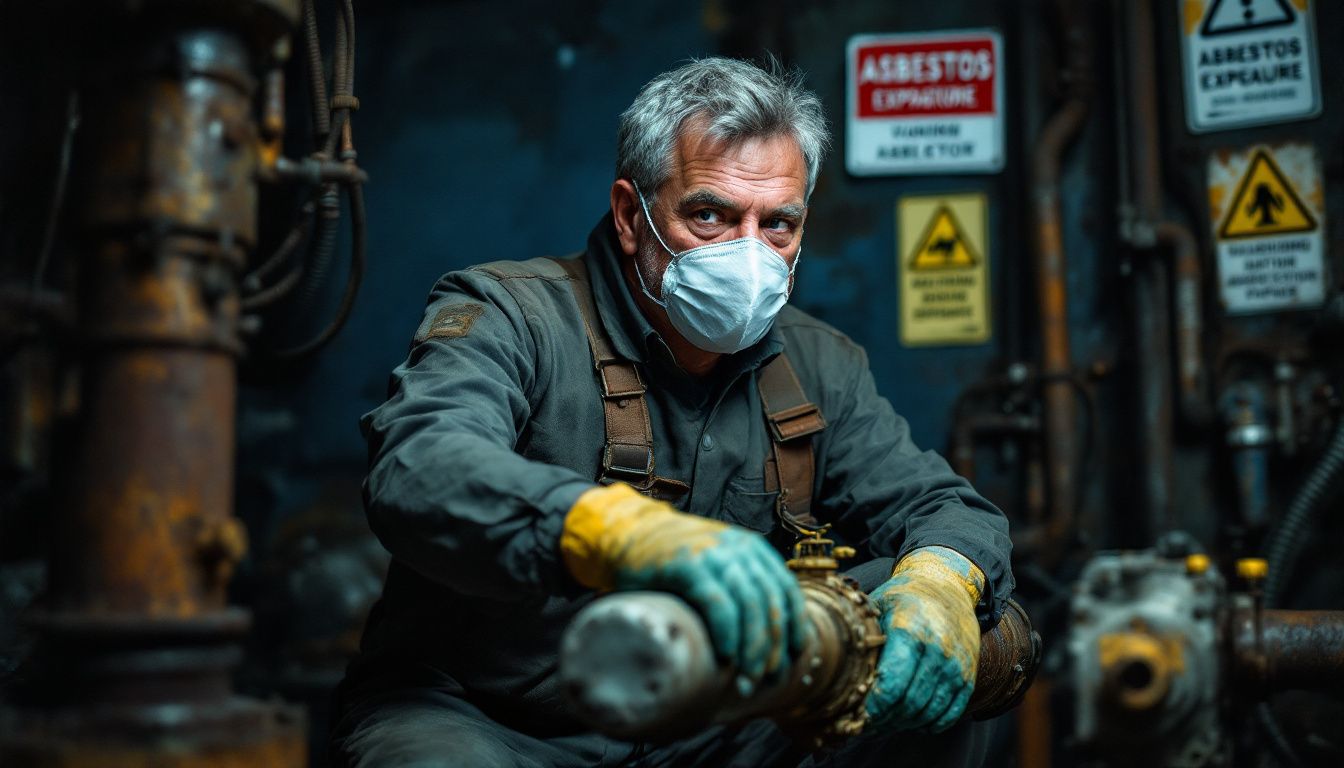
Asbestos Exposure at Brooklyn Navy Yard: A Legacy That Still Demands Attention
Thousands of men and women who worked at the Brooklyn Navy Yard never knew they were breathing in one of the most dangerous substances ever used in industry. Asbestos exposure at Brooklyn Navy Yard created a slow-burning public health crisis whose consequences are still being felt today — by former workers, their families, and the wider communities connected to this historic site.
Understanding how this happened, and what lessons it holds for anyone dealing with asbestos in the built environment, matters far beyond the United States. Property managers, building owners, and safety professionals across the UK face the same underlying challenge: asbestos installed decades ago does not disappear, and the duty to manage it safely is both a moral and legal obligation.
Why Shipyards Became Asbestos Hotspots
Asbestos was not used carelessly in shipbuilding — it was used deliberately and enthusiastically. Its natural properties made it genuinely valuable: it resisted heat, fire, and corrosion, and it was cheap to source and easy to apply across many forms and formats.
Ships required fire protection throughout their structures. Engine rooms, boiler rooms, pipe lagging, bulkheads, and crew quarters all needed insulation capable of withstanding extreme temperatures. Asbestos delivered on every requirement, and the maritime industry embraced it accordingly.
From the 1930s through to the 1970s, virtually every major shipyard in the industrialised world used asbestos as a matter of course. The Brooklyn Navy Yard was no exception — one of the most active naval facilities in the United States, with asbestos woven into its construction and repair work at every level.
The Types of Asbestos Used in Shipbuilding
Two forms of asbestos were particularly prevalent in shipyards: chrysotile (white asbestos) and amosite (brown asbestos). Both were used extensively, often in combination, across a wide range of products and applications.
Common asbestos-containing materials found in shipyard environments included:
- Pipe insulation and lagging
- Spray-applied fireproofing coatings
- Insulation boards and panels
- Fireproof blankets and textiles
- Gaskets and valve packing
- Floor tiles, ceiling panels, and wall boards
- Boiler and furnace insulation
- Paints and deck coatings
Workers in every trade — insulators, pipefitters, electricians, welders, painters — encountered asbestos-containing materials daily. In many cases, they were cutting, sanding, or applying these materials in poorly ventilated spaces, generating clouds of fine fibre that settled on skin, clothing, and lungs.
What Happened at the Brooklyn Navy Yard
The Brooklyn Navy Yard, formally known as the New York Naval Shipyard, was one of the most strategically significant naval facilities in American history. During the Second World War, it operated around the clock, employing tens of thousands of workers at its peak — building and repairing warships on an extraordinary scale, with asbestos central to that effort.
Workers handled asbestos-containing materials without adequate protection. Respirators were rarely provided, and where they were available, they were often inadequate for the size of fibres being released. The confined spaces of ship interiors meant that airborne fibre concentrations could reach dangerous levels, with no effective ventilation to clear them.
Repair and refit work was often worse than new construction. When old insulation was stripped out to access pipes or equipment, previously bound asbestos fibres were released in large quantities. Workers doing this job — and those working nearby — received heavy, repeated exposures over years or even decades of employment.
The Scale of the Problem Across US Shipyards
The Brooklyn Navy Yard was not an isolated case. Similar conditions existed at shipyards across the United States and the United Kingdom. Wartime urgency, post-war expansion, and a lack of regulatory oversight combined to create conditions where asbestos exposure was essentially unavoidable for anyone working in these environments.
Other US facilities with documented histories of heavy asbestos use include:
- Mare Island Naval Shipyard, California
- Norfolk Naval Shipyard, Virginia
- Newport News Naval Shipyard, Virginia
- Portsmouth Naval Shipyard, New Hampshire
- Bremerton Naval Shipyard, Washington
- Pearl Harbor Naval Shipyard, Hawaii
Each of these sites has a documented history of worker illness linked to asbestos exposure, with diseases emerging decades after the original exposure occurred.
The Health Consequences of Asbestos Exposure at Brooklyn Navy Yard and Beyond
The diseases caused by asbestos exposure do not appear immediately. This is one of the most insidious aspects of asbestos as a hazard: the latency period between first exposure and the onset of illness can be anywhere from 20 to 50 years. By the time a worker develops symptoms, they may have long since retired, making it difficult to connect their illness to their working conditions.
This delayed onset has complicated diagnosis, legal claims, and compensation for generations of shipyard workers.
Mesothelioma
Mesothelioma is a cancer of the mesothelial lining surrounding the lungs, abdomen, and heart. It is almost exclusively caused by asbestos exposure and remains one of the most serious occupational diseases linked to shipyard work. The prognosis is typically poor, and the disease is often not diagnosed until it has reached an advanced stage.
Asbestosis
Asbestosis is a chronic lung condition caused by the scarring of lung tissue as a result of inhaled asbestos fibres. It causes progressive breathlessness and reduced lung function, and can significantly impair quality of life. There is no cure — management focuses on slowing progression and relieving symptoms.
Lung Cancer
Asbestos exposure significantly increases the risk of lung cancer, particularly in those who also smoked. The combination of tobacco and asbestos creates a risk that is many times greater than either factor alone, and this combination was tragically common among shipyard workers of that era.
Pleural Disease
Pleural plaques, thickening, and effusions are also associated with asbestos exposure. While pleural plaques themselves are not cancerous, their presence indicates significant past exposure and is associated with an increased risk of other asbestos-related conditions.
Former shipyard workers — including those who served at the Brooklyn Navy Yard — face a substantially elevated risk of these conditions compared to the general population. People who worked in these environments during the 1940s, 50s, 60s, and 70s may still be developing asbestos-related illness today.
Legal Accountability and Compensation
The legal landscape around asbestos liability has evolved significantly since the 1970s. As the link between asbestos exposure and serious disease became scientifically established, workers and their families began pursuing claims against manufacturers, employers, and government bodies.
What Workers and Veterans Are Entitled To
In the United States, veterans who developed asbestos-related illness as a result of service at naval shipyards — including the Brooklyn Navy Yard — may be eligible for benefits through the Department of Veterans Affairs. Claims require documentation of service, evidence of asbestos exposure during that service, and a confirmed diagnosis of an asbestos-related condition.
Civilian shipyard workers have pursued claims through the civil courts and through asbestos trust funds established by companies that went bankrupt as a result of asbestos litigation. Major manufacturers that supplied asbestos products to shipyards have faced substantial legal action, with courts awarding significant sums to affected workers and their families.
The Role of Asbestos Manufacturers
Internal documents from several major asbestos manufacturers revealed that companies were aware of the health risks associated with their products long before they disclosed this information publicly. This knowledge — and the decision to conceal it — has been central to many successful legal claims.
The financial consequences of this litigation have been enormous. Dozens of companies have been forced into bankruptcy as a result of asbestos claims, leading to the creation of trust funds intended to compensate future claimants. Accessing these funds typically requires assistance from a lawyer experienced in asbestos claims.
Time limits apply to asbestos claims, and these vary by jurisdiction. Anyone who believes they may have a claim should seek legal advice promptly after receiving a diagnosis.
How the UK Regulates Asbestos Today
In the United Kingdom, the management of asbestos is governed by the Control of Asbestos Regulations, which set out clear duties for employers, building owners, and those responsible for non-domestic premises. The Health and Safety Executive (HSE) enforces these regulations and provides detailed guidance through HSG264, the definitive reference for asbestos surveying practice in the UK.
The regulations require that anyone responsible for a non-domestic building must manage any asbestos present within it. This means identifying where asbestos-containing materials are located, assessing the risk they pose, and putting in place a plan to manage that risk — whether through monitoring, encapsulation, or removal.
Types of Asbestos Survey Required
The Control of Asbestos Regulations and HSG264 define two main types of asbestos survey, each suited to different circumstances:
- Management survey: Used to locate and assess asbestos-containing materials in a building that is in normal use. A management survey is the standard requirement for ongoing management of asbestos in occupied premises, and it forms the basis of any asbestos management plan.
- Demolition survey: Required before any refurbishment or demolition work begins. This is a more intrusive survey designed to locate all asbestos-containing materials that may be disturbed during the planned work. Commissioning a proper demolition survey before breaking ground is not optional — it is a legal requirement.
Choosing the right survey for your situation is critical. Using the wrong type of survey — or failing to commission a survey at all — can put workers and occupants at risk and leave building owners legally exposed.
Modern Shipbuilding and Asbestos: What Has Changed
The shipbuilding industry has changed substantially since the era of the Brooklyn Navy Yard. The use of asbestos in new construction has been banned in the UK and across much of the developed world. Modern shipbuilders use alternative materials — glass wool, mineral wool, ceramic fibre, and other synthetic insulation products — in place of asbestos.
However, the legacy of past asbestos use has not disappeared. Ships built before the widespread bans on asbestos use may still contain significant quantities of asbestos-containing materials. When these vessels undergo repair, refit, or decommissioning, the risk of exposure re-emerges with full force.
Managing Asbestos in Older Vessels and Industrial Buildings
Anyone involved in the repair or decommissioning of older ships and marine vessels needs to treat asbestos as a serious and live risk. The same principles apply equally to older industrial buildings, warehouses, and commercial premises across the UK.
Best practice in these situations requires:
- Commissioning a thorough asbestos survey before any work begins
- Ensuring all workers are aware of the potential for asbestos-containing materials to be present
- Using licensed contractors for any asbestos removal work where required
- Providing appropriate personal protective equipment and respiratory protection
- Following HSE guidance on the safe management and removal of asbestos throughout the project
Whether you are managing an industrial facility, a commercial property, or a public building, the duty to manage asbestos is clear and legally enforceable. Cutting corners is not just dangerous — it is a criminal offence under the Control of Asbestos Regulations.
Lessons From Brooklyn Navy Yard for UK Property Owners
The story of asbestos exposure at Brooklyn Navy Yard is not simply a piece of American industrial history. It is a warning that applies directly to anyone responsible for older buildings in the UK today.
The same materials that caused illness among shipyard workers were used extensively in UK construction from the 1950s through to the late 1990s. Schools, hospitals, offices, factories, and residential blocks all incorporated asbestos-containing materials as a matter of routine. Many of those buildings are still in use.
The key lessons are straightforward:
- Assume asbestos is present in any building constructed or refurbished before the year 2000, unless a survey has confirmed otherwise.
- Do not disturb suspected asbestos-containing materials without first commissioning an appropriate survey.
- Maintain an asbestos register and keep it updated — it is a legal requirement for non-domestic premises.
- Train staff and contractors to recognise potential asbestos-containing materials and to follow the correct reporting procedures.
- Act on survey findings promptly — a risk identified and managed is far less dangerous than one ignored.
The workers at the Brooklyn Navy Yard had no meaningful choice about the risks they faced. Building owners and managers in the UK today do have that choice, and the regulatory framework exists precisely to ensure it is exercised responsibly.
Asbestos Surveys Across the UK: Where Supernova Can Help
Supernova Asbestos Surveys operates nationwide, providing accredited asbestos surveying services to property owners, managers, and contractors across England. Whether your building is a former industrial site, a commercial office, or a public facility, our qualified surveyors can identify asbestos-containing materials and provide clear, actionable guidance on managing the risk.
We carry out surveys in major cities and regions across the country. If you need an asbestos survey in London, our team covers the full capital and surrounding areas. For those in the north-west, we provide a full asbestos survey in Manchester and the wider region. We also offer a complete asbestos survey in Birmingham service for properties across the Midlands.
Every survey we carry out is conducted in accordance with HSG264 and the Control of Asbestos Regulations, giving you the assurance that your legal duties are being met and your occupants are protected.
Frequently Asked Questions
What diseases are associated with asbestos exposure at Brooklyn Navy Yard?
Workers at the Brooklyn Navy Yard have been diagnosed with mesothelioma, asbestosis, lung cancer, and pleural disease as a result of their asbestos exposure. These conditions typically have a latency period of 20 to 50 years between first exposure and the appearance of symptoms, meaning that workers exposed during the 1940s, 50s, and 60s may still be developing illness today.
Why was asbestos used so widely in shipbuilding?
Asbestos offered exceptional fire resistance, heat insulation, and durability at a low cost. Shipbuilders used it throughout vessels — in engine rooms, pipe lagging, bulkheads, and crew quarters — because it met demanding fire safety requirements that few other materials could match at the time. Its hazardous nature was either unknown to workers or actively concealed by manufacturers.
Are UK buildings affected by the same asbestos risks as shipyards?
Yes. The same asbestos-containing materials used in shipbuilding were also used extensively in UK construction throughout the twentieth century. Any building constructed or refurbished before 2000 may contain asbestos, and the duty to manage it safely is enshrined in the Control of Asbestos Regulations. Property owners who fail to manage asbestos correctly face both legal liability and the risk of causing serious harm to occupants and workers.
What type of asbestos survey do I need for my building?
The type of survey required depends on what you plan to do with the building. A management survey is appropriate for buildings in normal use, helping you identify and manage asbestos-containing materials as part of an ongoing asbestos management plan. If you are planning refurbishment or demolition work, a demolition survey is required — this is a more intrusive inspection designed to locate all materials that could be disturbed during the planned works. A qualified surveyor can advise you on the correct approach for your specific situation.
How do I find a qualified asbestos surveyor in the UK?
You should always use a surveyor accredited by the United Kingdom Accreditation Service (UKAS) and working in accordance with HSG264. Supernova Asbestos Surveys provides accredited asbestos surveying services across the UK, with over 50,000 surveys completed nationwide. Contact our team on 020 4586 0680 or visit asbestos-surveys.org.uk to arrange a survey.
Speak to Supernova Asbestos Surveys Today
The consequences of unmanaged asbestos exposure — as the Brooklyn Navy Yard story makes painfully clear — can last for generations. You have both a legal duty and a moral responsibility to ensure that asbestos in your building is identified, assessed, and managed correctly.
Supernova Asbestos Surveys has completed over 50,000 surveys across the UK. Our accredited surveyors work quickly, thoroughly, and in full compliance with the Control of Asbestos Regulations and HSG264 guidance.
Call us today on 020 4586 0680 or visit asbestos-surveys.org.uk to book your survey or speak to one of our specialists about your asbestos management obligations.