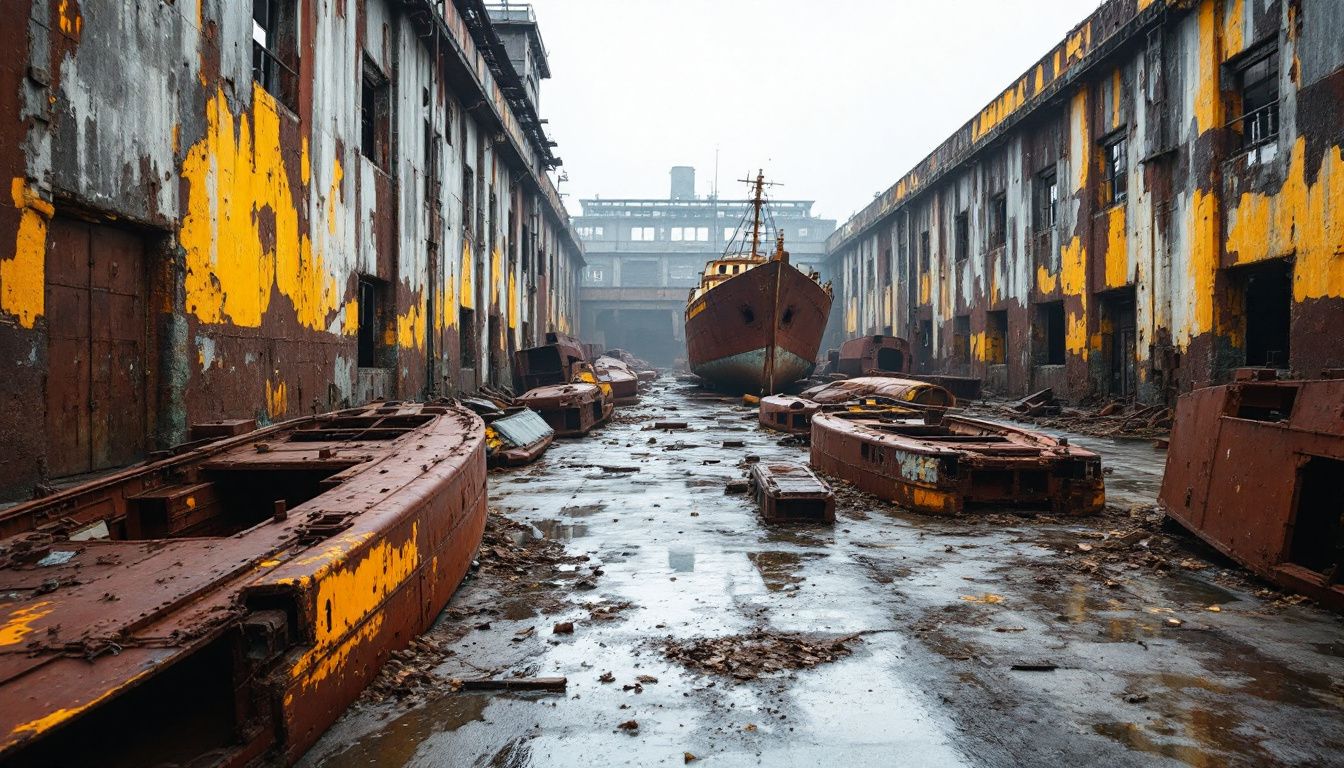
Asbestos in Ships: A Legacy of Danger That Still Affects Workers Today
For most of the twentieth century, asbestos was considered an engineering miracle. Cheap, lightweight, resistant to heat and fire, and seemingly indestructible — it was embraced by industries worldwide. Nowhere was it used more enthusiastically than in shipbuilding, and nowhere did it cause more devastation. Asbestos in ships affected hundreds of thousands of workers across the UK and beyond, leaving a trail of preventable illness that continues to this day.
Old vessels are still in service. Dry docks still handle aged hulls. Surveyors, engineers, and maintenance crews still encounter asbestos-containing materials on the water. This is not purely a historical problem — it is an active, ongoing risk that demands serious attention.
Why Shipbuilders Relied So Heavily on Asbestos
Ships are uniquely hostile environments. They carry enormous heat loads from boilers and engines, operate in saltwater that corrodes metal rapidly, and must meet stringent fire safety requirements. Asbestos addressed all of these problems in a single material, which is precisely why shipbuilders found it so appealing.
From the early twentieth century onwards, shipyards across Britain, the United States, and Europe incorporated asbestos into virtually every part of a vessel’s construction. It was woven into insulation, pressed into gaskets, mixed into paints, and sprayed directly onto structural steel. It appeared in sleeping quarters as well as engine rooms — no area of a ship was entirely free of it.
The scale of use was staggering. Asbestos-containing materials were found in well over 300 distinct ship components, including boilers, steam pipes, turbines, bulkheads, deckheads, cable runs, pump housings, and floor tiles.
The Role of Naval Specifications
Military navies accelerated the problem considerably. Naval specifications mandated asbestos use in many vessel types because of its fire-suppression properties. Once it became a regulatory requirement in military shipbuilding, commercial yards followed suit — and an entire industry built itself around a material that was already raising health concerns in other sectors.
British shipyards — particularly those on the Clyde, Tyne, Wear, and Mersey — were among the most productive in the world during this period. They were also among the most heavily contaminated workplaces in the country.
Common Asbestos-Containing Materials Found in Ships
The variety of asbestos-containing materials (ACMs) used in shipbuilding is one of the reasons the industry produced such high rates of asbestos-related disease. Workers were not dealing with a single product in a single location — they were surrounded by asbestos in dozens of different forms throughout every working day.
Typical ACMs found in ships include:
- Pipe lagging and thermal insulation — applied to steam pipes, boiler casings, and exhaust systems throughout the vessel
- Sprayed asbestos coatings — applied directly to structural steel for fire protection and thermal management
- Asbestos cement panels and boards — used in bulkheads, deckheads, and accommodation areas
- Gaskets and packing materials — used to seal pipe joints, valves, and flanges throughout engineering spaces
- Insulating rope and tape — wrapped around pipes and cable runs
- Floor tiles and deck coverings — particularly in high-traffic areas and accommodation
- Asbestos-reinforced paints and coatings — applied to internal walls, decks, and machinery
- Electrical cable insulation — asbestos was used as a fire-resistant sheath on wiring throughout the ship
- Textiles and blankets — used in sleeping quarters and as protective coverings for hot surfaces
- Pump and valve components — asbestos was incorporated into seals and internal components designed to handle high-pressure steam
Each of these materials presented its own exposure risk, depending on whether it was being installed, maintained, repaired, or removed. The more friable the material, the greater the risk of airborne fibre release.
Asbestos Exposure in UK Shipyards: The Scale of the Problem
British shipyards were at the peak of their output from the 1930s through to the 1970s — precisely the period when asbestos use was most intensive. Workers in these yards faced daily exposure to asbestos fibres in conditions that would be completely unacceptable today.
Ventilation in ship interiors was poor. Workers cutting, fitting, and removing insulation in confined spaces below deck were effectively breathing concentrated asbestos dust for entire shifts. There were no adequate respirators, no dust suppression measures, and — critically — no meaningful communication to workers about the risks they were taking.
The consequences have been catastrophic. Mesothelioma, lung cancer, asbestosis, and pleural disease have claimed the lives of thousands of former shipyard workers across the UK. Because asbestos-related diseases typically have a latency period of between 20 and 60 years, many workers exposed in the 1950s and 1960s did not receive a diagnosis until the 1990s or later — often decades after they had retired.
The Occupations Most at Risk
Whilst all shipyard workers faced some level of exposure, certain trades were at far greater risk due to the nature of their daily tasks.
Insulators faced the most severe exposure of any shipyard trade. Their entire job involved handling, cutting, and fitting asbestos insulation around pipes, boilers, and machinery. Working in tight spaces with poor ventilation, insulators routinely generated clouds of airborne asbestos fibre.
Welders and burners were frequently required to cut through existing asbestos insulation to access pipework or structural steel. The combination of heat and mechanical disturbance released fibres into the air, and the confined spaces in which much of this work took place meant exposure levels were extremely high.
Pipefitters and plumbers worked constantly alongside asbestos-lagged pipework. Fitting new pipe sections, removing old lagging, and working on steam systems brought them into direct contact with friable asbestos materials on a daily basis.
Joiners and carpenters cutting asbestos insulating board for bulkheads and accommodation areas were also heavily exposed, as were painters applying asbestos-containing coatings and labourers who swept up asbestos debris at the end of shifts.
Health Consequences of Asbestos in Ships
The diseases caused by asbestos exposure in the shipbuilding industry are severe, progressive, and in most cases fatal. There is no safe level of asbestos exposure, and even relatively brief contact with asbestos fibres can trigger disease decades later.
Mesothelioma
Mesothelioma is a cancer of the lining of the lungs, abdomen, or heart. It is almost exclusively caused by asbestos exposure and has no cure. The prognosis is extremely poor, with most patients surviving less than two years after diagnosis. Shipyard workers have historically been among the most affected occupational groups.
Lung Cancer
Asbestos is a recognised cause of lung cancer, and the risk is significantly elevated in shipyard workers who were also smokers. The combination of tobacco and asbestos exposure multiplies lung cancer risk considerably beyond either factor alone.
Asbestosis
Asbestosis is a chronic scarring of lung tissue caused by the inhalation of asbestos fibres over time. It causes progressive breathlessness, reduced lung capacity, and a persistent cough. There is no treatment that reverses the scarring, and the condition worsens over time even after exposure has ended.
Pleural Disease
Pleural plaques, pleural thickening, and pleural effusions are all associated with asbestos exposure. Whilst pleural plaques themselves are not cancerous, they indicate significant past exposure and are associated with an increased risk of more serious asbestos-related conditions.
Many former shipyard workers also develop cancers of the larynx, stomach, and colon that are linked to asbestos exposure — connections that are sometimes less widely recognised than the primary respiratory diseases.
Legal Recourse for Former Shipyard Workers
The legal history of asbestos in shipbuilding is long and significant. Employers and asbestos product manufacturers knew — or should have known — about the dangers of asbestos long before they took meaningful action to protect workers. This knowledge, combined with documented evidence of inadequate safety measures, has formed the basis of thousands of successful legal claims.
Former shipyard workers, their families, and the dependants of those who have died from asbestos-related disease may be entitled to compensation through:
- Civil claims against former employers — where negligence in providing adequate protection can be demonstrated
- Claims against asbestos product manufacturers — where the products supplied were defective or inadequately labelled
- Industrial Injuries Disablement Benefit — a government scheme for workers diagnosed with prescribed industrial diseases including mesothelioma and asbestosis
- The Diffuse Mesothelioma Payment Scheme — for those unable to trace a former employer or their insurer
Legal cases involving shipyard workers have resulted in substantial settlements. Families of workers who died from diseases contracted in the yards have successfully pursued claims many years after their loved ones’ deaths. Specialist solicitors with experience in industrial disease claims are the right starting point for anyone affected.
Asbestos in Ships Today: The Ongoing Risk
A significant proportion of vessels currently in service worldwide were built before asbestos use was restricted or banned. Many of these ships still contain large quantities of asbestos-containing materials, particularly in areas that have not been refurbished or stripped.
Ship recycling — the process of breaking down old vessels at the end of their working lives — is a major source of ongoing asbestos exposure risk. Shipbreaking yards, many of which operate in South Asia, handle vessels containing substantial quantities of asbestos with limited protective measures, creating serious occupational health problems in those regions.
In the UK, the Control of Asbestos Regulations impose strict duties on those who manage, maintain, or work on vessels containing asbestos. The regulations require that asbestos-containing materials are identified, assessed, and managed appropriately. Where work is likely to disturb ACMs, a licensed contractor must be engaged and appropriate controls must be in place before work begins.
The Duty to Manage Asbestos on Vessels
The duty to manage asbestos applies to vessels just as it does to buildings. Owners and operators of ships built before the ban on asbestos use came into effect must ensure that a suitable asbestos register is in place, that the condition of known ACMs is regularly reviewed, and that anyone working on the vessel is made aware of the location and condition of asbestos-containing materials.
Failure to manage asbestos appropriately on a vessel is a criminal offence under the Control of Asbestos Regulations and can result in substantial fines as well as civil liability if workers are harmed.
What Type of Asbestos Survey Do You Need?
If you manage a vessel, a dry dock facility, a marine engineering workshop, or any property connected to the maritime industry, a professional asbestos survey is the essential first step in understanding your risk. This applies equally to onshore infrastructure as it does to the vessels themselves.
There are two primary survey types relevant to maritime and industrial settings:
Management Survey
A management survey is required for any premises or vessel in normal occupation and use. It identifies the location, type, and condition of asbestos-containing materials so that a management plan can be put in place. This is the baseline requirement for any duty holder.
Refurbishment and Demolition Survey
Where a vessel or associated property is undergoing significant repair, refurbishment, or decommissioning, a refurbishment survey is required before any intrusive work begins. This survey is more invasive than a management survey — it involves destructive inspection to locate all ACMs that could be disturbed during the planned works.
For vessels undergoing major overhaul, dry dock work, or end-of-life processing, a refurbishment and demolition survey is not optional. It is a legal requirement, and proceeding without one puts workers at serious risk and exposes the duty holder to criminal liability.
Asbestos Surveys for Maritime and Industrial Properties Across the UK
Supernova Asbestos Surveys operates nationwide, providing management surveys, refurbishment surveys, and bulk sampling services for a wide range of commercial and industrial clients — including those connected to the maritime sector.
Our surveyors are BOHS-qualified and experienced in working across complex industrial environments. Whether you need an asbestos survey in London for a riverside facility or dry dock, an asbestos survey in Manchester for a marine engineering workshop, or an asbestos survey in Birmingham for an industrial property with maritime connections, our team delivers accurate, thorough results you can rely on.
We have completed over 50,000 surveys across the UK and understand the specific challenges that older industrial buildings and vessels present. Every survey we carry out is fully compliant with HSE guidance and the requirements of HSG264.
Frequently Asked Questions
Is asbestos still found in ships that are currently in service?
Yes. Many vessels built before asbestos use was restricted or banned still contain asbestos-containing materials, particularly in areas that have not been refurbished. Engine rooms, boiler spaces, pipe runs, and accommodation areas are all common locations. Any vessel of a certain age should be treated as potentially containing asbestos until a survey confirms otherwise.
Who is responsible for managing asbestos on a vessel?
The duty to manage asbestos falls on the owner or operator of the vessel — whoever has responsibility for its maintenance and the safety of those working on it. Under the Control of Asbestos Regulations, duty holders must ensure that ACMs are identified, their condition is monitored, and that workers are informed of any asbestos present. Failure to do so is a criminal offence.
What should happen before refurbishment or repair work on an older vessel?
Before any intrusive work begins on a vessel that may contain asbestos, a refurbishment and demolition survey must be carried out by a qualified surveyor. This identifies all ACMs that could be disturbed during the planned works. Licensed asbestos removal contractors must then remove any relevant materials before other trades begin work. Skipping this step is both illegal and extremely dangerous.
Can former shipyard workers still make a legal claim for asbestos-related illness?
Yes, in many cases they can. Claims can be made against former employers, asbestos product manufacturers, or through government compensation schemes such as the Diffuse Mesothelioma Payment Scheme. Legal time limits do apply, so anyone affected should seek specialist legal advice as soon as possible. Solicitors experienced in industrial disease claims are best placed to advise on the options available.
What types of asbestos were most commonly used in shipbuilding?
All three main commercial types of asbestos — crocidolite (blue), amosite (brown), and chrysotile (white) — were used in shipbuilding. Crocidolite and amosite are considered the most hazardous and were widely used in thermal insulation and pipe lagging. Chrysotile appeared in gaskets, textiles, and cement products. All three types are capable of causing mesothelioma, lung cancer, and asbestosis.
Speak to Supernova Asbestos Surveys
If you manage a vessel, a maritime facility, or any older industrial property and need clarity on your asbestos obligations, Supernova Asbestos Surveys is ready to help. With over 50,000 surveys completed nationwide, we have the expertise and accreditation to give you accurate, reliable results — fast.
Call us on 020 4586 0680 or visit asbestos-surveys.org.uk to request a survey or speak to one of our qualified surveyors today.