When Was Asbestos Banned on Ships — And Why Did It Take So Long?
Asbestos and shipbuilding share one of the most devastating relationships in industrial history. For over a century, the material was packed into every corner of vessels — from engine rooms to sleeping quarters — and the consequences have been catastrophic. If you are asking when was asbestos banned on ships, the short answer is that the International Maritime Organisation (IMO) prohibited its installation in new ships from 2002, with a broader ban on all asbestos on ships coming into effect in 2011. But the story behind that ban, and the legacy it left behind, is far more complex than a single date can capture.
A Century of Asbestos at Sea
Asbestos was considered the ideal maritime material for most of the twentieth century. It is naturally fire-resistant, a superb thermal insulator, cheap to source, and easy to work with. For an industry where fire at sea meant catastrophe, those properties were irresistible.
During the Second World War, shipbuilding accelerated at an extraordinary pace. The Liberty Ships programme alone produced over 2,700 vessels, each one heavily insulated with asbestos throughout. Engine rooms, boiler spaces, pipe lagging, bulkheads, deck tiles, and crew quarters — all contained asbestos in some form. Workers laid it, cut it, and breathed it in, day after day, with no meaningful protection.
Between 1950 and 1975, shipyards globally consumed asbestos on a staggering scale. The material was extraordinarily cheap, making it the default choice for any application requiring fire protection or thermal insulation at sea.
Why Ships Used Asbestos So Extensively
Fire Protection and Heat Resistance
A ship’s engine room can reach temperatures that would destroy most conventional insulation materials. Asbestos fibres remain structurally stable at extremely high temperatures, which made them uniquely suited to wrapping boilers, lining furnace walls, and insulating the pipe networks running throughout a vessel. There was simply no cheaper material that performed as well under those conditions.
Asbestos also resisted the salt air, moisture, and vibration that quickly degrade other materials at sea. It did not corrode. It did not rot. Once installed, it lasted for decades — which, ironically, is part of what makes it so dangerous today in ageing vessels and dry-docked ships awaiting decommissioning.
Cost and Availability
The economics of large-scale shipbuilding drove asbestos use as much as its physical properties. By the early twentieth century, the price per tonne had fallen dramatically, making it accessible even for the most cost-conscious shipyard. Shipbuilders could insulate an entire vessel for relatively little outlay, and that commercial logic dominated decision-making for decades.
The Cold War accelerated naval construction programmes on both sides of the Atlantic. Warships, submarines, and support vessels were built at pace, and asbestos was used throughout. The Royal Navy’s shipbuilding programme relied heavily on the material well into the 1970s, as did naval programmes in the United States and across Europe.
No Viable Alternatives at the Time
It is easy to look back and ask why alternatives were not used sooner. The honest answer is that, for much of the twentieth century, no single material matched asbestos for its combination of fire resistance, thermal performance, acoustic dampening, and low cost. Mineral wool, ceramic fibres, and other modern substitutes exist today, but their development and adoption took time — and the industry was slow to change even once those alternatives became available.
When Was Asbestos Banned on Ships — The Regulatory Timeline
Understanding when was asbestos banned on ships requires looking at both international maritime law and domestic UK regulation, because the two did not always move in step.
The International Maritime Organisation’s Role
The IMO is the United Nations agency responsible for the safety and environmental performance of international shipping. It introduced asbestos restrictions through amendments to the International Convention for the Safety of Life at Sea (SOLAS) and related conventions.
- 2002: The IMO banned the installation of asbestos-containing materials in new ship construction. This applied to ships built from that date onwards.
- 2011: The IMO extended the prohibition to cover all ships, including existing vessels. The use, supply, and installation of asbestos on any ship subject to IMO conventions was prohibited from this point.
These were significant milestones, but enforcement has never been uniform. Ships registered under flags of convenience, or operating in jurisdictions with weak regulatory oversight, have not always complied. The global nature of shipping makes consistent enforcement genuinely difficult.
UK Domestic Regulation
In the United Kingdom, the Control of Asbestos Regulations impose strict duties on those who manage, work with, or commission work on asbestos-containing materials. These regulations apply on land, but they also inform the standards expected of UK-flagged vessels and shore-based work on ships in UK ports and dry docks.
The UK banned the use of all forms of asbestos — including chrysotile (white asbestos), which was the last to be restricted — well before the IMO’s 2011 deadline. Breaching asbestos regulations in the UK can result in significant fines, and the Health and Safety Executive (HSE) takes enforcement seriously.
HSG264, the HSE’s guidance on asbestos surveys, is the benchmark document for identifying and managing asbestos in buildings and structures, including vessels in UK waters. Any surveying work must follow its methodology to be considered compliant.
What About Ships Already Containing Asbestos?
Banning new installation is one thing. Managing the enormous legacy of asbestos already present in older vessels is quite another. Thousands of ships built before 2002 contain asbestos in some form.
Under IMO guidelines, ships constructed before the ban are required to carry an Inventory of Hazardous Materials (IHM), which must document the location, type, and condition of any asbestos-containing materials on board. This inventory system is imperfect. Older vessels may have incomplete records, and asbestos can be found in unexpected locations — behind panelling, within composite materials, or in components that were not originally identified as containing the substance.
For those managing vessels in UK waters, the practical advice is straightforward: do not assume a ship is asbestos-free simply because records are incomplete or because it was built in an era when use was supposedly declining. A proper survey is the only reliable way to know.
The Human Cost of Asbestos in Shipbuilding
No discussion of maritime asbestos is complete without acknowledging what it did to the people who built, crewed, and repaired those ships. The health consequences have been, and continue to be, devastating.
Diseases Caused by Asbestos Exposure
Asbestos fibres, once inhaled, cannot be expelled by the body. They embed in lung tissue and the pleural lining, causing inflammation and scarring that can progress over decades. The diseases associated with occupational asbestos exposure include:
- Mesothelioma: An aggressive cancer of the pleural or peritoneal lining, almost exclusively caused by asbestos exposure. It has a very poor prognosis and typically presents 20 to 50 years after initial exposure.
- Lung cancer: Asbestos significantly increases the risk of lung cancer, particularly in those who also smoked.
- Asbestosis: A chronic scarring of the lung tissue that causes progressive breathlessness and, in severe cases, respiratory failure.
- Pleural plaques and pleural thickening: Visible on imaging, these indicate past exposure and can impair lung function over time.
Around 5,000 people in the UK die from asbestos-related diseases every year — more than are killed on the roads. Shipyard workers, naval personnel, and those who worked in port facilities account for a significant proportion of those deaths.
The Belfast Shipyards and Harland and Wolff
Harland and Wolff in Belfast is one of the most cited examples of the human cost of shipyard asbestos use. Studies identified the area around the yard as having among the highest rates of male pleural cancer deaths in the UK during certain periods. Workers who built, repaired, and refitted vessels there were exposed to asbestos dust throughout their working lives.
In Northern Ireland, people continue to die each year from asbestos-related conditions linked to historic shipyard exposure. These are not historical footnotes — they are ongoing consequences of decisions made decades ago.
Submarines: A Particularly Dangerous Environment
Submarines presented an especially acute hazard. The enclosed environment, poor ventilation, and extensive use of asbestos for fire protection and thermal insulation meant that crew members lived and worked in a space where asbestos fibres had nowhere to go. Veterans of submarine service have experienced elevated rates of asbestos-related disease as a result.
The Global Picture: Asbestos Still Present in International Shipping
While the UK and other developed nations have moved decisively away from asbestos, the global picture remains troubling. Ships registered in jurisdictions with weaker regulatory frameworks may still contain asbestos, and enforcement of the IMO ban is inconsistent across flag states.
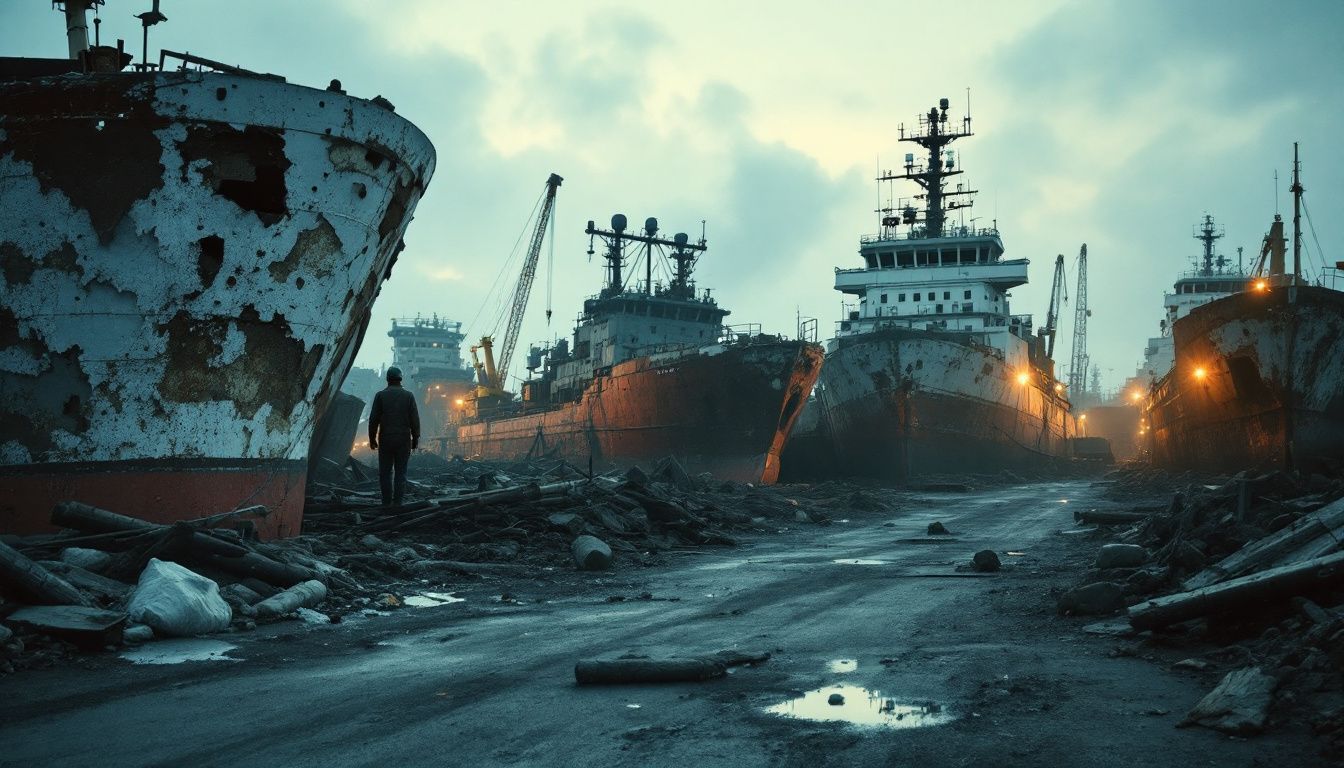
Ship-breaking — the process of dismantling end-of-life vessels — is a particular concern. Much of this work takes place in South Asia, where workers dismantle ships containing large quantities of asbestos with minimal protective equipment. International pressure has led to some improvements, but the conditions in many ship-breaking yards remain deeply hazardous.
The Basel Convention and the Hong Kong Convention on the Safe and Environmentally Sound Recycling of Ships both address the management of hazardous materials in ship recycling, but ratification and implementation have been slow and uneven. The answer to when was asbestos banned on ships may be clear in international law — but the reality on the ground in many parts of the world tells a different story.
Asbestos Surveys for Ships and Marine Structures in the UK
For those managing vessels, dry docks, port facilities, or marine structures in the UK, asbestos surveys are not optional — they are a legal and practical necessity. Any structure or vessel where work is to be carried out must be assessed for asbestos-containing materials before work begins, in line with the Control of Asbestos Regulations and HSE guidance.
This applies to shore-based facilities as much as to vessels themselves. A dry dock, a boathouse, a port warehouse, or a marine engineering workshop may all contain asbestos in roofing, insulation, flooring, or pipework — particularly if the building dates from before the mid-1980s.
If you manage a port facility or marine-related property in the capital, an asbestos survey London from a qualified surveying team will identify any asbestos-containing materials and provide the management plan you need to comply with your legal duties. For those operating in the north-west, an asbestos survey Manchester can cover port-adjacent facilities and industrial premises with the same rigour. In the Midlands, an asbestos survey Birmingham ensures that any asbestos present in older industrial and commercial buildings is properly identified and managed.
What Happens When Asbestos Is Found on a Vessel or Marine Site?
Finding asbestos does not automatically mean it needs to be removed. The HSE’s guidance is clear: asbestos that is in good condition and is not likely to be disturbed can often be managed in place, provided it is properly recorded, monitored, and included in an asbestos management plan.
The decision to remove or manage in place depends on several factors:
- The type of asbestos present (amphibole fibres such as crocidolite and amosite carry a higher risk than chrysotile)
- The condition of the material — whether it is friable, damaged, or likely to be disturbed by planned work
- The location and accessibility of the material
- The nature of the work being planned in the area
Where removal is required, it must be carried out by a licensed asbestos removal contractor for higher-risk materials. Lower-risk work may be carried out by a notifiable non-licensed contractor, but the requirements around notification, supervision, and health surveillance still apply.
The key point is that none of these decisions can be made responsibly without a proper survey carried out by a qualified surveyor following HSG264 methodology. Guesswork is not a compliant approach — and it is not a safe one either.
Protecting Workers Who Handle Older Vessels Today
The question of when was asbestos banned on ships is not just a historical curiosity. It has direct relevance for anyone working on older vessels today — whether in a dry dock, a marina, a port facility, or during refurbishment of a heritage vessel.
Tradespeople working on older ships are at risk if they disturb asbestos-containing materials without knowing they are present. Cutting, drilling, sanding, or removing components in an older vessel can release fibres that are just as dangerous as those inhaled by shipyard workers decades ago.
Employers have a legal duty under the Control of Asbestos Regulations to ensure that workers are not exposed to asbestos. Before any refurbishment or maintenance work begins on a vessel or marine structure of uncertain history, a refurbishment and demolition survey must be commissioned. This is not a management survey — it involves intrusive investigation of the areas where work will take place, to locate all asbestos-containing materials that could be disturbed.
Practical steps for anyone managing work on older vessels include:
- Check whether an Inventory of Hazardous Materials or asbestos register already exists for the vessel
- Commission a survey from a UKAS-accredited surveying organisation before any work begins
- Ensure all contractors are briefed on the location and condition of any asbestos-containing materials
- Do not allow any work to disturb suspected asbestos-containing materials until they have been properly assessed
- Keep records updated as work progresses and conditions change
The Ongoing Legacy of Maritime Asbestos
The IMO’s ban answered the question of when was asbestos banned on ships in formal terms. But the legacy of a century of asbestos use at sea will be felt for generations to come. The latency period of mesothelioma and other asbestos-related diseases means that people are still being diagnosed today as a direct result of exposure that occurred in shipyards during the 1960s and 1970s.
Heritage vessels, museum ships, and decommissioned naval craft present particular challenges. These vessels were often built at the height of asbestos use and may contain extensive quantities of the material in a deteriorating condition. Organisations responsible for their upkeep must treat them with the same rigour as any other asbestos-containing structure.
The regulatory framework in the UK is clear. The moral obligation is equally clear. Anyone with responsibility for a vessel, a port facility, or a marine-related structure owes it to the people who work there to ensure that the mistakes of the past are not repeated.
Frequently Asked Questions
When was asbestos banned on ships in the UK?
The UK banned the use of all forms of asbestos, including chrysotile (white asbestos), before the International Maritime Organisation’s 2011 deadline for existing vessels. The IMO first banned asbestos installation in new ship construction in 2002, extending the prohibition to all ships in 2011. UK domestic law under the Control of Asbestos Regulations applies to UK-flagged vessels and to any work on ships in UK ports and dry docks.
Are older ships still likely to contain asbestos?
Yes. Any vessel built before 2002 may contain asbestos-containing materials, and ships built before the mid-1980s are particularly likely to have significant quantities present. Asbestos was used in engine rooms, boiler spaces, pipe lagging, bulkheads, deck tiles, crew accommodation, and many other areas. The only reliable way to establish whether a vessel contains asbestos is to commission a proper survey from a qualified surveyor.
What is an Inventory of Hazardous Materials and is it required for ships?
An Inventory of Hazardous Materials (IHM) is a document required under IMO guidelines for ships built before the asbestos ban. It records the location, type, and condition of hazardous materials on board, including asbestos. The requirement forms part of the Hong Kong Convention framework, though implementation varies between flag states. In UK waters, the principles of the IHM align with the asbestos register requirements under the Control of Asbestos Regulations.
Do asbestos regulations apply to shore-based marine facilities?
Yes. The Control of Asbestos Regulations apply to all non-domestic premises, which includes dry docks, port warehouses, marine engineering workshops, boathouses, and any other shore-based facility associated with the maritime industry. If a building was constructed or refurbished before the mid-1980s, it may contain asbestos, and a management survey should be carried out. Before any refurbishment or demolition work, a refurbishment and demolition survey is required.
What should I do if I suspect asbestos is present on a vessel or in a marine facility?
Stop any work that could disturb the material and do not attempt to sample or remove it yourself. Commission a survey from a UKAS-accredited asbestos surveying company. The surveyor will assess the type, location, and condition of any asbestos-containing materials and provide a report and management plan. If removal is required, it must be carried out by a licensed contractor for higher-risk materials. Supernova Asbestos Surveys can assist — call 020 4586 0680 or visit asbestos-surveys.org.uk.
Talk to Supernova Asbestos Surveys
Supernova Asbestos Surveys has completed over 50,000 surveys across the UK, working with property managers, facility operators, and businesses in every sector — including those with marine and port-related assets. Our surveyors follow HSG264 methodology and are fully accredited, giving you a report you can rely on and a management plan that keeps you compliant.
Whether you need a management survey for a shore-based facility or a refurbishment survey before planned maintenance work on an older vessel, we are ready to help. Call us on 020 4586 0680 or visit asbestos-surveys.org.uk to book your survey or request a quote.