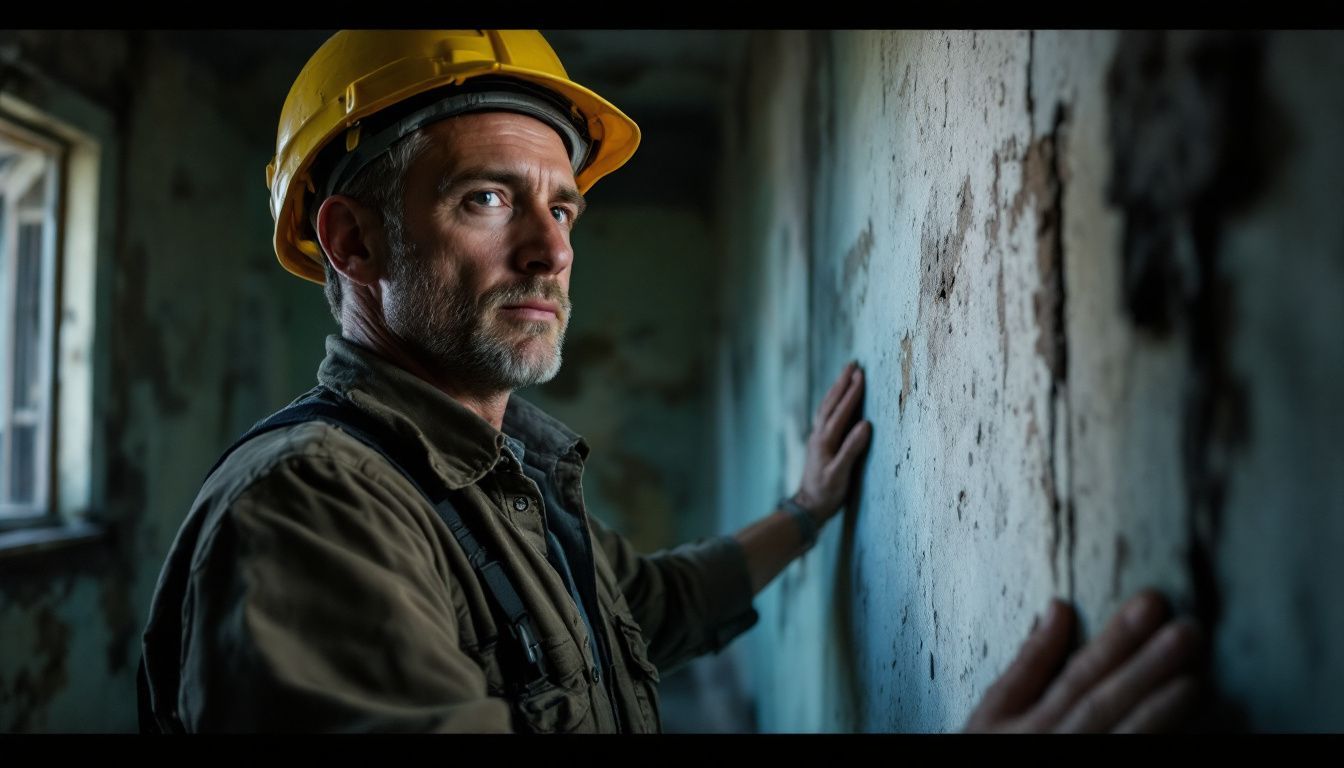
Carpenters Asbestos Exposure: What Every Carpenter and Employer Must Know
Carpenters asbestos exposure is one of the most serious occupational health risks in the UK construction industry — and one of the most underestimated. You can’t see asbestos fibres, you can’t smell them, and the diseases they cause can take decades to appear. By the time a diagnosis arrives, the damage is already done.
Asbestos was used extensively in UK buildings constructed before 2000. That means millions of properties still contain it today. For carpenters working in those buildings — drilling into walls, fitting skirting boards, removing old fixtures — the risk of disturbing hidden asbestos-containing materials (ACMs) is very real and very serious.
This post covers where carpenters are most likely to encounter asbestos, what the health consequences look like, what the law requires, and what practical steps you can take to protect yourself and your team.
Why Carpenters Face a Particularly High Risk
Unlike trades that work primarily on a building’s surface, carpenters regularly penetrate structural elements. Drilling into walls, cutting through floors, removing old partitions, boxing in pipework — every one of those tasks has the potential to disturb ACMs installed decades ago.
A carpenter fitting a new door frame in a 1970s commercial building could easily cut through asbestos insulating board without any prior warning. There’s no visible sign, no smell, no immediate physical sensation — just a cloud of invisible fibres that can lodge permanently in lung tissue.
The HSE consistently identifies construction workers — and carpenters specifically — among the trades most at risk from occupational asbestos exposure. The latency period for asbestos-related disease is typically 20 to 50 years, meaning workers exposed today may not see symptoms until well into the future.
Where Carpenters Are Most Likely to Encounter Asbestos
Asbestos was used throughout the built environment. It doesn’t appear in just one or two places — it was woven into the fabric of buildings across virtually every construction type. Here’s where carpenters are most likely to come across it.
Asbestos Insulating Board (AIB)
AIB was widely used as a fire-resistant lining in partition walls, ceiling tiles, door panels, and around structural steelwork. It looks remarkably similar to standard plasterboard, which makes it easy to mistake during work.
Cutting, drilling, or breaking AIB releases a significant concentration of asbestos fibres. Carpenters fitting or removing internal partitions in pre-2000 buildings are at particular risk. If you’re not certain whether a board contains asbestos, treat it as suspect until it has been sampled and tested.
Floor Tiles and Adhesives
Vinyl floor tiles from the 1950s through to the 1980s frequently contained chrysotile (white asbestos). The bitumen adhesive used to fix them often contained asbestos too. Carpenters laying new timber flooring over old substrates may disturb these tiles without realising it.
Sanding or scraping old floor tiles is particularly hazardous. Even tiles that appear intact can release fibres when disturbed. Always check floor substrates before starting work in older properties.
Textured Coatings and Decorative Finishes
Artex and similar textured coatings applied to ceilings and walls before the mid-1980s often contained chrysotile asbestos. Carpenters fitting coving, ceiling roses, or cornices in older properties may need to cut into or work around these coatings.
Dry sanding or power-sanding textured coatings is one of the highest-risk activities for asbestos fibre release. Get the material tested before proceeding — it’s a straightforward step that could protect your lungs for the rest of your life.
Pipe and Boiler Insulation
Thermal insulation around pipework and boilers in older buildings frequently contained amosite (brown asbestos) or crocidolite (blue asbestos) — both among the most hazardous forms of the mineral. Carpenters boxing in pipework or building service ducts may come into close proximity with this insulation.
Disturbing pipe lagging is one of the most dangerous activities on any construction site. Never cut into or remove pipe insulation without a confirmed asbestos survey and, where necessary, asbestos removal carried out by a licensed contractor.
Roofing Materials
Asbestos cement was used extensively in roofing sheets, soffits, fascias, and guttering. Carpenters working on roof structures, fitting new fascia boards, or repairing eaves may encounter asbestos cement products. While asbestos cement is generally considered lower-risk when intact, cutting or breaking it generates hazardous dust.
Window and Door Surrounds
Some older window and door frames — particularly in commercial and industrial buildings — incorporated AIB or asbestos rope seals. Carpenters removing and replacing windows or doors in older properties should always consider the possibility of asbestos-containing components before starting work.
The Health Risks of Carpenters Asbestos Exposure
Carpenters asbestos exposure can lead to a range of serious, life-limiting diseases. None of them have straightforward cures. All of them are preventable with the right precautions.
Mesothelioma
Mesothelioma is a cancer of the lining of the lungs, abdomen, or heart, caused almost exclusively by asbestos exposure. It is aggressive, typically diagnosed at a late stage, and has a very poor prognosis. Symptoms — including breathlessness, chest pain, and persistent cough — often don’t appear until 20 to 50 years after initial exposure.
The UK has one of the highest rates of mesothelioma in the world, largely as a result of widespread asbestos use during the post-war construction boom. Carpenters who worked in the industry during the 1960s, 70s, and 80s are particularly vulnerable.
Asbestosis
Asbestosis is a chronic lung condition caused by the scarring of lung tissue following repeated asbestos fibre inhalation. It causes progressive breathlessness, a persistent dry cough, and reduced lung function. There is no cure, and the condition typically worsens over time.
Asbestosis generally results from prolonged, heavy exposure rather than a single incident. Carpenters who worked for years in environments containing ACMs, without adequate protection, are most at risk.
Lung Cancer
Asbestos exposure significantly increases the risk of lung cancer, particularly in workers who also smoke. The combination of asbestos fibres and cigarette smoke is considerably more dangerous than either risk factor alone. Carpenters who were regularly exposed to asbestos and who smoked face a substantially elevated risk compared to the general population.
Pleural Thickening and Pleural Plaques
Pleural plaques are areas of scar tissue on the lining of the lungs. They are a marker of past asbestos exposure but are not themselves cancerous. Diffuse pleural thickening, however, can cause significant breathlessness and reduced lung capacity. Both conditions can appear decades after the original exposure.
UK Legal Duties: What Employers and Self-Employed Carpenters Must Do
The Control of Asbestos Regulations places clear duties on employers, the self-employed, and those in control of premises. Ignorance of the regulations is not a defence — and the consequences of non-compliance include prosecution, unlimited fines, and civil liability.
The Duty to Manage
Owners and managers of non-domestic premises have a legal duty to manage asbestos. This means identifying whether ACMs are present, assessing their condition and risk, and putting in place a written asbestos management plan. Carpenters working in non-domestic buildings should always ask to see the asbestos register before starting work.
Asbestos Surveys Before Intrusive Work
Before any intrusive work begins — including carpentry that involves drilling, cutting, or removing structural elements — a refurbishment and demolition survey must be carried out in the affected areas. This is a requirement under HSG264 guidance, and it applies regardless of the scale of the work.
If demolition is also planned, a full demolition survey must be completed before any work starts, ensuring every ACM is identified and safely managed before the structure is touched.
For carpenters working in the capital, a specialist asbestos survey London can be arranged quickly, covering all areas of the property that will be affected by your work.
Licensed and Non-Licensed Work
Some asbestos work requires a licence issued by the HSE. This applies to work on AIB, pipe lagging, and sprayed asbestos coatings. Carpenters must never attempt to remove or disturb these materials without a licensed contractor in place.
Other lower-risk asbestos work — such as minor work on asbestos cement — may be carried out without a licence, but still requires notification, a written risk assessment, and appropriate controls. The distinction between licensed and non-licensed work is clearly set out in the Control of Asbestos Regulations and associated HSE guidance.
Training Requirements
Anyone liable to disturb asbestos during their work — including carpenters — must receive adequate asbestos awareness training. This training must cover what asbestos is, where it is found, how to recognise it, the health risks, and what to do if you suspect you’ve encountered it. Refresher training should be provided regularly — not just once at the start of a career.
Practical Steps for Carpenters to Reduce Asbestos Exposure Risk
Knowing the risks is one thing. Acting on them is another. Here’s what carpenters should do in practice to protect themselves and their colleagues on every job.
- Always check for an asbestos register before starting work in any pre-2000 building. Ask the building owner, facilities manager, or principal contractor for a copy.
- Treat unknown materials as suspect until they have been sampled and tested by a UKAS-accredited laboratory.
- Stop work immediately if you discover a material you suspect may contain asbestos. Do not disturb it further. Secure the area and report it to the person in charge.
- Use the correct PPE — at minimum, a properly fitted FFP3 respirator and disposable coveralls — when working in areas where asbestos is present or suspected.
- Never dry sweep or use compressed air to clean up dust in areas where asbestos may be present. Use a Type H vacuum cleaner.
- Dispose of asbestos waste correctly — it is classified as hazardous waste and must be double-bagged, labelled, and taken to an authorised disposal site.
- Attend asbestos awareness training and ensure it is refreshed regularly. Many incidents occur simply because workers don’t recognise what they’re looking at.
For carpenters working in the Midlands, commissioning a professional asbestos survey Birmingham before a major project can prevent costly delays and protect both your health and your legal position.
What to Do If You Think You’ve Been Exposed
If you believe you have been exposed to asbestos fibres during work, act quickly and systematically. The steps you take in the immediate aftermath matter.
- Report it immediately — inform your employer or principal contractor. The incident should be formally recorded.
- Seek medical advice — speak to your GP and explain that you may have been exposed to asbestos. Ask about health surveillance and long-term monitoring.
- Keep detailed records — document where you were working, what materials were involved, and how long the exposure lasted. This information is critical if you need to make a claim in the future.
- Understand your rights — workers who develop asbestos-related disease as a result of occupational exposure may be entitled to compensation. Legal advice from a specialist solicitor is strongly recommended.
Carpenters working across the North West should ensure that any building they work in has been properly assessed before intrusive work begins. A professional asbestos survey Manchester will identify any ACMs and give you the information you need to work safely and confidently.
The Role of Asbestos Surveys in Protecting Carpenters
An asbestos survey is the single most effective tool for protecting carpenters from unexpected exposure. It identifies where ACMs are located, assesses their condition, and provides clear guidance on what can and cannot be disturbed safely.
There are two main types relevant to carpentry work:
- Management surveys — suitable for routine maintenance and minor works. These identify ACMs that could be disturbed during day-to-day activities and assess their condition.
- Refurbishment and demolition surveys — required before any intrusive work, including most carpentry projects in older buildings. These involve destructive inspection to locate all ACMs in areas that will be affected by the work.
A survey carried out by a qualified surveyor before work begins doesn’t just protect health — it protects your business, your legal compliance, and your reputation. Discovering asbestos mid-project is costly, disruptive, and potentially dangerous. Discovering it before work starts is simply good practice.
Surveys should always be carried out by a UKAS-accredited organisation using surveyors trained to HSG264 standards. The results must be documented in a formal report that clearly identifies the location, type, and condition of any ACMs found.
Frequently Asked Questions
Are carpenters at high risk of asbestos exposure compared to other trades?
Yes. Carpenters are consistently identified by the HSE as one of the trades most at risk from occupational asbestos exposure. Because their work regularly involves penetrating structural elements — drilling, cutting, removing partitions and flooring — they are more likely to disturb hidden ACMs than trades that work primarily on a building’s surface.
What should a carpenter do if they find a suspicious material on site?
Stop work in the affected area immediately. Do not attempt to remove or disturb the material further. Secure the area to prevent others from entering, and report the find to the principal contractor or site manager. The material should be sampled and tested by a UKAS-accredited laboratory before any further work takes place in that area.
Is asbestos awareness training a legal requirement for carpenters?
Yes. Under the Control of Asbestos Regulations, anyone who is liable to disturb asbestos during their work must receive adequate asbestos awareness training. This applies to carpenters working in both domestic and non-domestic settings in pre-2000 buildings. The training must be relevant to the work undertaken and should be refreshed on a regular basis.
Do I need a survey before carrying out carpentry work in an old building?
If the work is intrusive — meaning it involves drilling, cutting, removing or disturbing the fabric of the building — a refurbishment and demolition survey is required under HSG264 guidance before work begins. This applies even to relatively small-scale carpentry projects in pre-2000 buildings. A management survey alone is not sufficient for intrusive work.
What types of asbestos are most dangerous for carpenters?
All forms of asbestos are hazardous, but amosite (brown asbestos) and crocidolite (blue asbestos) are considered the most dangerous due to the shape and durability of their fibres. These were commonly used in pipe insulation and thermal insulation products — materials that carpenters may encounter when boxing in pipework or working near plant rooms. Chrysotile (white asbestos), while considered less potent, is still a serious health risk and was used in a wide range of materials including floor tiles, textured coatings, and roofing products.
Speak to Supernova Asbestos Surveys
Supernova Asbestos Surveys has completed over 50,000 surveys across the UK, helping carpenters, contractors, and property managers work safely and compliantly in buildings that may contain asbestos. Our UKAS-accredited surveyors provide fast, accurate results with clear, actionable reports.
Whether you need a management survey, a refurbishment survey, or specialist advice before a major project, we’re ready to help. Call us on 020 4586 0680 or visit asbestos-surveys.org.uk to book your survey today.