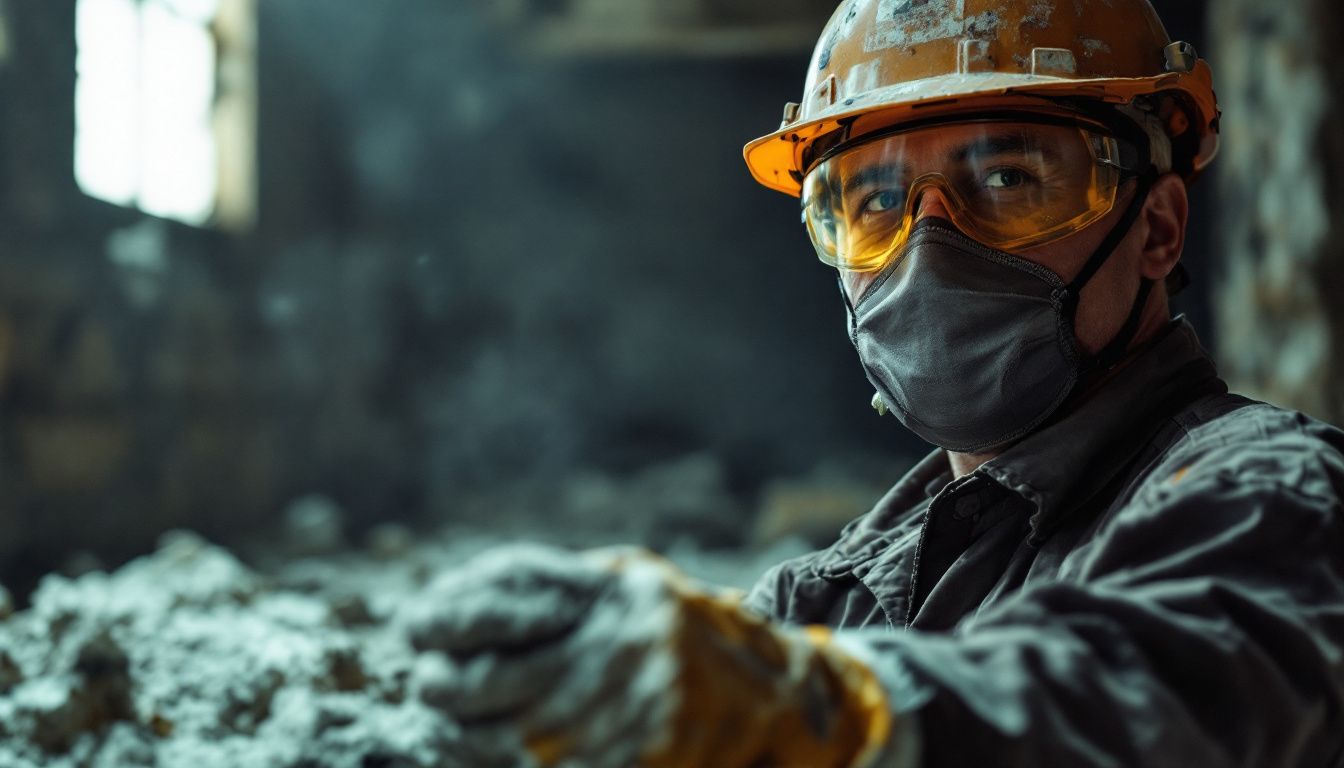
Why Is Asbestos Bad? The Truth About a Killer Material Still Hiding in UK Buildings
Asbestos kills more people in the UK each year than any other single work-related cause of death. It is not a relic of the past — it is a live, present danger hiding inside millions of British homes, schools, offices, and commercial buildings constructed before 2000.
Understanding why asbestos is bad is not just useful knowledge. For many people, it could be the difference between life and death. This post covers what asbestos actually does to the human body, which diseases it causes, who is most at risk, and what UK law requires property owners and employers to do about it.
What Makes Asbestos So Dangerous?
Asbestos is a naturally occurring fibrous mineral. For much of the twentieth century, it was used extensively in construction because it is fire-resistant, durable, and cheap to produce. The problem is what happens when asbestos-containing materials are disturbed, damaged, or deteriorate over time.
When asbestos is disturbed, it releases microscopic fibres into the air. These fibres are invisible to the naked eye, have no smell, and cause no immediate irritation when inhaled. That invisibility is precisely what makes asbestos so treacherous.
Once inhaled, asbestos fibres lodge deep in the lung tissue and the lining of the lungs and other organs. The human body cannot break them down or expel them. They remain permanently embedded, causing progressive inflammation, scarring, and cellular damage — often for decades before any symptoms appear.
There are six types of asbestos mineral, the most common of which are:
- Chrysotile (white asbestos) — the most widely used type in UK buildings
- Amosite (brown asbestos) — frequently found in insulation board
- Crocidolite (blue asbestos) — considered the most hazardous type
All three are classified as Group 1 carcinogens by the International Agency for Research on Cancer. There is no safe type of asbestos — the distinction between types matters for risk assessment, but none of them are harmless.
The Diseases Caused by Asbestos Exposure
Why is asbestos bad for your health? Because it causes a range of serious, largely incurable diseases — several of which are fatal. The cruel reality is that symptoms typically do not appear until 15 to 60 years after exposure, by which point the damage is often irreversible.
Mesothelioma
Mesothelioma is a cancer of the mesothelium — the thin lining surrounding the lungs, abdomen, and other organs. It is almost exclusively caused by asbestos exposure, and the UK has one of the highest rates of mesothelioma in the world, with over 2,500 deaths recorded annually according to HSE data.
The prognosis is extremely poor. Most patients are diagnosed at a late stage because symptoms — chest pain, breathlessness, persistent cough — are easily mistaken for less serious conditions. There is currently no cure.
Lung Cancer
Asbestos exposure significantly increases the risk of lung cancer, and that risk multiplies dramatically for people who also smoke. Asbestos fibres embedded in lung tissue cause chronic inflammation that can trigger malignant cell changes over time.
Symptoms typically include a persistent cough, coughing up blood, chest pain, and unexplained weight loss. As with mesothelioma, diagnosis often comes late, reducing treatment options considerably.
Asbestosis
Asbestosis is a chronic lung disease caused by the long-term inhalation of asbestos fibres. The fibres cause progressive scarring of the lung tissue, making the lungs stiff and reducing their capacity to function.
Sufferers experience worsening breathlessness, fatigue, and a persistent dry cough. Asbestosis is not curable — management focuses on slowing progression and improving quality of life. People with asbestosis also face a significantly elevated risk of developing lung cancer.
Pleural Thickening
Pleural thickening affects the pleura — the membrane surrounding the lungs. Asbestos fibres cause the pleura to thicken and stiffen, restricting lung expansion and making breathing increasingly difficult. In severe cases, it is debilitating.
Like asbestosis, pleural thickening is a permanent condition. It is often detected incidentally on chest X-rays in people with a history of asbestos exposure.
Ovarian Cancer and Other Cancers
Research has established a link between asbestos exposure and ovarian cancer. Asbestos fibres can travel through the body via the lymphatic system and settle in the ovaries, where they cause cellular damage. The International Agency for Research on Cancer recognises asbestos as a cause of ovarian cancer.
There is also evidence linking asbestos exposure to cancers of the larynx and pharynx, further underscoring why asbestos is bad for whole-body health — not just lung health.
Why Is Asbestos Still a Problem in the UK?
The UK banned the import and use of all forms of asbestos, with the final restrictions coming into force at the turn of the millennium. However, that ban did nothing to remove the asbestos already installed in the built environment during the preceding decades.
Asbestos-containing materials are present in the majority of buildings constructed before 2000 in the UK. That includes:
- Schools and universities
- NHS hospitals and GP surgeries
- Local authority housing and private homes
- Commercial offices and retail premises
- Industrial units, warehouses, and factories
- Public buildings including libraries and leisure centres
Asbestos-containing materials that are in good condition and left undisturbed pose a relatively low risk. The danger arises when those materials are damaged, deteriorate with age, or are disturbed during maintenance, renovation, or demolition work.
This is why tradespeople — electricians, plumbers, joiners, plasterers — are among the most at-risk groups. They routinely work in older buildings without always knowing what materials they are cutting into, drilling through, or stripping out.
Who Is Most at Risk from Asbestos Exposure?
While anyone in a building containing deteriorating asbestos can be at risk, certain occupations carry a significantly higher exposure risk.
Construction and Demolition Workers
Construction workers are among the most heavily exposed group. Renovation and demolition of older buildings frequently disturbs asbestos-containing materials — insulation board, textured coatings, floor tiles, roof sheets, pipe lagging — without adequate precautions being taken.
The HSE consistently identifies the construction sector as the industry with the greatest burden of asbestos-related disease. If demolition work is planned, a demolition survey is a legal requirement before any structural work begins.
Maintenance Tradespeople
Electricians, plumbers, heating engineers, and general maintenance workers are at particular risk because their work often involves disturbing the fabric of older buildings. Drilling into walls, lifting floor tiles, working in ceiling voids — all of these activities can release asbestos fibres if the materials contain it.
Shipbuilding and Manufacturing Workers
Historically, shipyards and heavy manufacturing relied heavily on asbestos for insulation and fireproofing. Many workers from these industries are now presenting with asbestos-related diseases after latency periods of several decades. The legacy of that industrial use continues to affect public health today.
Property Owners and Managers
Landlords, facilities managers, and building owners have a legal duty to manage asbestos risks on their premises. Failure to do so puts not just workers but also occupants at risk — and exposes duty holders to serious legal consequences.
What Does UK Law Say About Asbestos?
The Control of Asbestos Regulations place clear legal duties on those who own, occupy, or manage non-domestic premises. The key obligation is the duty to manage asbestos — which means identifying whether asbestos-containing materials are present, assessing their condition and risk, and putting a written management plan in place.
The HSE’s guidance document HSG264 sets out the standards for asbestos surveys. There are two main types:
- Management surveys — used to locate and assess asbestos-containing materials that could be disturbed during normal occupation and routine maintenance. A management survey is the standard starting point for most non-domestic premises.
- Refurbishment and demolition surveys — required before any structural work, refurbishment, or demolition takes place.
Employers also have a duty to ensure workers who may encounter asbestos receive appropriate information, instruction, and training. Licensed contractors must be used for higher-risk asbestos work, including most removal activities.
Penalties for non-compliance are severe. The HSE can issue improvement notices, prohibition notices, and prosecute duty holders — with unlimited fines and custodial sentences possible in serious cases.
What Should You Do If You Suspect Asbestos?
The single most important rule is this: do not disturb it. If you suspect a material contains asbestos, stop work immediately and keep the area clear. Do not attempt to sample, remove, or clean up potentially asbestos-containing materials yourself.
The correct course of action is to commission a professional asbestos survey. A qualified surveyor will inspect the building, take samples where necessary, and send those samples to an accredited laboratory for analysis. You will receive a written report identifying the location, type, condition, and risk rating of any asbestos-containing materials found.
From there, you can make an informed decision about whether materials need to be managed in place, encapsulated, or removed entirely. For asbestos removal, you must use a licensed contractor — this is a legal requirement for the majority of asbestos removal work in the UK.
If you are based in the capital and need professional help, our team provides a full asbestos survey London service covering all property types across the city. We also provide a dedicated asbestos survey Manchester service for properties across Greater Manchester, and our asbestos survey Birmingham team covers the West Midlands region.
Can Asbestos in Good Condition Be Left Alone?
This is one of the most common questions property owners ask, and the answer is nuanced. Asbestos-containing materials that are in good condition, well-bonded, and unlikely to be disturbed do not necessarily need to be removed immediately. In many cases, managing them in place — with regular monitoring and a documented management plan — is the appropriate approach.
However, “good condition” must be assessed by a qualified professional, not assumed. Materials that appear intact can still pose a risk if they are in areas of high activity or likely to be disturbed during planned works.
The condition of asbestos-containing materials can also deteriorate over time, which is why regular re-inspection is essential. Removal is always required before any significant refurbishment or demolition work, regardless of the apparent condition of the materials.
Protecting Workers: What Employers Must Do
If your workers could foreseeably come into contact with asbestos — whether in construction, maintenance, or any other trade — you have specific legal obligations under the Control of Asbestos Regulations. These include:
- Carrying out a suitable and sufficient risk assessment before work begins
- Ensuring workers are trained to a standard appropriate to their likely exposure
- Providing adequate personal protective equipment, including appropriate respiratory protective equipment
- Implementing control measures to prevent or minimise the release of asbestos fibres
- Arranging health surveillance for workers regularly exposed to asbestos
- Keeping records of asbestos work and employee exposure
Workers should never be sent into a building to carry out work without first checking whether an asbestos survey has been completed and whether asbestos-containing materials have been identified in the work area. This is not a procedural nicety — it is a legal obligation and a basic duty of care.
The Impact of Asbestos Exposure on Employee Wellbeing and Productivity
The consequences of asbestos exposure extend far beyond the immediate health impact on the individual. When a worker develops an asbestos-related disease, the effects ripple outward — affecting their family, their employer, and the wider economy.
Asbestos-related diseases are long-term, progressive conditions. Workers who develop asbestosis or pleural thickening often experience a gradual decline in their ability to perform physical work, leading to reduced productivity, extended sick leave, and early retirement. For employers, this means the loss of experienced staff, increased absence costs, and potential liability for compensation claims.
Mesothelioma, in particular, carries an enormous human cost. Workers who receive a mesothelioma diagnosis typically have a life expectancy measured in months. The psychological impact on colleagues, managers, and families is profound — and the legal and financial consequences for employers who failed in their duty of care can be devastating.
Proactive asbestos management is not just a legal obligation — it is a direct investment in the long-term health, productivity, and wellbeing of your workforce. The cost of a professional survey is minimal compared to the cost of a single asbestos-related compensation claim, let alone a criminal prosecution.
Common Places Asbestos Hides in Buildings
Many property owners and managers are surprised by how widely asbestos was used in construction. It was not limited to insulation — it was incorporated into a vast range of building materials. Common locations include:
- Ceiling tiles and textured coatings — Artex and similar textured finishes frequently contain chrysotile asbestos
- Floor tiles and adhesives — vinyl floor tiles and the black bitumen adhesive beneath them often contain asbestos
- Pipe and boiler lagging — asbestos was widely used to insulate hot water pipes and heating systems
- Insulation board — used extensively in fire doors, partition walls, ceiling panels, and soffits
- Roofing materials — corrugated asbestos cement sheets were common on industrial and agricultural buildings
- Guttering and rainwater pipes — asbestos cement was used in external drainage systems
- Electrical equipment — fuse boxes, storage heaters, and electrical panels from older installations may contain asbestos components
The sheer variety of locations underlines why a professional survey — rather than a visual inspection by an untrained person — is the only reliable way to identify asbestos-containing materials in a building.
Get Professional Asbestos Advice from Supernova
Supernova Asbestos Surveys has completed over 50,000 surveys across the UK. Our UKAS-accredited surveyors work with property owners, employers, facilities managers, and local authorities to identify asbestos risks, meet legal obligations, and protect the people who live and work in their buildings.
Whether you need a management survey for an occupied premises, a refurbishment or demolition survey before planned works, or expert advice on managing asbestos in place, our team is ready to help.
Call us on 020 4586 0680 or visit asbestos-surveys.org.uk to book a survey or speak to one of our specialists today.
Frequently Asked Questions
Why is asbestos bad if it is not disturbed?
Asbestos-containing materials that are in good condition and left completely undisturbed pose a low immediate risk. However, materials can deteriorate over time, and any disturbance — even minor maintenance work — can release fibres. This is why professional assessment and regular monitoring are essential, even for materials that appear intact.
How long after asbestos exposure do symptoms appear?
Asbestos-related diseases have a very long latency period. Symptoms typically do not appear until 15 to 60 years after initial exposure. This delay is one of the reasons asbestos is so dangerous — by the time a disease is diagnosed, the damage has usually been progressing silently for decades.
Is asbestos only dangerous in old buildings?
In the UK, asbestos was banned at the turn of the millennium, so new buildings do not contain it. However, any building constructed before 2000 may contain asbestos-containing materials. This includes a very large proportion of the UK’s existing building stock — homes, schools, hospitals, offices, and industrial premises.
Who is legally responsible for managing asbestos in a building?
Under the Control of Asbestos Regulations, the duty to manage asbestos falls on the “dutyholder” — typically the owner, landlord, or managing agent of non-domestic premises. In shared buildings, responsibility may be split between the freeholder and individual tenants depending on lease arrangements. Domestic properties are not covered by the same duty, but landlords still have obligations under other health and safety legislation.
Can I remove asbestos myself?
For the majority of asbestos removal work in the UK, you must use a licensed contractor. Unlicensed removal is illegal for most asbestos types and poses a serious risk to health. Even for lower-risk materials where unlicensed work is permitted, strict controls apply. Never attempt to remove or disturb asbestos-containing materials without professional guidance.