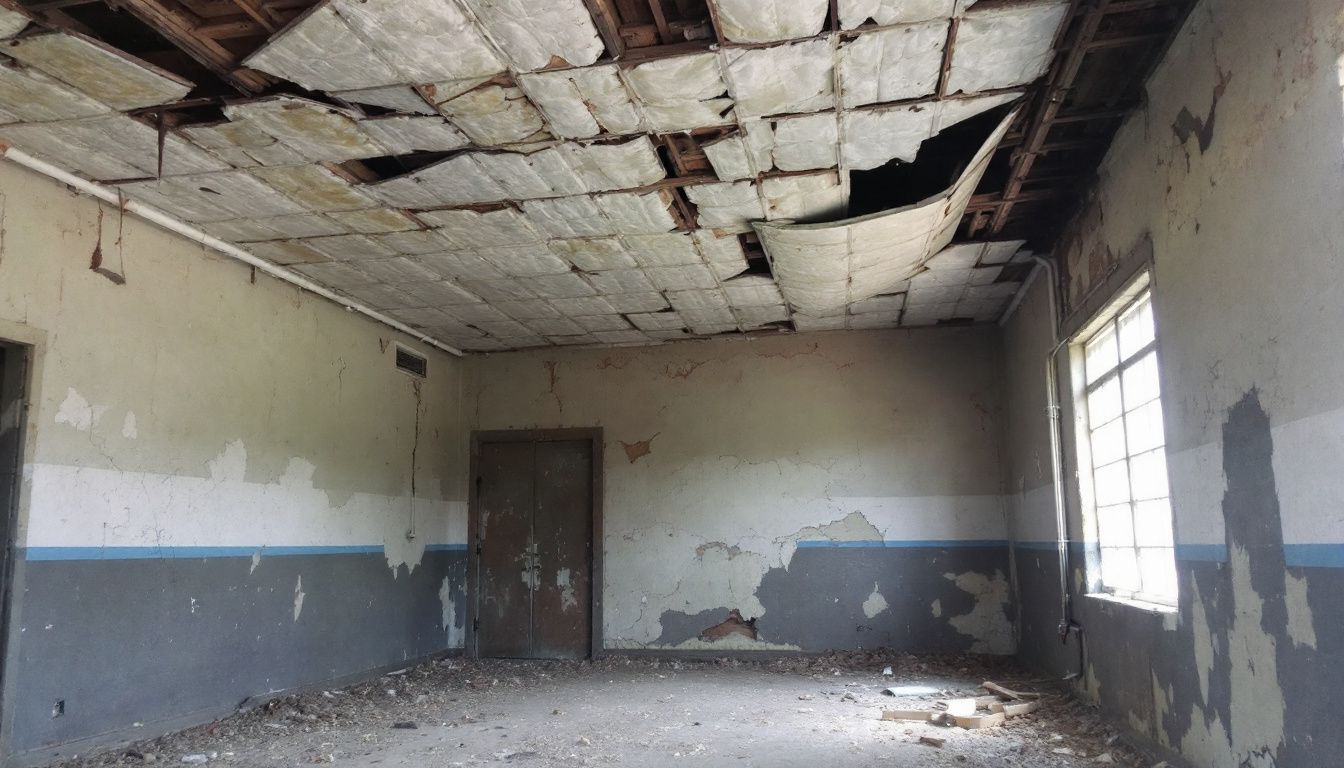
Asbestos in Buildings UK: What Every Property Owner and Business Needs to Know
Asbestos in buildings UK-wide remains one of the most serious occupational health hazards facing property owners, employers, and tradespeople today. Despite a complete ban on its use in 1999, asbestos-containing materials are still present in millions of commercial and residential properties across the country — and disturbing them without proper precautions can be fatal.
If you own, manage, or work in a building constructed before the year 2000, understanding your legal duties and practical responsibilities is not optional. It could save lives.
Why Asbestos in Buildings UK Remains a Live Issue
The UK banned the import and use of all forms of asbestos in 1999, but the legacy of decades of widespread use means the material is still embedded in a huge proportion of the country’s built environment. Schools, offices, factories, hospitals, and homes built between the 1950s and 1980s are particularly likely to contain it.
Asbestos was used in over 3,000 different products and building materials — from roof sheeting and floor tiles to pipe lagging, ceiling tiles, and textured coatings like Artex. Its presence is not always obvious, and it cannot be identified by sight alone.
When asbestos-containing materials are in good condition and left undisturbed, the risk is generally low. The danger arises when materials are damaged, deteriorating, or disturbed during maintenance, renovation, or demolition work — releasing microscopic fibres into the air that, once inhaled, can cause devastating and irreversible lung disease.
The Health Consequences of Asbestos Exposure
Asbestos-related diseases are among the most serious occupational illnesses in the UK. The conditions caused by asbestos fibre inhalation include:
- Mesothelioma — a cancer of the lining of the lungs or abdomen, almost exclusively caused by asbestos exposure and with a very poor prognosis
- Asbestosis — scarring of the lung tissue that causes progressive breathlessness
- Asbestos-related lung cancer — particularly in those who also smoked
- Pleural thickening — thickening of the lung lining that restricts breathing
One of the most troubling aspects of these diseases is the latency period. Symptoms typically do not appear until 15 to 60 years after exposure, and by the time a diagnosis is made, the disease is often at an advanced stage. There is currently no cure for mesothelioma or asbestosis.
This long latency period means that people being diagnosed today were exposed decades ago — often without knowing it. Workers in the construction, plumbing, electrical, and painting trades face the highest ongoing risk, as they are most likely to encounter hidden asbestos during routine building work.
The Legal Framework: What UK Regulations Require
The primary legislation governing asbestos in buildings in the UK is the Control of Asbestos Regulations. These regulations place clear duties on those who own, occupy, or are responsible for non-domestic premises — a requirement commonly referred to as the “duty to manage” asbestos.
The Duty to Manage
Under the Control of Asbestos Regulations, anyone with responsibility for the maintenance or repair of non-domestic premises must take reasonable steps to find out whether asbestos-containing materials are present, assess their condition, and manage the risk they pose.
This duty applies to commercial landlords, facilities managers, employers, and managing agents. It does not apply to private domestic properties in the same formal way, but homeowners undertaking renovation work still have responsibilities under wider health and safety law.
Exposure Limits and Licensed Work
The Control of Asbestos Regulations set a workplace exposure limit (WEL) of 0.1 fibres per cubic centimetre of air, averaged over a four-hour period. Employers must ensure workers are not exposed above this level.
Certain types of asbestos work — particularly work with high-risk materials such as sprayed asbestos coatings or asbestos insulation — must only be carried out by HSE-licensed contractors. Other work may be carried out by competent non-licensed contractors, but notification requirements and strict control measures still apply.
HSG264 and the Asbestos Survey Requirement
HSE guidance document HSG264 sets out the standards for asbestos surveys. It defines two main types of survey:
- Management survey — required for the routine management of asbestos in an occupied building. It locates, as far as reasonably practicable, the presence and extent of any asbestos-containing materials and assesses their condition.
- Refurbishment survey — required before any refurbishment or demolition work. It is more intrusive and is designed to locate all asbestos-containing materials in the area where work will take place.
Choosing the right type of survey for your circumstances is essential. Using a management survey when a refurbishment survey is needed could put workers at serious risk.
Where a building is to be demolished entirely, a demolition survey is required — a fully intrusive inspection that must be completed before any demolition work begins.
Which Buildings Are Most at Risk?
Any building constructed or refurbished before the year 2000 may contain asbestos. However, some building types and construction eras carry higher risk than others.
Commercial and Industrial Properties
Factories, warehouses, and industrial units built between the 1950s and 1980s often contain significant quantities of asbestos, particularly in roof panels, pipe lagging, and boiler insulation. These buildings frequently undergo maintenance and renovation work, creating regular opportunities for disturbance.
Public Buildings
Schools, hospitals, and public offices built during the post-war construction boom are among the most likely to contain asbestos. Many of these buildings are still in active use and require careful, ongoing management to protect staff and visitors.
Residential Properties
While the duty to manage does not apply to domestic premises in the same formal way, homeowners and landlords of residential properties should be aware that asbestos may be present. Common locations include garage roofs, textured ceiling coatings, floor tiles, and pipe lagging in older properties.
If you are a landlord, you have a duty of care to your tenants. If you are planning renovation work in a pre-2000 home, commissioning an asbestos management survey before work begins is strongly advisable.
Asbestos Surveys Across the UK: Getting the Right Help
Whether you manage a property in the capital or elsewhere in the country, professional asbestos surveying is the only reliable way to understand what you are dealing with. Visual inspection alone cannot identify asbestos — laboratory analysis of samples is always required for confirmation.
If you need an asbestos survey London property owners can rely on, Supernova Asbestos Surveys provides fully accredited management and refurbishment surveys across all London boroughs, with fast turnaround times and detailed written reports.
For those in the north-west, an asbestos survey Manchester businesses and property managers trust is available through our local team, covering Greater Manchester and the surrounding region.
In the Midlands, our asbestos survey Birmingham service covers commercial, industrial, and residential properties across the city and beyond, with surveyors who understand the specific building stock of the region.
What Small Businesses Need to Know
Small businesses often bear a disproportionate burden when it comes to asbestos compliance. The costs of surveys, air monitoring, staff training, and record-keeping can feel significant — but the cost of non-compliance is far greater.
Your Core Responsibilities as an Employer
If you employ people and occupy a building constructed before 2000, your responsibilities include:
- Commissioning an asbestos management survey if one is not already in place
- Creating and maintaining an asbestos register for your premises
- Developing an asbestos management plan and keeping it up to date
- Ensuring any contractors working on your premises are made aware of the location and condition of any known asbestos-containing materials
- Providing appropriate information and training to employees who may encounter asbestos
- Reviewing your asbestos management plan regularly and following up on any changes in the condition of materials
Failing to meet these duties can result in enforcement action by the HSE, including improvement notices, prohibition notices, and prosecution. Fines for asbestos-related breaches can be substantial, and in serious cases, directors and individuals can face personal liability.
Practical Steps to Reduce Risk
Beyond meeting the minimum legal requirements, there are practical steps every small business can take to reduce risk and build a culture of asbestos awareness:
- Brief all new staff on your asbestos management plan during induction
- Ensure maintenance workers and contractors follow a “permit to work” system before carrying out any intrusive work
- Use warning signs and clear labelling in areas where asbestos-containing materials are known to be present
- Never allow drilling, cutting, or sanding of suspected asbestos-containing materials without a prior survey
- Keep all asbestos-related documentation in a central, accessible location
- Review your asbestos management plan whenever there is a change in building use or occupancy
The Role of the HSE in Asbestos Enforcement
The Health and Safety Executive is the UK’s primary regulator for workplace safety, including asbestos management. HSE inspectors have the authority to enter premises unannounced, inspect records, take samples, and issue enforcement notices.
The HSE also provides a range of free resources for businesses, including guidance documents, risk assessment templates, training videos, and a dedicated helpline. HSG264, the HSE’s guidance on asbestos surveys, is freely available and provides detailed technical guidance on survey standards and management requirements.
Ignorance of the regulations is not a defence in law, but the HSE’s guidance materials are designed to make compliance accessible even for those without specialist knowledge. Make use of them.
Common Mistakes That Put People at Risk
Even well-intentioned business owners and property managers make errors when it comes to asbestos management. The most common mistakes include:
- Assuming a building is asbestos-free because it looks modern or has been recently decorated — cosmetic work does not remove underlying materials
- Using a management survey for refurbishment work — a more intrusive refurbishment survey is legally required before any significant building work
- Failing to pass on asbestos information to contractors — this is a specific legal duty and a common cause of accidental disturbance
- Treating the asbestos register as a one-time exercise — it must be reviewed and updated regularly, particularly after any work that may have affected asbestos-containing materials
- Attempting DIY removal — even for materials that do not require a licensed contractor, removal must be carried out by a competent person following strict control measures
What to Do If You Suspect Asbestos Has Been Disturbed
If you suspect that asbestos-containing materials have been accidentally disturbed during building work, act immediately. Delay increases the risk of exposure to everyone in the building.
- Stop all work in the affected area immediately
- Evacuate the area and prevent anyone else from entering
- Do not attempt to clean up dust or debris — this will make things worse
- Seal off the area as best you can to prevent fibre spread
- Contact a licensed asbestos professional to carry out air monitoring and decontamination
- Notify the HSE if the disturbance was significant or if workers may have been exposed
Acting quickly and correctly in these situations can significantly reduce the risk of harm to building occupants and workers.
Frequently Asked Questions
Is asbestos still present in UK buildings?
Yes. Although asbestos was fully banned in the UK in 1999, it remains present in a very large number of buildings constructed before that date. Properties built between the 1950s and 1980s are particularly likely to contain asbestos-containing materials. The only way to confirm whether asbestos is present is through a professional survey and laboratory analysis of samples.
Who is responsible for managing asbestos in a commercial building?
Under the Control of Asbestos Regulations, the “duty holder” — typically the building owner, employer, or managing agent responsible for the maintenance of non-domestic premises — is legally required to manage asbestos. This includes identifying asbestos-containing materials, assessing their condition, and putting in place a management plan to control the risk.
What is the difference between a management survey and a refurbishment survey?
A management survey is used for the routine management of asbestos in an occupied building. It is less intrusive and is designed to locate materials that could be disturbed during normal use. A refurbishment survey is required before any refurbishment or building work takes place — it is more thorough and intrusive, designed to locate all asbestos-containing materials in the area where work will occur. Using the wrong type of survey can put workers at serious risk.
Do homeowners have legal duties around asbestos?
The formal duty to manage under the Control of Asbestos Regulations applies to non-domestic premises. However, homeowners planning renovation work on a pre-2000 property have responsibilities under wider health and safety law, and have a duty of care to any contractors they employ. Commissioning a survey before any building work begins is strongly advisable.
What should I do if I think asbestos has been disturbed in my building?
Stop all work immediately, evacuate and seal off the affected area, and contact a licensed asbestos professional to carry out air monitoring and decontamination. Do not attempt to clean up any dust or debris yourself. If workers may have been exposed, you must notify the HSE. Acting quickly is essential to minimise the risk of harm.
Get Professional Asbestos Surveying from Supernova
Supernova Asbestos Surveys has completed over 50,000 surveys for property owners, businesses, and landlords across the UK. Our fully accredited surveyors provide fast, reliable results with clear written reports — giving you everything you need to meet your legal duties and protect the people in your building.
Whether you need a management survey for an occupied premises, a refurbishment survey ahead of building work, or a demolition survey for a site being cleared, our team is ready to help.
Call us on 020 4586 0680 or visit asbestos-surveys.org.uk to book your survey or request a quote.