One cracked panel in a riser cupboard or a handful of dusty insulation in a loft can change the risk picture instantly. Friable asbestos is not just another label on a survey report; it is the type of asbestos-containing material most likely to release fibres when disturbed, which is why property managers, landlords and employers need to treat it with real caution.
The difference between friable and non-friable asbestos affects far more than removal. It shapes your legal duties under the Control of Asbestos Regulations, the kind of survey you need, the controls required on site, and how waste must be packaged, transported and disposed of. If you are planning works, managing an older building, or dealing with damaged materials, understanding friable asbestos helps you make safer decisions quickly.
What friable asbestos means in practice
Friable asbestos is asbestos-containing material that can be crumbled, crushed or reduced to powder by hand pressure when dry. In plain terms, the fibres are loosely bound or no longer securely held in the product.
That matters because loose fibres are far easier to release into the air. Once airborne, they can be inhaled by anyone nearby, including maintenance staff, contractors, occupants and cleaners.
Common examples of friable asbestos
- Sprayed coatings on ceilings, walls and structural steel
- Pipe lagging and thermal insulation
- Loose-fill insulation in lofts and cavity spaces
- Millboard used around heaters or fireproof panels
- Damaged asbestos insulating board
- Asbestos ropes, yarns and some gaskets in older plant
Some products are inherently friable from the start, especially loose-fill insulation and sprayed coatings. Others become friable over time through age, water damage, vibration, impact or poor previous work.
This is why condition is so important during asbestos management. A material that was once relatively stable can become a much more serious hazard once it starts breaking down.
Friable asbestos vs non-friable asbestos
The key distinction is simple: how easily fibres can escape into the air. That single factor influences survey recommendations, risk assessments, contractor requirements, workplace controls and disposal arrangements.
Non-friable asbestos, often called bonded asbestos, contains fibres locked into a solid matrix such as cement, vinyl, resin or bitumen. These materials usually release fewer fibres while intact, but they are still hazardous if drilled, cut, sanded, snapped, broken or badly weathered.
Typical non-friable asbestos products
- Asbestos cement roof sheets and wall panels
- Corrugated garage and outbuilding roofs
- Gutters, downpipes and flues
- Vinyl floor tiles and some adhesives
- Bitumen roofing products
- Textured decorative coatings
- Damp proof courses and mastics
How the risk differs
- Friable asbestos: fibres can be released with very little force, sometimes through light handling or minor disturbance
- Non-friable asbestos: risk is often lower while intact, but rises quickly when the material is damaged or worked on
That is why a stable cement sheet is not treated in the same way as crumbling lagging. The material type matters, but so does its condition, accessibility and the work being planned around it.
How the legal treatment differs
Work involving friable asbestos is far more likely to fall within licensed asbestos work under the Control of Asbestos Regulations. Depending on the task and the condition of the material, this can mean specialist contractors, notification where required, enclosures, decontamination procedures and air monitoring.
Some work on bonded materials may be non-licensed or notifiable non-licensed work, but this depends on the exact product, what is being done to it, and how damaged it is. The correct category cannot be guessed from the material name alone.
Where friable asbestos is commonly found
Location matters because it affects who may be exposed and how likely the material is to be disturbed. Older buildings can contain both friable and non-friable asbestos in very different places.
Common locations for friable asbestos
- Plant rooms and boiler houses
- Service risers and duct voids
- Pipework, valves and calorifiers
- Ceiling voids and structural fire protection areas
- Lofts and cavity spaces where loose-fill insulation was used
- Older industrial premises with thermal insulation or process plant
These materials are often hidden from everyday view. They may only be discovered during maintenance, repairs, refurbishment or intrusive inspection work.
Common locations for non-friable asbestos
- Garage roofs and sheds
- Warehouse and factory roof sheets
- Soffits, wall cladding and rainwater goods
- Floor tiles and adhesive layers
- Textured coatings on ceilings and walls
- Bitumen products on roofs and services
Because bonded products are so common, they are often underestimated. Yet even a lower-risk material can become dangerous when someone drills through it or strips it out without checking first.
How to identify suspect friable asbestos safely
You cannot confirm asbestos by sight alone. Age, appearance and location can raise suspicion, but they cannot tell you for certain whether a material contains asbestos or whether it is friable asbestos.
The safest response is to treat suspect materials cautiously and stop anyone disturbing them until they have been assessed properly.
Warning signs that should make you stop work
- Crumbling insulation around pipes, boilers or valves
- Dusty debris in service areas, risers or loft spaces
- Old board panels with broken edges or exposed cores
- Cement sheets on garages, sheds or industrial roofs
- Textured coatings in older properties due for refurbishment
- Unknown debris left after previous works
What not to do
If you suspect friable asbestos, do not:
- Touch, rub or break the material
- Try to take a sample yourself
- Sweep dust dry
- Use a domestic vacuum cleaner
- Drill, cut or remove the material
- Ask a general tradesperson to expose more of it for a closer look
Trying to see whether a material crumbles is exactly the sort of action that can release fibres. Restrict access and arrange a professional assessment instead.
The right way to identify asbestos
Arrange a professional asbestos survey and, where required, sampling by a competent surveyor. Survey work should follow HSG264, which sets out how asbestos surveys should be planned, carried out and reported.
If you are managing premises in the capital, booking an asbestos survey London service before maintenance or refurbishment helps prevent accidental disturbance. The same applies elsewhere: an asbestos survey Manchester can clarify risks before contractors attend site, while an asbestos survey Birmingham gives Midlands dutyholders clear information for safe planning.
Laboratory analysis is then used to confirm whether asbestos is present. A useful report should tell you what the material is, where it is, what condition it is in, how accessible it is and what action is recommended.
Health risks linked to friable asbestos
The health concern with friable asbestos is straightforward. It can release fibres more easily, and airborne fibres are the route of exposure that matters most.
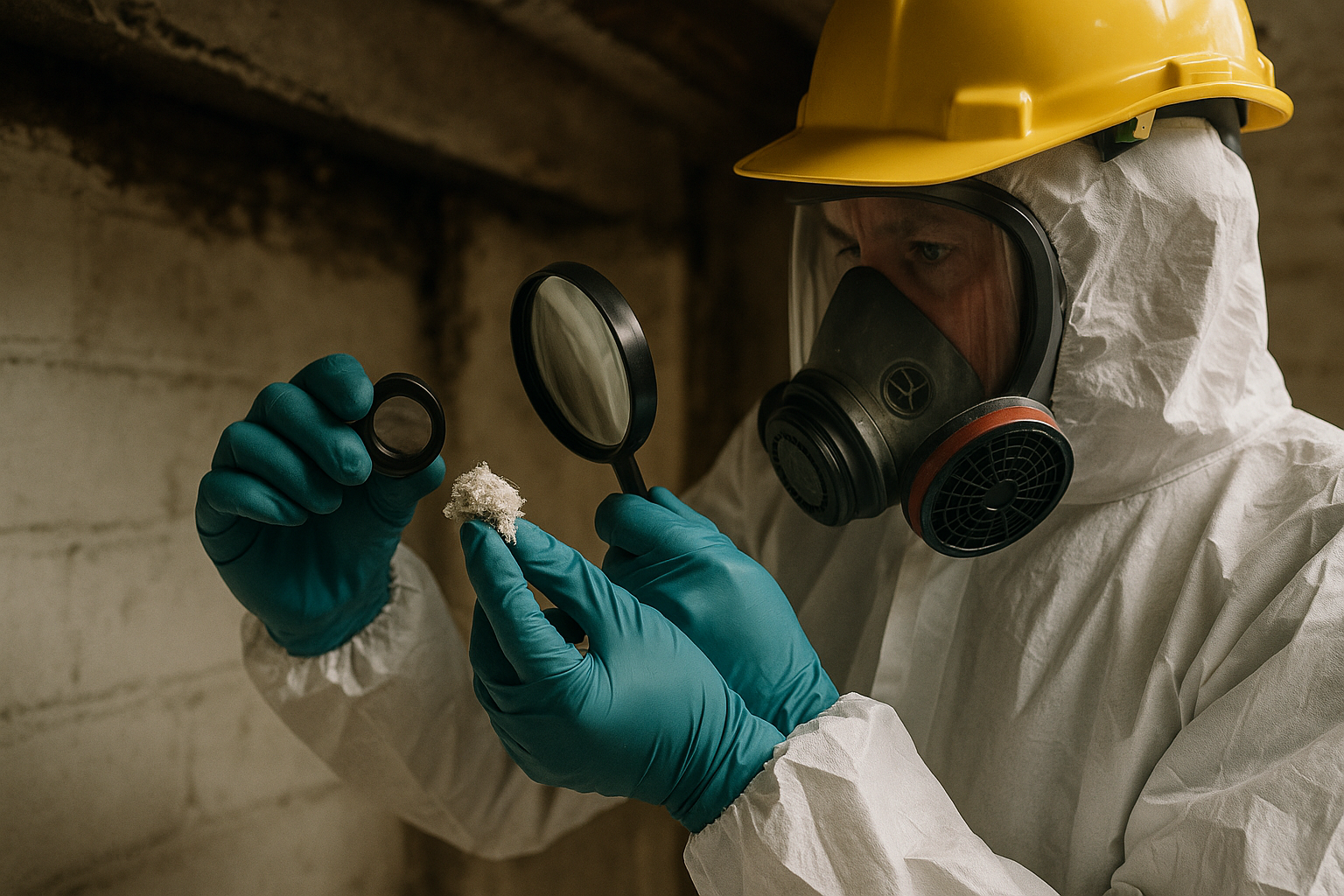
Once inhaled, asbestos fibres can remain in the lungs for many years. Exposure does not usually cause immediate symptoms, which is one reason accidental disturbance is sometimes taken less seriously than it should be.
The real concern is long-term disease risk after fibres have been breathed in. That is why prevention, not reaction, should always be your priority.
Why friable asbestos is treated as higher risk
- It can release fibres with minimal disturbance
- Dust and debris may spread contamination beyond the original area
- It is often hidden in service spaces where workers may encounter it unexpectedly
- It usually requires tighter controls during removal and cleaning
Who is most at risk
People most at risk are often those who disturb the material without realising what it is. That includes:
- Maintenance staff
- Electricians
- Plumbers
- Heating engineers
- Demolition workers
- Decorators
- General contractors
Occupants can also be affected if damaged friable asbestos is left exposed in a building. The risk is not limited to old factories. Schools, offices, flats, retail units and plant rooms can all contain higher-risk asbestos materials.
Legal duties and workplace controls
Managing asbestos safely depends on planning, communication and control. If you are a dutyholder, employer, facilities manager or landlord, you need a system that stops workers disturbing asbestos by accident.
Under the Control of Asbestos Regulations, those responsible for non-domestic premises and the common parts of some domestic buildings must identify asbestos, assess the risk and manage it properly. HSE guidance makes clear that this is an active duty, not a paperwork exercise.
Practical controls that make a real difference
- Maintain an up-to-date asbestos register
- Make survey information available before work starts
- Label or otherwise clearly identify known asbestos where appropriate
- Train staff to recognise suspect materials and stop work
- Restrict access to damaged or high-risk areas
- Review the condition of known asbestos regularly
- Reassess after leaks, impact damage or refurbishment
Before contractors attend site
Never assume a contractor will identify asbestos on sight. They need the right information before they begin.
Provide:
- The relevant asbestos survey report
- Details from the asbestos register
- Information about the planned works and likely disturbance
- Access restrictions and emergency procedures
If the planned work is intrusive and the existing information is not sufficient, arrange the correct survey first. Guesswork is not a control measure.
What to do if suspect friable asbestos is disturbed
- Stop work immediately
- Evacuate and restrict the area
- Prevent further spread of dust and debris
- Do not sweep or use ordinary vacuum equipment
- Arrange specialist assessment and, where needed, decontamination
- Review how the incident happened before work resumes
Fast action can limit contamination. Delay often turns a localised issue into a much larger and more expensive problem.
Removal, abatement and disposal rules for different asbestos types
This is where the distinction between friable and non-friable asbestos becomes especially practical. The disposal route for asbestos waste is tightly controlled, but the way material is removed, packaged and handled before disposal often differs because the risk level is different.
Friable asbestos generally requires stricter controls because fibres are more likely to be released during the work. That can mean licensed contractors, sealed enclosures, negative pressure units, specialist decontamination arrangements and air testing where required.
Some bonded products may be removed using lower-level controls where the task is permitted and the risk is lower. That does not mean the waste can be treated casually. All asbestos waste must still be handled correctly.
Why friable asbestos usually needs tighter removal controls
- The material can break down during handling
- Dust and fibres are more likely to spread
- Workers may need respiratory protective equipment and specialist procedures
- The work area may require enclosure and controlled access
- Cleaning and clearance are more demanding
Key disposal principles
Whether asbestos is friable or bonded, waste must be:
- Properly contained and labelled
- Handled by those competent to do so
- Transported in line with applicable waste and carriage requirements
- Taken to a facility authorised to accept asbestos waste
The difference is that friable asbestos is more likely to need specialist packaging and handling arrangements because of the greater chance of fibre release. Loose debris, contaminated PPE and cleaning materials can also become asbestos waste and must be managed the same way.
Practical advice for property managers and dutyholders
- Do not let general waste contractors remove suspect asbestos
- Do not store damaged asbestos waste loosely on site
- Do not assume all asbestos jobs fall into the same category
- Ask your contractor to explain the work classification and controls
- Keep records of surveys, risk assessments, waste documentation and remedial work
If you are unsure whether a material is likely to be licensed work or how the waste should be handled, stop and seek competent advice before work starts.
Managing friable asbestos in occupied buildings
Not every asbestos issue begins with planned removal. Many start with routine occupation, minor maintenance or accidental damage in buildings that remain in use.
If friable asbestos is identified in an occupied property, the first question is whether it can be left safely in place while managed, or whether urgent remedial action is needed. The answer depends on condition, location, accessibility and the likelihood of disturbance.
When urgent action is more likely
- The material is visibly damaged or shedding debris
- It is in an area accessed by staff, contractors or residents
- Planned works could disturb it
- It is in a service route with regular maintenance activity
- Previous damage or contamination is already evident
When management in place may be considered
In some cases, asbestos-containing materials can remain where they are if they are in good condition, protected from disturbance and covered by a robust management plan. With friable asbestos, however, the threshold for leaving it in place is much narrower because the consequences of damage are greater.
Practical management steps may include restricted access, encapsulation where appropriate, clear communication to contractors, regular reinspection and prompt action if the condition changes.
How surveys support safer decisions
A survey is not just a box-ticking exercise. It is the foundation for deciding whether suspect materials are present, how risky they are, and what should happen next.
The right survey depends on the building and the work planned:
- Management surveys help locate asbestos-containing materials that could be disturbed during normal occupation and routine maintenance
- Refurbishment and demolition surveys are needed before intrusive work so hidden materials can be identified
Where friable asbestos may be present, the quality of the survey matters even more. Hidden lagging in a riser or debris above a suspended ceiling can be missed if the scope is wrong or access is restricted without proper follow-up.
Always check that the survey is suitable for the task ahead. A management survey is not a substitute for a refurbishment and demolition survey when walls, ceilings, services or structural elements will be opened up.
Practical steps to reduce risk right now
If you manage property, you do not need to wait for a problem to start improving control. A few practical actions can significantly reduce the chance of accidental exposure.
- Review your asbestos information
Make sure surveys and registers are current, accessible and relevant to the building. - Check high-risk areas first
Prioritise plant rooms, risers, ceiling voids, service ducts and older insulation systems. - Brief contractors properly
Give them the asbestos information before they quote or attend site, not after work has started. - Train staff to stop and report
A caretaker or engineer who recognises suspect friable material early can prevent a major incident. - Investigate damage immediately
Leaks, impact damage and unauthorised works can turn previously stable materials into a higher-risk issue. - Use competent specialists
Surveyors, analysts and removal contractors all have different roles. Make sure the right people are involved at the right stage.
These steps are straightforward, but they are often what separates controlled asbestos management from an avoidable exposure incident.
Frequently Asked Questions
Is friable asbestos always more dangerous than non-friable asbestos?
Friable asbestos is generally considered higher risk because it can release fibres more easily. Non-friable asbestos can still be dangerous if it is damaged, drilled, cut or broken, so both need proper assessment and control.
Can friable asbestos ever be left in place?
Sometimes, but only where the material is in suitable condition, protected from disturbance and covered by a robust management plan. In practice, friable materials often require more urgent action because the margin for error is smaller.
Do different asbestos types have different disposal rules?
All asbestos waste is controlled and must be handled, packaged, transported and disposed of correctly. The main difference is that friable asbestos usually needs stricter removal and packaging controls before disposal because of the greater risk of fibre release.
Can I identify friable asbestos by looking at it?
No. You can suspect asbestos based on age, appearance and location, but you cannot confirm it by sight alone. Sampling and analysis by competent professionals are needed for confirmation.
What should I do if a contractor accidentally disturbs suspect friable asbestos?
Stop work immediately, clear the area, restrict access and prevent dust spreading further. Do not sweep or use ordinary vacuum equipment. Arrange specialist assessment and follow the advice given before anyone re-enters or work restarts.
If you need clear advice on friable asbestos, a management survey before maintenance, or a refurbishment and demolition survey before intrusive works, Supernova Asbestos Surveys can help. We provide professional asbestos surveying services across the UK, with practical reporting that helps dutyholders act quickly and safely. Call 020 4586 0680 or visit asbestos-surveys.org.uk to book your survey.