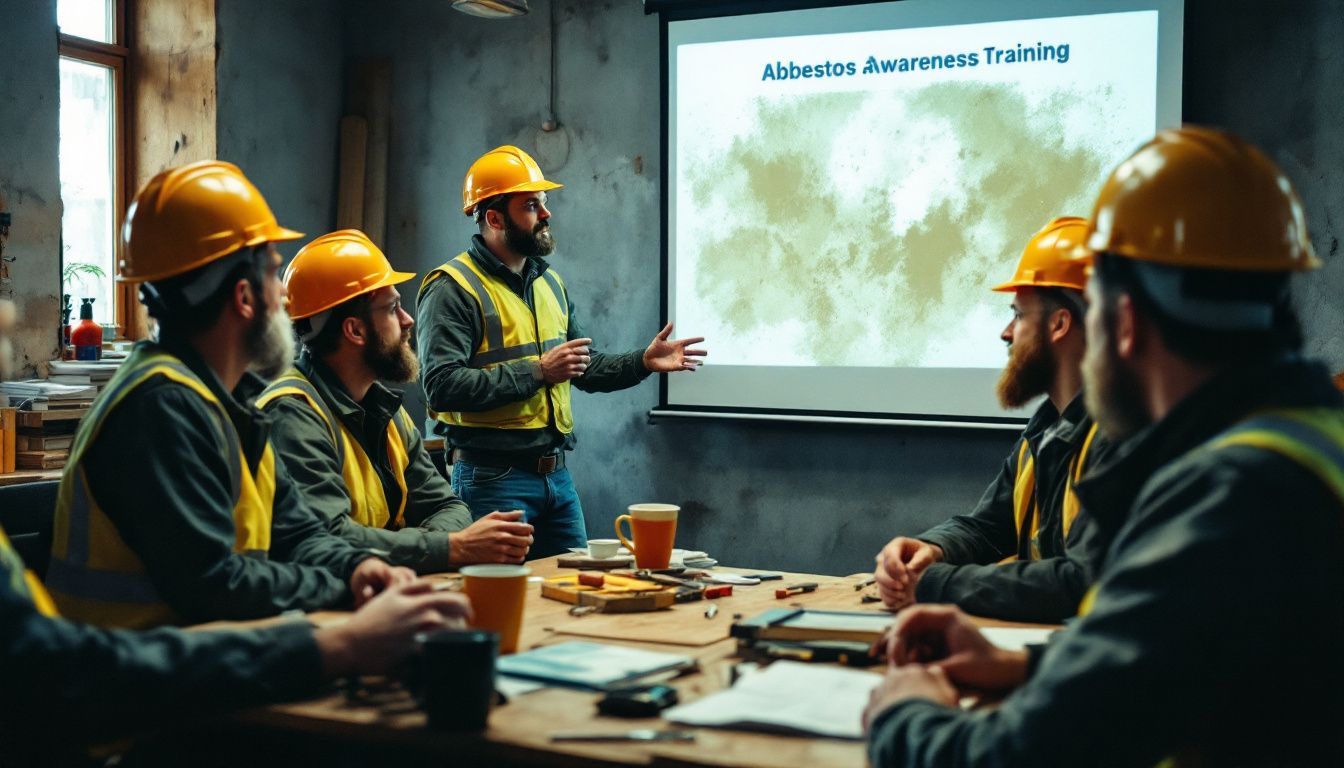
What Every Labourer with Asbestos Awareness Needs to Know Before Starting Work
Asbestos kills more construction workers in the UK than any other occupational hazard. If you are a labourer with asbestos awareness training, you are already ahead of many on site — but awareness only protects you if you know exactly what to do with that knowledge.
This post covers what that training should include, why it matters legally, and how it fits into the reality of working on pre-2000 buildings every day.
Why Every Labourer with Asbestos Awareness Has a Critical Role on Site
Labourers are often the first people on site. They dig, clear, strip, and prepare — work that puts them directly in contact with materials that could contain asbestos fibres.
Unlike licensed asbestos contractors who work with confirmed asbestos-containing materials (ACMs), labourers frequently encounter asbestos unexpectedly. That is precisely what makes their awareness training so critical.
The Control of Asbestos Regulations places a clear duty on employers to ensure that any worker who could disturb ACMs in the course of their work receives appropriate information, instruction, and training. For labourers, this is non-negotiable. It cannot be covered in a five-minute toolbox talk and dismissed.
Asbestos-related diseases — including mesothelioma, asbestosis, and lung cancer — can take decades to develop after exposure. By the time symptoms appear, the damage is already done. Prevention through proper training is the only effective strategy.
What Asbestos Awareness Training Actually Covers
Asbestos awareness training for labourers and construction workers is not a licence to work with asbestos. It is specifically designed to help workers recognise when they might encounter asbestos, understand the risks involved, and know what steps to take before any disturbance occurs.
Types and Locations of Asbestos-Containing Materials
A labourer with asbestos awareness training will learn to identify the most common ACMs found on UK construction sites. These include:
- Asbestos cement sheets and roofing panels
- Textured coatings such as Artex on ceilings and walls
- Floor tiles and the adhesive used beneath them
- Pipe lagging and boiler insulation
- Insulating board used around fire doors and partitions
- Sprayed coatings on structural steelwork
- Roof felt and bitumen products
Any building constructed or refurbished before 2000 could contain one or more of these materials. That covers an enormous proportion of the UK’s existing building stock, and it means labourers working on older properties must treat suspected materials with caution until proven otherwise.
Health Risks Associated with Asbestos Exposure
Training must include a clear explanation of why asbestos is dangerous. When ACMs are disturbed, microscopic fibres are released into the air. These fibres are invisible to the naked eye, have no smell, and can remain airborne for hours.
Once inhaled, they lodge permanently in lung tissue. The consequences are severe:
- Mesothelioma — a cancer of the lining of the lungs — has no cure
- Asbestosis causes progressive scarring of lung tissue
- Lung cancer risk is significantly elevated in those exposed to asbestos, particularly in people who smoke
Workers need to understand these risks not to frighten them, but to reinforce why the correct procedures must be followed every single time — not just when a supervisor is watching.
Where to Expect Asbestos on Site
Knowing the general types of ACMs is one thing — knowing where to look on a specific site is another. Asbestos awareness training teaches labourers to think spatially about risk.
Boiler rooms, roof spaces, service risers, ceiling voids, and areas around old pipework are all high-priority zones in pre-2000 buildings. Training also explains the importance of asbestos registers and management plans.
Before any work begins, a management survey should have been carried out to identify and record the location and condition of any ACMs on the premises. Labourers should know where this register is kept and consult it before starting work in unfamiliar areas.
Legal Duties: What the Regulations Require
The Control of Asbestos Regulations sets out clear legal obligations for employers, duty holders, and workers. Understanding these duties is a core part of any proper asbestos awareness programme.
Employer Responsibilities
Employers must ensure that workers who are liable to disturb ACMs — even inadvertently — receive asbestos awareness training before they start work on relevant sites. This training must be provided by a competent person and refreshed regularly.
The HSE’s guidance document HSG264 provides detailed information on how surveys and risk management should be approached, and employers are expected to follow this guidance in practice.
Employers also have a duty to carry out a suitable and sufficient risk assessment before any work begins on a pre-2000 building. If ACMs are identified, a written plan of work must be prepared before any disturbance takes place.
Worker Responsibilities
Labourers are not passive recipients of safety information — they have their own legal duties. Workers must follow the training they have received, use the personal protective equipment provided, and report any suspected asbestos finds to a supervisor immediately.
Continuing to work after discovering a potential ACM without reporting it is both dangerous and a breach of legal duty. No project deadline justifies that risk.
The Three Categories of Asbestos Work
Asbestos awareness training explains the distinction between different categories of asbestos work, because this directly affects what a labourer is permitted to do:
- Non-licensed work — lower-risk tasks that do not require a licence but still require training and proper precautions
- Notifiable non-licensed work (NNLW) — work that must be notified to the HSE, with medical surveillance and written records required
- Licensed work — high-risk work that can only be carried out by a contractor holding a licence from the HSE
Asbestos awareness training does not qualify a labourer to carry out any of these categories of work. Its purpose is to ensure they can recognise ACMs and respond appropriately — which almost always means stopping work and calling in a specialist.
Safe Working Practices Every Labourer Should Know
Even with awareness training, labourers need to understand the practical steps that reduce risk on site. These are not complicated, but they must become second nature.
Before Work Begins
- Check whether an asbestos survey has been carried out for the property
- Review the asbestos register and identify any ACMs in your working area
- Confirm with your supervisor that the work plan accounts for any identified materials
- Never assume a building is asbestos-free because it looks modern — many pre-2000 buildings have been partially refurbished and still contain hidden ACMs
During Work
- Do not drill, cut, sand, or break materials you suspect may contain asbestos
- If you uncover anything that looks like it could be an ACM — fibrous material, old insulation, unusual board materials — stop immediately
- Do not attempt to remove or clean up suspected asbestos yourself
- Inform your supervisor and keep others away from the area
If You Suspect Exposure Has Occurred
- Leave the area without disturbing the material further
- Remove outer clothing and place it in a sealed bag
- Wash hands and face thoroughly
- Report the incident to your supervisor and ensure it is recorded
- Seek medical advice if you have reason to believe significant exposure occurred
Refresher Training: How Often and Why It Matters
Asbestos awareness is not a one-and-done qualification. The HSE expects that training is kept current, and most industry guidance recommends refresher training at least every 12 months for workers in roles where asbestos exposure is a realistic risk.
Refresher training is not just about ticking a compliance box. Regulations are updated, guidance evolves, and workers’ understanding of risk can drift over time — particularly if they have been fortunate enough not to encounter a real asbestos situation in their day-to-day work.
Regular refreshers keep the knowledge sharp and the habits correct. Employers should maintain clear records of all training completed, including dates, course content, and the provider used. These records may be requested during HSE inspections or following an incident on site.
Choosing the Right Training Provider
Not all asbestos awareness courses are equal. Employers should look for providers accredited by recognised bodies such as the United Kingdom Asbestos Training Association (UKATA) or the Asbestos Control and Abatement Division (ACAD).
These organisations set standards for course content and delivery, giving employers confidence that the training meets regulatory expectations.
A good training provider will cover all the key topics — types of ACMs, health risks, legal duties, emergency procedures, and safe working practices — and will be able to tailor content to the specific types of work your labourers carry out.
Generic online courses may meet the minimum threshold, but site-specific or sector-specific training is always preferable where possible. The goal is not just a certificate — it is workers who genuinely know how to behave when they encounter something suspicious on site.
The Role of Asbestos Surveys in Protecting Labourers
Training alone cannot protect workers if nobody has actually checked the building for asbestos before work begins. This is where professional asbestos surveys are essential — and where the legal duty of the building owner or principal contractor comes firmly into play.
A management survey identifies the location and condition of ACMs in a building that is occupied or in normal use. A demolition survey goes further, inspecting all areas that will be disturbed during planned refurbishment or demolition works.
Both types must be completed by a UKAS-accredited surveying company using qualified surveyors. If you are a labourer working on a site where no survey has been carried out, that is a red flag.
You are legally entitled to ask whether a survey exists. If your employer cannot provide evidence that the building has been assessed, you should raise this concern before work begins — and you should not feel pressured to stay quiet about it.
Building a Safety Culture Around Asbestos Awareness
Individual training is necessary, but it works best when it sits within a broader culture of safety on site. Site managers and principal contractors set the tone. If they treat asbestos awareness as a genuine priority — not just a compliance formality — labourers will follow that lead.
Practical steps that reinforce a strong safety culture include:
- Displaying asbestos register information in accessible locations on site
- Including asbestos risk in every site induction, not just for new starters
- Running regular toolbox talks that reference real examples from the site
- Encouraging workers to report concerns without fear of being dismissed or penalised
- Ensuring supervisors are trained to respond correctly when asbestos is suspected
A labourer with asbestos awareness training who works in an environment where that awareness is actively valued is far more likely to act correctly under pressure than one who completed a course but has never seen it reflected in site practice. Culture and training reinforce each other — one without the other is rarely enough.
Asbestos Surveys Nationwide: Protecting Your Workforce
If you are a contractor, site manager, or property owner preparing for work on a pre-2000 building, commissioning a professional asbestos survey before any labourers set foot on site is the single most important step you can take. It protects your workers, fulfils your legal duty, and prevents the costly delays that come from discovering asbestos mid-project.
Supernova Asbestos Surveys has completed over 50,000 surveys across the UK. Our UKAS-accredited surveyors work with construction firms, housing associations, local authorities, and private clients to deliver thorough, reliable results that give site teams the information they need before work begins.
We cover the full range of survey types — from asbestos surveys in London to asbestos surveys in Manchester and asbestos surveys in Birmingham — with nationwide coverage and fast turnaround times.
Call us on 020 4586 0680 or visit asbestos-surveys.org.uk to book a survey or discuss your requirements with our team.
Frequently Asked Questions
What is asbestos awareness training and who needs it?
Asbestos awareness training is a course designed to help workers recognise asbestos-containing materials, understand the associated health risks, and know what steps to take if they encounter suspected ACMs. Under the Control of Asbestos Regulations, any worker whose role could result in the disturbance of ACMs — including labourers, electricians, plumbers, and general construction workers — must receive this training before working on relevant sites.
Does asbestos awareness training allow me to remove asbestos?
No. Asbestos awareness training does not qualify anyone to work with, disturb, or remove asbestos-containing materials. Its purpose is to help workers identify potential ACMs and respond safely — which means stopping work, keeping others away, and reporting to a supervisor. Actual removal work requires either non-licensed, notifiable non-licensed, or licensed asbestos work qualifications depending on the material and risk level involved.
How often does asbestos awareness training need to be refreshed?
Most industry guidance, aligned with HSE expectations, recommends refresher training at least every 12 months for workers in roles where encountering asbestos is a realistic possibility. Employers should keep records of all training completed, including dates and course content, as these may be requested during HSE inspections or following an incident on site.
What should a labourer do if they discover a suspected ACM on site?
Stop work immediately and do not disturb the material any further. Keep other workers away from the area and inform your supervisor straight away. Do not attempt to clean up, remove, or sample the material yourself. The incident should be recorded, and a qualified asbestos surveyor should assess the material before any work in that area resumes.
Is an asbestos survey legally required before construction or refurbishment work?
Yes. Before any refurbishment or demolition work begins on a pre-2000 building, the duty holder or principal contractor is legally required to ensure a suitable asbestos survey has been carried out. HSG264 sets out the HSE’s guidance on survey types and standards. A management survey covers occupied buildings in normal use, while a demolition survey is required for any area that will be structurally disturbed during planned works. Both must be carried out by a UKAS-accredited surveying company.