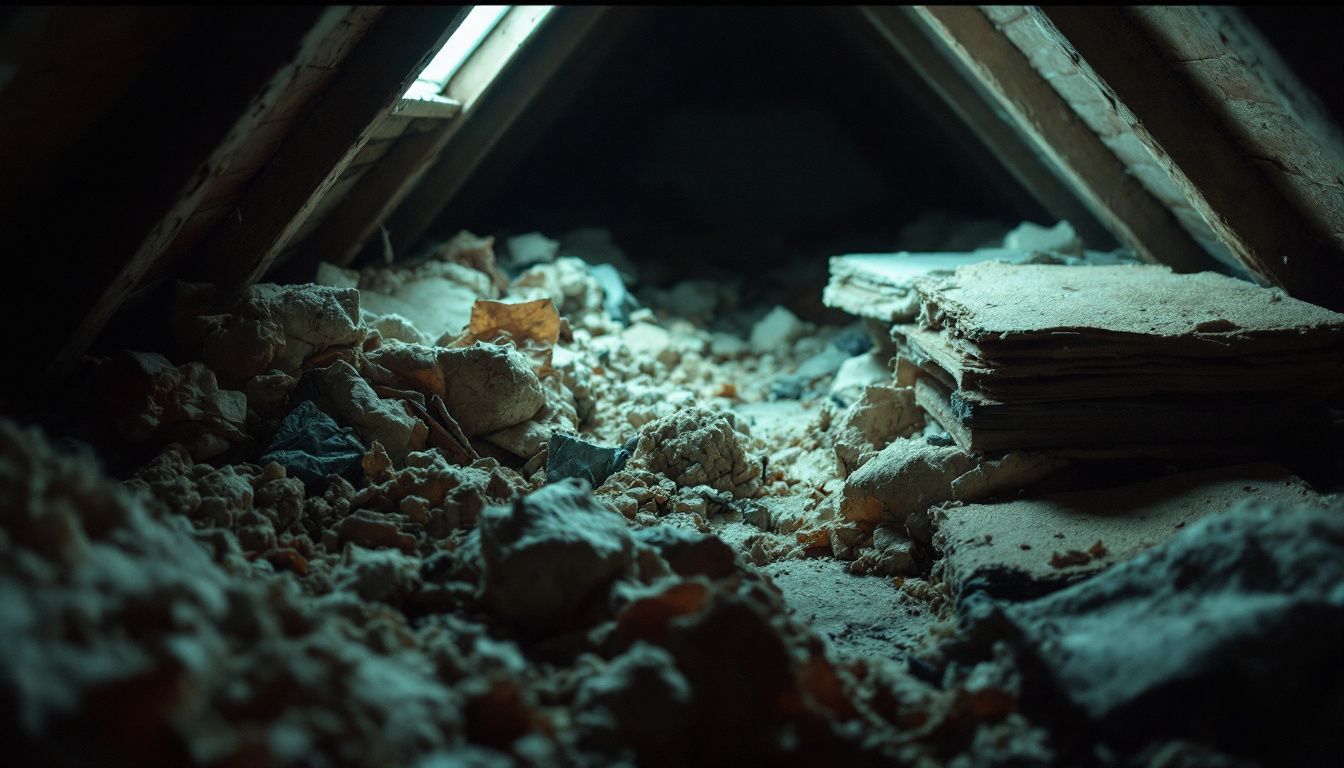
The Asbestos Problem in UK Housing: What Every Property Owner Must Understand
Millions of UK homes are sitting on a ticking time bomb, and most occupants have no idea. The asbestos problem in British housing is not a historical footnote — it is an active, ongoing public health crisis affecting families, tenants, workers, and landlords right now. Understanding the scale of this issue, and what you can do about it, could genuinely save lives.
How Widespread Is the Asbestos Problem Across the UK?
Asbestos was used extensively in British construction throughout much of the twentieth century. It was cheap, fire-resistant, and remarkably versatile — which is precisely why it ended up in so many buildings across the country.
Blue and brown asbestos were banned in 1985, but white asbestos remained legal until 1999. That means any property built or refurbished before that date may well contain it. The scale is staggering.
Millions of homes, schools, hospitals, and commercial premises across the UK still contain asbestos-containing materials (ACMs) in varying states of condition. It turns up in pipe lagging, ceiling tiles, floor tiles, textured coatings like Artex, roof panels, and insulation boards — often in places disturbed during routine maintenance or renovation.
Social housing has been particularly hard hit. Studies have consistently found that the majority of properties with known asbestos issues are owned by social landlords — councils and housing associations managing large stocks of older properties. That means the people most exposed to the risk are often those with the fewest resources to deal with it.
Where Does Asbestos Hide in Older Buildings?
One of the most dangerous aspects of the asbestos problem is that the material is not always visible. It was frequently mixed into other building products, making it impossible to identify by sight alone. Professional testing is the only reliable way to confirm its presence.
Common locations where asbestos is found in UK properties include:
- Pipe and boiler insulation — lagging was one of the most widespread uses of asbestos in older buildings
- Ceiling tiles — particularly in commercial and public buildings from the 1960s to 1980s
- Textured coatings — Artex and similar products frequently contained chrysotile (white asbestos)
- Floor tiles and adhesives — vinyl floor tiles in older properties are a common source
- Roof sheets and panels — corrugated asbestos cement roofing was widely used in garages and outbuildings
- Insulation boards — used around fireplaces, in partition walls, and in ceiling voids
- Gutters and downpipes — asbestos cement was common in external drainage systems
The condition of the material matters enormously. Asbestos that is intact and undisturbed poses a much lower immediate risk than material that is damaged, crumbling, or likely to be disturbed by building work.
This is why a professional survey is essential before any renovation or maintenance project in a pre-2000 building. A refurbishment survey will identify all ACMs in areas scheduled for work, ensuring your contractors are not unknowingly disturbing hazardous materials.
The Health Consequences of Asbestos Exposure
The reason the asbestos problem demands such serious attention is the severity of the diseases it causes. When asbestos fibres are disturbed, they become airborne. These fibres are microscopic — invisible to the naked eye — and once inhaled, they lodge permanently in lung tissue. The body cannot expel them.
Over time, these fibres can cause:
- Mesothelioma — a rare and aggressive cancer of the lining of the lungs or abdomen, almost exclusively caused by asbestos exposure and invariably fatal
- Asbestos-related lung cancer — a primary lung cancer triggered by fibre inhalation, distinct from mesothelioma
- Asbestosis — progressive scarring of lung tissue that causes severe and worsening breathing difficulties
- Pleural thickening — a build-up of scar tissue around the lungs that restricts breathing capacity over time
What makes these diseases particularly cruel is the latency period. Symptoms typically take between 20 and 50 years to appear after initial exposure. Someone exposed to asbestos fibres during a home renovation in the 1980s might only be receiving a diagnosis today.
By the time symptoms are present, the disease is usually advanced. Thousands of people in the UK die from asbestos-related diseases every year — more than die on the roads. These are not abstract numbers. They represent tradespeople, teachers, healthcare workers, and ordinary homeowners who encountered asbestos in the course of daily life.
Who Is Most at Risk From the Asbestos Problem?
While anyone can be exposed, certain groups face disproportionately higher risks. Tradespeople — plumbers, electricians, carpenters, and builders — who work regularly in older properties are among the most vulnerable, because their work frequently involves disturbing building materials.
Healthcare workers and teachers are also at elevated risk, given the age of many NHS buildings and schools. Maintenance staff and cleaners in older buildings face ongoing low-level exposure that can accumulate over an entire working lifetime.
Homeowners undertaking DIY projects in pre-2000 properties are a growing concern. Without professional guidance, it is easy to unknowingly drill into, sand, or cut through materials containing asbestos — releasing fibres into the air of a family home.
If you are planning any building work, arranging a refurbishment survey before work begins is not just good practice — in many circumstances it is a legal requirement under the Control of Asbestos Regulations.
The Legal Framework: What UK Law Requires
The primary legislation governing the asbestos problem in the UK is the Control of Asbestos Regulations, supported by the HSE’s guidance document HSG264. These regulations place a legal duty on those responsible for non-domestic premises — known as dutyholders — to manage asbestos within their buildings.
The Duty to Manage
The duty to manage requires dutyholders to take a series of specific steps:
- Find out whether asbestos is present in the premises and assess its condition
- Presume materials contain asbestos unless there is strong evidence they do not
- Make and keep an up-to-date record of the location and condition of all ACMs
- Assess the risk of anyone being exposed to fibres from these materials
- Prepare a plan to manage that risk and put it into action
- Review and monitor the plan regularly
A management survey is the standard way to fulfil this obligation. It locates ACMs that could be disturbed during normal use and maintenance, providing the foundation for a robust asbestos management plan.
Residential Properties and Landlord Obligations
For residential properties, the legal picture is more complex. Private landlords have duties under housing legislation to ensure their properties are safe, and asbestos in poor condition can constitute a hazard under the Housing Health and Safety Rating System (HHSRS).
However, the specific requirements are less prescriptive than for commercial premises, which has contributed to inconsistent standards across the housing stock. This does not reduce the moral or practical obligation — it simply means enforcement is harder to achieve.
Pre-Demolition and Refurbishment Requirements
Before any significant building work takes place, a demolition survey is legally required to identify all ACMs that could be disturbed or released during the project. Failure to commission one is not just a regulatory oversight — it can expose workers and the public to serious harm, and carries significant legal consequences for those responsible.
Enforcement Gaps and Their Consequences
Despite the legal framework, enforcement of asbestos regulations remains patchy. Local authorities and the HSE have finite resources, and inspections are not frequent enough to ensure universal compliance.
Many building owners — particularly smaller private landlords — are either unaware of their obligations, or aware but choosing to defer action because of cost. The result is that a significant number of buildings across the UK have no asbestos register, no management plan, and no clear record of where ACMs are located.
Courts have consistently found in favour of claimants where dutyholders failed to take reasonable steps to identify and manage asbestos risks. The legal and financial consequences of inaction are substantial — and entirely avoidable with a straightforward professional survey.
The True Cost of the Asbestos Problem
One of the most common reasons property owners give for delaying asbestos work is cost. It is true that asbestos management and removal can be expensive — but the cost of inaction, both in human and financial terms, is far higher.
What Does Asbestos Removal Cost?
The cost of asbestos removal varies considerably depending on the type of asbestos, its location, the volume of material, and the complexity of the work. A small, straightforward job — removing asbestos floor tiles from a single room, for example — might cost around £1,000. A large-scale project involving extensive pipe lagging or structural insulation in a commercial building can run to £30,000 or more.
These figures include the cost of specialist contractors, personal protective equipment, air monitoring, waste disposal using licensed carriers, and the regulatory paperwork required for licensed asbestos work. Cutting corners is not an option — unlicensed removal of notifiable ACMs is a criminal offence under the Control of Asbestos Regulations.
The Cost of Not Acting
Deferring asbestos work carries its own serious costs. Asbestos-containing materials deteriorate over time. A material that is in stable condition today may become friable and hazardous within a few years, particularly if the building is subject to vibration, moisture, or physical disturbance.
Addressing a minor issue early is almost always cheaper than dealing with a significant contamination event later. There is also the question of liability. If a tenant, worker, or visitor is exposed to asbestos fibres on your property and subsequently develops an asbestos-related disease, the legal and financial consequences can be severe. Compensation awards in mesothelioma cases are substantial, and reputational damage can be irreparable.
Why Regular Asbestos Surveys Are the Most Effective Response
The most effective way to manage the asbestos problem in any property is to know exactly what you are dealing with. A professional asbestos survey provides a detailed record of where ACMs are located, what condition they are in, and what action — if any — is required.
Both management and refurbishment surveys must be carried out by a competent surveyor with appropriate training and experience. The resulting report should include a detailed plan of the building, photographs of ACMs, laboratory analysis of samples taken, and a risk assessment for each material identified.
Surveys are not a one-off exercise. As buildings age, as materials deteriorate, and as maintenance or renovation work takes place, the asbestos picture changes. Regular reassessment is the only way to stay on top of the risk and demonstrate ongoing compliance with your legal duties.
Asbestos Surveys Across the UK: Supernova’s Nationwide Service
Supernova Asbestos Surveys operates nationwide, providing management, refurbishment, and demolition surveys for residential, commercial, and industrial properties. With over 50,000 surveys completed, our teams are experienced in identifying and assessing ACMs across every property type and age.
For those needing an asbestos survey London teams can mobilise quickly across all boroughs, covering both routine management surveys and urgent pre-works assessments. Our London operations handle everything from period terraced houses to large commercial premises and public sector buildings.
For properties in the North West, our asbestos survey Manchester service covers the city and surrounding areas, including Salford, Stockport, and the wider Greater Manchester region. Whether you manage a single rental property or a large commercial portfolio, we can provide a fast, thorough, and fully accredited survey.
In the Midlands, our asbestos survey Birmingham service operates across the city and surrounding areas, supporting property managers, housing associations, developers, and private landlords with all survey types.
Wherever you are in the UK, the asbestos problem in your property does not go away by itself. A professional survey is the first step towards understanding your risk, meeting your legal obligations, and protecting the people who live and work in your buildings.
To book a survey or discuss your requirements, call us on 020 4586 0680 or visit asbestos-surveys.org.uk. Our team is ready to help you take control of the asbestos problem before it takes control of you.
Frequently Asked Questions
How do I know if my property has an asbestos problem?
You cannot identify asbestos by sight alone — it was mixed into many different building products and is impossible to distinguish without laboratory testing. If your property was built or significantly refurbished before 2000, you should assume ACMs may be present until a professional survey confirms otherwise. A management survey will identify the location and condition of any asbestos-containing materials in your building.
Is asbestos in my home dangerous if I leave it alone?
Asbestos that is in good condition and is not being disturbed poses a much lower immediate risk than damaged or friable material. However, conditions change — materials deteriorate, buildings are maintained, and renovation work takes place. The safest approach is always to have a professional survey carried out, so you know exactly what is present and can make an informed decision about management or removal.
What type of asbestos survey do I need?
The type of survey you need depends on what you intend to do with the building. A management survey is appropriate for occupied premises where you need to locate and monitor ACMs as part of an ongoing management plan. A refurbishment survey is required before any renovation or maintenance work that could disturb building materials. A demolition survey is legally required before any demolition or major structural work takes place.
Are landlords legally required to deal with the asbestos problem in their properties?
For non-domestic premises, the Control of Asbestos Regulations impose a clear duty to manage asbestos on dutyholders. For residential landlords, the obligations are set out under housing legislation, and asbestos in poor condition can constitute a hazard under the Housing Health and Safety Rating System. Landlords who fail to address known asbestos risks face potential legal action and substantial liability if occupants are harmed.
How much does it cost to have an asbestos survey carried out?
The cost of an asbestos survey varies depending on the size and type of property, the scope of the survey, and the number of samples required for laboratory analysis. Supernova Asbestos Surveys provides competitive pricing for all survey types. To get an accurate quote for your property, call us on 020 4586 0680 or visit asbestos-surveys.org.uk.