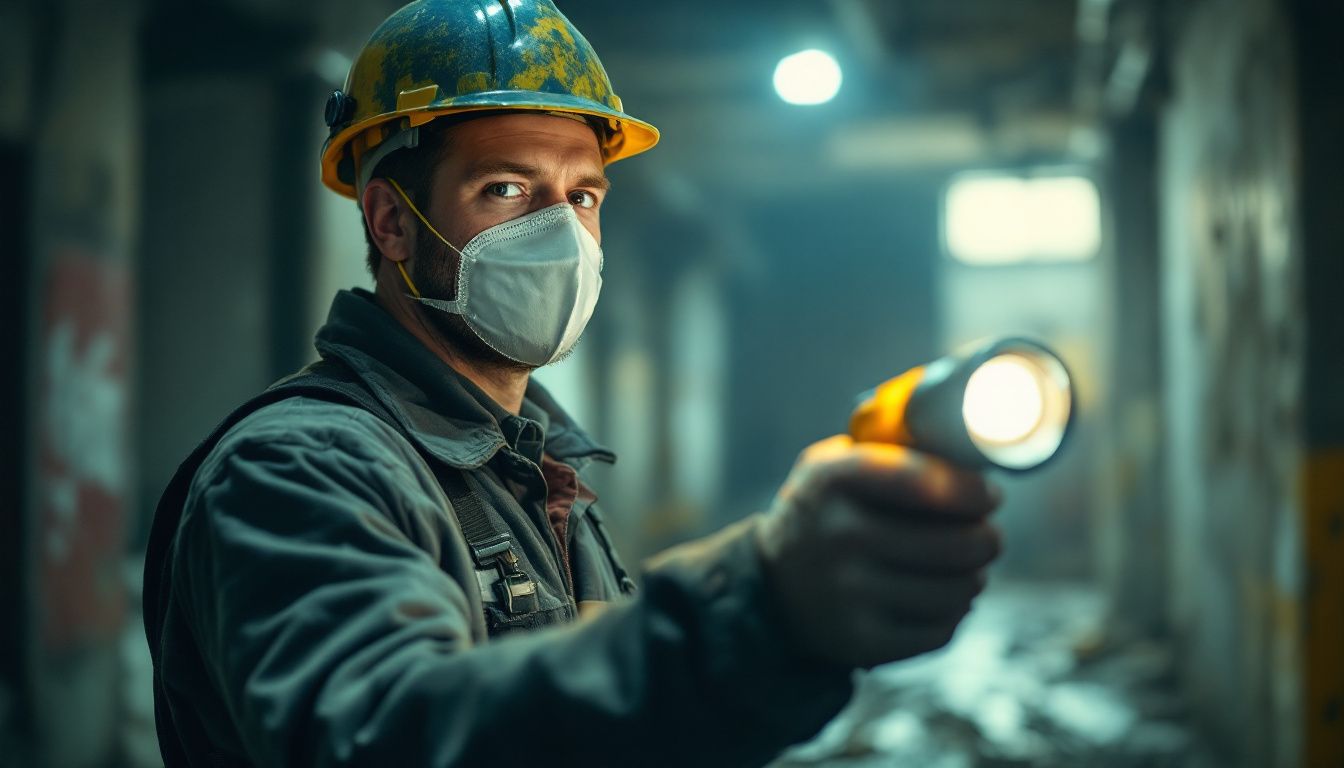
Why Every Builder Needs an Asbestos Survey Before Work Begins
Pick up a hammer in the wrong building and you could release fibres that kill. Asbestos remains the single largest cause of work-related deaths in the UK, and builders are among the most at-risk groups. Getting a proper asbestos survey for builders before any construction, refurbishment, or demolition work is not a box-ticking exercise — it is a legal requirement that protects your workers, your business, and your reputation.
Whether you are a sole trader fitting a kitchen or a principal contractor managing a multi-site development, the rules apply to you. This post breaks down exactly what you need to know.
What Is an Asbestos Survey and Why Do Builders Need One?
An asbestos survey is a structured inspection of a building carried out by a qualified surveyor to identify the presence, location, condition, and extent of any asbestos-containing materials (ACMs). For builders, it answers a critical question before work starts: is there anything in this building that could kill my workforce?
Any building constructed or refurbished before the year 2000 may contain asbestos. That covers an enormous proportion of the UK’s housing stock and commercial property. Textured coatings, insulation boards, floor tiles, pipe lagging, roof sheets — asbestos was used in hundreds of building products, and it does not always look the way people expect.
Without a survey, you are working blind. Disturbing asbestos without knowing it is there is how workers end up inhaling fibres that cause mesothelioma, asbestosis, and lung cancer — diseases that can take decades to develop but are invariably fatal.
The Two Types of Survey Builders Will Encounter
Not all surveys are the same, and choosing the wrong type can leave you legally exposed. There are two main survey types relevant to construction work.
Management Survey
A management survey is the standard survey required for the routine management of a building. It identifies ACMs that could be disturbed during normal occupancy and day-to-day maintenance. This survey is typically required by the building owner or dutyholder and should be available to any contractor working on the premises.
As a builder, you should always ask for the management survey register before starting work. If the client cannot produce one for a pre-2000 building, that is a serious red flag — and you may need to arrange a survey yourself before proceeding.
Refurbishment and Demolition Survey
If your work involves breaking into the fabric of a building — opening walls, lifting floors, removing ceilings, altering structural elements — a management survey is not sufficient. You need a demolition survey, more formally known as a refurbishment and demolition survey.
This is a far more intrusive inspection. The surveyor will access voids, break into surfaces, and check areas that a management survey would leave undisturbed. The area being surveyed must be vacated during the inspection. The goal is to locate every ACM that could be disturbed by the planned works — and that means getting into every corner of the affected area.
This survey is a legal requirement under the Control of Asbestos Regulations before any notifiable refurbishment or demolition work begins. There are no exceptions.
Your Legal Duties as a Builder Under UK Regulations
Two sets of regulations govern how builders must handle asbestos. Understanding both is essential — ignorance is not a defence, and the penalties for non-compliance are severe.
The Control of Asbestos Regulations
The Control of Asbestos Regulations impose a duty to manage asbestos on those responsible for non-domestic premises, and place strict requirements on anyone carrying out work where asbestos may be present. Key obligations for builders include:
- Identifying whether ACMs are present before work starts
- Ensuring a suitable survey has been carried out by a competent person
- Assessing the risk from any ACMs identified
- Preventing or adequately controlling exposure to asbestos fibres
- Ensuring workers who may disturb asbestos are trained to the appropriate level
- Using licensed contractors for licensable asbestos work
- Notifying the HSE before licensable asbestos work begins
The HSE’s guidance document HSG264 sets out in detail how surveys should be planned, conducted, and reported. Any surveyor you commission should be working to this standard.
Construction (Design and Management) Regulations — CDM
CDM regulations place duties on all parties in a construction project to manage health and safety risks, including asbestos. Under CDM, the principal designer must take account of any pre-construction information — which includes asbestos survey data — when developing the design and the construction phase plan.
The principal contractor must ensure that asbestos information is communicated to all relevant workers on site. If a refurbishment and demolition survey has not been carried out, the principal contractor should not allow intrusive work to begin. Asbestos surveys are pre-construction information, and failing to obtain and act on them is a clear CDM breach.
Under CDM, every duty holder — client, principal designer, principal contractor, and contractor — has a role to play. Asbestos management is not solely the client’s problem. If you are on site and you know the risks have not been properly assessed, you have a duty to raise it.
What Happens If Asbestos Is Found During Building Work?
Even with a thorough survey, unexpected finds do happen — particularly in complex or heavily altered buildings. Knowing what to do when this occurs can be the difference between a managed incident and a major enforcement action.
Stop Work Immediately
If a worker suspects they have disturbed asbestos, work in that area must stop immediately. Do not attempt to clean up the material or continue working around it. Evacuate the area and prevent others from entering.
Isolate the Area
Seal off the affected area as effectively as possible. This limits the spread of any fibres and protects other workers on site. Keep a record of who was in the area at the time of the find and whether they may have been exposed.
Get the Material Tested
Do not assume the material is or is not asbestos based on appearance alone. Arrange for a sample to be taken by a qualified surveyor and tested by a UKAS-accredited laboratory. Only once the results confirm the material’s identity can an informed decision be made about next steps.
Arrange Licensed Removal If Required
If the material is confirmed as asbestos and the work required to remove or manage it falls within the licensable category, you must engage a licensed asbestos removal contractor. Asbestos removal of licensable materials by unlicensed operatives is a criminal offence. Do not cut corners here — the consequences for workers’ health and for your business are too serious.
Choosing a Competent Asbestos Surveyor
The quality of your asbestos survey is only as good as the person carrying it out. HSG264 is clear that surveys must be conducted by competent surveyors with the appropriate qualifications, experience, and quality assurance systems. Here is what to look for:
- P402 qualification — issued by the British Occupational Hygiene Society (BOHS), this is the recognised qualification for asbestos surveyors in the UK
- UKAS accreditation — the surveying organisation should hold accreditation from the United Kingdom Accreditation Service, demonstrating that their processes meet the required standard
- Laboratory accreditation — samples should be analysed by a UKAS-accredited laboratory, not just any testing facility
- Clear, detailed reports — the survey report should include floor plans, photographs, sample locations, material condition assessments, and a risk priority rating for each ACM identified
- Adequate sampling — HSG264 specifies minimum sampling requirements; a surveyor taking too few samples is not providing a thorough service
Always ask for evidence of qualifications and accreditation before commissioning a survey. A cheap survey that misses ACMs is not a bargain — it is a liability.
Reading and Using the Survey Report on Site
Receiving the survey report is not the end of the process — it is the beginning of your asbestos management obligations on that project. Here is how to use it effectively:
- Review the register — check every ACM listed, its location, condition, and risk rating before planning your work sequence
- Share with all relevant parties — subcontractors, site managers, and any specialist trades need to know where ACMs are located before they start work
- Update the construction phase plan — the asbestos information should be reflected in the CDM construction phase plan, including how ACMs will be managed or removed
- Arrange removal in advance — where ACMs need to be removed before work can proceed, schedule this before the main works begin, not as an afterthought
- Keep the report on site — the survey report should be accessible on site throughout the project, not filed away in an office
Training Requirements for Construction Workers
Every worker who could encounter asbestos during their work must receive appropriate training. The level of training required depends on the nature of the work:
- Asbestos awareness training — required for all workers who could inadvertently disturb asbestos during their normal work. This includes general builders, electricians, plumbers, and joiners working in pre-2000 buildings
- Non-licensed work training — required for workers carrying out non-licensable asbestos work, such as removing small amounts of asbestos cement or textured coatings
- Licensed contractor training — required for workers employed by licensed asbestos removal contractors carrying out licensable work
Training must be refreshed regularly. Keeping records of who has been trained and when is both good practice and a requirement under the Control of Asbestos Regulations.
Asbestos Surveys Across the UK — We Cover Your Area
Supernova Asbestos Surveys operates nationwide, with local surveyors ready to mobilise quickly for construction projects of all sizes. Whether you need an asbestos survey in London, an asbestos survey in Manchester, or an asbestos survey in Birmingham, we have qualified surveyors on the ground who understand local building stock and can turn around reports quickly to keep your project moving.
We regularly work with principal contractors, main contractors, and specialist subcontractors across residential, commercial, and industrial projects. Fast turnaround, UKAS-accredited processes, and clear reports that are actually useful on site — that is what we deliver.
Frequently Asked Questions
Do I need an asbestos survey before starting building work?
Yes — if the building was constructed or refurbished before 2000, an asbestos survey is required before any work that could disturb the building fabric. For intrusive work such as refurbishment or demolition, a refurbishment and demolition survey is a legal requirement under the Control of Asbestos Regulations. A management survey alone is not sufficient for this type of work.
Who is responsible for commissioning the asbestos survey on a construction project?
Under CDM regulations, the client has a duty to provide pre-construction information — including asbestos survey data — to the principal designer and principal contractor. However, if no survey exists or it is inadequate, the principal contractor should not allow intrusive work to begin. In practice, responsibility is shared across the project team, and all parties should ensure the information is in place before work starts.
What is the difference between a management survey and a refurbishment and demolition survey?
A management survey is designed for the ongoing management of a building and identifies ACMs that could be disturbed during normal maintenance. A refurbishment and demolition survey is a more intrusive inspection required before any work that will disturb the building fabric. It involves accessing voids and breaking into surfaces to locate all ACMs in the affected area. For construction work, the refurbishment and demolition survey is almost always the appropriate type.
What should I do if we find suspected asbestos during building work?
Stop work in the affected area immediately, isolate the area, and prevent other workers from entering. Do not attempt to clean up or remove the material. Arrange for a qualified surveyor to take a sample and have it tested by a UKAS-accredited laboratory. If the material is confirmed as asbestos and licensable removal is required, engage a licensed asbestos removal contractor before work resumes.
How quickly can Supernova Asbestos Surveys carry out a survey for a construction project?
In most cases we can mobilise within 24 to 48 hours of instruction, and we deliver written reports within 24 hours of the survey being completed. For urgent construction projects, call us on 020 4586 0680 and we will do everything we can to accommodate your programme.
Get Your Asbestos Survey Sorted Before Work Starts
Do not let an asbestos issue derail your project, expose your workforce to risk, or land your business with an enforcement notice. Supernova Asbestos Surveys has completed over 50,000 surveys across the UK, working with builders and contractors who need fast, accurate, reliable results.
Get a free quote in 15 minutes, or call our team directly on 020 4586 0680. Find out more about our full range of services at asbestos-surveys.org.uk.