A cheap asbestos suit can create a very expensive problem. If the coverall tears, fits badly or is used without the right respiratory protection, asbestos fibres can settle on the wearer, spread into clean areas and turn a controlled job into a contamination incident.
That is why choosing an asbestos suit is never just about buying a white disposable overall online. It is about selecting suitable protective clothing, understanding where PPE fits within the wider duty to manage asbestos risk, and knowing when the correct next step is not PPE at all but a survey, sampling or licensed support.
For property managers, landlords, contractors and dutyholders, the key point is simple: PPE is the last line of defence. Under the Control of Asbestos Regulations, supported by HSG264 and wider HSE guidance, the priority is to identify asbestos, assess the risk and prevent exposure before anyone starts work.
If maintenance, refurbishment or demolition is planned, start by establishing whether asbestos-containing materials are present. For example, if works are due in the capital, arranging an asbestos survey London service is often the safest first move before any contractor reaches for an asbestos suit.
What is an asbestos suit actually for?
An asbestos suit is protective clothing designed to reduce contamination of the wearer’s body and normal clothing when working near asbestos-containing materials. It helps stop fibres lodging in everyday fabrics, seams and pockets where they could later spread into vehicles, offices, welfare areas or homes.
What an asbestos suit does not do is make asbestos work safe on its own. It is not a substitute for a risk assessment, training, controlled methods of work, suitable respiratory protective equipment, decontamination procedures and correct waste handling.
In practice, many people searching for an asbestos suit actually need to think about the whole PPE setup. That usually includes:
- Disposable coveralls suitable for fibre control
- Appropriate respiratory protective equipment
- Disposable gloves
- Suitable footwear or boot covers
- Eye protection where needed
- Approved asbestos waste bags
The exact combination depends on the material, its condition, the task and whether the work is licensed, notifiable non-licensed or non-licensed. If that classification is unclear, stop and get advice before disturbing anything.
How to choose the right asbestos suit
Not every disposable overall sold online is suitable as an asbestos suit. Product listings can be vague, and low prices often hide weak seams, poor-quality fabric or missing conformity information.
For asbestos work, disposable coveralls should generally be suitable for protection against hazardous airborne particles. In many cases that means Type 5 coveralls. Some garments are sold as Type 5/6, but the real question is whether the suit is appropriate for fibre control, fits properly and matches the task-specific risk assessment.
Features to look for in an asbestos suit
When selecting an asbestos suit, look past marketing claims and focus on specification. Practical details matter far more than branding.
- Type 5 particle protection
- Hooded design
- Close-fitting wrists and ankles
- Covered zip or secure front fastening
- No external pockets where fibres can collect
- Low-linting material
- Enough room to move without tearing
A good asbestos suit should allow safe movement without being so loose that it snags. If the coverall splits during the job, it should be replaced straight away and the contamination risk assessed.
Disposable or reusable?
For most asbestos tasks, disposable coveralls are the practical choice. Reusable workwear creates cleaning and contamination issues, and ordinary boiler suits are not suitable unless they are specifically certified and appropriate for the task.
This matters on real sites. A reusable garment taken into a van, office or home can spread fibres well beyond the original work area if decontamination is poor.
Do online reviews prove an asbestos suit is suitable?
No. A five-star rating does not mean a product is suitable as an asbestos suit. Reviews may comment on fit or delivery, but they do not replace technical specifications, conformity details or a proper risk assessment.
Before buying, check:
- Whether the coverall is suitable for hazardous particles
- Whether the hood, cuffs and ankles seal effectively
- Whether the fabric is durable enough for the task
- Whether product information is clear and credible
- Whether the supplier provides conformity details
Why an asbestos suit is only one part of asbestos PPE
An asbestos suit protects the body and normal clothing, but inhalation is the main route of exposure. That is why respiratory protection is often the most critical part of the PPE arrangement.
Respiratory protective equipment
The right RPE depends on the material, likely fibre release and method of work. Common options include disposable respirators with suitable filtration, half-mask respirators with P3 filters, or powered respirators where the risk assessment requires them.
Tight-fitting RPE must be face-fit tested. If the seal is poor, the protection is compromised. Facial hair can prevent an effective seal, so anyone using a tight-fitting mask normally needs to be clean-shaven where the mask contacts the face.
Practical steps that reduce avoidable errors:
- Carry out user seal checks every time the mask is worn
- Store reusable RPE in a clean sealed container
- Inspect straps, valves and filters before use
- Replace damaged or contaminated parts immediately
- Never assume one mask suits every asbestos task
Gloves
Disposable gloves are commonly worn with an asbestos suit. They should fit properly, allow safe handling of tools and materials, and be disposed of as contaminated waste after use.
The wrist area matters. Gaps between glove and sleeve can allow contamination onto the skin or underclothing, so the interface should follow the site method statement.
Footwear
Laced boots are awkward because fibres can lodge in the laces and eyelets. Smooth, easy-to-clean footwear is generally preferred. Disposable overshoes or boot covers may be used if they do not create a slip hazard.
Never walk contaminated footwear into a clean office, welfare area, vehicle or home. That is one of the easiest ways to spread asbestos contamination beyond the work zone.
Eye protection
Eye protection may be needed where there is dust, debris or splashes from wetting agents. In many cases, close-fitting goggles are more suitable than open-sided safety glasses.
The key is compatibility with the mask. Eye protection should not break the respirator seal or encourage workers to remove PPE because it fogs up or feels unstable.
When should you wear an asbestos suit?
An asbestos suit is used where there is a risk of contamination from asbestos-containing materials, but that does not mean every asbestos-related task should be handled by a general contractor or maintenance team. Some work should only be carried out by licensed specialists using controlled enclosures, decontamination procedures and air management measures.
As a rule, the more friable or damaged the material, the greater the risk. Pipe insulation, sprayed coatings and asbestos insulating board can present a much higher risk than bonded cement products in good condition.
Before any task starts, ask these questions:
- Has the material actually been identified as asbestos?
- What type of asbestos-containing material is it?
- Is it damaged, sealed, encapsulated or likely to release fibres?
- Does the work fall under licensed or notifiable requirements?
- Do the people involved have the right training and equipment?
If the answer to any of those is unclear, stop and get professional advice. In many cases, the right next step is not buying an asbestos suit at all. It is commissioning a survey or sampling programme first.
For larger premises in the North West, booking an asbestos survey Manchester appointment can help dutyholders identify materials before maintenance or refurbishment begins.
How to put on and remove an asbestos suit safely
Even the best asbestos suit can fail if it is used badly. Contamination often happens during dressing and undressing, especially when workers rush or improvise.
Before putting on the suit
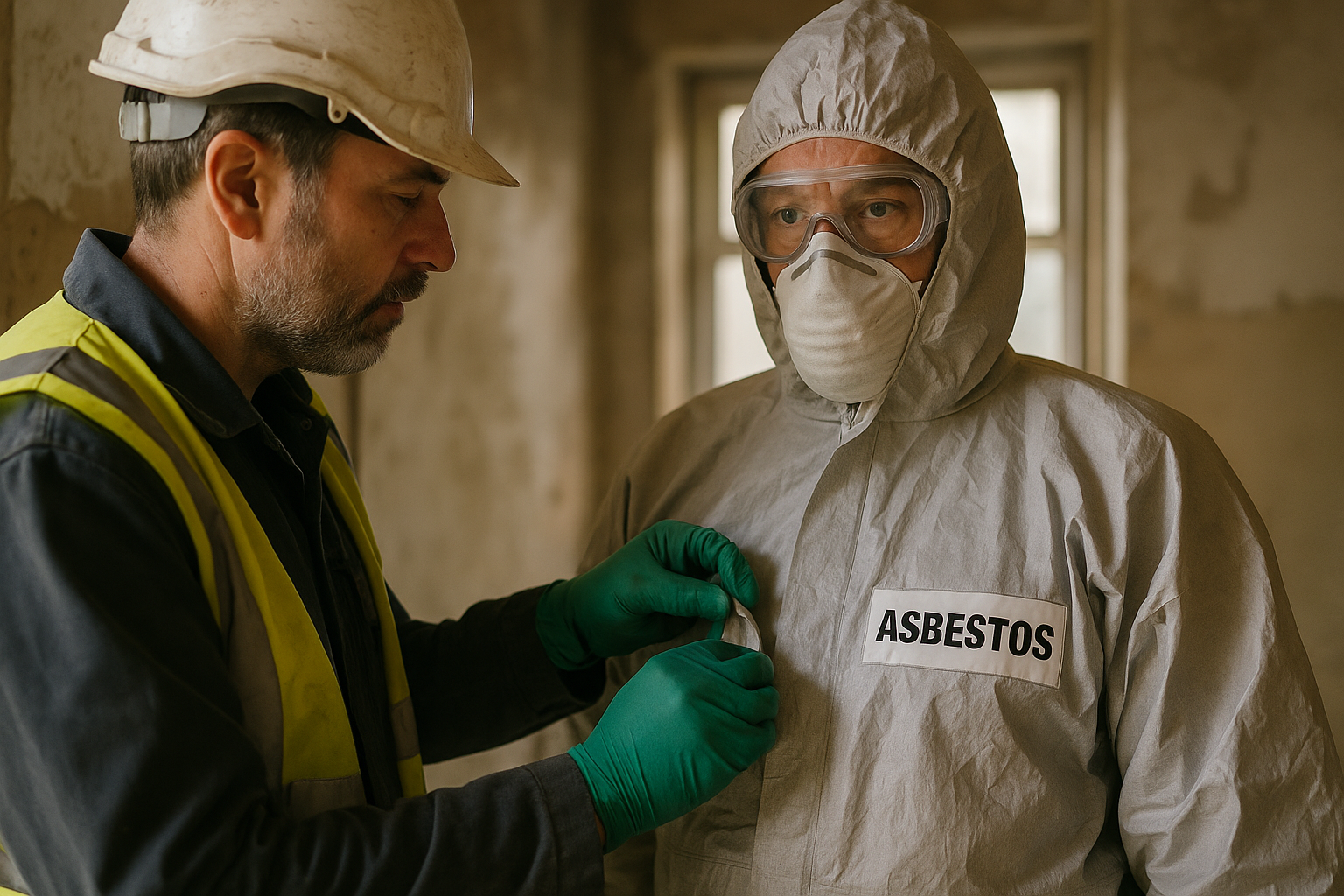
Check the coverall for tears, failed seams, damaged zips or weak points around the hood, cuffs and ankles. Make sure the size is right.
A suit that is too small can split when bending or reaching. One that is too large can catch on edges, fittings and debris.
Putting on an asbestos suit
- Remove jewellery and empty pockets
- Put on suitable underclothing and footwear
- Fit the respirator in line with training and carry out user checks
- Step into the coverall carefully to avoid tearing it
- Pull the zip fully closed
- Position the hood correctly
- Fit gloves and any other required PPE
- Check the interfaces at wrists, ankles and face area
The exact order can vary depending on site procedure and the type of RPE being used. Workers should follow the method statement and training, not guesswork.
While working
Movement should be controlled. Kneeling on sharp debris, dragging against rough surfaces or using unsuitable tools can damage the asbestos suit and increase fibre release.
Better site habits include:
- Using wet methods where appropriate
- Avoiding uncontrolled breakage of asbestos materials
- Keeping the work area restricted
- Cleaning with suitable methods rather than dry sweeping
- Stopping work immediately if PPE is damaged
Removing an asbestos suit
Taking off an asbestos suit is a major contamination risk point. The outer surface may carry fibres, so the coverall should be removed carefully, turned inward as far as possible and bagged as asbestos waste in line with the site procedure.
Do not pull contaminated clothing over the face. Follow the planned decontamination sequence and remove PPE in the correct order for the task.
Common mistakes people make with an asbestos suit
Most PPE failures are not caused by the label on the packet. They happen because the wrong product is chosen, the fit is poor or the wearer assumes the asbestos suit provides more protection than it actually does.
Common mistakes include:
- Buying the cheapest disposable overall without checking specification
- Using a suit without suitable respiratory protection
- Wearing the wrong size
- Working in a torn or damaged coverall
- Using laced or hard-to-clean footwear
- Removing PPE carelessly and spreading contamination
- Taking contaminated clothing into clean areas
- Assuming DIY work is acceptable without identifying the material first
Another frequent error is treating asbestos cement and higher-risk materials as if they present the same level of danger. They do not. The material type, condition and work method all affect the risk and the legal controls required.
What kit might be needed alongside an asbestos suit?
People often search for an asbestos suit when they are really trying to work out the full kit list for a task. For lower-risk work that is legally permitted and properly assessed, the setup may include:
- Type 5 hooded disposable coveralls
- Suitable RPE, often task-appropriate P3 protection
- Disposable gloves
- Suitable footwear or disposable boot covers
- Eye protection where required
- Approved asbestos waste bags
- Damp rags and controlled wetting equipment
- Warning signage and restricted access controls
- A Class H vacuum where the method of work calls for it
That does not mean the task is automatically suitable for in-house staff. Some jobs require specialist contractors from the outset.
If asbestos is damaged, friable or likely to release fibres, professional support is the safer route. Where materials need to be taken out, proper asbestos removal arrangements are far more reliable than relying on unsuitable PPE and guesswork.
Household asbestos and DIY: where people get it wrong
Domestic properties are often where poor decisions start. A homeowner, tradesperson or handyman finds a garage roof, old floor tile backing, textured coating or boxed-in pipework and assumes a simple asbestos suit will make the job safe.
That assumption is dangerous. PPE does not replace identification, planning or legal compliance. If the material has not been confirmed, the first step is to stop disturbing it.
Common domestic mistakes include:
- Breaking materials to see what is underneath
- Using power tools that create dust
- Dry sweeping debris
- Bagging waste in ordinary refuse sacks
- Driving contaminated materials away without proper controls
- Wearing a cheap coverall and assuming that is enough
Even where asbestos-containing materials appear low risk, condition matters. A cement sheet in good condition is very different from a damaged insulating board panel or debris left after previous works.
If you manage housing stock or mixed-use buildings in the Midlands, arranging an asbestos survey Birmingham visit before planned works can prevent expensive mistakes and avoidable exposure.
Legal duties and what property managers should remember
An asbestos suit sits at the very end of the control hierarchy. The wider legal duty is to prevent exposure so far as reasonably practicable, not simply to hand workers PPE and hope for the best.
For non-domestic premises, dutyholders need to know whether asbestos is present, where it is, what condition it is in and how exposure will be prevented. Survey information, asbestos registers and management plans all play a part.
HSG264 sets out the survey standard, while HSE guidance supports decisions on risk, work methods and control measures. PPE should be selected as part of that process, not as a shortcut around it.
Practical steps for property managers:
- Check whether there is an up-to-date asbestos survey for the premises
- Review the asbestos register before maintenance starts
- Make sure contractors have relevant information before they arrive on site
- Stop work immediately if suspect materials are uncovered unexpectedly
- Do not allow staff to improvise with off-the-shelf PPE
If a contractor asks whether they just need an asbestos suit, that is usually a sign the scope needs reviewing. The right answer may be a survey, a sample, a revised method statement or licensed involvement.
How to buy an asbestos suit sensibly
If your risk assessment and method statement show that disposable coveralls are needed, buy on specification rather than price alone. The cheapest option can become the most expensive if it tears, contaminates clean areas or leaves workers under-protected.
Use this checklist before ordering an asbestos suit:
- Confirm the task is actually suitable for the people doing it
- Check the material type and likely fibre release
- Choose coveralls appropriate for hazardous particles
- Select the correct size range for the team
- Make sure the suit works with the chosen RPE
- Order enough stock for changes if garments become damaged
- Plan disposal and decontamination before work starts
Buying PPE without planning the rest of the job is where many sites go wrong. A suitable asbestos suit is one part of a controlled system, not the system itself.
When to stop and call in asbestos professionals
There are clear situations where buying an asbestos suit should not be your next move. If the material is unknown, damaged, friable or likely to release fibres, pause the job and get specialist advice.
You should also stop if:
- Survey information is missing or out of date
- Refurbishment or demolition is planned
- Workers are unsure what the material is
- The task may fall into licensed or notifiable work
- There is no clear decontamination or waste route
- PPE has been selected without a proper risk assessment
That decision saves time more often than it delays it. Identifying the issue early is far cheaper than dealing with contamination, project stoppages or enforcement action later.
Why survey information matters more than the suit itself
People often focus on the visible item of PPE because it feels like action. In reality, the document that protects you first is the survey report, not the asbestos suit.
A suitable survey helps establish whether asbestos is present, what type of material is involved, where it sits within the building and how likely it is to be disturbed. That information shapes the method of work, the level of control, the PPE selection and whether removal or encapsulation is needed.
Without that information, workers are guessing. Guesswork is exactly what the Control of Asbestos Regulations are designed to prevent.
Frequently Asked Questions
Is an asbestos suit enough protection on its own?
No. An asbestos suit only helps reduce contamination of the body and clothing. It must be used alongside suitable respiratory protection, a risk assessment, controlled methods of work, decontamination procedures and proper waste handling.
What type of coverall is usually used as an asbestos suit?
For many asbestos tasks, disposable Type 5 coveralls are commonly used because they are intended for hazardous airborne particles. The correct choice still depends on the task, the material, the method of work and the wider risk assessment.
Can I do DIY asbestos work if I buy an asbestos suit online?
No one should assume that buying an asbestos suit makes DIY asbestos work safe. If the material has not been identified, or if it may be damaged or higher risk, stop work and get professional advice first.
Should an asbestos suit be reused?
For most asbestos tasks, disposable coveralls are the safer and more practical option. Reusing contaminated clothing creates cleaning and transport risks and can spread fibres into clean areas if decontamination is poor.
When should I arrange a survey instead of buying PPE?
If asbestos has not been confirmed, if maintenance or refurbishment is planned, or if suspect materials are likely to be disturbed, a professional survey should come before PPE selection. Survey information is what allows the job to be planned safely and legally.
If you are unsure whether you need an asbestos suit, a survey, sampling or support with removal, speak to Supernova Asbestos Surveys. We provide asbestos surveys nationwide for commercial and residential properties, with practical advice that helps you make the right decision before work starts. Call 020 4586 0680 or visit asbestos-surveys.org.uk to book a survey or discuss your site.