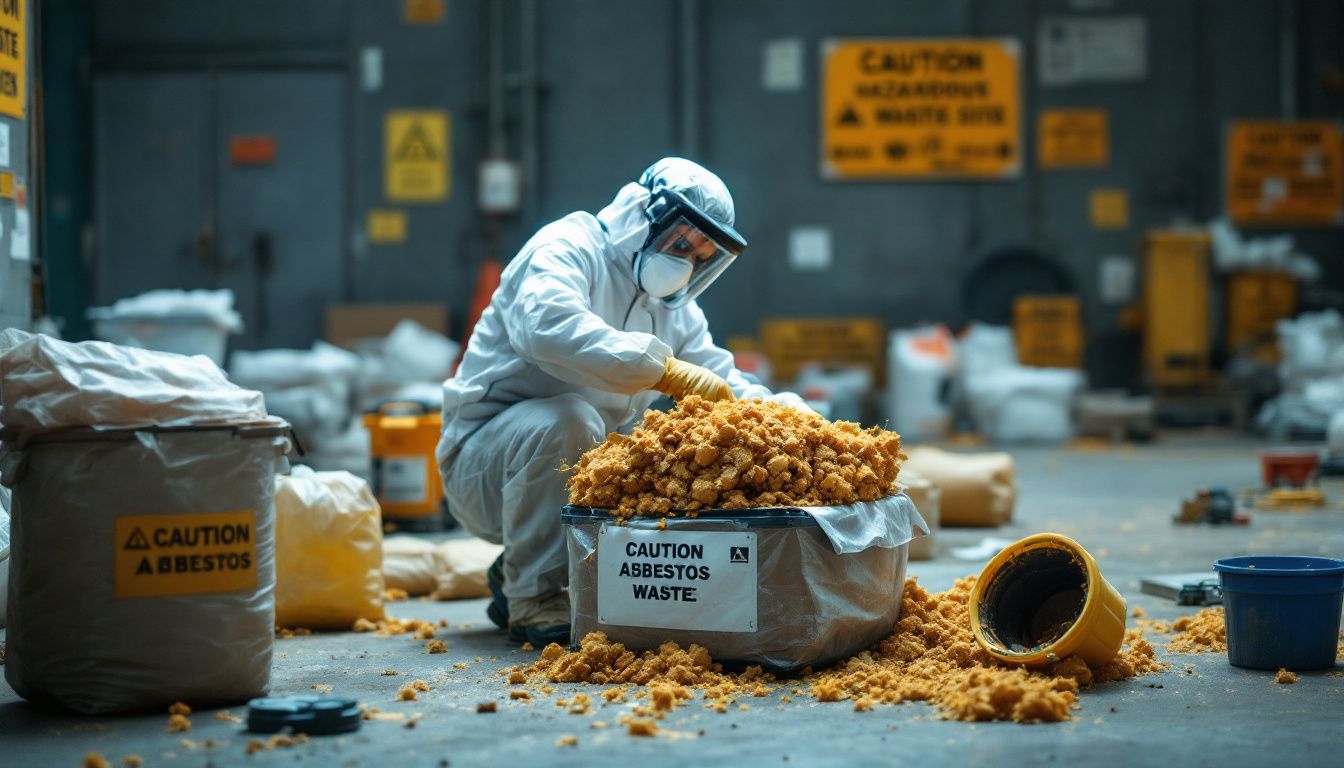
Why Asbestos Wrapping Plastic Is Non-Negotiable for Safe Waste Disposal
Asbestos doesn’t become safe the moment it’s removed from a building. In fact, the period immediately after abatement — when loose fibres are most likely to become airborne — is one of the highest-risk stages of the entire process. Asbestos wrapping plastic is the critical barrier that stands between those fibres and the people handling, transporting, and disposing of the waste.
Get this stage wrong and you’re not just risking health — you’re risking prosecution. The Control of Asbestos Regulations places strict legal duties on anyone involved in the handling and disposal of asbestos-containing materials (ACMs). Property managers, contractors, and building owners all need to understand exactly what correct wrapping, bagging, transporting, and disposing of asbestos waste looks like in practice.
Understanding Asbestos Waste After Abatement
Not all asbestos waste looks the same, and the form it takes after removal directly affects how it must be wrapped and packaged. Recognising what you’re dealing with is the first step to handling it safely.
Types of Asbestos Waste You May Encounter
- Loose or friable materials — sprayed coatings, pipe lagging, and insulation. These carry the highest risk because fibres release easily when disturbed.
- Bonded materials — asbestos cement sheets, floor tiles, and textured coatings. Less friable, but still hazardous when broken or disturbed.
- Contaminated PPE and tools — disposable overalls, gloves, sheeting, and equipment used during removal all count as asbestos waste and must be treated accordingly.
- Mixed debris — broken fragments, dust, and residue from the abatement area.
Each of these requires proper containment before it leaves the work area. The wrapping and bagging method you use must be appropriate to the material type and its condition.
Cutting corners here creates risk downstream — for workers, transport staff, and the wider public. If you’re unsure what ACMs are present before work begins, commissioning an asbestos survey London or in your local area is the correct starting point. Knowing exactly what you’re dealing with shapes every decision that follows.
Asbestos Wrapping Plastic: What the Regulations Require
Under the Control of Asbestos Regulations and associated HSE guidance, asbestos waste must be securely contained to prevent fibre release during handling and transport. Asbestos wrapping plastic — typically heavy-duty polythene sheeting — is the standard method for large or irregular pieces that cannot be bagged.
The HSE’s guidance document HSG264 sets out best practice for asbestos surveys and waste management. While it primarily addresses survey methodology, the principles of containment it describes inform the standards expected at every stage of asbestos work, including disposal.
The Double-Bag Rule for Smaller Debris
For smaller pieces and debris, double-bagging is the accepted method. Follow these steps precisely:
- Place the asbestos waste into a heavy-duty polythene bag — minimum 500 gauge thickness.
- Seal the inner bag securely using approved tape.
- Place the sealed inner bag into a second bag of the same specification.
- Seal the outer bag and apply asbestos warning labels clearly to the exterior.
Never fill bags more than three-quarters full. Overfilled bags are far more likely to split, and a split bag in transit is a serious contamination incident with legal consequences for everyone involved in that movement of waste.
Wrapping Large ACMs in Polythene Sheeting
For large sheets of asbestos cement, insulation boards, or other bulky items, polythene sheeting is used to wrap the material entirely. The process should follow these steps:
- Lay the polythene sheeting flat on a clean surface.
- Place the ACM onto the sheeting without dragging or dropping it — both actions can release fibres.
- Fold the sheeting over the material, ensuring full coverage with no exposed edges.
- Seal all seams with approved tape, working methodically to avoid gaps.
- Apply asbestos warning labels clearly on multiple sides of the wrapped package.
- Where possible, apply a second layer of wrapping for additional protection during transit.
The wrapping must remain intact throughout transport. Any damage to the outer layer during loading or transit must be addressed immediately — rewrap on site rather than continuing with compromised packaging. A damaged outer layer is not a minor inconvenience; it’s a regulatory failure.
Warning Labels: What They Must Show
Every bag, wrapped package, or container holding asbestos waste must carry a compliant warning label. These labels must clearly state that the contents contain asbestos, include the appropriate hazard symbols, and provide handling instructions.
Using generic hazardous waste labels is not sufficient — asbestos-specific labels are required by law. If you’re unsure which labels are compliant, speak to a licensed asbestos contractor before the work begins rather than after.
PPE Requirements During Wrapping and Bagging
Asbestos wrapping plastic protects the environment and the public — but the workers doing the wrapping need their own layer of protection. PPE requirements during asbestos waste handling are not optional extras.
Minimum PPE for Asbestos Waste Handling
- Respiratory Protective Equipment (RPE) — at minimum an FFP3 disposable mask, but a half-face or full-face respirator with a P3 filter is preferable for higher-risk work involving friable materials.
- Disposable coveralls — Type 5 (category 3) disposable overalls that prevent fibre penetration.
- Gloves — disposable nitrile or latex gloves worn under the coverall cuffs.
- Boot covers or disposable overshoes — to prevent cross-contamination between the work area and clean areas.
All PPE used during asbestos work is itself classified as asbestos waste once removed. Disposable overalls, gloves, and boot covers must be bagged and labelled in the same way as the ACMs themselves. They cannot be placed in general waste under any circumstances.
Workers should follow a strict decontamination procedure — removing PPE in the correct sequence, using a decontamination unit where required, and showering before leaving the work area if they’ve been working with friable materials. This isn’t bureaucracy; it’s what prevents fibres from travelling beyond the controlled area.
Legal Responsibilities for Asbestos Waste Disposal
Wrapping and bagging is only the beginning. Once the waste is contained, it must be transported and disposed of in accordance with strict legal requirements. Cutting corners at this stage can result in unlimited fines, criminal prosecution, and long-term liability.
Hazardous Waste Classification
Any material containing more than 0.1% asbestos by weight is classified as hazardous waste under UK regulations. This classification applies regardless of whether the asbestos is friable or bonded.
It cannot be mixed with general waste, taken to a standard household recycling centre, or disposed of in a skip used for non-hazardous materials. There are no exceptions to this rule.
Licensed Waste Carriers
Only companies holding a valid Waste Carriers Licence issued by the Environment Agency — or Natural Resources Wales or SEPA in the devolved nations — can legally transport asbestos waste. Before engaging any waste carrier, verify their licence number and check it against the relevant regulatory register.
For quantities exceeding 1,000kg of bonded asbestos, drivers are also required to hold ADR (Agreement concerning the International Carriage of Dangerous Goods by Road) certification. Ask for documented evidence of this before any work begins — accepting verbal assurances is not sufficient.
Hazardous Waste Consignment Notes
Every movement of asbestos waste must be accompanied by a Hazardous Waste Consignment Note. This document must record:
- The nature and quantity of the waste
- The address from which it was collected
- The name and licence details of the carrier
- The destination disposal facility
- The date of transfer
You must retain copies of all consignment notes. The standard minimum is three years, but best practice — particularly for higher-risk asbestos work — is to retain records for at least 30 years. Asbestos-related diseases have long latency periods, and documentation may be required decades after the disposal took place.
Transporting Asbestos Waste Safely
Even correctly wrapped and bagged asbestos waste can become a hazard if it’s transported improperly. The vehicle, loading method, and route all matter — this is an area where oversights are common and consequences can be severe.
Vehicle Requirements
Vehicles used to transport asbestos waste must be appropriate for the load. The load area should be lined or otherwise protected to prevent contamination, and vehicles must display the correct hazard placards during transit. The driver must carry the consignment documentation at all times.
After delivering asbestos waste, vehicles must be decontaminated before being used for other purposes. Any vehicle found to be contaminated with asbestos fibres poses a risk to subsequent users and may constitute a legal liability for the carrier.
Loading and Securing the Load
Wrapped packages and bags must be loaded carefully to avoid puncturing or tearing the packaging. Heavy items should not be stacked on top of bagged waste.
The load must be secured to prevent movement during transit — shifting loads can damage packaging and release fibres into the vehicle. If packaging is damaged during loading, stop and rewrap before the vehicle moves. Do not attempt to continue with compromised containment.
Approved Disposal Sites for Asbestos Waste
Asbestos waste cannot go to a standard landfill. It must be taken to a facility that holds the appropriate environmental permit to accept hazardous waste — specifically asbestos. Not all licensed hazardous waste sites are permitted to accept asbestos, so always verify before arranging collection.
What Approved Sites Look Like
Licensed asbestos disposal sites maintain dedicated cells — engineered containment areas with impermeable liners and covers — specifically for asbestos materials. These cells are mapped and monitored to ensure the waste remains contained long-term.
Staff at these facilities are trained in asbestos handling and wear appropriate PPE during unloading operations. Before engaging a disposal facility, confirm that they hold a current environmental permit that explicitly covers asbestos waste. Check the specific waste codes accepted rather than relying on a general hazardous waste permit.
Council Collection Services
Some local councils offer collection services for small quantities of asbestos waste from domestic properties. These services vary significantly by area — some councils charge a nominal fee and collect from the kerbside, while others require waste to be dropped at a specific facility.
Contact your local authority directly to find out what’s available in your area and what their requirements are for packaging. These services are generally only available for householders, not commercial properties. Businesses generating asbestos waste must arrange disposal through a licensed commercial waste carrier and approved facility regardless of the quantity involved.
Verifying Disposal and Maintaining Records
The paper trail doesn’t end when the waste leaves your site. You need documented proof that it reached a legitimate disposal facility and was handled correctly throughout. This documentation is your legal protection if questions arise later.
Disposal Certificates
A reputable licensed disposal facility will issue a disposal certificate or waste acceptance confirmation. This document should state the date of receipt, the quantity and type of waste accepted, and the facility’s permit details.
File this alongside your consignment notes as part of your asbestos management records. Gaps in this documentation are a liability — if you cannot demonstrate compliant disposal, the legal assumption may not be in your favour.
How Long to Keep Records
Asbestos records should be treated differently from ordinary project paperwork. Given the long latency period of asbestos-related diseases — which can span several decades — retaining disposal records for the lifetime of the building or at least 30 years is strongly advisable.
This applies whether you’re a commercial property owner in Birmingham or a landlord managing a residential portfolio. If you’re based in the Midlands and need to establish or update your asbestos records before undertaking any removal work, an asbestos survey Birmingham will give you the documented baseline you need.
Common Mistakes That Lead to Regulatory Failures
Even experienced contractors and property managers make avoidable errors at the disposal stage. Understanding where things typically go wrong helps you avoid the same pitfalls.
Using the Wrong Gauge Polythene
Standard polythene sheeting used for general construction purposes is not suitable for asbestos wrapping. The minimum specification is 500 gauge (125 microns) for bags, and heavy-duty sheeting of equivalent or greater thickness for wrapping large ACMs. Thinner material tears too easily and provides inadequate protection during handling and transit.
Skipping the Second Layer
Double-bagging exists for good reason. A single bag or a single layer of wrapping is not compliant for most asbestos waste scenarios. The outer layer provides protection if the inner layer is compromised, and it’s the outer layer that carries the warning labels — keeping them visible and intact throughout transit.
Mixing Asbestos Waste with General Waste
This is one of the most serious — and surprisingly common — errors. Even small quantities of asbestos waste placed in a general skip or bin constitutes illegal disposal. The consequences include prosecution, site shutdown, and remediation costs that can far exceed the original project budget.
Failing to Check Carrier Credentials
Engaging an unlicensed waste carrier — even unknowingly — does not remove your liability. As the waste producer, you have a duty of care that extends to verifying the credentials of everyone who handles your waste. Check licence numbers before work begins, not after something goes wrong.
Inadequate Labelling
Labels must be asbestos-specific, clearly legible, and affixed securely to every package. Labels that fall off during transit, become illegible due to moisture, or use incorrect hazard symbols are a compliance failure. Use self-adhesive labels designed for the purpose and check them before loading.
When Professional Asbestos Contractors Should Handle Disposal
For licensed asbestos removal work — which covers all work with sprayed coatings, pipe lagging, and other high-risk ACMs — a licensed contractor is legally required to carry out the removal and is responsible for the correct disposal of waste generated during that work.
For lower-risk non-licensed work, the duty holder or property manager may have more direct involvement in arranging disposal. Either way, the legal responsibilities described in this article apply in full.
If you’re managing a commercial property in the North West and need to establish what ACMs are present before commissioning any removal work, an asbestos survey Manchester will provide the detailed information needed to plan safe, compliant abatement and disposal.
The survey findings directly inform the scope of removal work, the type and quantity of asbestos wrapping plastic required, and the appropriate disposal route for each material type. Skipping the survey stage and proceeding straight to removal is a false economy — and a legal risk.
Frequently Asked Questions
What thickness does asbestos wrapping plastic need to be?
Asbestos bags must be a minimum of 500 gauge (125 microns) thickness. For wrapping large ACMs in polythene sheeting, heavy-duty material of equivalent or greater thickness is required. Standard construction polythene does not meet this specification and must not be used for asbestos waste containment.
Can I put asbestos waste in a skip?
No. Asbestos waste is classified as hazardous waste and cannot be placed in a general skip. It must be stored separately, correctly wrapped and labelled, and collected by a licensed waste carrier for transport to an approved hazardous waste disposal facility. Placing asbestos waste in a general skip is illegal and can result in prosecution.
How long do I need to keep asbestos disposal records?
The legal minimum for hazardous waste consignment notes is three years. However, given the long latency periods of asbestos-related diseases, best practice is to retain all asbestos disposal records for at least 30 years, or for the lifetime of the building. These records may be required as legal evidence decades after the disposal took place.
Do I need a licensed contractor to wrap and dispose of asbestos waste?
For licensed asbestos removal work — covering high-risk materials such as sprayed coatings, pipe lagging, and asbestos insulating board — a licensed contractor is legally required and takes responsibility for disposal. For non-licensed work involving lower-risk bonded materials, the duty holder may arrange disposal directly, but all the same legal requirements for packaging, labelling, carrier licensing, and consignment documentation still apply in full.
What happens if asbestos wrapping plastic is damaged during transit?
Any damage to asbestos packaging during transit must be treated as a serious incident. The vehicle should be stopped and the packaging rewrapped before continuing. The incident should be documented, and depending on the extent of any fibre release, decontamination of the vehicle may be required. Continuing to transport damaged asbestos packaging is a regulatory breach with potential criminal consequences for the carrier and the waste producer.
Get Expert Asbestos Support from Supernova
Supernova Asbestos Surveys has completed over 50,000 surveys nationwide, working with property managers, landlords, contractors, and local authorities across the UK. Whether you need a survey to establish what ACMs are present before removal work begins, or you need guidance on your legal obligations as a duty holder, our team is ready to help.
Call us on 020 4586 0680 or visit asbestos-surveys.org.uk to find out how we can support your asbestos management responsibilities — from initial survey through to post-abatement compliance.