Asbestos Risk in Older Buildings: What Every Property Owner Needs to Know
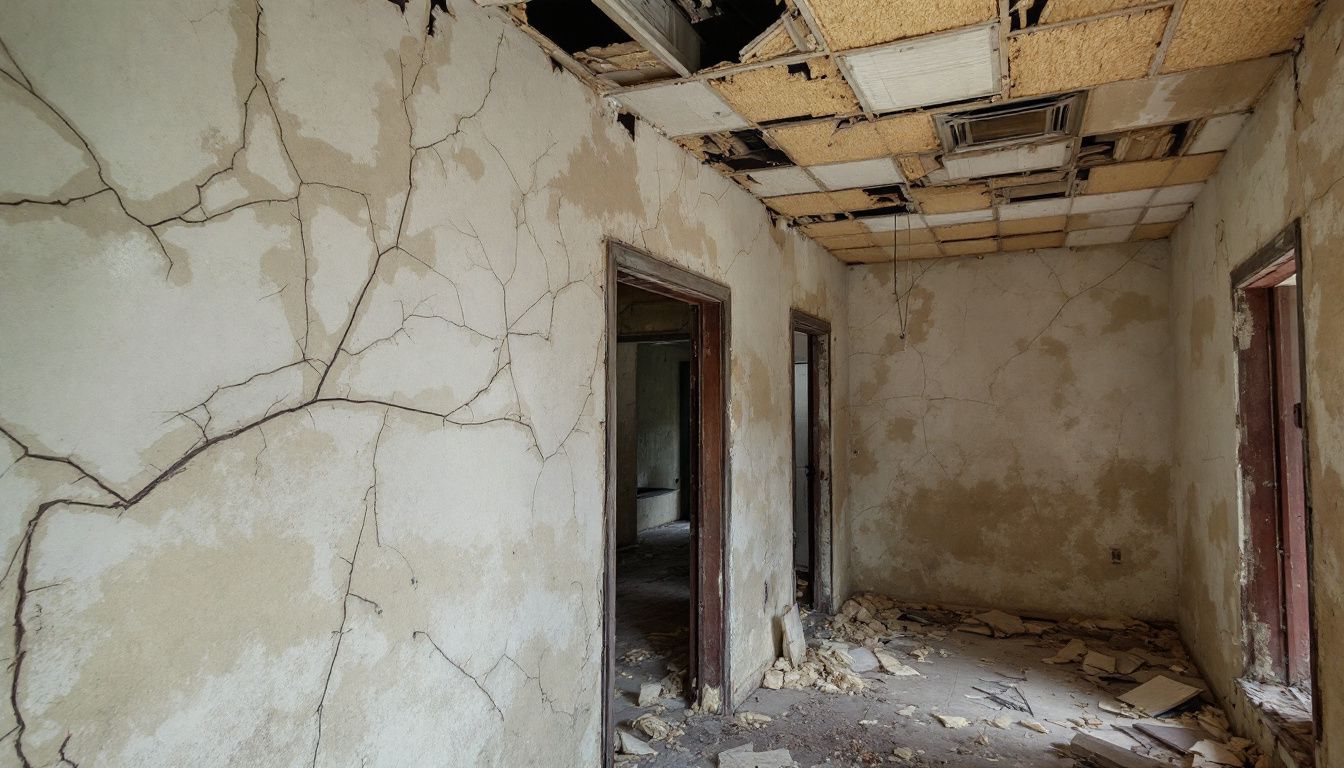
If your building was constructed before 2000, there is a very real asbestos risk present within its walls, ceilings, floors, and pipework. Asbestos was used extensively across UK construction for decades — prized for its fire resistance, durability, and insulating properties — before its full ban in 1999. The problem is not simply that it exists in older buildings. The problem is that millions of property owners, landlords, and facilities managers still do not know what to do about it.
This is not a niche concern. The Health and Safety Executive estimates that asbestos-related diseases claim around 5,000 lives in the UK every year — more than road traffic accidents. Understanding the asbestos risk in your property is not optional. For many building owners, it is a legal obligation.
Why Asbestos Was Used So Widely in UK Construction
Asbestos is a naturally occurring silicate mineral that comes in several forms, most notably chrysotile (white), amosite (brown), and crocidolite (blue). All three types are hazardous. All three were used extensively in UK construction.
Builders and manufacturers favoured asbestos because it was cheap, fire-resistant, thermally insulating, and easy to work with. From the early twentieth century through to the late 1990s, it was incorporated into an enormous range of building products. When the full import and use ban came into force, it was already embedded in an estimated half a million commercial buildings and countless residential properties across the UK. The legacy of that widespread use is what property professionals are still managing today.
Where Asbestos Risk Is Highest in Older Structures
One of the most dangerous misconceptions about asbestos is that it only appears in industrial or commercial buildings. In reality, asbestos-containing materials (ACMs) are found in all property types — schools, hospitals, offices, shops, flats, and family homes alike.
Common locations where ACMs are found include:
- Pipe and boiler insulation — lagging around pipes and boilers in plant rooms, cupboards, and roof spaces was frequently made from asbestos-based materials
- Textured coatings — Artex and similar textured ceiling and wall finishes applied before 2000 commonly contained chrysotile asbestos
- Asbestos cement products — roof sheets, guttering, soffits, and fascias made from cement-bonded asbestos remain common in industrial and agricultural buildings
- Floor tiles and adhesives — vinyl floor tiles, thermoplastic tiles, and the black bitumen adhesive used to fix them frequently contained asbestos
- Ceiling and wall tiles — insulating board tiles used in suspended ceilings and partition walls often contained amosite or crocidolite
- Sprayed coatings — applied to structural steelwork and concrete for fire protection, sprayed asbestos is one of the most hazardous forms
- Gaskets and rope seals — found in older boilers, heating systems, and industrial plant
- Roofing felt — some older roofing underlays incorporated asbestos fibres
The sheer variety of materials means that visual inspection alone is never sufficient. You cannot identify asbestos by looking at it. Professional asbestos testing with laboratory analysis of bulk samples is the only reliable way to confirm whether a material contains asbestos fibres.
Understanding the Health Risks of Asbestos Exposure
The asbestos risk to human health stems from its fibrous structure. When ACMs are disturbed — through drilling, cutting, sanding, or demolition — microscopic fibres are released into the air. These fibres are invisible to the naked eye, can remain airborne for hours, and are easily inhaled deep into the lungs.
Once lodged in lung tissue, asbestos fibres cannot be expelled by the body. Over time, they cause scarring, inflammation, and cellular damage. The diseases that result are serious, often fatal, and have a notoriously long latency period — symptoms may not appear until 20 to 50 years after exposure.
Mesothelioma
Mesothelioma is a cancer of the lining of the lungs (pleura) or abdomen (peritoneum). It is almost exclusively caused by asbestos exposure and has no cure. Prognosis following diagnosis is typically poor, with most patients surviving less than two years after diagnosis.
The UK has one of the highest rates of mesothelioma in the world — a direct consequence of the country’s industrial history and widespread asbestos use.
Asbestosis
Asbestosis is a chronic lung disease caused by prolonged inhalation of asbestos fibres. The fibres cause progressive scarring of lung tissue (fibrosis), leading to breathlessness, persistent cough, and reduced lung function. There is no treatment to reverse the damage, and the condition can be severely debilitating.
Lung Cancer
Asbestos exposure significantly increases the risk of lung cancer, particularly in combination with smoking. The risk is not limited to those who worked directly with asbestos — secondary exposure through contaminated clothing or environments has also been linked to lung cancer diagnoses.
Pleural Thickening and Pleural Plaques
Pleural thickening involves scarring and thickening of the membrane surrounding the lungs, which can restrict breathing and cause chronic discomfort. Pleural plaques are localised areas of scarring on the pleura and are a marker of past asbestos exposure, though they do not themselves cause significant impairment.
All of these conditions share one characteristic: they are entirely preventable. Managing asbestos risk properly is the single most effective way to protect people from these diseases.
The Legal Framework: What UK Regulations Require
The Control of Asbestos Regulations set out clear legal duties for those who manage or own non-domestic premises. Understanding these duties is essential for any building owner, landlord, or facilities manager.
The Duty to Manage
The duty to manage asbestos applies to anyone responsible for the maintenance or repair of non-domestic premises. This includes commercial landlords, employers, managing agents, and local authorities.
The duty requires you to:
- Find out whether your building contains asbestos and, if so, where it is and what condition it is in
- Assess the risk from any asbestos identified
- Prepare and implement a written asbestos management plan
- Monitor the condition of ACMs regularly and keep the plan up to date
- Provide information about the location and condition of ACMs to anyone who might disturb them
A management survey is the starting point for fulfilling this duty. It is designed to locate and assess ACMs in areas of the building that are likely to be disturbed during normal occupancy and routine maintenance.
Refurbishment and Demolition Surveys
Before any refurbishment or demolition work begins on a pre-2000 building, a refurbishment and demolition survey is legally required. This is a more intrusive survey that involves accessing all areas of the building, including those that would be disturbed by the planned works.
HSG264 — the HSE’s guidance document on asbestos surveys — sets out the methodology and standards that surveyors must follow. Failing to commission the appropriate survey before refurbishment work begins is a criminal offence. It also puts contractors and workers at serious risk of exposure.
Residential Properties
The duty to manage does not apply to domestic properties in the same way, but landlords renting residential properties still have obligations. Where common areas such as hallways, stairwells, and plant rooms are involved, the duty to manage applies.
Homeowners undertaking renovation work on pre-2000 properties should also arrange appropriate surveys before any work begins. The asbestos risk during renovation is particularly acute — it is precisely the kind of disturbance that releases fibres into the air.
How Professional Asbestos Surveys Work
A professional asbestos survey is not simply a visual walkthrough. It is a structured, methodical inspection carried out by a qualified surveyor who understands where ACMs are likely to be found and how to assess their condition and risk.
During a management survey, the surveyor will:
- Inspect all accessible areas of the building systematically
- Identify materials suspected of containing asbestos
- Assess the condition of each suspected material using a standardised scoring system
- Take bulk samples where necessary for laboratory analysis
- Produce a detailed written report including an asbestos register, risk assessment, and recommendations
Laboratory analysis uses techniques such as polarised light microscopy (PLM) to identify asbestos fibre types within sampled materials. The results inform the risk assessment and determine what action, if any, is required.
If you need asbestos testing for a specific material you suspect may be an ACM — rather than a full survey — this can also be arranged through a specialist provider. Targeted sample testing is a cost-effective way to get clarity on a particular concern without commissioning a full building survey.
Supernova Asbestos Surveys operates across the UK, providing surveys to the highest professional standards. Whether you need an asbestos survey in London, an asbestos survey in Manchester, or an asbestos survey in Birmingham, our accredited surveyors are ready to help.
Managing Asbestos Risk: Removal Is Not Always the Answer
A common assumption is that asbestos must always be removed immediately. This is not the case. In fact, disturbing ACMs that are in good condition and are not at risk of being damaged can actually increase the asbestos risk rather than reduce it.
The HSE’s guidance is clear: where ACMs are in good condition and are unlikely to be disturbed, the safest option is often to manage them in place. This means monitoring their condition regularly, recording their location in an asbestos register, and ensuring that anyone who might disturb them — maintenance workers, contractors, emergency services — is made aware of their presence.
However, where ACMs are damaged, deteriorating, or located in areas where they are likely to be disturbed, removal or encapsulation may be the appropriate course of action. Any asbestos removal work must be carried out by a licensed contractor in accordance with the Control of Asbestos Regulations.
For the most hazardous materials — including sprayed coatings, asbestos insulation board, and pipe lagging — only a contractor holding an HSE licence is legally permitted to carry out removal. Attempting to remove these materials without the correct licence is a criminal offence and creates serious health risks for anyone in the vicinity.
Practical Steps to Reduce Asbestos Risk in Your Property
Whether you are a commercial landlord, facilities manager, or homeowner, there are concrete steps you can take to manage asbestos risk effectively right now.
Step 1: Commission a Professional Survey
If you do not already have an up-to-date asbestos survey for your property, this is the first and most important step. Do not assume your building is asbestos-free because it looks modern or has been recently refurbished — ACMs can be hidden behind new finishes and in inaccessible spaces.
Step 2: Create and Maintain an Asbestos Register
Your survey report should include an asbestos register — a document recording the location, type, condition, and risk rating of all ACMs identified. Keep this document accessible and share it with contractors before any work begins. An out-of-date or incomplete register is almost as dangerous as having no register at all.
Step 3: Implement a Written Management Plan
A written asbestos management plan sets out how you will manage the ACMs in your building over time. It should include inspection schedules, responsibilities, and procedures for dealing with any accidental disturbance. Review it at least annually and update it whenever circumstances change.
Step 4: Train Relevant Staff
Anyone who is likely to work with or near ACMs — including maintenance staff and building managers — should receive appropriate asbestos awareness training. This is a legal requirement under the Control of Asbestos Regulations. Training does not need to be extensive, but it must be sufficient for the level of risk involved.
Step 5: Act Before Any Renovation Work
Before any building work begins on a pre-2000 property, commission a refurbishment and demolition survey. Do not allow contractors to begin work until the survey is complete and any ACMs in the work area have been appropriately managed or removed. This single step prevents the majority of accidental asbestos exposures that occur during renovation projects.
The Cost of Getting It Wrong
The consequences of failing to manage asbestos risk properly are severe — in both human and financial terms. From a legal perspective, breaches of the Control of Asbestos Regulations can result in unlimited fines and, in serious cases, custodial sentences. The HSE takes enforcement action regularly, and prosecutions following accidental exposures during renovation work are not uncommon.
Beyond the legal consequences, the human cost is incalculable. Mesothelioma and asbestosis are devastating diseases. The knowledge that exposure could have been prevented — and the liability that flows from that — weighs heavily on those responsible for building management.
The good news is that managing asbestos risk is straightforward when you have the right professional support. A survey, a register, a management plan, and regular monitoring are the foundations of a compliant and responsible approach. None of these steps is prohibitively expensive. The cost of not taking them is far greater.
Frequently Asked Questions
How do I know if my building contains asbestos?
You cannot tell by looking. Asbestos fibres are microscopic and ACMs often look identical to non-asbestos materials. The only reliable way to determine whether a material contains asbestos is through professional asbestos testing, which involves taking bulk samples and analysing them in an accredited laboratory. If your building was constructed or refurbished before 2000, you should assume ACMs may be present until a survey confirms otherwise.
Is asbestos in my building dangerous if it is left undisturbed?
Not necessarily. Asbestos fibres are only released into the air when ACMs are damaged or disturbed. Materials that are in good condition and are unlikely to be disturbed can often be safely managed in place rather than removed. The key is to have them identified, recorded in an asbestos register, and monitored regularly by a qualified professional.
Who is legally responsible for managing asbestos risk in a commercial building?
The Control of Asbestos Regulations place a duty to manage asbestos on anyone who has responsibility for the maintenance or repair of non-domestic premises. This typically includes building owners, commercial landlords, employers, and managing agents. If responsibility is shared, it should be clearly defined in writing. Ignorance of the regulations is not a defence.
What is the difference between a management survey and a demolition survey?
A management survey is designed to locate ACMs in areas likely to be disturbed during normal occupancy and routine maintenance. It is the standard survey for buildings in active use. A demolition or refurbishment survey is far more intrusive — it involves accessing all parts of the building, including those behind walls and above ceilings, to ensure that all ACMs are identified before any major works begin. The latter is a legal requirement before refurbishment or demolition of any pre-2000 building.
Can I remove asbestos myself?
For the most hazardous materials — including sprayed coatings, asbestos insulation board, and pipe lagging — removal must be carried out by a contractor holding an HSE licence. Some lower-risk materials, such as small amounts of asbestos cement, may be removed by an unlicensed contractor following strict HSE guidelines, but this still requires specific training and precautions. Attempting to remove asbestos without appropriate knowledge and equipment is extremely dangerous and likely illegal. Always seek professional advice before proceeding.
Speak to Supernova Asbestos Surveys
Supernova Asbestos Surveys has completed over 50,000 surveys nationwide. Our accredited surveyors work with commercial landlords, facilities managers, housing associations, local authorities, and homeowners across the UK — delivering clear, actionable survey reports that meet the requirements of the Control of Asbestos Regulations and HSG264.
If you are unsure about the asbestos risk in your property, do not wait. Call us today on 020 4586 0680 or visit asbestos-surveys.org.uk to arrange a survey, request a quote, or speak to one of our specialists about your specific situation.