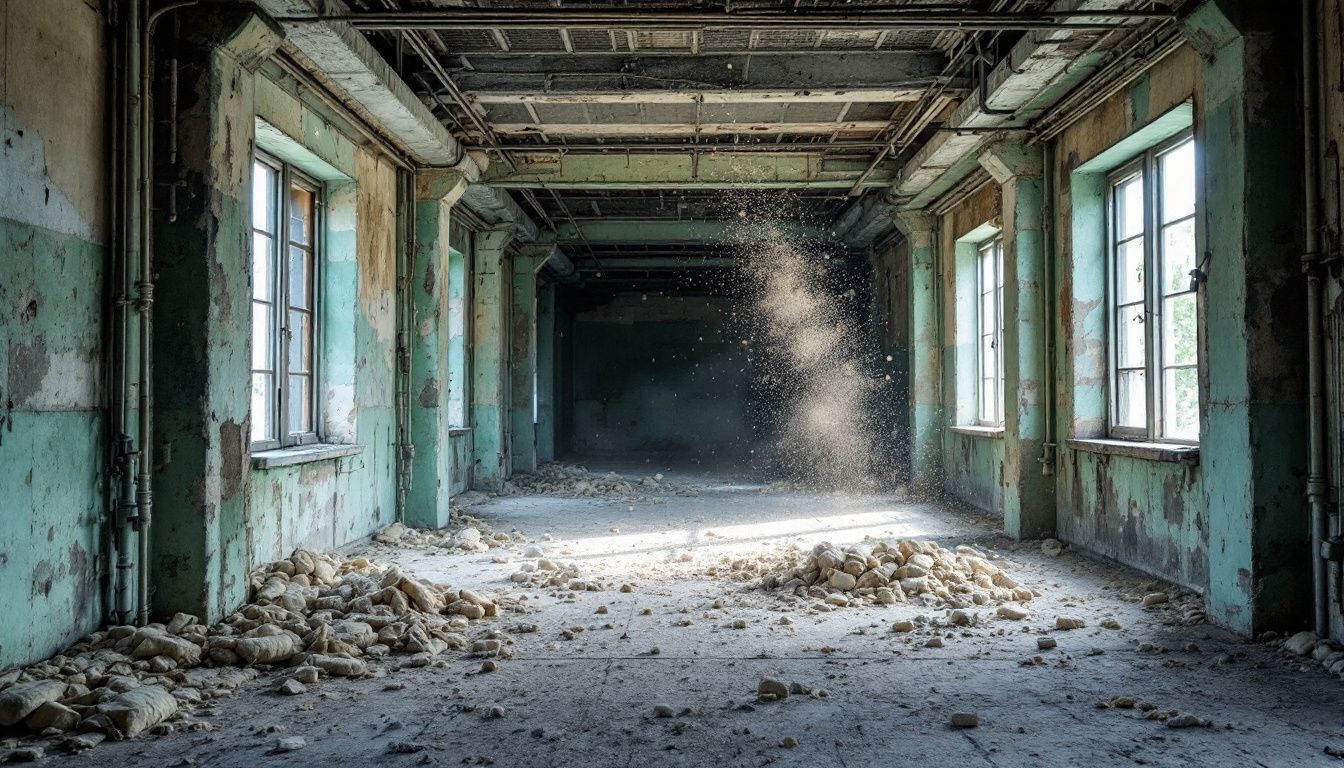
Health Hazards With 1920s Homes: What Every Owner Needs to Know
If you own or manage a property built in the 1920s, there is a very real chance it contains materials that could seriously harm your health. The health hazards with 1920s homes go far beyond damp walls and draughty windows — asbestos, lead paint, and other toxic building materials were standard practice during that era, and many of them are still quietly present in properties across the UK today.
This is not a distant or theoretical risk. Disturb the wrong material during a renovation, and you could release fibres that cause irreversible lung damage decades down the line. Knowing what to look for — and taking the right steps — keeps you, your family, and any workers safe.
Why 1920s Properties Carry Unique Health Risks
Properties built in the 1920s sit in a particularly hazardous window of UK construction history. Asbestos was widely available, cheap, and considered a wonder material — fire-resistant, thermally insulating, and durable. Builders used it everywhere, often without any understanding of the risks involved.
Unlike post-war properties, 1920s homes frequently feature original fabric that has never been disturbed. That can mean decades of undisturbed asbestos-containing materials (ACMs) sitting behind plaster, beneath floorboards, or wrapped around pipework. Age alone does not make them safe — in fact, deterioration over a century can make certain materials considerably more dangerous.
Common Asbestos-Containing Materials Found in 1920s Homes
Asbestos was incorporated into dozens of building products during this period. In a 1920s property, you might find ACMs in the following locations:
- Pipe lagging and boiler insulation — one of the most common sources, particularly in basements and utility rooms
- Textured ceiling coatings — similar coatings to what became known as Artex were applied from the early 20th century onwards
- Asbestos cement roof sheets and guttering
- Floor tiles and the adhesive beneath them
- Partition walls and ceiling tiles
- Rope seals around solid fuel stoves and fireplaces
- Insulating board around electrical fuse boxes
If any of these materials are damaged, crumbling, or disturbed during building work, they can release microscopic fibres into the air. Those fibres are invisible to the naked eye and can remain airborne for hours.
The Serious Health Consequences of Asbestos Exposure
The health hazards with 1920s homes are most acutely associated with asbestos, and the diseases it causes are among the most serious in occupational and environmental medicine. There is no safe level of asbestos exposure — even a single significant incident can, in rare cases, lead to disease years later.
Mesothelioma
Mesothelioma is an aggressive cancer of the lining of the lungs, abdomen, or heart. It is almost exclusively caused by asbestos exposure. Symptoms typically do not appear until 20 to 50 years after exposure, by which point the disease is usually at an advanced stage and there is currently no cure.
Asbestosis
Asbestosis is a chronic scarring of the lung tissue caused by prolonged inhalation of asbestos fibres. It causes progressive breathlessness, a persistent cough, and reduced quality of life. It is irreversible and can be severely debilitating.
Lung Cancer
Asbestos exposure significantly increases the risk of lung cancer, and that risk is dramatically compounded by smoking. Someone who smokes and has been exposed to asbestos faces a far higher risk than either factor alone would suggest.
Pleural Conditions
Pleural plaques, pleural thickening, and pleural effusion are all conditions affecting the lining around the lungs. They are markers of asbestos exposure and can cause chest pain, restricted breathing, and long-term respiratory impairment.
Other Cancers
The HSE recognises that asbestos exposure is also linked to cancers of the larynx and ovaries. These are less common than mesothelioma or lung cancer, but the association is established in the scientific and regulatory literature.
Beyond Asbestos: Other Health Hazards in 1920s Homes
Asbestos is the most serious concern, but it is not the only health hazard lurking in properties of this age. A thorough understanding of the risks helps you prioritise action.
Lead Paint
Lead-based paint was standard in UK homes until it was phased out in the mid-20th century. In a 1920s property, you may have multiple layers of lead paint beneath more recent decorating. Sanding, stripping, or drilling through these layers releases lead dust, which is toxic — particularly to children and pregnant women — and can cause lasting neurological harm.
Damp and Mould
Properties of this age often lack modern damp-proof courses and cavity wall insulation. Persistent damp creates ideal conditions for mould growth, which releases spores that aggravate asthma, cause allergic reactions, and in cases of toxic black mould (Stachybotrys), can cause more serious respiratory symptoms.
Radon Gas
Radon is a naturally occurring radioactive gas that seeps up through the ground. Older properties with solid floors and limited underfloor ventilation can accumulate radon to levels that significantly increase the risk of lung cancer. Certain regions of the UK — including parts of Cornwall, Devon, and Derbyshire — have elevated radon levels, but it is a nationwide concern.
Poor Ventilation and Indoor Air Quality
Ironically, modern draught-proofing of older properties can trap pollutants inside. Without adequate ventilation, volatile organic compounds (VOCs) from old materials, cleaning products, and furnishings accumulate. Combined with the other hazards already mentioned, this can make indoor air quality considerably worse than outdoor air.
How to Identify Potential Asbestos in Your 1920s Property
You cannot identify asbestos by sight alone — laboratory analysis is the only definitive method. However, there are visual indicators that should prompt you to treat a material with caution and arrange professional testing.
Look for the following warning signs:
- Fraying, crumbling, or flaking insulation on pipes and boilers
- Damaged or deteriorating ceiling or wall boards
- Cracked or broken floor tiles with discolouration around the edges
- Water damage to any ceiling or wall material of unknown composition
- Corrugated roofing or cement sheets showing signs of weathering
If in doubt, do not touch, drill, sand, or disturb the material. Treat it as if it contains asbestos until proven otherwise.
For properties being renovated, a refurbishment survey is a legal requirement before any intrusive works begin. This type of survey is specifically designed to locate all ACMs in areas that will be disturbed, protecting both the occupants and any contractors on site.
What an Asbestos Survey Involves
Many owners of 1920s properties are unsure what getting a survey actually entails. The process is straightforward and far less disruptive than most people expect.
A qualified surveyor — holding BOHS P402 qualifications, the recognised standard in the UK — will carry out a visual inspection of the property and take samples from any materials suspected to contain asbestos. Those samples are sent to a UKAS-accredited laboratory for analysis under polarised light microscopy.
You then receive a written report containing:
- An asbestos register listing every identified or suspected ACM
- A risk assessment for each material based on its condition and accessibility
- A management plan setting out recommended actions
For an occupied 1920s home or a building in regular use, a management survey establishes a baseline record of all ACMs and helps you manage them safely over time. Once a management plan is in place, it should be reviewed periodically — a re-inspection survey ensures that known ACMs have not deteriorated and that the risk assessment remains current.
Practical Steps to Reduce Your Risk
Understanding the health hazards with 1920s homes is only useful if it leads to action. Here is what you should do if you own or manage a property of this age.
1. Do Not Disturb Suspect Materials
The single most effective thing you can do is leave undisturbed materials alone. Asbestos that is in good condition and not being disturbed poses a much lower risk than material that is damaged or being worked on. If you are planning any building work — even something as minor as putting up a shelf — check the area first.
2. Commission a Professional Survey
If you do not already have an asbestos register for your property, arrange a survey before you do anything else. This is the only way to know exactly what you are dealing with. You can request a free quote from Supernova Asbestos Surveys to understand the cost and scope involved.
3. Consider a Home Testing Kit for Initial Screening
If you want a preliminary indication before committing to a full survey, a testing kit allows you to collect a sample from a suspect material and have it analysed in a laboratory. This is not a substitute for a professional survey — particularly before any renovation works — but it can be a useful first step for homeowners.
4. Encapsulate or Enclose Where Appropriate
Not all ACMs need to be removed. Where materials are in good condition and not at risk of disturbance, encapsulation (sealing the surface with an approved product) or enclosure (building an airtight barrier around the material) can be a safe and cost-effective management strategy. This must be carried out by a competent person and documented in your asbestos register.
5. Use Licensed Contractors for Removal
Certain types of asbestos work — particularly work involving sprayed coatings, lagging, and asbestos insulating board — must be carried out by a licensed contractor under the Control of Asbestos Regulations. Even for non-licensable work, always use contractors who are trained and experienced in asbestos handling.
6. Address Damp and Ventilation
Improving ventilation and tackling damp not only reduces mould risk but also helps maintain the condition of any ACMs by preventing moisture-related deterioration. A damp survey and appropriate remediation works are a sensible investment in any 1920s property.
7. Consider a Fire Risk Assessment
Older properties often have outdated electrical systems, open flues, and limited fire separation between floors. A fire risk assessment is a legal requirement for non-domestic premises and a wise precaution for HMOs and converted properties. It identifies hazards that might otherwise go unnoticed in an older building.
UK Regulations That Apply to Asbestos in Older Properties
Understanding your legal obligations is essential, particularly if you are a landlord or property manager rather than an owner-occupier. The Control of Asbestos Regulations place a duty on those responsible for non-domestic premises to manage asbestos. This includes identifying ACMs, assessing their condition, producing and maintaining an asbestos register, and ensuring that anyone likely to disturb the material is informed of its presence.
HSG264 — the HSE’s definitive survey guidance — sets out the standards that any competent asbestos survey must meet. All surveys carried out by Supernova Asbestos Surveys are conducted in accordance with HSG264 and deliver reports that satisfy the legal requirements of the Control of Asbestos Regulations.
For domestic properties, the duty to manage does not apply in the same way, but the health risks are identical. Homeowners have a moral — and in some circumstances a legal — obligation to protect contractors and visitors from asbestos exposure on their property.
Supernova Asbestos Surveys: Covering the UK
Supernova Asbestos Surveys has completed over 50,000 surveys across the UK, with more than 900 five-star reviews from property owners, managers, and developers. Our BOHS P402-qualified surveyors work to HSG264 standards on every job, and all samples are analysed in UKAS-accredited laboratories.
Whether you are in the capital and need an asbestos survey London, require an asbestos survey Manchester, or are looking for an asbestos survey Birmingham, our nationwide team can be with you quickly and deliver results you can act on.
Do not wait until building work is underway to find out what is hidden in your 1920s property. Call us today on 020 4586 0680, visit asbestos-surveys.org.uk, or request a free quote online and take the first step towards making your property safe.
Frequently Asked Questions
Are all 1920s homes guaranteed to contain asbestos?
Not every 1920s property will contain asbestos, but the risk is significant enough that you should always assume it may be present until a professional survey confirms otherwise. Asbestos was widely used in construction materials throughout the early 20th century, and many properties of this age retain original fabric that has never been tested or disturbed.
Is asbestos in a 1920s home dangerous if it has not been disturbed?
Asbestos-containing materials that are in good condition and left completely undisturbed pose a lower immediate risk than damaged or deteriorating materials. However, any ACM can become hazardous if it is disturbed, damaged by damp, or affected by physical deterioration over time. A management survey and regular re-inspections are the safest way to monitor the condition of any ACMs in your property.
Do I need an asbestos survey before renovating a 1920s home?
Yes. Under the Control of Asbestos Regulations, a refurbishment survey is required before any intrusive or demolition works begin in a non-domestic property. Even for domestic properties, it is strongly advised — and in many cases a contractual requirement from your builder or contractor — to have a refurbishment survey completed before work starts. Disturbing unidentified ACMs without proper controls puts everyone on site at serious risk.
What other health hazards should I be aware of in a 1920s property besides asbestos?
Properties from this era can also contain lead paint, which releases toxic dust when sanded or stripped. Radon gas can accumulate in properties with solid floors and poor underfloor ventilation. Persistent damp leads to mould growth, which causes respiratory problems. Poor ventilation can trap volatile organic compounds and other indoor pollutants. A thorough property survey addressing all these hazards gives you the clearest picture of what needs to be managed.
How much does an asbestos survey for a 1920s property cost?
The cost varies depending on the size and type of property, the scope of the survey required, and your location. Supernova Asbestos Surveys provides transparent, no-obligation quotes — you can request a free quote online or call 020 4586 0680 to discuss your requirements. Most homeowners find the cost of a survey is far outweighed by the peace of mind and legal protection it provides.