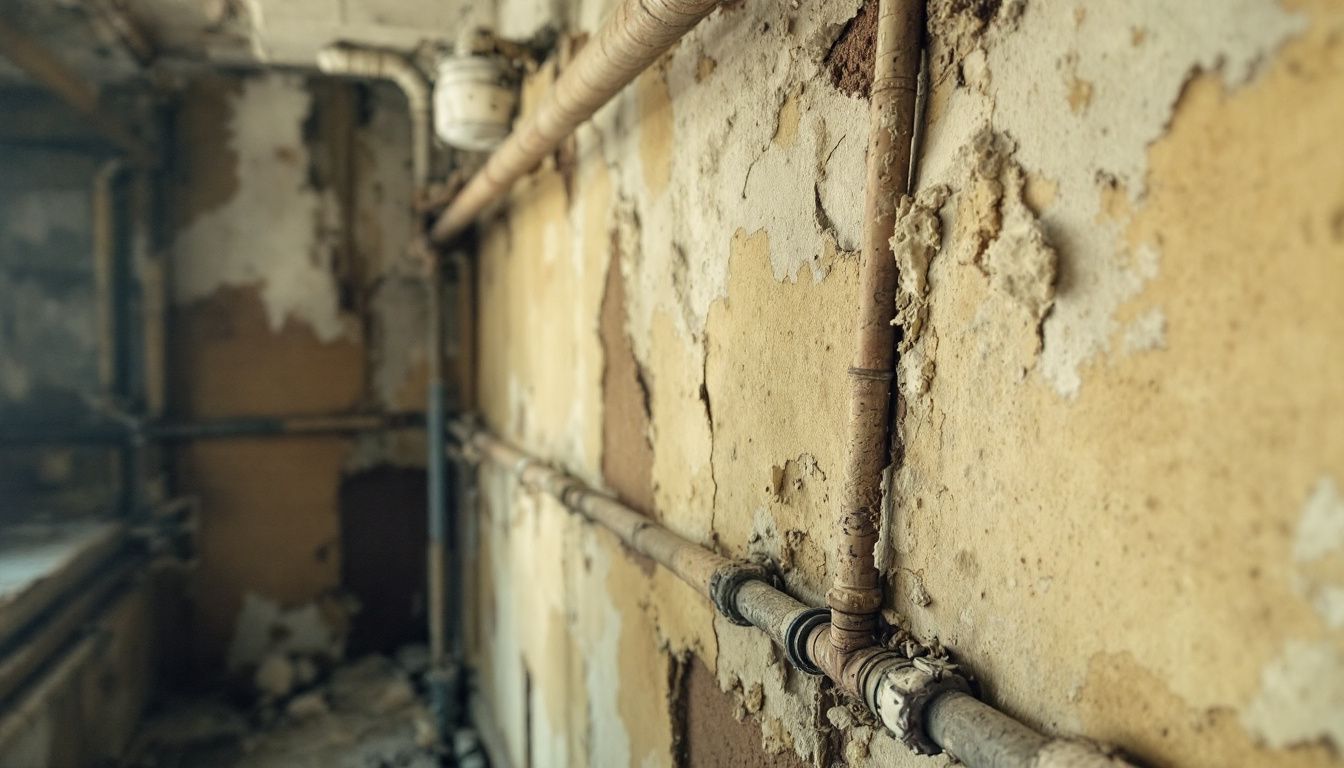
Your Legal Responsibility for Asbestos in Older Buildings
If you own, manage, or hold responsibility for a building constructed before the year 2000, the legal responsibility for addressing asbestos in older buildings falls squarely on your shoulders. This is not a grey area — it is a clear statutory duty, and failing to meet it can result in serious harm to occupants, workers, and visitors, as well as significant financial and criminal consequences.
Asbestos was woven into British construction for decades. It was cheap, durable, and effective as insulation and fireproofing. The problem is that when asbestos-containing materials (ACMs) are disturbed or deteriorate, they release microscopic fibres capable of causing fatal diseases — including mesothelioma, asbestosis, and lung cancer.
The UK still records thousands of asbestos-related deaths every year, making it one of the country’s most significant occupational health hazards. Here is what every duty holder needs to know.
What the Law Actually Requires
The Control of Asbestos Regulations is the primary legislation governing asbestos management across Great Britain. These regulations place a legal duty to manage asbestos on the owners and managers of non-domestic premises — including commercial buildings, schools, hospitals, and residential blocks with shared areas.
The duty applies to any building that was constructed or significantly refurbished before the year 2000. That is when the final forms of asbestos were banned in the UK. If your property predates that point, you must assume asbestos may be present until a survey proves otherwise.
Under Regulation 4 of the Control of Asbestos Regulations, duty holders must:
- Take reasonable steps to find out if ACMs are present in their premises
- Assess the condition of any ACMs identified
- Prepare and implement an asbestos management plan
- Maintain an up-to-date asbestos register
- Provide information about ACMs to anyone who may disturb them
- Review and monitor the plan regularly
This is not optional. Failure to comply can result in prosecution, unlimited fines, and — most critically — preventable deaths.
Who Is a Duty Holder?
The term “duty holder” causes genuine confusion for many property professionals. In practice, it refers to anyone who has responsibility for maintaining or repairing non-domestic premises by way of a contract or tenancy agreement. If no such agreement exists, the duty falls on the building owner.
In practical terms, duty holders typically include:
- Commercial landlords and property owners
- Facilities managers and building managers
- Employers who occupy and control their own premises
- Local authorities and housing associations (for communal areas)
- Managing agents acting on behalf of property owners
If you are unsure whether the duty applies to you, the safest assumption is that it does. Seek qualified advice rather than guessing — the consequences of getting this wrong are too serious.
Where Asbestos Hides in Older Buildings
One of the most challenging aspects of the legal responsibility for addressing asbestos in older buildings is that ACMs are rarely obvious. Asbestos was incorporated into dozens of building materials, and it is often impossible to identify by sight alone.
Common locations for asbestos in pre-2000 buildings include:
- Ceiling tiles and textured coatings such as Artex
- Floor tiles and the adhesive used to fix them
- Pipe lagging and boiler insulation
- Roof sheets and soffit boards
- Partition walls and fireproofing boards
- Electrical switchgear and fuse boxes
- Gaskets and rope seals in industrial equipment
- Sprayed coatings on structural steelwork
The only reliable way to confirm whether a material contains asbestos is through laboratory analysis of a physical sample. Visual inspection alone is not sufficient for legal compliance, and assuming a material is safe without evidence is not a defensible position.
The Role of Asbestos Surveys in Meeting Your Legal Duty
An asbestos survey is the essential starting point for any duty holder. There are several types, and which one you need depends on your circumstances and the current state of your building. Commissioning the wrong type — or skipping one altogether — is a common and potentially dangerous mistake.
Management Survey
A management survey is the standard survey required to manage ACMs in a building that is occupied and in normal use. It identifies the location, extent, and condition of any ACMs that could be disturbed during routine maintenance or occupancy, and forms the foundation of your asbestos register and management plan.
If your building has never been surveyed, this is where you start. It is the baseline requirement for legal compliance under the Control of Asbestos Regulations, and without it, you have no defensible basis for your asbestos management approach.
Refurbishment Survey
A refurbishment survey is required before any renovation, refurbishment, or alteration work. It is more intrusive than a management survey because it must locate all ACMs in areas that will be disturbed — including inside walls, floors, and ceilings.
No contractor should begin work on the fabric of a pre-2000 building without one. Commissioning this survey before works begin is not just best practice — it is a legal obligation that protects both the workers on site and you as the duty holder.
Demolition Survey
Before a building is demolished, a demolition survey is legally required. This is the most thorough and intrusive type of survey, designed to locate every ACM throughout the entire structure — including areas not accessible during normal occupation. The results must be available before demolition work begins.
Re-Inspection Survey
Managing asbestos is not a one-off exercise. A re-inspection survey is the mechanism by which duty holders fulfil the ongoing monitoring requirement under the regulations. The frequency of re-inspections depends on the condition and risk rating of the ACMs identified, but annual re-inspection is a common standard for materials in reasonable condition.
An asbestos register that was accurate five years ago may no longer reflect the current state of the building. Neglecting this ongoing duty is one of the most frequent compliance failures seen in older properties — and one of the easiest to avoid.
Asbestos Testing: When Sampling Is Required
Sometimes a full survey is not immediately practical, or you need to confirm whether a specific material contains asbestos before deciding how to proceed. In these cases, asbestos testing of individual materials provides a fast and cost-effective answer.
Samples must be analysed by a UKAS-accredited laboratory using polarised light microscopy (PLM). This is the recognised method under HSG264 — the HSE’s definitive guidance on asbestos surveys — and it provides legally defensible results.
For smaller properties or situations where a single suspect material needs checking, a testing kit allows you to collect a sample and post it to an accredited laboratory for analysis. This is a practical option for landlords dealing with a specific query before undertaking broader works.
However, sampling individual materials is not a substitute for a full survey. If you need a broader picture of what is present across your building, our dedicated asbestos testing page provides guidance on the right approach for your situation.
Managing Asbestos in Place: The Ongoing Duty
Not all asbestos needs to be removed. The HSE’s guidance is clear that ACMs in good condition and unlikely to be disturbed are often safer left in place and managed, rather than removed. Removal itself carries risks if not carried out correctly.
Managing asbestos in place requires:
- An up-to-date asbestos register — a documented record of all known or presumed ACMs, their location, condition, and risk rating
- A written management plan — setting out how each ACM will be monitored and managed over time
- Regular re-inspections — to check that ACMs remain in acceptable condition and have not been disturbed
- Effective communication — ensuring that maintenance workers, contractors, and others who may disturb ACMs are informed of their location before work begins
Good records are not just good practice — they are a legal requirement and your primary defence if questions arise about compliance. Keep documentation of every survey, inspection, and piece of remedial work carried out.
When Asbestos Must Be Removed
There are circumstances where asbestos removal is the only appropriate course of action. These include:
- ACMs in poor condition that cannot be safely managed in place
- Planned refurbishment or demolition work that will disturb ACMs
- Materials that present an unacceptable ongoing risk to occupants or maintenance workers
Asbestos removal is tightly regulated. Most removal work must be carried out by a contractor licensed by the HSE. For notifiable non-licensed work (NNLW), specific notification and record-keeping requirements apply. For licensable work, the contractor must notify the relevant enforcing authority at least 14 days before work begins.
Attempting to remove asbestos without the appropriate licence is a criminal offence. It also creates significant liability for the duty holder who commissioned the work. Always verify that any contractor you engage holds a current HSE asbestos licence before work begins.
Fire Safety and Asbestos: An Overlooked Connection
In older buildings, asbestos management and fire safety are frequently intertwined. Many ACMs — including asbestos insulating board and sprayed coatings — were used specifically for their fire-resistant properties. Removing or disturbing them without a proper plan can inadvertently compromise the fire strategy of the building.
Equally, a fire risk assessment may identify structural elements or compartmentation features that could contain asbestos. Duty holders responsible for non-domestic premises must comply with both the Control of Asbestos Regulations and the Regulatory Reform (Fire Safety) Order, and these obligations frequently overlap in older buildings.
Addressing both risks through a coordinated approach — rather than in isolation — makes practical and legal sense. If you are commissioning works in an older building, make sure both assessments are in place before any contractor sets foot on site.
Practical Steps for Duty Holders in Older Buildings
If you are managing an older building and are not confident your asbestos obligations are fully met, work through the following steps:
- Check your building’s age. If it was built or significantly refurbished before 2000, assume asbestos may be present.
- Review existing records. Do you have an asbestos register? When was it last updated? Is it based on a proper survey or just assumptions?
- Commission a management survey if no valid survey exists. This is the foundation of legal compliance.
- Ensure your asbestos register is current. If the building has changed since the last survey, a re-inspection or updated survey may be needed.
- Communicate with contractors. Before any maintenance or refurbishment work, share the asbestos register and ensure workers are briefed on ACM locations.
- Commission a refurbishment or demolition survey before any planned works that will disturb the building fabric.
- Use licensed contractors for removal. Never cut corners — the legal and health consequences are severe.
- Keep records. Document every survey, inspection, test, and piece of remedial work. Good records demonstrate compliance and protect you if questions arise.
What Happens If You Fail to Meet Your Asbestos Obligations?
The consequences of non-compliance with the legal responsibility for addressing asbestos in older buildings extend well beyond a fine. The HSE has powers to issue improvement notices, prohibition notices, and to prosecute duty holders in the criminal courts. Penalties can include unlimited fines and, in serious cases, custodial sentences.
Beyond the regulatory consequences, there is the civil liability to consider. If a worker, tenant, or visitor suffers harm as a result of asbestos exposure on your premises, you face the prospect of civil claims — potentially running into hundreds of thousands of pounds — alongside reputational damage that can be difficult to recover from.
The duty to manage asbestos exists precisely because the harm it causes is entirely preventable. Courts and regulators take a dim view of duty holders who knew — or should have known — about the risks and failed to act.
Asbestos Surveys in London and Across the UK
If your property is based in the capital, Supernova provides specialist asbestos survey London services covering commercial, residential, and public sector buildings across all London boroughs. Our surveyors are accredited, experienced, and familiar with the specific challenges posed by older London stock — from Victorian terraces to mid-century commercial premises.
We operate nationwide, with over 50,000 surveys completed across England, Scotland, and Wales. Whether you need a first-time management survey or an urgent pre-refurbishment inspection, we can mobilise quickly and deliver results you can act on.
Get Your Asbestos Obligations Under Control
The legal responsibility for addressing asbestos in older buildings is non-negotiable — but meeting it does not have to be complicated. With the right surveys in place, a properly maintained register, and a clear management plan, you can protect the people in your building and demonstrate compliance with confidence.
Supernova Asbestos Surveys has helped thousands of duty holders across the UK get their asbestos obligations in order. Our team of qualified surveyors provides clear, actionable reports — not jargon-heavy documents that gather dust on a shelf.
Call us today on 020 4586 0680 or visit asbestos-surveys.org.uk to find out which survey is right for your building. We offer fast turnaround, nationwide coverage, and straightforward advice from surveyors who understand what compliance actually looks like in practice.
Frequently Asked Questions
Does the legal duty to manage asbestos apply to residential properties?
The duty under Regulation 4 of the Control of Asbestos Regulations applies specifically to non-domestic premises and the common parts of residential buildings — such as shared corridors, plant rooms, and stairwells in blocks of flats. It does not apply to the interior of privately owned or rented domestic dwellings, though landlords of houses in multiple occupation (HMOs) should take asbestos risks seriously and seek appropriate advice.
What is the difference between a management survey and a refurbishment survey?
A management survey is designed for buildings in normal occupation and use. It identifies accessible ACMs that could be disturbed during day-to-day maintenance. A refurbishment survey is more intrusive — it is carried out before any works that will disturb the building fabric, and it must locate all ACMs in the areas to be worked on, including inside walls, floors, and ceilings. The two serve different purposes and one cannot substitute for the other.
How often does an asbestos register need to be updated?
There is no fixed statutory interval, but the Control of Asbestos Regulations require duty holders to review and monitor their asbestos management plan regularly. In practice, annual re-inspections are standard for ACMs in reasonable condition. If the building has been altered, if ACMs have deteriorated, or if new information comes to light, the register should be updated immediately — not at the next scheduled review.
Can I remove asbestos myself?
For most types of asbestos removal work, the answer is no. Work involving higher-risk materials — such as asbestos insulating board, lagging, and sprayed coatings — must be carried out by an HSE-licensed contractor. Some lower-risk work falls into the category of notifiable non-licensed work (NNLW), which has its own notification and record-keeping requirements. Attempting to remove licensable asbestos without the appropriate authorisation is a criminal offence.
What should I do if I suspect asbestos has been disturbed in my building?
Stop any work in the affected area immediately and prevent access until the situation has been assessed by a qualified professional. Do not attempt to clean up any debris yourself. Arrange for air monitoring and a site assessment by a competent surveyor. If there is reason to believe significant exposure has occurred, you may need to notify the relevant enforcing authority. Acting quickly and decisively is essential — both to protect people and to demonstrate that you took your duty of care seriously.