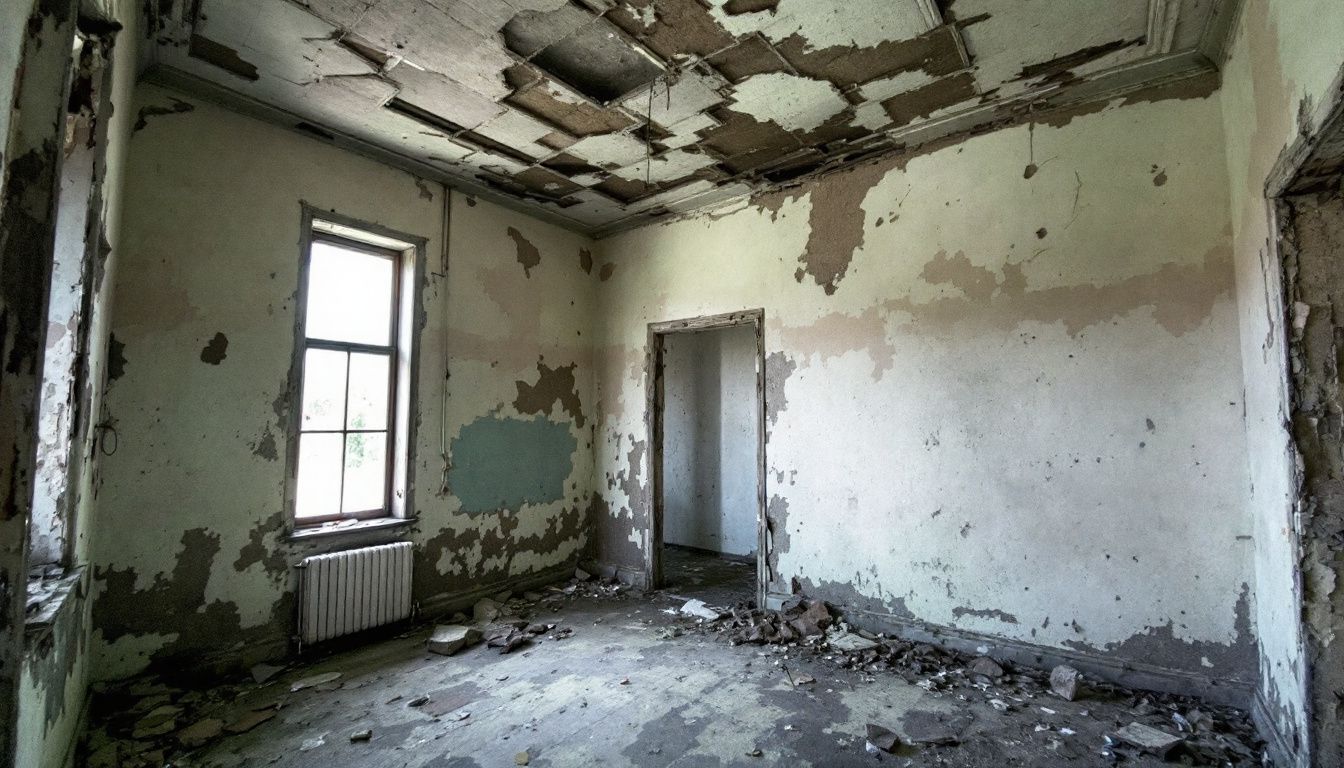
What’s Hiding in Your Walls? The Hidden Threat Asbestos Poses in Older Buildings
If your building went up before the year 2000, there is a reasonable chance it contains asbestos — and you may have absolutely no idea. The hidden threat asbestos poses in older buildings is not some distant, theoretical risk. It is a live issue affecting schools, offices, residential blocks, warehouses, and homes across the UK right now.
Understanding where asbestos hides, what it does to human health, and what your legal obligations are is not optional. For anyone who owns, manages, or works in an older building, it is essential knowledge.
Why Older Buildings Are So Vulnerable to the Hidden Threat Asbestos Presents
Asbestos was not used sparingly. For much of the twentieth century, it was the go-to material for builders and developers because it was cheap, durable, fire-resistant, and remarkably versatile. It was woven into the fabric of British construction — quite literally.
The UK banned the final commercially used form of asbestos (chrysotile, or white asbestos) in 1999. That means any building constructed or significantly refurbished before that date may contain asbestos-containing materials (ACMs). Buildings from the 1950s through to the 1980s are particularly high-risk, but even properties updated during the 1990s are not automatically in the clear.
The problem is that asbestos does not announce itself. It blends into floor tiles, ceiling boards, pipe lagging, roof sheets, and textured coatings. Unless you know exactly what you are looking for — and have the training to identify it — you can walk past it every single day without a second thought.
Where Asbestos Hides: Common Locations in Older Properties
Asbestos was used in hundreds of building products, which is precisely what makes it such a pervasive hidden threat in older buildings. It does not tend to sit in one obvious location. It is distributed throughout a structure, often in places that only become apparent during renovation or demolition work.
Some of the most common locations include:
- Ceiling tiles and textured coatings — Artex and similar decorative finishes applied before the mid-1980s frequently contain chrysotile asbestos.
- Floor tiles and adhesives — Vinyl floor tiles and the bitumen-based adhesive used to fix them are a well-known source of ACMs.
- Pipe lagging and boiler insulation — Older heating systems were routinely insulated with amosite (brown asbestos), which is particularly hazardous when disturbed.
- Roof sheets and guttering — Asbestos cement was widely used in industrial and agricultural buildings, as well as domestic garages and outbuildings.
- Insulating board panels — Found in fire doors, partition walls, ceiling panels, and around boilers.
- Loose-fill insulation — Found in some cavity walls and loft spaces, this is one of the most dangerous forms because fibres can migrate easily through a structure.
- Soffits, fascias, and rainwater goods — Particularly common in properties built between the 1950s and 1970s.
- Spray-applied coatings — Used on structural steelwork and concrete for fire protection; highly friable and dangerous if disturbed.
The appearance of a material is not a reliable indicator of whether it contains asbestos. Fibres can appear grey, white, or bluish-green, but they are often bound within other materials and completely invisible to the naked eye. Only laboratory analysis can confirm the presence of asbestos with certainty.
The Health Risks: Why the Hidden Threat Asbestos Poses Cannot Be Ignored
Asbestos fibres are microscopic. When ACMs are disturbed — through drilling, cutting, sanding, or even just physical deterioration over time — those fibres become airborne. Once inhaled, they lodge in the lungs and surrounding tissue, and the body has no mechanism to expel them.
The diseases caused by asbestos exposure are serious, frequently fatal, and have extremely long latency periods. This is what makes the hidden threat asbestos represents so insidious: people can be exposed for years without any symptoms, only for illness to emerge decades later.
Mesothelioma
Mesothelioma is a rare and aggressive cancer affecting the lining of the lungs (pleura) or abdomen (peritoneum). It is almost exclusively caused by asbestos exposure and typically presents 20 to 50 years after initial contact with fibres. There is no cure, and the prognosis is poor.
Asbestosis
Asbestosis is a chronic lung disease caused by prolonged inhalation of asbestos fibres, resulting in progressive scarring of lung tissue. It causes worsening breathlessness and can significantly reduce life expectancy. Symptoms typically emerge 10 to 20 years after exposure.
Lung Cancer
Asbestos is a recognised cause of lung cancer, independent of smoking. The risk is substantially higher for individuals who both smoke and have been exposed to asbestos fibres. Lung cancer linked to asbestos exposure can develop 15 to 35 years after contact.
Pleural Disease
Pleural plaques (scarring of the lung lining) and pleural thickening are non-malignant conditions associated with asbestos exposure. While not always symptomatic, they are indicators of significant past exposure and can cause breathing difficulties over time.
These are not historical statistics — people are being diagnosed today as a direct result of exposures that occurred decades ago in buildings that still stand. Protecting people now means preventing future harm.
Your Legal Obligations as a Duty Holder
If you own, manage, or have responsibility for a non-domestic building, you have a legal duty to manage asbestos under the Control of Asbestos Regulations. This is not discretionary. Failure to comply can result in substantial fines, prosecution, and — most critically — serious harm to the people who use your building.
The key obligations under the regulations are:
- Identify whether ACMs are present — This requires a formal asbestos survey carried out by a competent, qualified surveyor.
- Assess the condition and risk — Not all asbestos needs to be removed. The priority is understanding whether materials are in good condition and unlikely to be disturbed.
- Maintain an asbestos register — A written record of the location, type, and condition of all known or presumed ACMs must be kept and regularly updated.
- Produce and maintain a management plan — This sets out how ACMs will be monitored, managed, and — where necessary — remediated.
- Share information — Anyone who may work on or disturb ACMs must be made aware of their presence before work begins.
The HSE’s guidance document HSG264 sets out in detail how surveys should be conducted and what they must cover. All Supernova surveys are carried out in full accordance with HSG264 and the Control of Asbestos Regulations.
For domestic landlords, the duty to manage applies to common areas of residential buildings — hallways, stairwells, plant rooms, and communal spaces. Individual privately owned homes are not subject to the same statutory duty, but the health risks are identical regardless of tenure.
The Different Types of Asbestos Survey Explained
Not every situation calls for the same type of survey. Understanding which survey applies to your circumstances is the first step towards compliance and safety.
Management Survey
A management survey is the standard survey for buildings in normal use. It is designed to locate ACMs that could be disturbed during routine maintenance and everyday occupation, producing an asbestos register and risk assessment that form the basis of your management plan. This is the survey most duty holders require as a baseline starting point.
Refurbishment Survey
Before any significant building work begins, a refurbishment survey is required. This is a more intrusive inspection that examines areas which will be disturbed during the planned works. It is a legal requirement before refurbishment and must be completed before contractors set foot on site.
Demolition Survey
Where a structure is to be demolished in full, a demolition survey is required. This is the most thorough and intrusive type of survey, examining the entire fabric of the building to ensure all ACMs are identified before any demolition work commences.
Re-Inspection Survey
If ACMs have been identified and are being managed in situ, they must be periodically checked to ensure their condition has not deteriorated. A re-inspection survey updates the asbestos register and confirms whether the management plan remains appropriate. The frequency of re-inspections depends on the risk rating assigned to the materials.
What Happens During an Asbestos Survey?
An asbestos survey is a structured, methodical process carried out by a BOHS P402-qualified surveyor. Here is what to expect when you book with Supernova:
- Booking — Contact us by phone or online. We confirm availability quickly, with same-week appointments often available.
- Site visit — The surveyor attends at the agreed time and carries out a thorough visual inspection of the property, accessing all relevant areas.
- Sampling — Representative samples are taken from suspect materials using correct containment procedures to prevent fibre release during collection.
- Laboratory analysis — Samples are analysed under polarised light microscopy (PLM) at our UKAS-accredited laboratory.
- Report delivery — You receive a detailed asbestos register, risk-rated management plan, and full written report — typically within three to five working days.
If you are unsure whether materials in your property contain asbestos and want a preliminary indication before commissioning a full survey, our testing kit allows you to collect bulk samples yourself for laboratory analysis. It is a cost-effective first step for homeowners and smaller properties.
When Asbestos Must Be Removed
Contrary to a common misconception, asbestos does not always need to be removed. If ACMs are in good condition, are not likely to be disturbed, and are being properly managed and monitored, leaving them in place is often the safest option. Unnecessary removal can actually create more risk by releasing fibres that would otherwise remain safely contained.
However, removal becomes necessary when:
- Materials are deteriorating and cannot be effectively managed in situ
- Refurbishment or demolition work will disturb the ACMs
- The risk assessment indicates the material poses an unacceptable ongoing risk
- The building is being sold, repurposed, or fully cleared
All licensed asbestos removal must be carried out by a contractor holding a licence from the HSE. Our asbestos removal service connects you with licensed, experienced contractors who work to strict safety protocols, ensuring compliant and safe remediation every time.
The Relationship Between Asbestos and Fire Safety
Asbestos management and fire safety are closely linked in older buildings, particularly where asbestos was used specifically for its fire-resistant properties — in fire doors, around boilers, and on structural steelwork. When planning any fire safety upgrade or remediation work in an older building, it is essential to know what you are dealing with before work begins.
A fire risk assessment carried out alongside an asbestos survey gives you a complete picture of the risks within your building. For commercial property managers and landlords, having both assessments in place is best practice and demonstrates a thorough, responsible approach to duty of care.
The Hidden Threat Asbestos Poses Across the UK: Our Nationwide Coverage
The hidden threat asbestos poses in older buildings is not confined to any one region. Supernova operates nationwide, with specialist teams covering every major city and region across England, Scotland, and Wales.
If you need an asbestos survey in London — whether for a commercial premises in the City, a residential block in South London, or a school in the suburbs — our London team is ready to mobilise quickly. For clients in the North West, our asbestos survey service in Manchester covers the full Greater Manchester area and surrounding counties. In the Midlands, our asbestos survey team in Birmingham serves commercial and residential clients across the region.
Wherever your property is located, Supernova can deploy a qualified surveyor promptly. We have completed over 50,000 surveys nationwide, and that experience shows in the quality and reliability of every report we produce.
Practical Steps You Can Take Right Now
If you manage or own an older building and have not yet addressed the hidden threat asbestos may present, here is where to start:
- Do not disturb suspect materials. If you think something might contain asbestos, treat it as though it does until you know otherwise. Avoid drilling, cutting, or sanding any material in an older building without first establishing its composition.
- Commission a management survey. If your building is in normal use and you do not have an asbestos register in place, a management survey is your immediate priority. It is the foundation of legal compliance and safe building management.
- Check your existing register. If a survey has been carried out previously, review when it was done and whether a re-inspection is overdue. Asbestos registers are not a one-time exercise — they require regular review.
- Inform contractors. Before any maintenance or building work takes place, share your asbestos register with all contractors. This is a legal requirement, and failing to do so can expose both you and workers to serious risk.
- Plan ahead for refurbishment. If you are considering renovation work, commission a refurbishment survey before any plans are finalised. Discovering asbestos mid-project causes delays, cost overruns, and potential enforcement action.
Frequently Asked Questions
How do I know if my building contains asbestos?
The only reliable way to confirm whether asbestos-containing materials are present is through a formal asbestos survey carried out by a qualified surveyor, followed by laboratory analysis of any suspect samples. Visual inspection alone is not sufficient — many ACMs are indistinguishable from non-asbestos materials without testing. If your building was constructed or refurbished before 2000, you should assume ACMs may be present until a survey confirms otherwise.
Is asbestos only dangerous if it is disturbed?
Asbestos that is in good condition and left undisturbed poses a low risk, because fibres are not being released into the air. The danger arises when ACMs deteriorate or are physically disturbed — through drilling, cutting, sanding, or demolition work. This is why managing asbestos in situ is often the preferred approach for materials that are stable and unlikely to be touched.
Who is legally responsible for managing asbestos in a building?
Under the Control of Asbestos Regulations, the duty to manage asbestos falls on the “duty holder” — typically the person or organisation with responsibility for maintaining the building. This could be a building owner, a managing agent, an employer, or a landlord. In multi-occupancy buildings, the duty holder is usually the person responsible for the common areas and structure.
How often does an asbestos register need to be updated?
An asbestos register must be kept up to date whenever the condition of known ACMs changes, when new materials are identified, or when remediation work is carried out. In addition, a periodic re-inspection survey should be conducted at intervals determined by the risk rating of the materials — typically every six to twelve months for higher-risk materials, and annually or longer for lower-risk ones.
Can I remove asbestos myself?
In most cases, no. The Control of Asbestos Regulations require that licensed asbestos removal work — which covers the majority of higher-risk ACMs, including insulating board, pipe lagging, and spray coatings — is carried out only by contractors holding an HSE licence. Some lower-risk materials may be handled by trained non-licensed workers under specific conditions, but attempting to remove asbestos without appropriate training and equipment is extremely dangerous and likely unlawful.
Speak to Supernova Today
The hidden threat asbestos poses in older buildings is manageable — but only if you take action. Supernova Asbestos Surveys has carried out over 50,000 surveys across the UK, helping property owners, managers, and landlords meet their legal obligations and protect the people in their buildings.
Our BOHS-qualified surveyors operate nationwide, with fast turnaround times and clear, detailed reports that give you everything you need to manage asbestos compliantly and confidently.
Call us today on 020 4586 0680 or visit asbestos-surveys.org.uk to book your survey or find out more about our services.