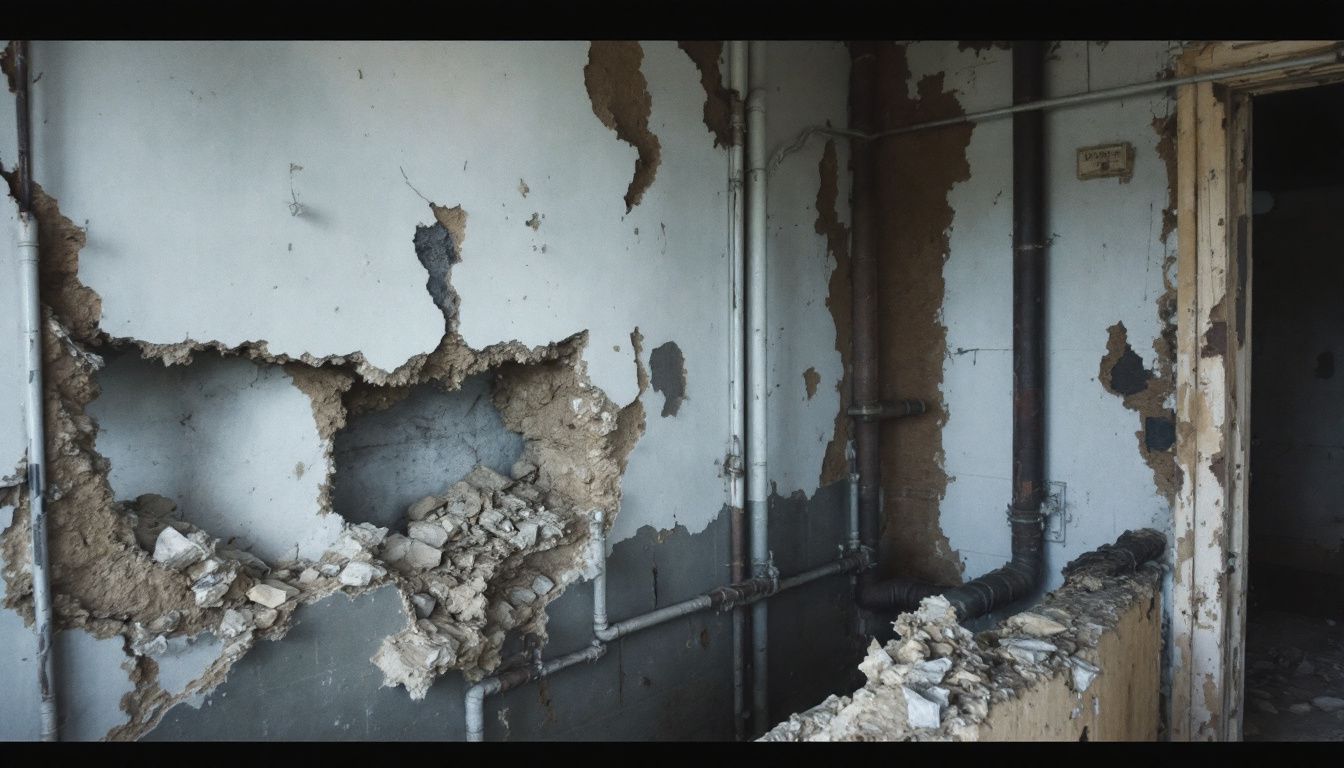
Asbestos in Old Buildings: What Every Property Owner Needs to Know
If your building was constructed before 2000, there is a realistic chance it contains asbestos. Asbestos in old buildings is not a historical curiosity — it is an active health and legal concern affecting millions of properties across the UK right now. Understanding where it hides, what risks it poses, and what you are legally required to do about it could protect lives and keep you on the right side of the law.
The consequences of getting it wrong range from serious illness to significant regulatory penalties. Here is everything you need to know.
Why Asbestos in Old Buildings Is Still Such a Serious Problem
Asbestos was used extensively in UK construction from the 1950s through to the late 1990s. It was cheap, fire-resistant, and incredibly versatile — which is precisely why it ended up in so many building materials. A full ban on its use in construction came into force in 1999, but the material left behind did not disappear with the legislation.
Asbestos-containing materials (ACMs) are present in a vast number of non-domestic buildings, including schools, hospitals, offices, and industrial premises. Many residential properties built before 2000 are also affected. The danger is not the presence of asbestos itself — it is disturbance. When ACMs are damaged, drilled, cut, or deteriorate with age, they release microscopic fibres into the air. Those fibres, once inhaled, can lodge permanently in lung tissue and cause life-threatening disease decades later.
Where Asbestos Hides in Older Properties
One of the most challenging aspects of dealing with asbestos in old buildings is that it is rarely obvious. It does not look dangerous. In many cases, it looks like perfectly ordinary building material — because that is exactly what it was designed to be.
Common locations where ACMs are found in older buildings include:
- Insulation boards — used around boilers, pipes, and heating systems
- Ceiling tiles and floor tiles — particularly vinyl floor tiles and their adhesive backing
- Artex and textured coatings — widely used on ceilings and walls in domestic and commercial properties
- Roofing and guttering — especially cement-based products such as corrugated roofing sheets
- Fire doors — asbestos was used as a fire-resistant filler within door panels
- Wall cavities and partition walls — spray-applied asbestos was used for fireproofing in many commercial buildings
- Pipe lagging — particularly in older heating and hot water systems
- Electrical switchgear and equipment — older fuse boxes and switchboards sometimes contain asbestos components
- Soffits and fascias — especially in properties built between the 1960s and 1980s
The key point is that asbestos can be present in materials that appear entirely intact and undamaged. You cannot identify ACMs by sight alone. Professional asbestos testing is the only reliable way to confirm whether a material contains asbestos fibres.
The Health Risks: Why This Cannot Be Ignored
Asbestos-related diseases are among the most serious occupational health conditions in the UK. What makes them particularly insidious is the latency period — the time between exposure and the onset of disease. This can range from 10 to 50 years, meaning people exposed during the 1970s and 1980s construction boom are still being diagnosed today.
Diseases Caused by Asbestos Exposure
Mesothelioma is a cancer of the lining of the lungs or abdomen and is almost exclusively caused by asbestos exposure. It is aggressive and currently incurable. The UK has one of the highest rates of mesothelioma in the world.
Asbestos-related lung cancer is linked to both asbestos exposure and smoking. When both risk factors are present, the likelihood of developing lung cancer increases substantially.
Asbestosis is a chronic scarring of lung tissue caused by prolonged exposure to asbestos fibres. It leads to progressive breathlessness and has no cure.
Pleural plaques and pleural thickening are changes to the lining of the lungs. While pleural plaques are not themselves disabling, they indicate significant past exposure and are associated with other asbestos-related conditions.
The delayed onset of these conditions is precisely why asbestos in old buildings continues to claim lives long after its use in construction ended. This is not a historical problem — it is an ongoing public health crisis.
Your Legal Duties as a Property Owner or Manager
If you own or manage a non-domestic building — whether that is a commercial office, a school, a care home, or any other premises where people work or visit — you have a legal duty to manage asbestos under the Control of Asbestos Regulations. This is known as the Duty to Manage, and it is not optional.
What the Duty to Manage Requires
Under Regulation 4 of the Control of Asbestos Regulations, duty holders must:
- Take reasonable steps to find out whether ACMs are present and assess their condition
- Presume materials contain asbestos unless there is strong evidence they do not
- Prepare and maintain an up-to-date written asbestos register
- Assess the risk from any ACMs identified
- Prepare, implement, and review a plan to manage those risks
- Provide information about the location and condition of ACMs to anyone who might disturb them
For domestic landlords, the duty still applies to common areas of residential buildings such as hallways, plant rooms, and roof spaces.
Notifying the HSE Before Removal Work
If asbestos needs to be removed, the Health and Safety Executive (HSE) must be notified at least 14 days before licensed removal work begins. Only licensed contractors are permitted to work with certain categories of asbestos, including friable asbestos and asbestos insulation board.
The HSE’s guidance document HSG264 sets out the standards that must be met when conducting surveys and managing asbestos. Non-compliance can result in prosecution, substantial fines, and — far more seriously — preventable harm to workers, residents, and visitors.
Types of Asbestos Survey and When You Need Each One
Not all asbestos surveys are the same. The type of survey you need depends on what you intend to do with the building and the level of disturbance anticipated.
Management Survey
A management survey is the standard survey required for managing asbestos in an occupied building during normal use. It locates and assesses the condition of ACMs that could be disturbed during everyday activities — routine maintenance, minor repairs, and the like. The result is an asbestos register and a risk-rated management plan.
This is the survey most property managers will need as a baseline, and it is the starting point for demonstrating compliance with the Duty to Manage.
Refurbishment Survey
A refurbishment survey is required before any renovation or refurbishment work that will disturb the building fabric. This is a more intrusive survey — it involves accessing areas not normally inspected, including wall cavities, above ceiling tiles, and beneath floor coverings. It must be completed before work begins, not during it.
Demolition Survey
Before any building is demolished, a demolition survey is legally required. This is the most thorough and intrusive type of survey, designed to locate all ACMs in the structure so they can be safely removed before demolition commences. It covers the entire building, including areas that may be structurally compromised or difficult to access.
Re-Inspection Survey
Once an asbestos register is in place, it must be kept up to date. A re-inspection survey is carried out periodically — typically annually — to reassess the condition of known ACMs and update the management plan accordingly. The condition of ACMs can change over time, particularly if the building is ageing or has been subject to minor disturbance.
What Happens During an Asbestos Survey
Understanding the survey process helps you prepare properly and ensures you get the most accurate result. Here is what to expect when you book with Supernova Asbestos Surveys.
- Booking — Contact us by phone or via our website. We confirm availability and send a booking confirmation. Same-week appointments are frequently available.
- Site Visit — A BOHS P402-qualified surveyor attends at the agreed time and carries out a thorough visual inspection of the property.
- Sampling — Representative samples are collected from suspect materials using correct containment procedures to prevent fibre release.
- Laboratory Analysis — Samples are analysed under polarised light microscopy (PLM) at our UKAS-accredited laboratory, ensuring accurate and legally defensible results.
- Report Delivery — You receive a detailed asbestos register and risk-rated management plan in digital format, typically within 3 to 5 working days. The report is fully compliant with HSG264 guidance.
If you are based in the capital and need a fast turnaround, our asbestos survey London service covers all London boroughs with experienced local surveyors.
Asbestos Testing: When You Need Confirmation Without a Full Survey
Sometimes a full survey is not immediately required, but you need to know whether a specific material contains asbestos before work proceeds. In these situations, targeted asbestos testing of individual materials can provide rapid, laboratory-confirmed answers.
For smaller jobs or situations where a property owner wants to test a specific material themselves, a postal testing kit allows samples to be collected and sent directly to our UKAS-accredited laboratory for analysis. This is a cost-effective option for straightforward situations, though it should not be used as a substitute for a full survey where one is legally required.
Asbestos Removal: When Management Is Not Enough
Not all asbestos needs to be removed. In many cases — particularly where materials are in good condition and unlikely to be disturbed — the safest approach is to manage asbestos in place, monitor its condition, and keep a detailed register. Unnecessary disturbance of intact ACMs can create more risk than leaving them undisturbed.
However, removal becomes necessary when:
- Materials are in poor condition and releasing or at risk of releasing fibres
- Refurbishment or demolition work will disturb the ACMs
- The asbestos is in a location where it cannot be adequately managed or protected
- The duty holder decides removal is the most practical long-term solution
When removal is required, it must be carried out by a licensed contractor following strict HSE-approved procedures. Our asbestos removal service connects you with licensed professionals who work to the highest safety standards, ensuring full compliance with the Control of Asbestos Regulations.
Fire Risk and Asbestos: An Overlooked Connection
In older buildings, asbestos management and fire safety are often intertwined. Asbestos was widely used in fire doors, ceiling voids, and structural fireproofing — meaning that fire safety assessments and asbestos surveys frequently cover overlapping areas of a building.
If you are managing an older building, a fire risk assessment should be conducted alongside your asbestos management plan. Both are legal requirements for non-domestic premises, and addressing them together ensures a coherent approach to building safety rather than piecemeal compliance.
Survey Costs and What to Expect
Supernova Asbestos Surveys offers transparent, fixed-price surveys across the UK. There are no hidden fees — you receive a confirmed price before we begin.
- Management Survey — From £195 for a standard residential or small commercial property
- Refurbishment & Demolition Survey — From £295, covering all areas to be disturbed prior to works
- Re-Inspection Survey — From £150, plus £20 per ACM re-inspected
- Bulk Sample Testing — From £25 per sample, with results typically returned within 3 to 5 working days
Prices vary depending on property size and complexity. Contact us directly for a precise quote tailored to your building.
Practical Steps Every Property Owner Should Take Now
If you manage or own a building constructed before 2000 and have not yet addressed asbestos, here is where to start:
- Do not disturb suspect materials. Until you know what you are dealing with, avoid drilling, cutting, or sanding any material that could potentially contain asbestos.
- Commission a management survey. This is your legal baseline. It identifies what is present, assesses the risk, and gives you the register and plan you are required to maintain.
- Keep your register up to date. Schedule annual re-inspections to ensure the condition of known ACMs is reassessed and your plan remains current.
- Brief your contractors. Before any maintenance or repair work, share the asbestos register with the contractors involved. This is a legal requirement under the Control of Asbestos Regulations.
- Plan ahead for refurbishment. If you are planning any renovation work, commission a refurbishment survey before work begins — not after.
- Do not attempt DIY removal. Removing asbestos without the correct training, equipment, and licensing is illegal for notifiable work and extremely dangerous in all circumstances.
Frequently Asked Questions
How do I know if my building contains asbestos?
You cannot tell by looking. If your building was constructed or refurbished before 2000, you should assume ACMs may be present until a professional survey confirms otherwise. A management survey carried out by a qualified surveyor is the only reliable way to identify and assess asbestos-containing materials in your property.
Is asbestos in old buildings always dangerous?
Not always immediately. Asbestos that is in good condition and unlikely to be disturbed poses a low risk if properly managed and monitored. The danger arises when ACMs are damaged, deteriorating, or disturbed — releasing fibres into the air. This is why condition monitoring through regular re-inspection surveys is so important.
Do I need an asbestos survey if I am planning building work?
Yes. If the work will disturb the building fabric in any way — including removing walls, lifting floors, or working above ceiling tiles — a refurbishment survey must be completed before work begins. Starting work without one puts contractors at risk and places you in breach of the Control of Asbestos Regulations.
Who is responsible for managing asbestos in a commercial building?
The duty holder — typically the building owner, employer, or managing agent — is responsible under Regulation 4 of the Control of Asbestos Regulations. In leased premises, responsibility can be shared between landlord and tenant depending on the terms of the lease, but the duty to manage cannot be ignored by either party.
Can I remove asbestos myself?
For most notifiable asbestos work — including the removal of asbestos insulation board, lagging, and sprayed asbestos — a licensed contractor is legally required. Some minor, non-licensable work may be carried out by a competent person following strict HSE guidance, but this is a narrow category. If in doubt, always use a licensed professional. The risks of getting this wrong are simply too serious.
Get Expert Help With Asbestos in Old Buildings
Supernova Asbestos Surveys has completed over 50,000 surveys nationwide. Our BOHS-qualified surveyors, UKAS-accredited laboratory, and transparent pricing make us the trusted choice for property owners, landlords, and facilities managers across the UK.
Whether you need a management survey, a refurbishment survey ahead of planned works, or simply want to test a suspect material, we can help. Same-week appointments are available across the country.
Call us on 020 4586 0680 or visit asbestos-surveys.org.uk to book your survey or request a quote today.