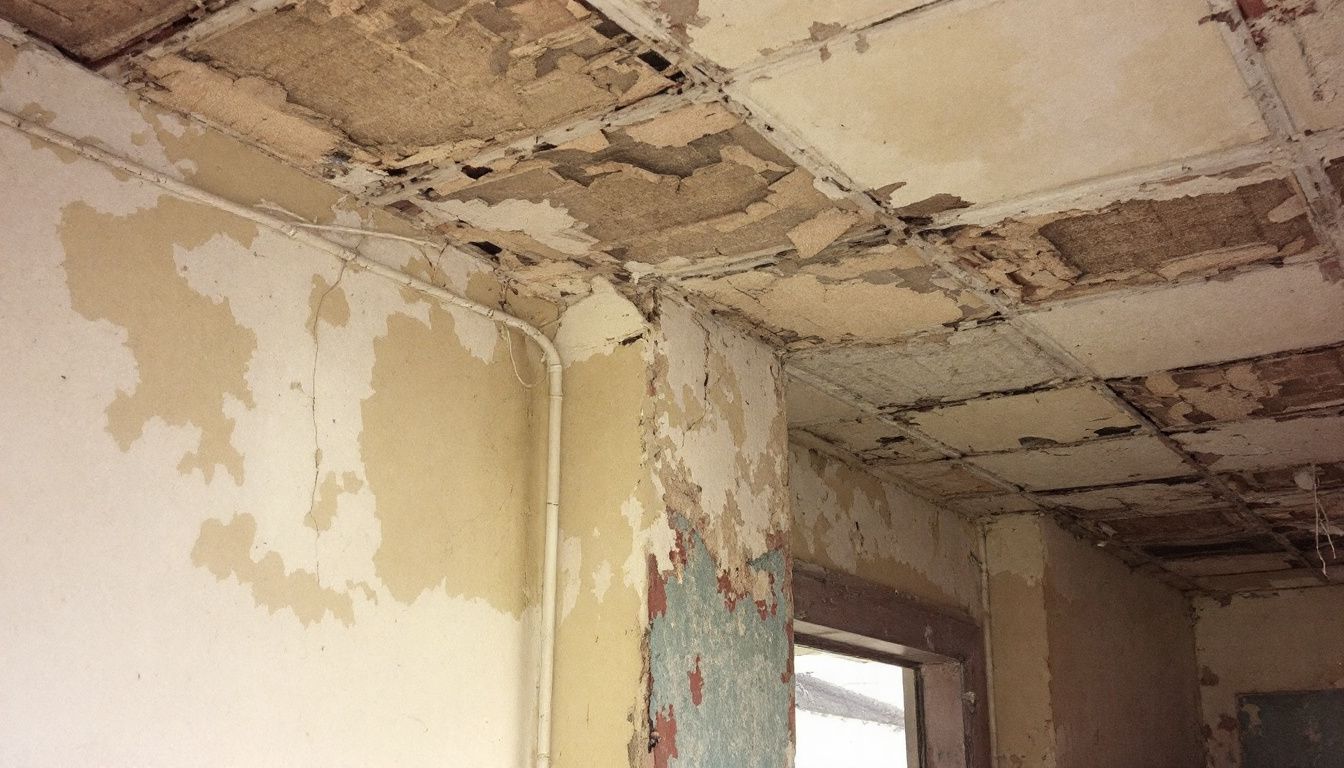
Asbestos in Older Buildings: The Real Cost of Doing Nothing
Asbestos is one of the most serious hidden hazards facing owners of older UK properties. It sits quietly inside walls, ceilings, floor tiles, and pipe lagging — completely invisible, entirely odourless, and potentially lethal. For decades it was the go-to building material: cheap, fire-resistant, and durable. Now it is the single largest cause of work-related deaths in the United Kingdom.
If you own, manage, or are responsible for a building constructed before the year 2000, understanding your obligations around asbestos is not optional. Ignoring the issue does not make it go away — it makes it more expensive, more dangerous, and potentially criminal.
Why Asbestos Was Used So Widely
Asbestos was used extensively in UK construction from the 1950s through to the late 1990s. Its properties seemed ideal: it was resistant to heat, fire, and chemical corrosion, and it bonded well with cement, plaster, and insulation materials.
Builders and developers used it in everything from roof sheeting and floor tiles to boiler insulation and artex coatings. At the time, it was considered a modern solution to real engineering problems. The health consequences were either unknown or, in some cases, deliberately suppressed.
A full ban on all forms of asbestos in the UK came into force in 1999. Any building constructed or substantially refurbished before that date may contain asbestos-containing materials (ACMs). That covers an enormous proportion of the UK’s existing building stock — including homes, schools, hospitals, offices, and industrial premises.
The Health Risks of Asbestos Exposure
Asbestos fibres are microscopic. When ACMs are disturbed — during drilling, cutting, or demolition — those fibres become airborne and can be inhaled deep into the lungs. The body cannot expel them, and over time they cause serious, often fatal, diseases.
The conditions linked to asbestos exposure include:
- Mesothelioma — an aggressive cancer of the lining of the lungs or abdomen, almost exclusively caused by asbestos exposure
- Lung cancer — risk is significantly increased by asbestos exposure, particularly in smokers
- Asbestosis — progressive scarring of the lung tissue that causes severe breathing difficulties
- Pleural plaques and pleural thickening — changes to the lining of the lungs that can cause pain and breathlessness
- Laryngeal cancer and ovarian cancer — both have established links to asbestos exposure
What makes asbestos particularly dangerous is the latency period. Symptoms may not appear for 20 to 50 years after exposure. Someone exposed during routine maintenance work in the 1980s may only now be receiving a terminal diagnosis.
Asbestos-related diseases kill more people in the UK each year than road accidents. Globally, the World Health Organisation links asbestos to tens of thousands of deaths annually, with an estimated 125 million workers exposed to it in occupational settings worldwide.
The Economic Consequences of Neglecting Asbestos
The financial argument for managing asbestos properly is just as compelling as the moral one. Neglect is expensive — often catastrophically so.
Healthcare and Compensation Costs
Treating asbestos-related diseases places enormous strain on individuals, families, and the NHS. Diagnostic procedures alone can cost between £1,000 and £5,000. Chemotherapy courses range from £30,000 to £100,000. Surgical interventions can run to £50,000 per operation, and palliative care adds thousands more each month.
For employers and building owners found liable for asbestos exposure, compensation claims can run into millions. Legal fees, expert witness costs, and regulatory penalties compound the financial damage significantly.
Remediation and Property Value
Professional asbestos removal typically costs between £50 and £150 per square metre depending on the material type and access conditions. Encapsulation — where ACMs are sealed rather than removed — is a lower-cost option at roughly £8 to £16 per square metre, though it requires ongoing monitoring.
Large commercial remediation projects can exceed £1 million. Properties where asbestos has not been properly managed routinely lose between 5% and 20% of their market value. Buyers, surveyors, and mortgage lenders are increasingly alert to undisclosed asbestos risks.
The cost of an asbestos management survey starts from £195 for a standard residential or small commercial property. That is a fraction of what remediation, litigation, or a collapsed property sale will cost you.
Your Legal Obligations Around Asbestos
Asbestos management in the UK is governed by a clear and enforceable legal framework. Ignorance of the law is not a defence, and the consequences of non-compliance are serious.
The Control of Asbestos Regulations
The Control of Asbestos Regulations represent the primary legislation governing asbestos work in Great Britain. They set out licensing requirements for high-risk work, notification duties to the HSE, and the obligations of duty holders to protect workers and building occupants from exposure.
Regulation 4 — the Duty to Manage — applies specifically to non-domestic premises. It requires owners and managers to identify ACMs, assess the risk they pose, and maintain an up-to-date asbestos register. If you are responsible for a commercial, industrial, or public building, this duty applies to you.
HSG264 — The Survey Guide
HSG264 is the HSE’s definitive guidance on how asbestos surveys should be planned and conducted. It sets out the methodology for both management surveys and refurbishment or demolition surveys, and specifies the qualifications required of surveyors. Any asbestos survey that does not follow HSG264 is not legally compliant.
Property Sales, Lettings, and Remortgages
If you are selling, letting, or remortgaging a property built before 2000, asbestos disclosure is a practical necessity. Solicitors and conveyancers routinely raise asbestos questions through the Property Information Questionnaire. A current asbestos register and management plan provides the documentation needed to satisfy buyers, tenants, and lenders.
Failure to disclose known asbestos risks can expose sellers to legal action after completion. Getting a survey done before you go to market is far simpler than dealing with a delayed or collapsed transaction.
Types of Asbestos Survey — Which One Do You Need?
Not all asbestos surveys are the same. The type you need depends on what you intend to do with the building.
Management Survey
A management survey is the standard survey for buildings in normal use. It identifies ACMs that could be disturbed during routine maintenance and assesses the risk they pose. This is the survey required to fulfil the Duty to Manage under the Control of Asbestos Regulations.
It produces an asbestos register, a condition assessment, and a risk-rated management plan. Supernova’s management surveys start from £195 and are carried out by BOHS P402-qualified surveyors.
Refurbishment Survey
If you are planning building works — even something as routine as fitting a new kitchen or bathroom — you need a refurbishment survey before work begins. This is a more intrusive survey that examines all areas that will be disturbed during the works.
Starting a refurbishment without this survey puts contractors at serious risk of asbestos exposure, and puts you at serious risk of prosecution. Refurbishment and demolition surveys start from £295.
Re-inspection Survey
Where ACMs are known to be present and are being managed in situ, they must be regularly monitored to check their condition has not deteriorated. A re-inspection survey provides that ongoing assurance and updates your asbestos register accordingly. Re-inspections start from £150 plus £20 per ACM re-inspected.
Asbestos Testing — When You Need Samples Analysed
Sometimes you do not need a full survey — you need to know whether a specific material contains asbestos. Asbestos testing involves taking a small sample from the suspect material and having it analysed under polarised light microscopy at a UKAS-accredited laboratory.
This is the only reliable way to confirm whether a material contains asbestos. Visual identification alone is not sufficient — many ACMs are indistinguishable from non-asbestos alternatives without laboratory analysis.
If you are confident in safely collecting a sample yourself, a testing kit is available from £30 per sample and can be posted directly to you. Alternatively, our surveyors can attend site to collect samples under correct containment procedures.
For a broader understanding of the asbestos testing process and what the results mean, our team is always available to talk you through your options.
What Happens During a Supernova Asbestos Survey
Booking a survey with Supernova is straightforward. Here is what to expect from the process:
- Booking: Contact us by phone or through our website. We confirm availability and send a booking confirmation — often with same-week appointments available.
- Site Visit: A BOHS P402-qualified surveyor attends at the agreed time and carries out a thorough visual inspection of the property.
- Sampling: Representative samples are collected from suspect materials using correct containment procedures to prevent fibre release.
- Laboratory Analysis: Samples are analysed under polarised light microscopy at our UKAS-accredited laboratory.
- Report Delivery: You receive a detailed asbestos register and risk-rated management plan in digital format within 3 to 5 working days.
Every report is fully compliant with HSG264 guidance and satisfies the legal requirements under the Control of Asbestos Regulations. You receive documentation you can use immediately — for compliance, for property transactions, or for planning remediation works.
Why Property Managers and Owners Choose Supernova
Supernova Asbestos Surveys has completed over 50,000 surveys across the UK, with more than 900 five-star reviews from clients ranging from individual homeowners to large commercial landlords and local authorities.
Here is what sets us apart:
- BOHS P402/P403/P404 Qualified Surveyors — the gold standard qualifications in asbestos surveying
- UKAS-Accredited Laboratory — all samples analysed to the highest standard, producing legally defensible results
- UK-Wide Coverage — we operate across England, Scotland, and Wales
- Same-Week Availability — we understand surveys are often time-critical
- Transparent, Fixed-Price Quotes — no hidden fees, no surprises
- HSG264-Compliant Reports — every report meets the legal standard
Whether you need a single residential survey or an ongoing asbestos management programme across a commercial portfolio, we have the expertise and capacity to support you.
Take Action Before the Problem Gets Worse
Asbestos does not deteriorate on a convenient schedule. ACMs in poor condition can release fibres at any time — during routine maintenance, as a result of building movement, or simply through age. The longer you wait, the greater the risk and the higher the eventual cost.
If you are unsure whether your building contains asbestos, or if you know it does but have not yet put a management plan in place, now is the time to act. Request a free quote online or call our team directly to discuss your requirements.
A fire risk assessment is also available from £195 for standard commercial premises — a useful addition when you are already reviewing the safety compliance of your building.
Call Supernova Asbestos Surveys on 020 4586 0680 or visit asbestos-surveys.org.uk to book your survey or request a free, no-obligation quote today.
Frequently Asked Questions
How do I know if my building contains asbestos?
If your building was constructed or refurbished before 2000, it may contain asbestos. The only way to confirm whether a specific material contains asbestos is through laboratory analysis of a sample. A management survey will identify all suspect materials throughout the property and provide a risk-rated register of findings.
Is asbestos dangerous if it is left undisturbed?
Asbestos-containing materials that are in good condition and are not being disturbed pose a low risk. The danger arises when ACMs are damaged, deteriorating, or disturbed during maintenance or renovation work, which can release fibres into the air. Regular re-inspection surveys are essential to monitor the condition of known ACMs.
Do I need an asbestos survey before selling my property?
There is no absolute legal requirement for a survey before selling a residential property, but asbestos disclosure is routinely required through the Property Information Questionnaire. For commercial properties, the Duty to Manage under the Control of Asbestos Regulations requires an up-to-date asbestos register. Having a current survey in place protects you legally and prevents delays in the transaction.
What is the difference between asbestos removal and encapsulation?
Removal involves physically extracting the asbestos-containing material from the building, which eliminates the long-term risk but is more costly and disruptive. Encapsulation involves sealing the ACM with a specialist coating to prevent fibre release, which is less expensive but requires ongoing monitoring through regular re-inspection surveys. The right approach depends on the condition of the material, its location, and your plans for the building.
How long does an asbestos survey take?
A standard residential management survey typically takes between one and three hours depending on the size and complexity of the property. Larger commercial buildings or refurbishment surveys requiring more intrusive access will take longer. Your surveyor will give you a realistic time estimate when confirming your appointment. Laboratory results are typically returned within 3 to 5 working days of the site visit.