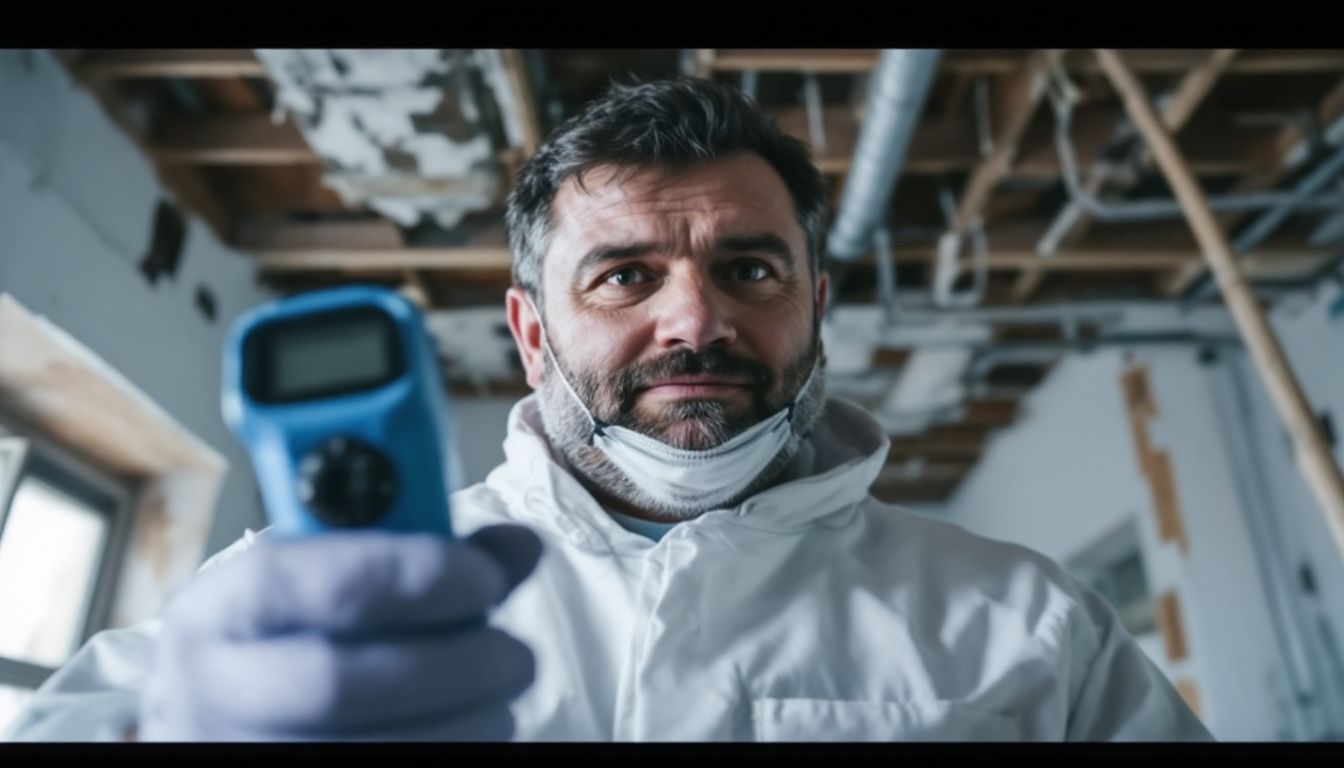
Asbestos Clearing: What Every Property Owner and Manager Needs to Know
Asbestos clearing is one of the most serious responsibilities facing owners and managers of older buildings across the UK. Whether you’ve just discovered suspect materials during a renovation or you’re working through a long-term asbestos management plan, getting this right isn’t optional — it’s a legal and moral obligation. Get it wrong, and the consequences range from hefty fines to life-threatening exposure for workers and occupants.
Asbestos was used extensively in UK construction right up until its full ban in 1999, meaning millions of properties still contain it today — often in places you wouldn’t immediately think to look. This post cuts through the complexity and gives you a clear, practical picture of what asbestos clearing actually involves.
Where Asbestos Hides in Older Buildings
Before any asbestos clearing work can begin, you need to know what you’re dealing with and where it is. Asbestos-containing materials (ACMs) were used in a staggering range of building products throughout the twentieth century.
Common locations include:
- Pipe and boiler insulation
- Ceiling and floor tiles
- Roof sheeting and soffit boards
- Textured coatings such as Artex
- Insulating board panels around doors and fireplaces
- Adhesives, mastics, and gaskets
- HVAC ductwork and lagging
- Cement products including guttering and flue pipes
The challenge is that asbestos fibres are invisible to the naked eye. A material can look perfectly intact and still pose a risk if it’s disturbed — and you cannot identify asbestos by sight alone. Laboratory analysis of a physical sample is the only reliable method of confirmation.
If your building was constructed or refurbished before 2000 and hasn’t been professionally surveyed, there’s a strong chance ACMs are present somewhere. The starting point for any asbestos clearing programme is always a professional survey.
Choosing the Right Survey Before Asbestos Clearing Begins
The type of survey you need depends entirely on what you’re planning to do with the building. This isn’t a one-size-fits-all situation, and choosing the wrong survey type could leave you legally exposed.
Management Survey
A management survey is the standard survey for buildings in normal occupation. It identifies ACMs that could be disturbed during everyday use or routine maintenance, and forms the basis of your asbestos register and management plan.
If you’re a duty holder under the Control of Asbestos Regulations, this is where you start. It’s the foundation of any responsible asbestos management approach.
Refurbishment Survey
If you’re planning any building work — even something as straightforward as replacing a ceiling or knocking through a wall — you’ll need a refurbishment survey before work begins. This is a more intrusive survey that examines all areas likely to be disturbed, including behind walls, above ceilings, and beneath floors.
It’s a legal requirement before any refurbishment or demolition work commences. Skipping this step isn’t just dangerous — it’s a criminal offence.
Demolition Survey
When a building is being fully or partially demolished, a demolition survey is required. This is the most thorough and intrusive survey type, covering the entire structure to ensure every ACM is identified before demolition begins. It’s designed to protect demolition workers and prevent asbestos contamination of the surrounding environment.
Re-Inspection Survey
If you already have an asbestos register in place, your duty doesn’t end there. ACMs need to be monitored over time to check whether their condition is deteriorating. A re-inspection survey updates your existing register and ensures your management plan remains accurate and current.
HSE guidance in HSG264 recommends re-inspections at least annually for most properties. Leaving known ACMs unchecked for extended periods is a compliance failure that could have serious consequences.
Understanding Asbestos Clearing: What the Process Actually Involves
Asbestos clearing is not simply a case of bagging up suspect materials and putting them in a skip. The process is heavily regulated under the Control of Asbestos Regulations and requires trained, often licensed, professionals at every stage.
Step 1: Confirm the Presence of Asbestos
Before any clearing work begins, the material must be confirmed as containing asbestos. If you’re unsure whether a material is an ACM, you can use a testing kit to collect a sample for laboratory analysis. However, for anything beyond a single suspect material, a professional survey is the appropriate route.
Step 2: Risk Assessment and Planning
Once ACMs are identified and their condition assessed, a risk assessment determines the appropriate course of action. Not every ACM needs to be removed immediately — in many cases, materials in good condition are best left in place and managed rather than disturbed. Disturbance is what releases fibres into the air, and that’s where the danger lies.
Where removal is necessary, a detailed plan of work must be drawn up before anything is touched. This includes identifying the correct licence category for the work, establishing the exclusion zone, and ensuring the right personal protective equipment (PPE) and respiratory protective equipment (RPE) are in place.
Step 3: Containment and Controlled Removal
The work area must be isolated from the rest of the building using sealed enclosures and negative pressure units. This prevents fibres from migrating into adjacent spaces during asbestos clearing operations.
Depending on the type and quantity of asbestos, the work may require a licensed contractor — and for the most hazardous materials such as amosite and crocidolite, a licensed contractor is legally mandatory. During removal, wet methods are used where possible to suppress fibre release, and HEPA-filtered vacuum equipment is used throughout. All waste materials are double-bagged in clearly labelled asbestos waste sacks.
Step 4: Air Monitoring
Throughout the asbestos clearing process, air monitoring is carried out to ensure fibre levels remain within safe limits. This is typically conducted by an independent analyst who is not part of the removal team — maintaining objectivity and protecting the interests of building occupants.
Step 5: Clearance Inspection and Certificate
Once removal is complete, a four-stage clearance procedure is carried out. This includes a visual inspection of the work area, air testing using phase contrast microscopy, and a final certificate of reoccupation. The area cannot be signed off for reuse until this process is complete and results are within acceptable limits.
When Is Asbestos Removal Actually Required?
A common misconception is that all asbestos must be removed immediately. That’s not the case. The HSE’s guidance is clear: if ACMs are in good condition and are unlikely to be disturbed, managing them in place is often the preferred option. Unnecessary disturbance creates risk where none previously existed.
Professional asbestos removal becomes necessary in the following situations:
- The material is in poor condition and deteriorating
- Refurbishment or demolition work will disturb the ACM
- The material is in a high-traffic area where damage is likely
- The duty holder decides removal is the most practical long-term solution
- The building is being sold or transferred and the buyer requires it
Where removal is the right decision, the work must be carried out by appropriately trained and, where required, licensed contractors. Attempting to remove asbestos without the right training and equipment is illegal and extremely dangerous.
Legal Obligations Around Asbestos Clearing
The legal framework governing asbestos in the UK is robust, and ignorance of the law is not a defence. Here’s what you need to know.
The Control of Asbestos Regulations
These regulations are the primary legislation controlling work with asbestos in Great Britain. They set out licensing requirements, notification duties, and the obligation to protect workers and others from asbestos exposure. Any work with asbestos — including asbestos clearing — must comply fully with these regulations.
The Duty to Manage
Under Regulation 4 of the Control of Asbestos Regulations, owners and managers of non-domestic premises have a legal duty to manage asbestos. This means identifying ACMs, assessing risk, preparing a written management plan, and keeping an up-to-date asbestos register.
The duty to manage does not apply to domestic properties in the same way, but landlords of residential properties still carry significant responsibilities and should not assume they’re exempt.
HSG264 — The Survey Guide
HSG264 is the HSE’s definitive guidance on conducting asbestos surveys. It sets out the methodology for management and refurbishment surveys, the competency requirements for surveyors, and the standards for reporting. Any survey or asbestos clearing programme that doesn’t follow HSG264 is not compliant — full stop.
Licensing Requirements
Not all asbestos work requires a licence, but the most hazardous categories do. Licensed work includes removal of sprayed coatings, asbestos insulation, and insulating board. Licensed contractors must notify the relevant enforcing authority before work begins, and workers must undergo medical surveillance and hold appropriate training certificates.
Asbestos Clearing and Fire Safety: A Connection You Shouldn’t Ignore
There’s an often-overlooked link between asbestos clearing and fire safety. Many of the materials that contain asbestos — insulating board, ceiling tiles, pipe lagging — also serve a fire protection function within a building’s passive fire protection system.
When these materials are removed as part of an asbestos clearing programme, the fire protection they provided must be replaced. Failing to address this leaves a building non-compliant with fire safety legislation, regardless of how well the asbestos work itself was carried out.
If you’re managing a commercial or multi-occupancy property, a fire risk assessment should be carried out alongside or immediately following any significant asbestos clearing work. This ensures any gaps in passive fire protection are identified and addressed before the building is reoccupied.
Disposal: The Final Stage of Asbestos Clearing
Asbestos waste is classified as hazardous waste and must be disposed of in accordance with strict legal requirements. It cannot be mixed with general construction waste or taken to a standard skip — doing so is a criminal offence.
Correct disposal involves:
- Double-bagging all asbestos waste in purpose-made, clearly labelled polythene sacks
- Sealing all bags and placing them in a rigid container or skip lined with polythene sheeting
- Transporting waste only to a licensed waste disposal site that accepts hazardous materials
- Completing a consignment note — a legal document that tracks the waste from site to disposal facility
- Retaining copies of consignment notes for at least three years
Failure to follow correct disposal procedures can result in significant penalties for both the contractor and the client. As the duty holder, you have an obligation to ensure compliant disposal takes place — the responsibility doesn’t sit solely with the removal team.
Asbestos Clearing Across the UK: Regional Considerations
The legal framework for asbestos clearing is consistent across Great Britain, but practical considerations can vary by location. In dense urban environments, working in occupied buildings, managing access restrictions, and coordinating with local authorities all require additional planning.
For property owners in the capital, specialist support for an asbestos survey London is available from teams experienced in working across commercial, residential, and mixed-use properties in complex urban settings.
For those managing portfolios across the north of England, dedicated support for an asbestos survey Manchester covers a wide range of property types, from industrial and commercial buildings to residential blocks.
In the Midlands, where large volumes of pre-2000 commercial and industrial stock remain in active use, an asbestos survey Birmingham provides the localised expertise needed to navigate both the built environment and regional regulatory expectations.
Wherever your property is located, the principles of asbestos clearing remain the same: survey first, plan carefully, use qualified professionals, and document everything.
Practical Steps for Duty Holders: Getting Your Asbestos Clearing Programme Right
If you’re a duty holder responsible for a non-domestic premises built before 2000, here’s a straightforward action plan to ensure your asbestos clearing responsibilities are being met:
- Commission a management survey if you don’t already have an asbestos register in place. This is your legal starting point.
- Review the condition of all identified ACMs with your surveyor and agree on a management approach for each — removal, encapsulation, or monitoring.
- Schedule re-inspections at least annually to keep your register current and identify any deterioration in ACM condition.
- Commission a refurbishment or demolition survey before any building work begins — even minor works can disturb hidden ACMs.
- Appoint licensed contractors for any notifiable licensed work, and ensure all clearance certificates are retained on file.
- Review fire safety after any significant asbestos clearing to ensure passive fire protection remains intact.
- Keep records of all surveys, risk assessments, plans of work, air monitoring results, clearance certificates, and waste consignment notes. These documents are your evidence of compliance.
Asbestos clearing isn’t a one-off event for most buildings — it’s an ongoing management responsibility that requires consistent attention and professional support.
Frequently Asked Questions
What is asbestos clearing and is it the same as asbestos removal?
Asbestos clearing is a broad term that covers the entire process of identifying, managing, and where necessary removing asbestos-containing materials from a building. Asbestos removal is one component of that process — the physical act of taking out ACMs. Clearing also encompasses surveying, risk assessment, air monitoring, clearance certification, and waste disposal.
Do I need a licensed contractor for all asbestos clearing work?
Not necessarily. The Control of Asbestos Regulations divide asbestos work into three categories: licensed, notifiable non-licensed (NNLW), and non-licensed. The most hazardous materials — such as sprayed coatings, asbestos insulation, and insulating board — require a licensed contractor. Less hazardous materials may be handled by trained but unlicensed operatives. Your surveyor can advise on the correct category for each ACM identified.
Can I leave asbestos in place rather than removing it?
Yes, and in many cases this is the preferred approach. The HSE’s guidance is clear that ACMs in good condition that are unlikely to be disturbed are often best managed in place rather than removed. Unnecessary disturbance creates risk. However, ACMs must be regularly monitored via re-inspection surveys, and removal becomes necessary if condition deteriorates or building work is planned.
How long does an asbestos clearing project take?
This depends entirely on the size of the building, the quantity and type of ACMs present, and the scope of work required. A small residential property with a limited number of ACMs might be cleared within a few days. A large commercial or industrial building with extensive asbestos could take weeks or months. Proper planning, including surveying and scheduling, is essential to managing timescales effectively.
What happens if I don’t comply with asbestos clearing regulations?
Non-compliance with the Control of Asbestos Regulations can result in enforcement action by the HSE or local authority, including improvement notices, prohibition notices, and prosecution. Convictions can result in unlimited fines and, in serious cases, custodial sentences. Beyond the legal consequences, non-compliance puts workers and building occupants at risk of asbestos-related diseases, which can be fatal.
Get Expert Support for Asbestos Clearing from Supernova
Supernova Asbestos Surveys has completed over 50,000 surveys nationwide, supporting property owners, managers, and duty holders across the UK with every aspect of asbestos clearing — from initial surveys through to removal oversight and compliance documentation.
Whether you need a management survey for an occupied office, a refurbishment survey before building works, or specialist advice on a complex asbestos clearing programme, our UKAS-accredited team is ready to help.
Call us on 020 4586 0680 or visit asbestos-surveys.org.uk to find out how we can support your asbestos clearing obligations — wherever your property is located.