Safety Precautions for Historic Building Maintenance: What Every Property Manager Must Know
Historic buildings carry stories in their walls — and sometimes, those walls contain asbestos. If you manage, own, or work on a pre-2000 structure, understanding the safety precautions for historic building maintenance isn’t just good practice. It’s a legal obligation that could save lives.
Asbestos was used extensively in UK construction throughout the mid-twentieth century. It appeared in floor tiles, ceiling panels, pipe lagging, artex coatings, and insulation boards. In a listed or heritage building, those materials may still be present and completely undisturbed — which sounds reassuring until a maintenance team drills through a wall or a surveyor chips away at a ceiling.
The risks are real, but they’re manageable. Here’s exactly what you need to know before anyone picks up a tool.
Why Historic Buildings Present Unique Asbestos Challenges
Modern buildings constructed after 1999 are generally asbestos-free, but heritage structures are a different matter entirely. The older the building, the more likely it contains asbestos-containing materials (ACMs) in multiple locations — often in places you wouldn’t immediately think to look.
There’s a second layer of complexity too. Historic and listed buildings are subject to strict preservation requirements. You can’t simply rip out a Victorian cornice or a 1930s tiled floor without consent from the local planning authority. This creates a tension between safe removal and heritage preservation that requires careful navigation.
Understanding this tension is the first step. The second is knowing your legal duties before any work begins.
Legal Requirements Under the Control of Asbestos Regulations
The Control of Asbestos Regulations place a clear duty on those who manage non-domestic premises. If you have responsibility for maintenance or repair of a building, you must manage the risk from asbestos — and that means knowing where it is, assessing its condition, and having a documented plan in place.
Regulation 4 is particularly relevant here. It requires duty holders to identify ACMs, assess their condition and risk, and produce a written asbestos management plan. This isn’t optional. Failing to comply can result in prosecution, significant fines, and — far more importantly — serious harm to workers and occupants.
Permits and Notifications
For licensed asbestos work — which includes most work on higher-risk materials such as sprayed coatings, lagging, and asbestos insulating board — you must notify the relevant enforcing authority at least 14 days before work begins. This is a legal requirement, not a courtesy.
If the building is listed, you’ll also need listed building consent before disturbing any materials that form part of the historic fabric. Submit your permit applications to the local planning authority with full details of the asbestos risk and your proposed management approach. Combining these processes from the outset saves time and prevents costly delays on site.
The Asbestos Management Plan
Every non-domestic building that may contain asbestos must have a written asbestos management plan. For a historic building, this document becomes even more critical because the fabric of the structure is complex, records may be incomplete, and multiple contractors are often involved over many years.
Your management plan should include:
- A full record of all known or suspected ACM locations and their condition
- Risk ratings for each ACM based on type, condition, and likelihood of disturbance
- Clear instructions for anyone carrying out maintenance or repair work
- Emergency procedures in the event of accidental disturbance
- A schedule for regular reinspection and plan updates
This plan must be kept up to date and made available to anyone who might disturb the materials — including contractors, surveyors, and maintenance staff.
Identifying Asbestos Before Any Work Starts
No safety precautions for historic building maintenance can be effective without first knowing where the asbestos is. Commissioning a professional asbestos survey is the only reliable way to achieve this, and it must happen before any maintenance, repair, or refurbishment work begins.
Types of Asbestos Survey
There are two main survey types, as defined in the HSE’s guidance document HSG264:
- Management survey — Used for normal occupation and routine maintenance. It identifies ACMs that could be disturbed during day-to-day activities and assesses their condition.
- Refurbishment and demolition survey — Required before any structural work, refurbishment, or demolition. This is a more intrusive survey that may involve opening up cavities, lifting floor coverings, and sampling materials that would otherwise remain undisturbed.
For a historic building undergoing repair or restoration work, a refurbishment and demolition survey is almost always necessary. The surveyor must have access to all areas where work will take place, including roof voids, service ducts, and subfloor spaces.
If you’re based in or around the capital and need specialist support, our asbestos survey London service covers heritage and listed buildings across all London boroughs.
Reviewing Historical Records and Building Plans
Before the surveyor even sets foot on site, gather every available document relating to the building’s construction and maintenance history. Original architectural drawings, planning applications, previous survey reports, and maintenance logs can all indicate where asbestos was used or has previously been disturbed.
Don’t assume that because a material was removed in the past, all ACMs have been dealt with. Partial removal was common, and materials were sometimes encapsulated rather than taken out entirely. Historical records give context; they don’t replace a current survey.
Non-Destructive Testing Methods
In heritage buildings where invasive investigation would damage irreplaceable historic fabric, non-destructive testing methods offer a valuable alternative for preliminary assessment. X-ray fluorescence (XRF) analysis can detect the presence of certain materials without physical sampling, helping surveyors prioritise where intrusive investigation is genuinely necessary.
These techniques are particularly useful in Grade I and Grade II* listed buildings where even minor physical interference requires consent. They should complement — not replace — a full professional survey.
Planning Safe Work Procedures
Once you have a clear picture of where ACMs are located, the next stage is planning how work will proceed safely. This isn’t something to improvise on the day. A detailed written safe work procedure must be in place before any operative touches a surface that could contain asbestos.
Risk Assessment
Carry out a thorough risk assessment for every task that could disturb ACMs. Consider:
- The type of asbestos present (chrysotile, amosite, crocidolite) and its associated risk level
- The condition of the material — friable or damaged ACMs present a far higher risk than intact, sealed materials
- The nature of the work — drilling, cutting, and sanding release far more fibres than visual inspection
- The duration and frequency of exposure for workers
- Proximity to other building occupants or members of the public
The risk assessment must be documented and reviewed if the scope of work changes. A task that initially seemed low-risk can become high-risk the moment a contractor uncovers an unexpected ACM.
Controlled Work Zones
Before any disturbance of ACMs, establish a clearly defined controlled work zone. Seal off the area using heavy-duty polythene sheeting and display prominent warning signs at all entry points. No one should enter the zone without the appropriate PPE and a clear briefing on the hazards present.
Wetting ACMs with a fine water mist before and during work significantly reduces the release of airborne fibres. This is a simple but highly effective control measure that should be standard practice on any site where asbestos disturbance is planned.
For major projects in the North West, our asbestos survey Manchester team provides pre-work surveys and ongoing support throughout the project lifecycle.
Worker Safety Precautions: Training and PPE
The safety precautions for historic building maintenance that protect workers most directly are proper training and the correct use of personal protective equipment. Neither can be an afterthought.
Asbestos Awareness and Handling Training
Anyone who could come into contact with asbestos during their work must receive appropriate training. The level of training required depends on the nature of the work:
- Asbestos awareness training — Required for all workers in occupations where they might encounter ACMs (plumbers, electricians, joiners, plasterers, and general maintenance staff)
- Non-licensed work training — Required for workers carrying out non-licensed asbestos work with appropriate controls
- Licensed contractor training — Required for all operatives working for a licensed asbestos removal contractor on higher-risk materials
Training must be refreshed regularly and should include hands-on practical elements, not just classroom instruction. Workers need to be able to recognise ACMs, understand the risks, and apply safe work procedures in real conditions.
Personal Protective Equipment
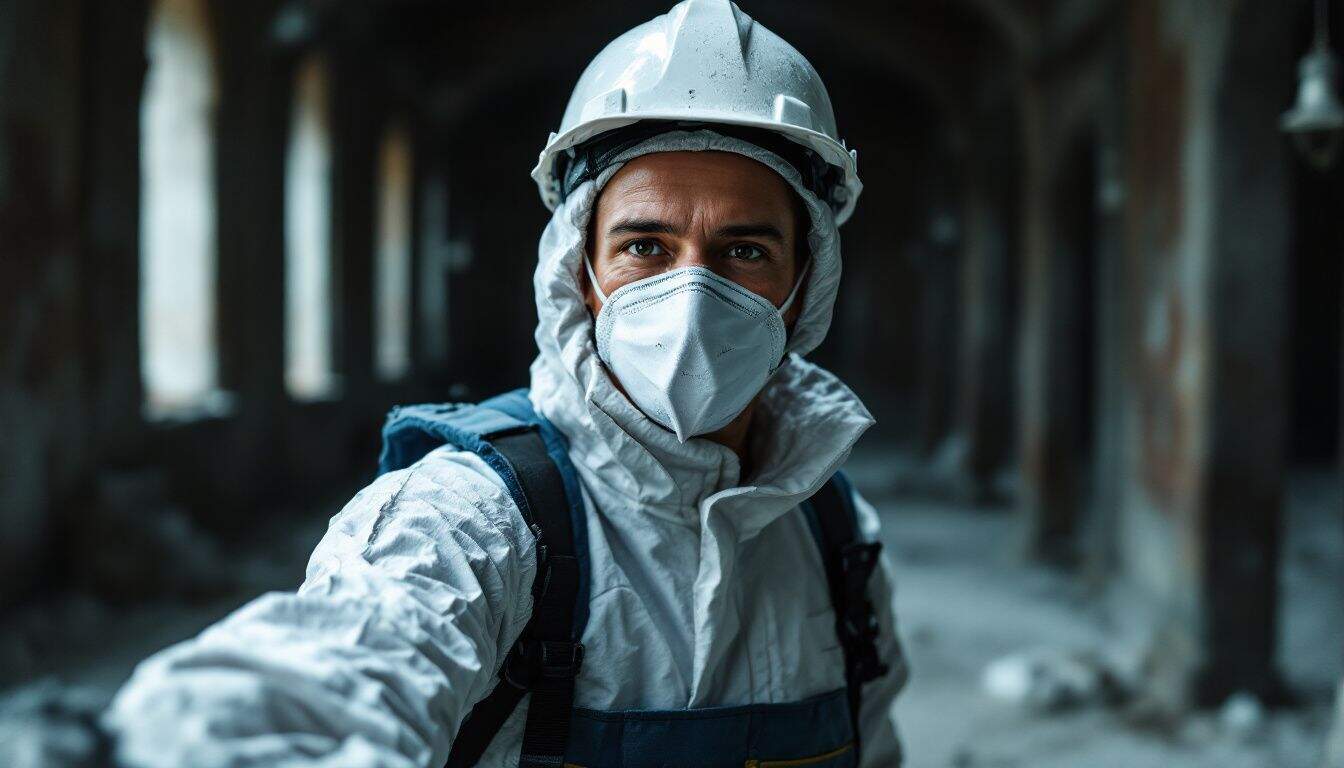
The correct PPE for asbestos work is non-negotiable. Depending on the level of risk, workers should be equipped with:
- A suitable respiratory protective device — for most asbestos work, a minimum of an FFP3 disposable mask or a half-face respirator with a P3 filter
- Disposable coveralls (Type 5, Category 3) to prevent fibre contamination of clothing
- Disposable gloves and overshoes
- Eye protection where there is a risk of fibre or dust contact with eyes
All PPE must be correctly fitted, regularly inspected, and disposed of appropriately after use. Contaminated coveralls must be double-bagged in sealed asbestos waste sacks — never taken home or left in communal areas.
Safe Asbestos Handling and Removal
Where ACMs must be removed as part of the maintenance or repair programme, the method of removal must be carefully chosen and executed by appropriately qualified personnel. Not all asbestos removal requires a licensed contractor, but higher-risk materials — including asbestos insulating board, lagging, and sprayed coatings — must only be removed by a firm holding a current HSE licence.
For lower-risk non-licensed work, the work must still be planned carefully, notified where required, and carried out using appropriate controls. The distinction between licensed and non-licensed work is defined in the Control of Asbestos Regulations, and getting this wrong can result in serious legal consequences.
Our dedicated asbestos removal service operates across the UK and covers the full range of removal scenarios, from large-scale industrial projects to sensitive heritage building work.
Approved Abatement Techniques
Approved asbestos abatement techniques for historic buildings must balance fibre control with the need to preserve historic fabric wherever possible. In practice, this often means:
- Encapsulation — applying a sealant to stabilise ACMs that cannot be safely removed without causing disproportionate damage to the building
- Enclosure — constructing a physical barrier around ACMs to prevent disturbance
- Controlled removal — carefully wetting and removing ACMs in sections to minimise fibre release, using negative pressure enclosures where required
The choice of technique should be agreed between the duty holder, the licensed contractor (where applicable), and — for listed buildings — the heritage authority. What works in a modern industrial unit may not be appropriate for a Grade II listed Victorian school.
Waste Disposal
Asbestos waste is classified as hazardous waste and must be disposed of at a licensed facility. It must be double-bagged in clearly labelled asbestos waste sacks, transported by a registered waste carrier, and accompanied by the appropriate documentation. Never mix asbestos waste with general site waste. The penalties for improper disposal are severe, and the environmental consequences can be long-lasting.
Air Monitoring and Clearance Testing
Air monitoring during asbestos removal work confirms that fibre concentrations remain within acceptable limits and that control measures are working effectively. For licensed asbestos removal work, a four-stage clearance procedure is required before the enclosure can be dismantled and the area returned to normal use.
This clearance procedure includes a thorough visual inspection, aggressive air sampling, and a final air test carried out by an independent UKAS-accredited laboratory. Only when the area passes all four stages can it be signed off as safe for re-occupation.
For projects in the West Midlands, our asbestos survey Birmingham team can advise on the full clearance process and connect you with accredited analysts.
Maintaining and Updating Records
Good record-keeping is not just a legal requirement — it’s the backbone of safe ongoing management. Every survey, risk assessment, safe work procedure, removal project, and air monitoring result should be filed and made accessible to relevant personnel.
The asbestos register must be updated whenever new ACMs are discovered, materials are removed or encapsulated, or the condition of known ACMs changes. A register that hasn’t been reviewed for several years is worse than useless — it creates a false sense of security.
Schedule regular reinspections of ACMs that are being managed in situ. The frequency will depend on the condition and risk rating of the materials, but annual reinspection is a reasonable baseline for most situations.
Frequently Asked Questions
What survey do I need before carrying out repairs on a historic building?
Before any repair or refurbishment work, you need a refurbishment and demolition survey as defined in HSG264. This is more intrusive than a standard management survey and is designed to locate all ACMs in areas where work will take place. A management survey alone is not sufficient before physical work begins on a building that may contain asbestos.
Do I need a licensed contractor to remove asbestos from a listed building?
It depends on the type of material. Higher-risk ACMs — including sprayed coatings, lagging, and asbestos insulating board — must be removed by an HSE-licensed contractor. Some lower-risk materials can be handled by trained non-licensed workers following specific controls. If you’re unsure which category applies, treat the work as licensable until a qualified surveyor advises otherwise. The consequences of getting this wrong are serious.
Can asbestos simply be left in place in a historic building?
Yes — in many cases, managing ACMs in situ is the safest and most appropriate option, particularly in listed buildings where removal would damage historic fabric. ACMs that are in good condition, unlikely to be disturbed, and regularly monitored can be safely managed without removal. The key is having a current, accurate management plan and ensuring all maintenance staff and contractors are aware of the materials’ locations.
What PPE is required for asbestos work in a heritage building?
At minimum, workers should wear an FFP3-rated respirator or a half-face mask with a P3 filter, Type 5 Category 3 disposable coveralls, disposable gloves, and overshoes. For higher-risk licensed work, full-face respiratory protection and more robust protective clothing may be required. All PPE must be correctly fitted and disposed of as asbestos waste after use.
How often should the asbestos management plan be reviewed?
The Control of Asbestos Regulations require the plan to be reviewed regularly and kept up to date. In practice, it should be reviewed at least annually, and immediately whenever new ACMs are discovered, materials are disturbed or removed, or the condition of existing ACMs changes. An outdated plan provides no protection and may leave you in breach of your legal duty.
Get Expert Support for Your Historic Building
Managing asbestos in a historic building demands expertise, care, and an understanding of both health and safety law and heritage preservation requirements. Cutting corners puts workers, occupants, and the building itself at risk.
Supernova Asbestos Surveys has completed over 50,000 surveys across the UK, including complex heritage and listed building projects. Whether you need an initial management survey, a pre-refurbishment assessment, or specialist advice on a specific maintenance challenge, our team is ready to help.
Call us on 020 4586 0680 or visit asbestos-surveys.org.uk to book your survey or speak with one of our specialists.