Why Asbestos Surveys for Historic Buildings Demand a Different Approach
Owning or managing a historic building carries responsibilities that extend well beyond routine maintenance. Hidden within the fabric of older structures — beneath ornate plasterwork, behind timber panelling, wrapped around original pipework — there may be asbestos-containing materials (ACMs) that pose a serious risk to anyone who disturbs them.
Asbestos surveys for historic buildings are not a box-ticking exercise. They are a critical part of responsible property management, legal compliance, and heritage preservation. Get them wrong and you risk harming people, damaging irreplaceable fabric, and falling foul of UK law.
Here is exactly what these surveys involve, what the law requires, and how to manage asbestos effectively in a building where every intervention carries additional weight.
Why Historic Buildings Present Unique Asbestos Challenges
Any building constructed or refurbished before 2000 may contain asbestos. That covers an enormous proportion of the UK’s historic building stock — from Victorian terraces and Edwardian civic buildings to mid-century additions bolted onto medieval structures.
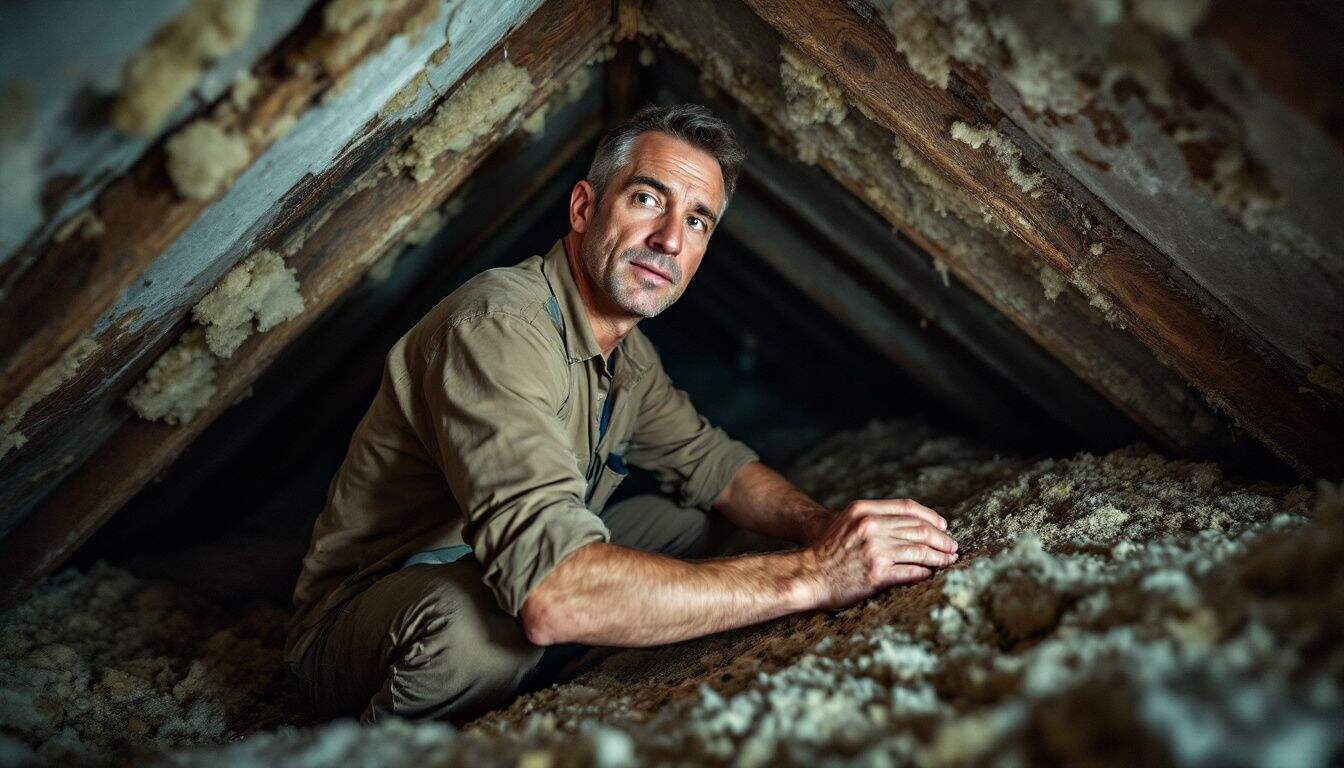
The challenge in historic buildings is that ACMs are often concealed within materials that surveyors cannot easily access or remove without causing damage. Decorative cornicing, original floor tiles, bitumen-backed linoleum, textured coatings on walls and ceilings — all of these can contain asbestos fibres, and all of them carry heritage significance that makes invasive sampling deeply problematic.
There is also the issue of layered construction history. A building that started life in the 1700s may have had Victorian additions, Edwardian upgrades, and post-war repairs — each phase potentially introducing different ACMs. Tracing what was added when, and what it contains, requires a surveyor with real experience of historic fabric.
The Types of Asbestos Commonly Found in Older Buildings
Asbestos was used in dozens of building products throughout the twentieth century. In historic buildings, surveyors commonly encounter a range of materials across different building elements:
- Chrysotile (white asbestos) — found in ceiling tiles, floor tiles, roofing sheets, and textured coatings such as Artex
- Amosite (brown asbestos) — used in insulation boards, ceiling tiles, and thermal insulation on pipes and boilers
- Crocidolite (blue asbestos) — the most hazardous form, used in spray coatings and pipe insulation
- Asbestos rope and gaskets — often found around original boiler rooms and plant areas
- Bitumen and adhesive products — used beneath floor coverings and in roofing felt
The presence of any of these materials does not automatically mean danger. Asbestos that is in good condition and left undisturbed presents a lower risk than ACMs that are damaged, friable, or likely to be disturbed during maintenance work.
What UK Law Requires: Your Legal Duties as a Dutyholder
The Control of Asbestos Regulations place a clear legal duty on anyone who manages or has responsibility for non-domestic premises. This includes managers of historic buildings, whether they are privately owned, operated by trusts, or managed on behalf of public bodies.
The duty to manage asbestos requires dutyholders to:
- Take reasonable steps to find out if ACMs are present and assess their condition
- Presume materials contain asbestos unless there is strong evidence to the contrary
- Prepare and maintain a written asbestos management plan
- Keep an up-to-date asbestos register
- Provide information about the location and condition of ACMs to anyone who might disturb them
- Review and monitor the plan regularly
HSE guidance — particularly HSG264, which sets out the standards for asbestos surveying — applies equally to historic buildings. There are no exemptions for listed buildings or scheduled monuments.
Additional Obligations for Listed and Heritage Buildings
If a building holds Grade I, Grade II*, or Grade II listed status, the legal picture becomes more complex. Any work that affects the character of the building — including intrusive asbestos sampling — may require Listed Building Consent from the local planning authority.
This means surveyors working on listed buildings must plan their approach carefully. Sampling strategies need to be agreed in advance, and conservation officers may need to be consulted before any physical intervention takes place. This is not a task for a generalist surveyor unfamiliar with heritage constraints.
How Asbestos Surveys for Historic Buildings Are Conducted
Asbestos surveys for historic buildings follow the same fundamental framework as surveys in any other property — but the methodology must be adapted to account for heritage sensitivities, access restrictions, and the potential presence of unusual or archaic materials.
Management Surveys
A management survey is the standard starting point for any occupied historic building. It is designed to locate ACMs that could be disturbed during normal occupancy and routine maintenance — including areas accessible to maintenance staff, contractors, and the public.
The surveyor will inspect all accessible areas, taking representative samples of suspect materials for laboratory analysis. Where materials cannot be accessed without causing damage, they will be presumed to contain asbestos and recorded accordingly.
Refurbishment Surveys
Before any significant repair, restoration, or refurbishment work begins — including work that might seem minor, such as replacing windows or relining flues — a refurbishment survey is required. This is a more intrusive process that aims to locate all ACMs in areas that will be affected by the planned works.
In a listed building, the scope of a refurbishment survey must be carefully defined to avoid unnecessary damage. Surveyors should work closely with the project architect and conservation officer to identify exactly which areas will be disturbed and focus the survey accordingly.
Demolition Surveys
Where an entire structure is being demolished or substantially stripped out, a demolition survey is required. This is the most thorough and intrusive survey type, designed to locate every ACM in the building before demolition proceeds.
Even in heritage contexts where full demolition is rare, partial demolition — such as removing a later addition from an older structure — triggers the same requirements. The survey must cover all areas that will be affected by the works.
Non-Destructive and Minimally Invasive Testing Methods
Where physical sampling would damage significant historic fabric, surveyors can use techniques that minimise intervention. X-ray fluorescence (XRF) analysis allows certain materials to be screened without the need for destructive sampling in every location.
All samples taken during a survey should be analysed by a UKAS-accredited laboratory. This ensures results are reliable, defensible, and meet the standards required by HSE guidance. Understanding the full process involved in asbestos testing helps building managers appreciate how laboratory analysis supports accurate identification of ACMs.
The goal is always to gather sufficient evidence to produce a reliable asbestos report without causing irreversible harm to the building’s historic character.
Reading and Acting on Your Asbestos Report
An asbestos report produced following a survey of a historic building should include:
- A clear description of the building and the areas surveyed
- The location of all identified and presumed ACMs, ideally marked on floor plans
- The type, extent, and condition of each ACM
- A risk assessment for each material, taking into account its condition and the likelihood of disturbance
- Recommendations for management, remediation, or removal
- A priority action list for materials presenting the highest risk
This report forms the foundation of your asbestos management plan. It is not a document to file and forget — it is a working tool that should be reviewed regularly and updated whenever new information comes to light.
Updating the Asbestos Register
The asbestos register is a live record of all known ACMs in the building. It must be updated after every survey, after any work that disturbs or removes ACMs, and whenever the condition of a known material changes.
Everyone who works in or on the building — from maintenance staff to visiting contractors — should be made aware of the register and given access to relevant information before they start work. This is a legal requirement under the Control of Asbestos Regulations, not an optional courtesy.
Managing ACMs in Place: When Removal Is Not the Answer
In many historic buildings, the most appropriate response to the presence of ACMs is not immediate removal. Asbestos that is in good condition, is not likely to be disturbed, and is not accessible to occupants can often be safely managed in place.
This approach — known as management rather than removal — involves monitoring the condition of ACMs at regular intervals, recording findings in the asbestos register, and acting promptly if the condition of any material deteriorates.
In a listed building, managing ACMs in place may also be preferable from a heritage perspective. Removing asbestos-containing floor tiles, for example, could destroy original floor finishes that form part of the building’s significance. Where management in place is the chosen strategy, it must be documented clearly and reviewed regularly.
When Asbestos Removal Becomes Necessary
There are circumstances where asbestos removal is the right course of action — particularly where ACMs are in poor condition, are being disturbed by ongoing maintenance, or where refurbishment work makes their removal unavoidable.
Any removal in a historic building must be carried out by a licensed contractor working in accordance with the Control of Asbestos Regulations. In a listed building, removal work may also require Listed Building Consent, particularly if it involves disturbing original fabric.
Post-removal, the affected area must be thoroughly cleaned and a clearance certificate issued before the space can be reoccupied. The asbestos register must be updated to reflect the removal.
Ongoing Asbestos Management: Keeping Historic Buildings Safe Long-Term
A single survey is not enough. Asbestos management in historic buildings is an ongoing responsibility that requires regular attention across several areas.
Routine Monitoring and Inspections
Known ACMs should be inspected at least annually to assess whether their condition has changed. If a material that was previously in good condition shows signs of deterioration — crumbling edges, surface damage, water ingress — the risk assessment must be reviewed and action taken.
Routine maintenance activities should always be checked against the asbestos register before work begins. A plumber replacing a section of pipework, a decorator applying new coatings, or a carpenter fitting new joinery — all of these activities could disturb ACMs if the register is not consulted first.
Training and Awareness for Building Staff
Everyone who works regularly in a historic building should receive asbestos awareness training. This does not mean they need to be qualified surveyors — but they should know what ACMs may be present, where they are located, what they look like, and what to do if they suspect they have disturbed asbestos.
Awareness training is a legal requirement for anyone who is liable to disturb asbestos in the course of their work. It is also one of the most cost-effective risk management tools available to a building manager.
Planning for Future Works
Any planned maintenance, repair, or restoration project should trigger a review of the asbestos register before work begins. If the planned works will affect areas not previously surveyed, or areas where ACMs are present, a refurbishment survey should be commissioned before contractors are appointed.
Building this step into your standard project planning process protects contractors, preserves the building’s fabric, and keeps you on the right side of the law. If you are commissioning asbestos testing as part of a wider restoration programme, make sure your surveyor understands the heritage constraints before work begins.
Choosing the Right Surveyor for a Historic Building
Not every asbestos surveyor has the knowledge or experience to work effectively in a historic building. When selecting a surveyor, look for:
- Membership of a recognised professional body such as BOHS (British Occupational Hygiene Society)
- UKAS-accredited laboratory partnerships for sample analysis
- Demonstrable experience working in listed buildings or heritage environments
- Familiarity with the planning requirements around Listed Building Consent
- A clear methodology for minimising damage to historic fabric during sampling
- The ability to liaise with conservation officers and project architects
A surveyor who has only worked in modern commercial buildings may not appreciate the constraints involved in accessing a Victorian roof void or sampling a decorative encaustic tile floor. The consequences of getting this wrong — both for the building and for the people working in it — are too significant to risk on an inexperienced appointment.
Asbestos Surveys for Historic Buildings Across the UK
Historic buildings are found in every corner of the UK, from rural estates to dense urban centres. The legal requirements are the same wherever the building is located, but local planning policies and the availability of specialist surveyors can vary.
For those managing properties in the capital, an asbestos survey London service that understands the specific heritage context of the city’s listed stock is essential. London holds thousands of listed buildings across every borough, many with complex construction histories.
In the north-west, an asbestos survey Manchester covering the region’s extensive Victorian civic and commercial building stock requires surveyors with an understanding of the materials and construction methods common to that era and area.
Similarly, those responsible for heritage properties in the Midlands should seek an asbestos survey Birmingham from a provider experienced in the city’s significant industrial and civic heritage buildings, many of which contain a wide range of ACMs from multiple phases of construction.
Frequently Asked Questions
Do listed buildings need an asbestos survey?
Yes. Listed building status provides no exemption from the Control of Asbestos Regulations. If the building is a non-domestic premises, the duty to manage asbestos applies in full. The difference is that any sampling or removal work must be planned carefully to avoid causing damage to significant historic fabric, and Listed Building Consent may be required before intrusive work can proceed.
Can asbestos surveys damage a historic building?
A poorly planned survey can cause unnecessary damage, which is why it is essential to appoint a surveyor with genuine experience of heritage environments. Skilled surveyors use minimally invasive techniques wherever possible, take samples from inconspicuous locations, and work within the constraints set by conservation officers. The risk of damage is manageable — the risk of leaving ACMs unidentified is far greater.
What happens if asbestos is found in a listed building?
Finding asbestos does not automatically mean it needs to be removed. Where ACMs are in good condition and are unlikely to be disturbed, managing them in place is often the most appropriate response — and may be preferable from a heritage perspective. Where removal is necessary, it must be carried out by a licensed contractor, and Listed Building Consent may be required if the work affects original fabric.
How often should asbestos surveys be updated in a historic building?
The asbestos register should be treated as a live document and updated whenever new information is available — after any work that disturbs or removes ACMs, after condition monitoring inspections, and whenever planned works require a new survey. A full resurvey may be appropriate if significant time has passed since the last survey, if the building’s use has changed, or if there is reason to believe the condition of known ACMs has deteriorated.
Who is responsible for asbestos management in a historic building?
Responsibility sits with the dutyholder — the person or organisation that has control of the building. This could be the owner, a managing agent, a charitable trust, or a local authority. Where responsibility is shared between multiple parties, it is essential to agree clearly in writing who holds the duty to manage asbestos and who is responsible for commissioning surveys, maintaining the register, and overseeing any remediation work.
Get Expert Help from Supernova Asbestos Surveys
Managing asbestos in a historic building requires a level of care, expertise, and regulatory knowledge that goes beyond standard asbestos surveying. Supernova Asbestos Surveys has completed over 50,000 surveys across the UK, working with property managers, heritage trusts, local authorities, and private owners responsible for some of the country’s most significant historic buildings.
Whether you need a management survey for an occupied listed building, a refurbishment survey ahead of restoration works, or specialist advice on managing ACMs in place, our team has the experience to deliver a thorough, sensitive, and legally compliant service.
Call us on 020 4586 0680 or visit asbestos-surveys.org.uk to discuss your requirements and arrange a survey.