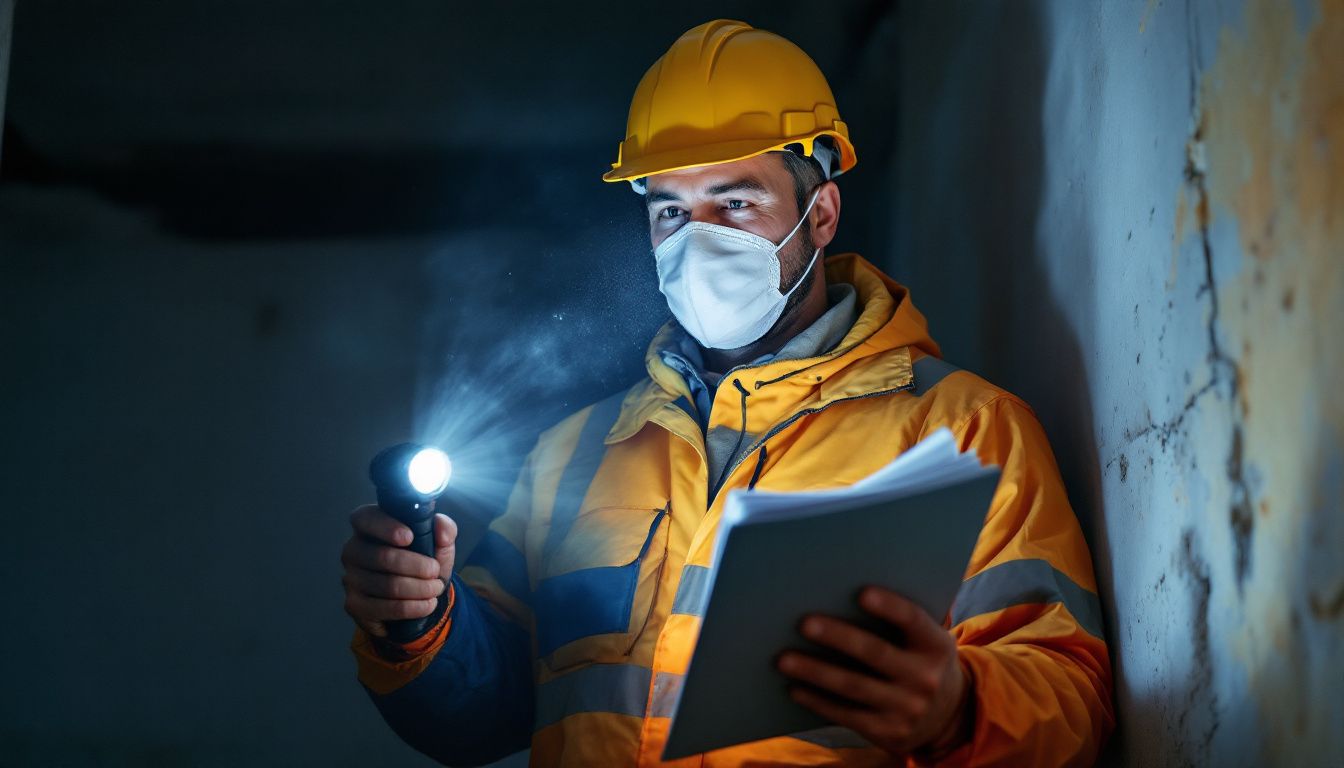
Asbestos Removal Safety Guidelines: What Every Property Owner and Worker Must Know
Asbestos still kills more people in Great Britain each year than any other single work-related cause. If you own, manage, or work on a building constructed before the year 2000, understanding asbestos removal safety guidelines is not optional — it is a legal and moral obligation. Get it wrong, and the consequences range from prosecution to fatal illness appearing decades down the line.
This post covers the health risks, the correct safety protocols, the legal framework, and the practical steps you need to follow when asbestos is discovered or disturbed.
Why Asbestos Remains a Serious Threat
Asbestos was used extensively in UK construction throughout the twentieth century. It was prized for its fire resistance, durability, and insulating properties. The problem is that when asbestos-containing materials (ACMs) are disturbed, they release microscopic fibres that lodge permanently in lung tissue.
Those fibres cause diseases including:
- Mesothelioma — a cancer of the lining of the lungs or abdomen, almost exclusively caused by asbestos exposure
- Asbestos-related lung cancer — with a risk comparable to heavy smoking when combined with tobacco use
- Asbestosis — scarring of the lung tissue that progressively reduces breathing capacity
- Pleural thickening and pleural plaques — changes to the lining of the lungs that can cause breathlessness and chest pain
What makes asbestos especially dangerous is the latency period. Symptoms typically appear 20 to 50 years after initial exposure, meaning workers who were exposed in the 1970s and 1980s are still dying today. There is no cure for mesothelioma.
Blue asbestos (crocidolite) and brown asbestos (amosite) were banned in Great Britain in 1985. White asbestos (chrysotile) was banned in 1999. Despite the ban, an enormous quantity of ACMs remains in place in schools, hospitals, offices, factories, and homes built before those dates.
Understanding the Three Types of Asbestos Work
Not all asbestos work carries the same level of risk, and the law treats different categories of work differently. Before any removal or disturbance takes place, it is essential to understand which category applies.
Licensable Work
This covers the highest-risk activities, including removing asbestos insulation, asbestos insulating board (AIB), and sprayed coatings. Only contractors holding a licence issued by the Health and Safety Executive (HSE) may carry out this work. The dutyholder or contractor must notify the HSE at least 14 days before licensable work begins.
Notifiable Non-Licensed Work (NNLW)
Some tasks fall below the licensable threshold but still carry significant risk. These must be notified to the relevant enforcing authority, and workers must undergo medical surveillance. Examples include short, non-continuous maintenance work on AIB where exposure is sporadic and low intensity.
Non-Licensed Work
The lowest-risk category, typically involving intact ACMs that are unlikely to release fibres during the work — for example, encapsulating undamaged asbestos cement sheets. Even here, proper precautions are still legally required.
If you are unsure which category applies to a specific task, consult a qualified asbestos surveyor before proceeding. Misclassifying the work is a common and serious mistake.
Core Asbestos Removal Safety Guidelines
Whether you are a dutyholder overseeing a project or a contractor carrying out the work, the following asbestos removal safety guidelines form the foundation of safe practice. These align with the Control of Asbestos Regulations and HSE guidance document HSG264.
1. Survey Before You Start
No removal work should begin without a current, valid asbestos survey. A management survey identifies the location, type, and condition of ACMs in a building. A refurbishment and demolition survey is required before any intrusive work or demolition takes place — it is more invasive and designed to locate all ACMs that could be disturbed.
If you need a survey carried out, Supernova covers the whole of the UK. We carry out asbestos survey London projects routinely, as well as work across every major region.
2. Use Licensed Contractors for High-Risk Work
This is non-negotiable. Attempting to remove asbestos insulation or AIB without a licensed contractor is a criminal offence. When selecting a contractor, verify their HSE licence is current and check that their workers hold the appropriate training certificates.
Our asbestos removal service connects clients with licensed contractors who operate to the highest standards of safety and compliance.
3. Establish a Controlled Work Area
Before any disturbance begins, the work area must be properly set up. This typically involves:
- Sealing off the area with polythene sheeting and creating an airlock entry/exit system
- Using negative pressure units (NPUs) to ensure air flows into the enclosure rather than out, preventing fibre escape
- Displaying clear warning signs at all entry points
- Restricting access to authorised personnel only
For larger projects, a three-stage decontamination unit (DCU) is required, allowing workers to shower and change out of contaminated PPE before leaving the controlled area.
4. Apply Wet Methods and Use HEPA Equipment
Keeping ACMs wet throughout the removal process is one of the most effective ways to suppress fibre release. Water mixed with a wetting agent is applied to the material before and during removal. This is a legal requirement for most licensable work, not a suggestion.
All vacuuming must be done using Type H (HEPA-filtered) vacuum cleaners. Standard domestic or industrial vacuums will not capture asbestos fibres — they simply redistribute them into the air. Using the wrong equipment is a serious breach of the safety guidelines.
5. Wear the Correct Personal Protective Equipment
PPE requirements for asbestos removal include:
- A correctly fitted, face-fit tested respirator — at minimum a FFP3 disposable mask for lower-risk work, and a full-face powered air-purifying respirator (PAPR) or supplied air system for licensable work
- Disposable coveralls (Type 5, category 3) — these must be removed and disposed of as asbestos waste after each use
- Disposable gloves and boot covers
PPE is the last line of defence, not the first. It supplements engineering controls — it does not replace them. Workers must be trained in how to don and doff PPE correctly, as improper removal is itself a contamination risk.
6. Handle and Dispose of Asbestos Waste Correctly
Asbestos waste is classified as hazardous waste under UK law. Every piece of removed ACM, every sheet of polythene, every used disposable coverall must be treated as contaminated material. The correct procedure is:
- Double-bag all waste in heavy-duty, clearly labelled polythene bags
- Seal each bag securely and wipe the outside with a damp cloth before placing in the second bag
- Label bags with the standard asbestos hazard warning label
- Transport waste only in a vehicle fitted with a suitable container
- Dispose of waste only at a licensed hazardous waste disposal site
Fly-tipping asbestos waste is a serious criminal offence. Skips used for general waste must never be used for asbestos materials.
7. Carry Out a Thorough Clearance Test
Once removal is complete, the area must be visually inspected and then air-tested by an independent UKAS-accredited analyst before the enclosure is dismantled. This four-stage clearance procedure confirms that fibre levels in the air have returned to background levels and the area is safe to reoccupy.
Never allow a contractor to carry out their own clearance test — independence is a legal requirement for licensable work.
Legal Duties for Dutyholders and Employers
The Control of Asbestos Regulations place clear duties on those responsible for non-domestic premises. If you manage or own a commercial building, you are likely a dutyholder. Your legal obligations include:
- Taking reasonable steps to find out if ACMs are present
- Presuming materials contain asbestos unless there is strong evidence they do not
- Keeping an up-to-date asbestos register and management plan
- Sharing information about ACMs with anyone who may disturb them
- Monitoring the condition of ACMs and arranging removal or remediation when necessary
Employers also have a duty to prevent or adequately control employee exposure to asbestos. This means providing training, health surveillance, and the correct equipment — not simply issuing PPE and hoping for the best.
Residential landlords also have responsibilities. If you let a property built before 2000, you should be aware of where ACMs may be present and ensure that maintenance workers are informed before they carry out any work that could disturb them.
Asbestos Safety in Practice: Common Mistakes to Avoid
Even experienced property managers can fall into avoidable errors. Here are the most common mistakes seen in practice:
- Assuming a building is asbestos-free because it looks modern or was recently refurbished — ACMs can be hidden beneath other materials
- Relying on an outdated survey — if significant work has been done since the last survey, a new one is needed
- Using unqualified tradespeople for work that turns out to involve ACMs — always check before any intrusive work begins
- Failing to notify the HSE 14 days before licensable work starts — this is a legal requirement, not an administrative formality
- Allowing contractors to skip the four-stage clearance to save time or money — this puts future occupants at risk and exposes the dutyholder to serious liability
Regional Coverage: Surveys and Removal Across the UK
Supernova Asbestos Surveys operates nationwide. Whether you need a management survey, a refurbishment survey, or licensed removal arranged, we have qualified surveyors covering every region of England, Scotland, and Wales.
We regularly carry out asbestos survey Manchester projects across the city and surrounding areas, as well as asbestos survey Birmingham work for commercial clients, landlords, and local authorities throughout the West Midlands.
With over 50,000 surveys completed, our team understands the specific challenges of different building types, ages, and uses — from Victorian terraces to 1970s office blocks to modern industrial units where legacy materials may still be present.
Frequently Asked Questions
What are the main asbestos removal safety guidelines I need to follow?
The core requirements are: commission a valid survey before work begins, use HSE-licensed contractors for high-risk removal, establish a controlled work area with negative pressure, apply wet methods and HEPA vacuuming during removal, use correct PPE, double-bag and label all waste, and arrange an independent four-stage clearance test before reoccupying the area. All of this sits within the framework of the Control of Asbestos Regulations and HSE guidance.
Do I need a licensed contractor to remove all types of asbestos?
No — licensing is required for the highest-risk work, specifically the removal of asbestos insulation, asbestos insulating board, and sprayed coatings. Some lower-risk tasks fall into the notifiable non-licensed work category, and the lowest-risk work is non-licensed. However, even non-licensed work requires proper precautions. If you are unsure which category applies, get professional advice before starting.
How do I know if my building contains asbestos?
If your building was constructed or refurbished before 2000, you should assume ACMs may be present until a survey proves otherwise. A management survey carried out by a qualified, accredited surveyor is the only reliable way to identify and assess ACMs. Visual inspection alone is not sufficient — many ACMs are indistinguishable from non-asbestos materials without laboratory analysis.
What happens if asbestos is disturbed accidentally?
Stop work immediately. Evacuate the area and prevent others from entering. Do not attempt to clean up the material yourself. Contact a licensed asbestos contractor to assess the situation, carry out any necessary remediation, and arrange air testing. Report the incident to your employer or, if you are the dutyholder, review your obligations under the Control of Asbestos Regulations. Depending on the scale of the disturbance, you may need to notify the HSE.
How often should an asbestos management plan be reviewed?
The Control of Asbestos Regulations require dutyholders to keep their asbestos management plan up to date. In practice, this means reviewing it at least annually and updating it whenever there is a change in the condition of ACMs, when work is carried out that affects them, or when new information becomes available. An asbestos register that has not been reviewed for several years is unlikely to meet the legal standard.
Get Professional Help From Supernova Asbestos Surveys
Asbestos management is not an area where cutting corners is worth the risk — legally, financially, or in terms of human health. Whether you need a survey to establish what is present, guidance on your management obligations, or licensed removal arranged, Supernova Asbestos Surveys can help.
With over 50,000 surveys completed across the UK, our accredited surveyors provide fast, accurate, and fully compliant services for commercial clients, landlords, housing associations, local authorities, and contractors.
Call us on 020 4586 0680 or visit asbestos-surveys.org.uk to book a survey or discuss your requirements with our team.