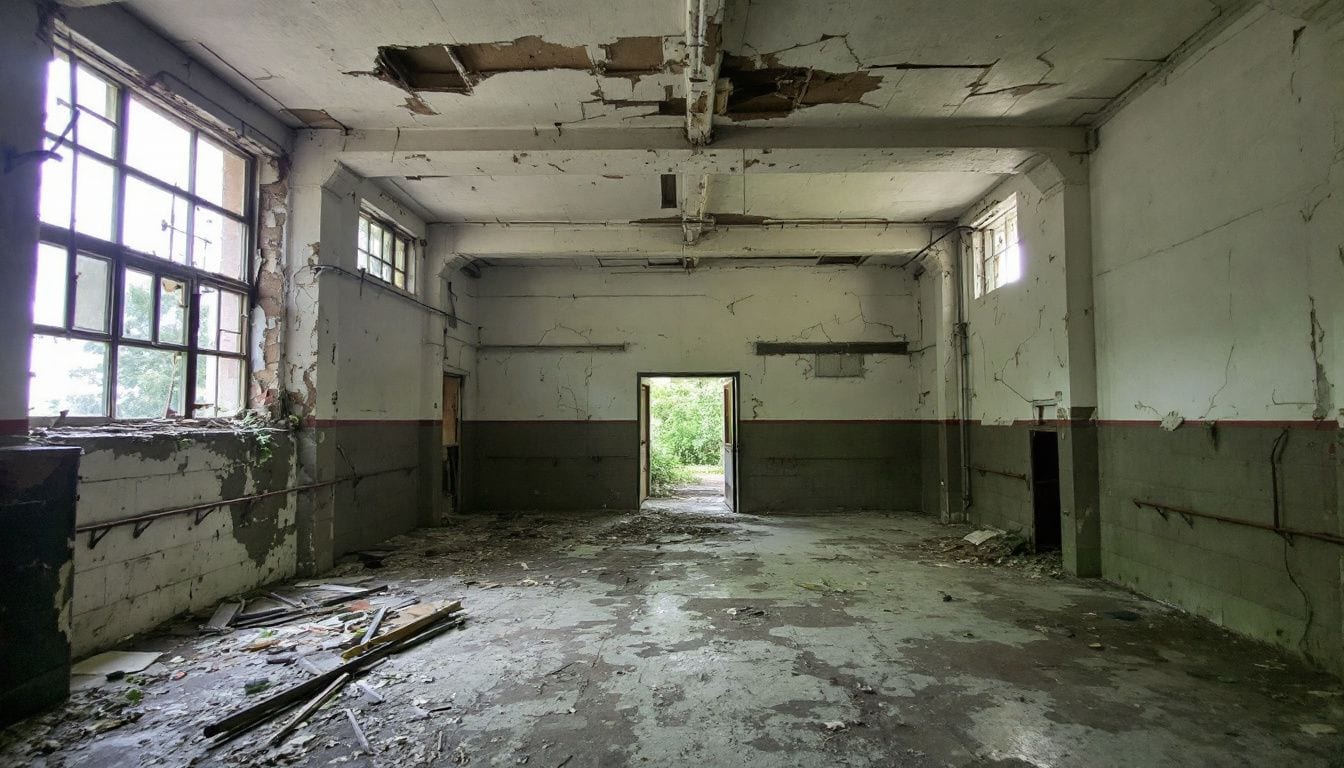
Asbestos kills more people in the UK every year than any other single work-related cause. The role employers play in protecting workers from asbestos is not a compliance formality — it is a legal duty with criminal consequences when ignored, and a moral obligation given the devastating diseases asbestos exposure causes. If your business operates from, or carries out work in, any building constructed or refurbished before 2000, asbestos is a risk that demands your full attention.
The good news is that with the right approach, those risks are entirely manageable. The steps required are also clearer than many employers realise — once you understand what the law actually asks of you.
Why Asbestos Remains a Live Threat in UK Workplaces
Asbestos was banned from use in the UK in 1999, but it was used extensively throughout most of the twentieth century in construction and building maintenance. It remains present in millions of commercial and residential buildings across the country — in ceiling tiles, pipe lagging, floor tiles, roof sheeting, insulation boards, textured coatings, and a host of other materials.
The danger is not simply from its presence. When asbestos-containing materials (ACMs) are disturbed, damaged, or deteriorate over time, they release microscopic fibres into the air. Those fibres, once inhaled, can cause mesothelioma, asbestosis, and lung cancer — diseases that frequently do not present symptoms until decades after the original exposure.
There is no safe level of asbestos exposure. That is why the legal framework around employer responsibilities in this area is so stringent, and why ignorance is not a defence under UK law.
The Legal Framework: What UK Law Requires of Employers
The primary legislation is the Control of Asbestos Regulations, which set out clear duties for employers, building owners, and anyone responsible for managing non-domestic premises. These regulations are enforced by the Health and Safety Executive (HSE), and breaches can result in unlimited fines, prosecution, and imprisonment.
The Health and Safety at Work Act also places a general duty on employers to ensure, so far as is reasonably practicable, the health, safety, and welfare of their employees. When it comes to asbestos, the Control of Asbestos Regulations make that general duty very specific indeed.
The Duty to Manage
Regulation 4 of the Control of Asbestos Regulations — commonly known as the duty to manage — applies to owners and managers of non-domestic premises. It requires them to identify whether ACMs are present, assess the condition and risk those materials pose, and produce a written management plan to control that risk.
This is an ongoing obligation, not a one-off task. ACMs must be monitored regularly, the management plan must be kept up to date, and the information it contains must be shared with anyone liable to disturb those materials — including contractors, maintenance staff, and sub-contractors arriving on site.
Licensing and Notification Requirements
Not all asbestos work is treated equally under the law. Some work with ACMs requires a licence from the HSE. Other work is notifiable but does not require a licence. Some lower-risk tasks fall outside both categories entirely.
Employers must establish which category applies to any planned work before it starts — getting this wrong is a criminal offence. Licensed work typically involves high-risk materials such as sprayed asbestos coatings or asbestos insulation. Employers arranging or supervising such work must ensure only appropriately licensed contractors carry it out. Checking a contractor’s licence before work begins is a basic but non-negotiable step.
The Role Employers Play in Protecting Workers from Asbestos: Practical Steps
Understanding the legal framework is one thing. Translating it into day-to-day actions is where most employers need practical guidance. Here is what that looks like in the real world.
Step 1: Commission a Professional Asbestos Survey
Before you can manage asbestos, you need to know where it is. For most non-domestic premises, the starting point is a management survey, which identifies the location, extent, and condition of any ACMs that could be disturbed during normal occupancy and routine maintenance.
If your building is about to undergo renovation or significant alteration, you will need a refurbishment survey instead. This is a more intrusive inspection covering all areas to be disturbed — including voids, ceiling spaces, and structural elements — and it must be completed before any work begins, not during it.
Where a building is being demolished entirely, a demolition survey is required. This is the most thorough form of inspection and must locate all ACMs in the structure before demolition proceeds.
All survey types must be carried out by a competent surveyor following the HSE’s HSG264 guidance. At Supernova Asbestos Surveys, every surveyor holds the BOHS P402 qualification — the industry gold standard for asbestos surveying.
Step 2: Produce and Maintain an Asbestos Management Plan
Once ACMs have been identified, employers must produce a written asbestos management plan. This document records the location of all ACMs, their condition, the risk they pose, and the actions being taken to manage them. It must be accessible to anyone who might need it.
The plan is a living document. It should be reviewed whenever there is a change in the condition of any ACM, whenever building work is planned, and at least annually as part of routine review. Keeping it current is part of the legal duty — not an optional extra.
Step 3: Arrange Regular Re-Inspections
ACMs that are in good condition and left undisturbed can often be safely managed in place. But their condition can change — through physical damage, water ingress, or gradual deterioration — and that change can go unnoticed without a formal monitoring process.
A re-inspection survey checks the current condition of known ACMs against the previous record, flags any deterioration, and updates the risk rating accordingly. Most duty holders should arrange re-inspections at least annually, though higher-risk materials may warrant more frequent checks.
Step 4: Control Access and Implement Engineering Controls
Where ACMs are present, employers must take active steps to prevent accidental disturbance. This means clearly labelling materials, restricting access to areas where ACMs are located, and ensuring that any maintenance or building work is planned with asbestos in mind from the outset.
Engineering controls — such as encapsulation, enclosure, or extraction ventilation — may be required where there is a realistic risk of fibre release. Personal protective equipment (PPE) and respiratory protective equipment (RPE) are also required for workers who may come into contact with asbestos, but these are a last line of defence, not a substitute for proper controls higher up the hierarchy.
Step 5: Monitor Air Quality Where Disturbance Is Possible
In environments where disturbance of ACMs is likely — during maintenance work or minor repairs, for example — employers should monitor air quality to ensure fibre concentrations remain within safe limits. Air monitoring must be carried out by a competent person using appropriate equipment, and records must be kept.
If you are unsure whether a suspect material contains asbestos before commissioning a full survey, a testing kit allows you to collect samples safely for analysis at a UKAS-accredited laboratory, giving you the information you need to make informed decisions quickly.
Asbestos Awareness Training: A Non-Negotiable Employer Duty
Training is one of the most powerful tools available to employers protecting workers from asbestos. The Control of Asbestos Regulations require that anyone liable to disturb ACMs in the course of their work receives appropriate training before doing so — not after an incident has already occurred.
General Awareness Training
All employees who work in buildings where asbestos may be present — including maintenance staff, cleaners, and anyone carrying out minor repairs — should receive general asbestos awareness training. This covers what asbestos is, where it is commonly found, the health risks associated with exposure, and what to do if they suspect they have encountered it.
This training should be refreshed regularly and documented. It is not a one-off event, and a single session delivered years ago does not fulfil the ongoing duty.
Specialist Training for Higher-Risk Roles
Workers who carry out non-licensed work with asbestos — such as certain types of maintenance or repair work — require more detailed training. This covers risk assessment, safe working methods, correct use of PPE and RPE, and the safe disposal of asbestos waste. Licensed workers require additional training specific to their licence category.
Employers must keep records of all training provided, including dates, content covered, and the names of those who attended. These records may be requested by the HSE in the event of an inspection or following an incident.
Hazard Communication in the Workplace
Training alone is not sufficient. Employers must also ensure workers are kept informed about the specific asbestos risks in their workplace. That means sharing the asbestos register with relevant staff and contractors, labelling ACMs clearly, and establishing clear procedures for reporting suspected damage or deterioration.
A worker who discovers what they think might be damaged asbestos needs to know exactly who to report it to and what not to do in the meantime. That clarity comes from good communication and well-documented procedures — not just a training course completed years ago.
What Happens When Employers Fail in Their Duties
The consequences of failing to manage asbestos properly are severe — and they fall on individual employers, not just the business as an abstract entity. The HSE takes enforcement action regularly, and prosecutions for asbestos-related breaches are not uncommon.
Employers who breach the Control of Asbestos Regulations face unlimited fines in the Crown Court. Individuals — including directors and managers — can be imprisoned. Civil claims from workers who develop asbestos-related diseases can result in substantial compensation awards, and reputational damage can be long-lasting.
Beyond the legal and financial consequences, the human cost is devastating. Mesothelioma and asbestosis are painful, progressive, and fatal. There is no cure. That reality should sit at the centre of every employer’s approach to asbestos management.
It is also worth being clear: ignorance is not a defence. If asbestos is present in your building and you have not taken steps to identify and manage it, that failure itself constitutes a breach of your legal duty under the Control of Asbestos Regulations.
Additional Compliance Considerations for Employers
Asbestos management does not sit in isolation from other health and safety obligations. Employers should consider how their asbestos management plan interacts with other site safety documentation, including their fire safety provisions.
A fire risk assessment is a separate legal requirement for most non-domestic premises, but it is worth arranging alongside your asbestos survey where possible — particularly because fire can damage ACMs and release fibres, creating a dual hazard that needs to be accounted for in both documents.
Employers should also ensure that their asbestos records are transferred when a property changes hands or when management responsibilities change. The duty to manage follows the premises, not the individual — and gaps in the paper trail can leave incoming managers exposed to liability for risks they did not create.
Core Employer Obligations: A Quick Reference Checklist
- Commission a professional asbestos survey appropriate to your premises and planned activities
- Produce and maintain a written asbestos management plan
- Share the asbestos register with all relevant staff and contractors
- Arrange regular re-inspections of known ACMs — at least annually
- Provide appropriate asbestos awareness training to all relevant employees
- Keep records of all training, surveys, and monitoring activity
- Establish clear reporting procedures for suspected ACM damage
- Ensure only licensed contractors carry out licensable asbestos work
- Notify the HSE where required for notifiable non-licensed work
- Review and update the management plan whenever circumstances change
Supernova Covers the Whole of the UK
Whether your premises are in the capital or further afield, Supernova Asbestos Surveys provides accredited, BOHS P402-qualified surveyors across the country. We have completed over 50,000 surveys nationwide, with dedicated teams serving major cities and surrounding regions.
If you need an asbestos survey in London, our team covers all London boroughs and the surrounding area. For businesses in the North West, we provide a full range of survey types for those requiring an asbestos survey in Manchester. And for employers in the Midlands, our surveyors regularly carry out an asbestos survey in Birmingham and across the wider region.
Wherever you are based, the obligations placed on you as an employer under the Control of Asbestos Regulations are the same. The support available to you should be too.
Speak to Supernova Asbestos Surveys Today
Supernova Asbestos Surveys is the UK’s leading asbestos surveying company, with over 50,000 surveys completed nationwide. Our BOHS P402-qualified surveyors provide management surveys, refurbishment and demolition surveys, re-inspection surveys, and air monitoring services — everything employers need to fulfil their legal duties and protect their workers.
Call us on 020 4586 0680 or visit asbestos-surveys.org.uk to book a survey or speak to a member of our team. We will help you understand exactly what your premises require and ensure your compliance is watertight.
Frequently Asked Questions
What is the primary legal duty on employers regarding asbestos?
The Control of Asbestos Regulations place a duty to manage asbestos on anyone responsible for non-domestic premises. This requires identifying ACMs, assessing the risk they pose, producing a written management plan, and keeping that plan up to date. Failure to comply can result in prosecution, unlimited fines, and imprisonment.
Do employers need an asbestos survey even if they think their building is asbestos-free?
If your building was constructed or refurbished before 2000, asbestos could be present even if it is not immediately visible. A professional management survey is the only reliable way to confirm whether ACMs are present. Assuming a building is clear without evidence is not a defensible position under the Control of Asbestos Regulations.
How often should asbestos re-inspections be carried out?
Most duty holders should arrange re-inspections at least once a year. Higher-risk materials, or those in areas subject to regular maintenance activity, may require more frequent monitoring. The outcome of each re-inspection should be recorded and used to update the asbestos management plan.
What training do employees need regarding asbestos?
Any employee who works in a building where asbestos may be present should receive general asbestos awareness training. Workers who carry out tasks that could disturb ACMs require more detailed training covering risk assessment, safe working methods, and correct use of PPE and RPE. Training must be documented and refreshed regularly.
What is the difference between a management survey and a refurbishment survey?
A management survey is designed for buildings in normal use and identifies ACMs that could be disturbed during routine occupancy and maintenance. A refurbishment survey is required before any renovation or alteration work and is more intrusive, covering all areas that will be disturbed. The two serve different purposes and are not interchangeable.