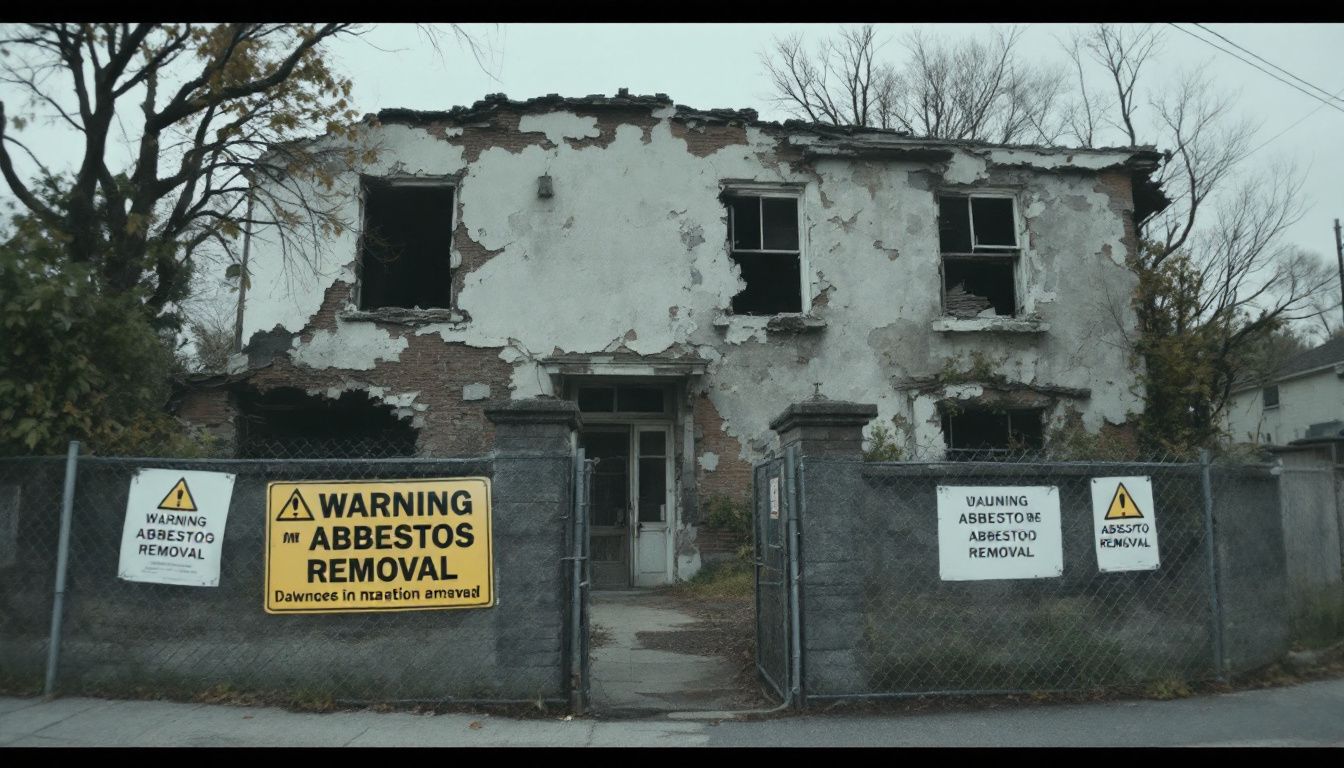
Asbestos Removal Management: What Every Building Owner and Facilities Manager Must Know
Asbestos removal management is one of the most legally demanding processes a building owner or facilities manager will ever oversee. Get it wrong and you face prosecution, serious harm to workers, and long-term liability. Get it right and you protect lives, satisfy your legal duties, and keep your project on track.
This post walks through every stage of the process — from initial survey through to licensed removal and waste disposal — so you know exactly what to expect and what to demand from your contractor.
What Is Asbestos Removal Management?
Asbestos removal management refers to the structured, legally compliant process of identifying, planning, executing, and documenting the safe removal of asbestos-containing materials (ACMs) from a building. It is not simply a case of pulling out old insulation and bagging it up.
Every stage — from the initial survey to the final air clearance test — must follow the requirements set out in the Control of Asbestos Regulations and the HSE’s HSG264 guidance. Failure to follow these requirements is a criminal offence, not just a procedural oversight.
Asbestos removal management applies to a wide range of scenarios: pre-demolition clearance, refurbishment projects, emergency remediation after accidental disturbance, and planned removal as part of an ongoing asbestos management plan.
Why Asbestos Remains a Serious Risk in UK Buildings
Asbestos was widely used in UK construction from the 1950s through to its full ban in 1999. It was valued for its fire resistance, durability, and insulating properties. The problem is that when ACMs are disturbed, they release microscopic fibres that — when inhaled — can cause mesothelioma, lung cancer, and asbestosis. All are fatal diseases with long latency periods.
The HSE consistently identifies asbestos as the single greatest cause of work-related deaths in Great Britain. Many of those deaths are among tradespeople — plumbers, electricians, joiners — who disturbed asbestos unknowingly during routine maintenance work.
Any building constructed or refurbished before 2000 should be treated as potentially containing asbestos until a proper survey proves otherwise. This is not a precaution — it is a legal baseline under the duty to manage.
Step One: Choosing the Right Asbestos Survey
No asbestos removal management programme can begin without an accurate, up-to-date asbestos survey. The type of survey you need depends on what you plan to do with the building.
Management Survey
A management survey is the standard survey for occupied buildings. It identifies the location, type, and condition of ACMs that could be disturbed during normal occupation and maintenance. The output is an asbestos register and a risk assessment that forms the basis of your asbestos management plan.
This survey is a legal requirement under Regulation 4 of the Control of Asbestos Regulations for non-domestic premises. If you manage a commercial, industrial, or public building and do not have one, you are already non-compliant.
Refurbishment Survey
If you are planning any building work — even something as minor as removing a partition wall — you need a refurbishment survey covering the areas to be disturbed. This is a more intrusive survey that may involve opening up voids, lifting floor coverings, and accessing concealed areas.
Handing a refurbishment project to a contractor without a valid refurbishment survey in place puts both the contractor and building occupants at serious risk — and the legal liability falls squarely on the dutyholder.
Re-Inspection Survey
Where ACMs are being managed in situ rather than removed, they must be monitored regularly. A re-inspection survey checks the condition of known ACMs and updates the risk assessment accordingly.
The frequency of re-inspection depends on the condition and risk rating of the materials, but annually is the standard minimum. Skipping re-inspections is a common compliance failure that can have serious consequences if conditions have deteriorated.
Step Two: Planning the Removal
Once the survey has identified what needs to be removed, the planning phase begins. This is where asbestos removal management becomes genuinely complex — and where corners are most often cut.
Determining Whether Licensed Removal Is Required
Not all asbestos work requires a licensed contractor, but the majority of removal work does. Under the Control of Asbestos Regulations, work is classified into three categories:
- Licensed work: High-risk materials such as sprayed coatings, lagging, and most insulation boards. Only contractors holding a licence issued by the HSE may carry out this work.
- Notifiable non-licensed work (NNLW): Lower-risk work that must still be notified to the relevant enforcing authority and is subject to health surveillance requirements.
- Non-licensed work: Very low-risk activities with minimal fibre release potential, such as working with textured coatings in good condition.
Misclassifying licensed work as non-licensed is one of the most common — and dangerous — compliance failures in asbestos removal management. Always seek professional advice if you are unsure of the classification.
Notification to the HSE
For licensed asbestos removal work, the contractor must notify the HSE at least 14 days before work commences using the prescribed notification form. This is a legal requirement, not a formality.
The notification must include details of the work, the site, the materials involved, and the methods to be used. Where demolition is involved, building control must also be notified — typically six weeks in advance — and the asbestos management plan must be verified before demolition proceeds.
Writing the Asbestos Removal Plan
A compliant removal plan sets out precisely how the work will be carried out. It should cover:
- The scope of the work and materials to be removed
- The methods to be used — wet stripping, encapsulation, or enclosure
- How the work area will be sealed and controlled
- Air monitoring arrangements
- Personal protective equipment (PPE) requirements
- Decontamination procedures
- Waste packaging, labelling, and disposal arrangements
- Emergency procedures
This plan is not optional. It is a working document that supervisors and operatives must follow throughout the job.
Step Three: Setting Up the Controlled Work Area
Before any asbestos is disturbed, the work area must be properly prepared and controlled. This is one of the most critical stages of asbestos removal management because it determines whether fibres are contained or released into the wider building environment.
Enclosure and Sealing
The work area is sealed using heavy-duty polythene sheeting, typically in multiple layers, fixed with tape to create an airtight enclosure. Ventilation systems are isolated or sealed to prevent fibres spreading through ductwork, and warning signs are posted at all access points.
For licensed work, a three-stage decontamination unit (DCU) is typically installed at the enclosure entrance. This consists of a clean changing area, a shower unit, and a dirty changing area — ensuring operatives do not carry contamination out of the work area.
Negative Pressure Units
For high-risk licensed work, negative pressure units (NPUs) fitted with HEPA filters are used to maintain negative air pressure inside the enclosure. This means any air movement is inward — so if the enclosure is breached, air flows in rather than fibres flowing out.
The NPU also continuously filters the air inside the enclosure throughout the removal process.
Personal Protective Equipment
All operatives working in the enclosure must wear appropriate PPE throughout. This includes:
- Disposable Type 5 coveralls, replaced when leaving the enclosure
- Half-face or full-face respirators with P3 filters, or powered air-purifying respirators (PAPRs)
- Disposable gloves and boot covers
- Safety footwear
PPE is the last line of defence, not the first. It works in conjunction with enclosure, wetting, and air monitoring — not instead of them.
Step Four: The Removal Process
With the work area secured and operatives properly equipped, the asbestos removal can begin. The specific techniques used depend on the material being removed, but the principles of asbestos removal management remain consistent throughout.
Controlled Wetting
Wetting asbestos materials before and during removal significantly reduces fibre release. Water is applied using low-pressure sprays, and materials are kept damp throughout the stripping process. Dry stripping is prohibited except in specific circumstances where wetting would cause additional hazards.
Encapsulation as an Alternative
In some cases, full removal is not necessary or practical. Encapsulation — applying a sealant that binds fibres and prevents release — can be a valid management option for ACMs in good condition.
However, encapsulation is a management strategy, not a permanent solution. Materials must still be monitored through regular re-inspection and recorded in the asbestos register.
Waste Handling and Disposal
Asbestos waste is classified as hazardous waste under UK environmental regulations. All waste must be:
- Double-bagged in heavy-duty polythene sacks clearly labelled with the hazardous waste symbol and asbestos warning
- Sealed within the enclosure before being passed out through an airlock
- Transported only by a licensed waste carrier
- Disposed of at a licensed hazardous waste facility
Consignment notes must be completed for all asbestos waste movements and retained for a minimum of three years. Fly-tipping or improper disposal of asbestos waste carries severe criminal penalties.
Step Five: Air Monitoring and Clearance Testing
Air monitoring takes place throughout the removal process to ensure fibre concentrations inside and outside the enclosure remain within safe limits. Monitoring is carried out by an independent analyst — not the removal contractor — to avoid any conflict of interest.
Once the removal is complete and the enclosure has been cleaned down, a four-stage clearance procedure is followed:
- Stage 1: Visual inspection of the enclosure by the analyst to confirm all visible debris has been removed
- Stage 2: Thorough cleaning of all surfaces within the enclosure
- Stage 3: Final visual inspection
- Stage 4: Air clearance testing — the enclosure must achieve fibre concentrations below the clearance indicator before it can be signed off
Only when the analyst issues a written clearance certificate can the enclosure be dismantled and the area returned to normal use. There are no shortcuts here.
Worker Training and Competence
Effective asbestos removal management depends entirely on the competence of the people carrying it out. Under the Control of Asbestos Regulations, all workers who may encounter asbestos — not just those doing licensed removal — must receive appropriate information, instruction, and training.
For licensed asbestos removal operatives, this means formal training with a recognised body, regular refresher training (typically annually), and ongoing health surveillance including lung function testing and chest X-rays at regular intervals.
Supervisors and managers must hold relevant qualifications — such as those offered by RSPH or BOHS — and must be able to demonstrate competence in planning, supervising, and auditing asbestos removal work.
When appointing a contractor, always ask to see evidence of their HSE licence, their operatives’ training records, and their health surveillance documentation. A reputable contractor will provide this without hesitation.
Asbestos Management After Removal
Removal does not always mean the end of your asbestos management obligations. In many buildings, some ACMs will remain in place — either because they are in good condition and low risk, or because removal is not practicable at that time.
These remaining materials must be recorded in the asbestos register, risk-assessed, and monitored through regular re-inspection. The asbestos management plan must be kept up to date and made available to anyone who may work on or in the building.
If further works are planned at a later date, the surveying and planning process begins again. Asbestos removal management is not a one-off event — it is an ongoing obligation that follows the building throughout its life.
Regional Asbestos Removal Management Services
Supernova Asbestos Surveys provides asbestos removal management support across the UK. Whether you are managing a single commercial property or a large portfolio, our surveyors can advise on the right approach for your specific situation.
We provide surveys and support in major cities including asbestos survey London, asbestos survey Manchester, and asbestos survey Birmingham, as well as nationwide coverage for clients with multi-site requirements.
Our surveyors are BOHS-qualified, fully independent, and have no commercial relationship with removal contractors — so the advice you receive is always impartial.
Frequently Asked Questions
What is the difference between asbestos removal and asbestos management?
Asbestos removal means physically taking ACMs out of a building under controlled conditions. Asbestos management means leaving ACMs in place but monitoring and controlling them through a documented management plan and regular re-inspections. Both approaches are legally valid depending on the condition and risk level of the materials involved.
Do I need a licensed contractor to remove asbestos?
It depends on the type of material and the work involved. High-risk materials such as sprayed coatings, pipe lagging, and most insulation boards must only be removed by an HSE-licensed contractor. Lower-risk work may fall into the notifiable non-licensed or non-licensed categories, but misclassification is a serious compliance risk. Always seek professional advice before proceeding.
How long does an asbestos removal project typically take?
Project duration varies considerably depending on the quantity and type of ACMs, the size of the building, and the complexity of the enclosure required. Small removals may take a day or two. Large-scale licensed removals in commercial or industrial buildings can take several weeks. The HSE notification requirement of at least 14 days before licensed work begins must be factored into your project timeline.
What happens if asbestos is found unexpectedly during building work?
Work must stop immediately in the affected area. The area should be vacated and secured, and a specialist surveyor instructed to assess the material before any work resumes. Continuing to work without addressing the find is a criminal offence under the Control of Asbestos Regulations and puts everyone on site at risk.
How do I know if my building has an asbestos management plan?
If your building was constructed or refurbished before 2000 and is a non-domestic premises, the dutyholder is legally required to have an asbestos management plan in place. This should include an asbestos register, risk assessments for all identified ACMs, and a schedule of re-inspections. If you have taken over management of a building and cannot locate this documentation, commission a management survey immediately.
Talk to Supernova About Your Asbestos Removal Management Requirements
Supernova Asbestos Surveys has completed over 50,000 surveys across the UK. Our team of qualified surveyors can help you understand your legal obligations, commission the right surveys, and manage the entire process from initial assessment through to post-removal clearance.
Call us on 020 4586 0680 or visit asbestos-surveys.org.uk to arrange a survey or speak to one of our specialists about your specific situation.