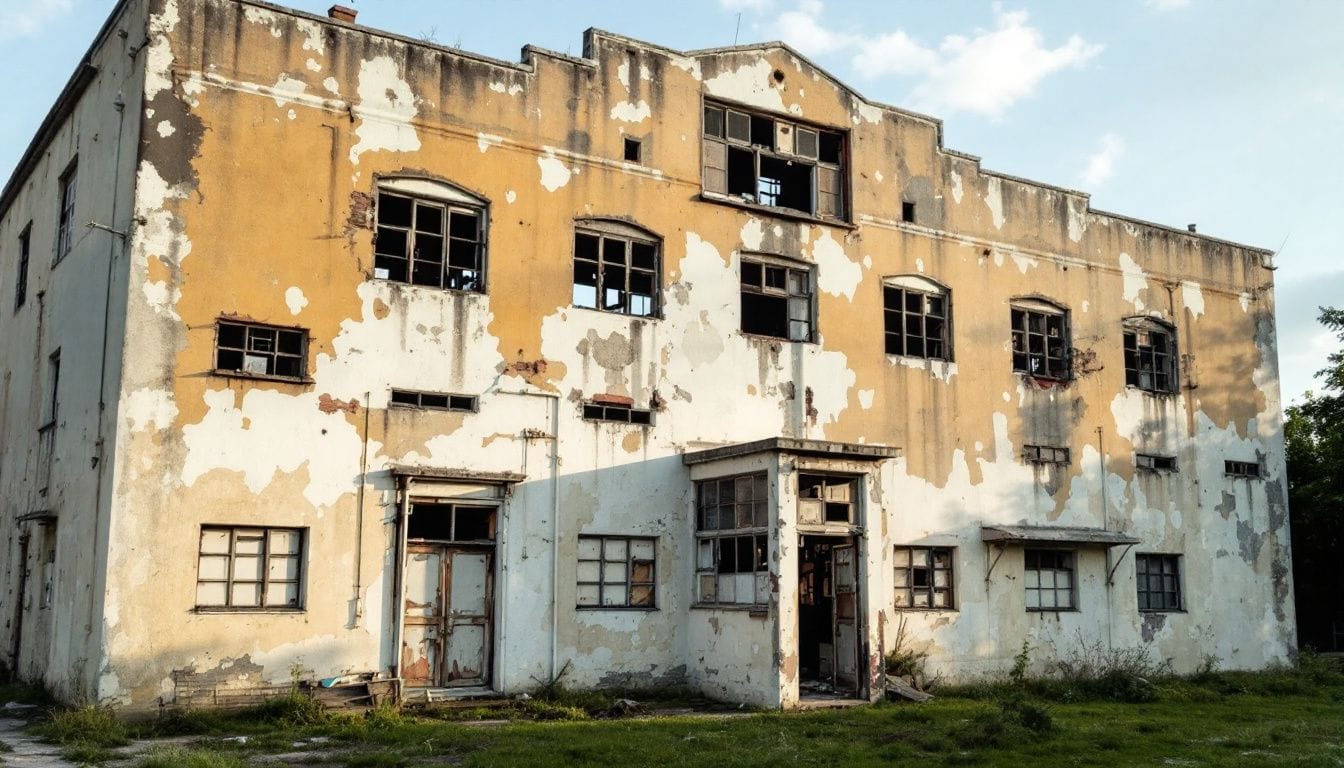
How Asbestos Shaped the UK — and Why Its Legacy Still Matters Today
The history of asbestos in the UK is one of industrial ambition, devastating health consequences, and a regulatory reckoning that came far too late for thousands of people. From Victorian-era factories to 1980s school buildings, asbestos was woven into the fabric of British construction for well over a century — and its legacy continues to claim lives today.
Understanding how we got here is not just a matter of historical interest. It has direct, practical implications for anyone who owns, manages, or works in a building constructed before the year 2000.
The History of Asbestos in the UK: From Industrial Boom to Nationwide Ban
British industry embraced asbestos with enthusiasm from the mid-nineteenth century onwards. Its natural fire resistance, durability, and insulating properties made it seem like a wonder material — cheap, versatile, and seemingly limitless in application.
The UK imported asbestos for approximately 150 years, drawing heavily on supplies from Canada and South Africa. At its peak, British trade accounted for more than half of global asbestos imports between 1920 and 2000. That is a staggering volume of material, much of which ended up embedded in buildings across every corner of the country.
Key Milestones in UK Asbestos Regulation
- 1930s–1980s: Asbestos used extensively in cement, ceiling tiles, pipe lagging, floor tiles, and insulation boards across residential and commercial construction.
- 1985: Brown asbestos (amosite) and blue asbestos (crocidolite) banned in the UK — the most dangerous fibre types were finally removed from use.
- 1999: White asbestos (chrysotile) banned, completing a full prohibition on all asbestos types in the UK.
- 2005: The European Union implemented its own blanket ban on asbestos across member states.
- 2024: The UK marked the 25th anniversary of its complete asbestos ban, prompting renewed debate about the pace of removal from existing structures.
The ban was necessary and long overdue. But banning new use does not remove what is already there — and that is where the challenge truly lies.
Where Asbestos Was Used and Why It Spread So Widely
To understand the scale of the problem, it helps to know just how many applications asbestos had in British construction. It was not simply used in industrial settings — it found its way into schools, hospitals, homes, and high street shops.
Common Asbestos-Containing Materials in UK Buildings
- Asbestos cement sheets and panels (roofing and cladding)
- Artex and textured ceiling coatings
- Pipe and boiler lagging
- Floor tiles and adhesive backing
- Insulation boards around heating systems
- Roof tiles and guttering
- Gaskets and rope seals in industrial plant
- Sprayed coatings on structural steelwork
The sheer variety of applications means that asbestos-containing materials (ACMs) can turn up almost anywhere in a pre-2000 building. A property that looks perfectly modern on the surface may contain ACMs hidden behind plasterboard, beneath floor coverings, or above suspended ceilings.
This is precisely why a professional management survey is the essential starting point for any duty holder responsible for a non-domestic premises built before 2000.
The Health Consequences: A Public Health Crisis That Continues
The health impact of the history of asbestos in the UK is not a past problem — it is an ongoing public health emergency. The UK has one of the highest rates of mesothelioma deaths per capita in the world, a direct consequence of the scale of asbestos use during the twentieth century.
More than 5,000 people die each year in the UK from cancers linked to asbestos exposure. The majority of these deaths are from mesothelioma, a cancer of the lining of the lungs, chest, or abdomen that is almost exclusively caused by asbestos exposure. Survival rates remain poor — fewer than half of those diagnosed survive beyond one year.
Who Is Most at Risk?
The occupations most heavily affected include construction workers, plumbers, electricians, carpenters, and shipbuilders who worked with or around asbestos-containing materials during the peak decades of use. Secondary exposure has also caused significant harm — family members of workers who brought fibres home on their clothing, for instance.
Rates of mesothelioma in women have risen substantially since the 1990s, reflecting exposure among those who worked in schools, offices, and healthcare settings where asbestos was present but not always visible or acknowledged. High-risk occupations today include teachers, nurses, and maintenance workers who may disturb ACMs during routine activities without realising the danger.
The latency period for mesothelioma — the gap between exposure and diagnosis — can be 20 to 50 years. This means people exposed in the 1980s and 1990s are still being diagnosed now, and will continue to be for years to come.
The Scale of the Remaining Problem
Estimates suggest that between 210,000 and 400,000 UK buildings still contain asbestos in some form. Approximately six million tonnes of asbestos material is thought to remain embedded within around 1.5 million structures across the country.
The figures for public buildings are particularly alarming:
- Around 81% of the UK’s 34,000 schools are believed to contain asbestos.
- Over 90% of NHS hospital buildings contain asbestos-containing materials.
- A significant proportion of homes and commercial premises built before 1999 also contain ACMs.
Critically, the condition of this material matters as much as its presence. Analysis of nearly one million samples found that approximately two-thirds of legacy asbestos in the UK has deteriorated to some degree. Damaged or friable ACMs release fibres into the air — and it is airborne fibres that cause disease.
The Regulatory Enforcement Gap
HSE enforcement activity in the area of asbestos has been significantly reduced by funding cuts over the past decade. Reduced inspection rates mean that non-compliance is less likely to be detected and challenged, placing greater responsibility on duty holders to manage their obligations proactively.
Occupational exposure limits in the UK are also considerably higher than those applied in some other European countries. This disparity has drawn criticism from health campaigners and occupational hygienists who argue that current UK limits do not adequately reflect the risk.
Current Legal Obligations for Building Owners and Managers
The Control of Asbestos Regulations place a clear legal duty on those who own or manage non-domestic premises to identify, assess, and manage any asbestos within their buildings. This is known as the duty to manage, and failure to comply can result in prosecution, significant fines, and — most importantly — serious harm to building occupants.
The duty to manage requires:
- Identifying whether asbestos is present and where
- Assessing the condition and risk of any ACMs found
- Producing and maintaining an up-to-date asbestos register
- Implementing a written asbestos management plan
- Ensuring anyone who may disturb ACMs is informed of their location
- Monitoring the condition of ACMs over time
HSG264 — the HSE’s definitive guidance on asbestos surveying — sets out the standards that surveys must meet to satisfy these legal requirements. All surveys carried out by Supernova Asbestos Surveys follow HSG264 standards on every visit.
If you are planning renovation or demolition work, a refurbishment survey is a legal requirement before any work begins that could disturb the fabric of the building. This type of survey is more intrusive than a management survey and is designed to locate all ACMs in areas that will be affected by the works.
Managing Asbestos in Practice: What Duty Holders Need to Do
Knowing the history of asbestos in the UK is one thing — knowing what to do about it in your own building is another. Here is a practical framework for anyone responsible for a pre-2000 property.
Step 1: Commission a Management Survey
If you do not already have an asbestos register in place, a management survey is your starting point. A qualified surveyor will carry out a thorough visual inspection, take samples from suspect materials, and produce a risk-rated report that tells you exactly what is present, where it is, and what condition it is in.
Step 2: Implement Your Asbestos Management Plan
Once you know what you are dealing with, you need a written plan for managing it. In many cases, ACMs in good condition are best left in place and monitored — disturbance is often more dangerous than leaving intact material undisturbed. Your management plan should record decisions, responsibilities, and review dates.
Step 3: Schedule Regular Re-Inspections
Asbestos does not stay static. Materials that were in good condition when first surveyed can deteriorate over time, particularly in areas subject to vibration, moisture, or physical damage. A regular re-inspection survey ensures your register remains accurate and your management plan reflects the current condition of ACMs in your building.
Step 4: Arrange Removal Where Necessary
Where ACMs are damaged, deteriorating, or located in areas that cannot be safely managed, professional asbestos removal by a licensed contractor is the appropriate course of action. Removal must follow strict procedures under the Control of Asbestos Regulations, and certain types of work require a licensed contractor and advance notification to the HSE.
Step 5: Consider Associated Safety Assessments
Asbestos management rarely exists in isolation. If you manage a commercial or public building, you are also likely to have obligations under fire safety legislation. A fire risk assessment is a legal requirement for most non-domestic premises and should be carried out alongside your asbestos management programme to ensure a joined-up approach to building safety.
What If You Are Not Sure Whether Asbestos Is Present?
If you own a residential property or are uncertain whether a specific material contains asbestos, a testing kit allows you to collect a sample and have it analysed by a UKAS-accredited laboratory. This is a cost-effective way to get a definitive answer about a specific material before deciding on next steps.
For larger properties or where multiple suspect materials are present, a professional survey will always provide a more thorough and legally robust assessment. If you are in any doubt, seek professional advice before disturbing any suspect material.
The Push for Faster Action
There is growing pressure on the UK government to take a more proactive approach to removing asbestos from public buildings. The Work and Pensions Select Committee has previously recommended a structured 40-year removal programme for public and commercial buildings — a recommendation that was rejected on grounds of cost.
Proposed legislation has also been discussed that would mandate asbestos surveys for all buildings constructed before 1999, bringing greater consistency to the management of the legacy problem. Whether or not such legislation is enacted, the moral and practical case for proactive management is clear.
Every year that passes without action is another year in which deteriorating ACMs pose a risk to the people who live and work in affected buildings. The history of asbestos in the UK is a warning — and the response to that warning will define the health outcomes of the next generation.
Work With Supernova Asbestos Surveys
Supernova Asbestos Surveys has completed over 50,000 surveys nationwide, helping property owners, managers, and developers understand and manage their asbestos obligations. Our BOHS P402-qualified surveyors operate across the UK, with same-week availability in most areas.
Whether you need an asbestos survey in London, an asbestos survey in Manchester, or an asbestos survey in Birmingham, our team is ready to help. We cover the full range of survey types — management, refurbishment, and re-inspection — as well as asbestos removal and associated safety services.
Call us today on 020 4586 0680 or visit asbestos-surveys.org.uk to book a survey or request a quote.
Frequently Asked Questions
When was asbestos banned in the UK?
The UK banned brown asbestos (amosite) and blue asbestos (crocidolite) in 1985. White asbestos (chrysotile) was banned in 1999, completing a full prohibition on all asbestos types. Despite the ban, asbestos installed before these dates remains in place in millions of buildings across the country.
Why does the history of asbestos in the UK still matter today?
Because the material is still there. Estimates suggest between 210,000 and 400,000 UK buildings still contain asbestos in some form. As long as ACMs remain in buildings — particularly where they are deteriorating — they continue to pose a risk to the people who occupy and work in those structures. The historical scale of use directly determines the scale of today’s management challenge.
Do I have a legal duty to manage asbestos in my building?
If you own or manage a non-domestic premises built before 2000, yes. The Control of Asbestos Regulations impose a duty to manage on those responsible for such buildings. This includes identifying whether asbestos is present, assessing its condition, maintaining an asbestos register, and implementing a written management plan. HSG264 provides the HSE’s definitive guidance on how surveys should be conducted to meet this duty.
Is asbestos dangerous if it is left undisturbed?
ACMs in good condition and left undisturbed generally pose a low risk. The danger arises when asbestos fibres become airborne — which happens when materials are damaged, deteriorating, or disturbed during maintenance or renovation work. This is why regular re-inspection surveys are so important: they ensure you know the current condition of any ACMs in your building before something goes wrong.
What should I do if I think a material in my building contains asbestos?
Do not disturb it. If the material is intact and undamaged, leave it in place and arrange for a professional survey or, for a single suspect material, an asbestos testing kit. A qualified surveyor will take samples and have them analysed by a UKAS-accredited laboratory, giving you a definitive answer and a clear picture of what action — if any — is required.