Why the Importance of Following Proper Health and Safety Protocols When Dealing with Asbestos Can Never Be Understated
Asbestos is the single largest cause of work-related deaths in the UK. It kills more people every year than road accidents, yet it remains hidden inside millions of buildings constructed before 2000. The importance of following proper health and safety protocols when dealing with asbestos is not a regulatory box-ticking exercise — it is the difference between a safe working environment and an irreversible, life-limiting illness.
Whether you are a property manager, a contractor, or a homeowner planning a renovation, the moment asbestos-containing materials are disturbed without the correct controls in place, microscopic fibres become airborne. Those fibres do not leave the body. They accumulate over time, scar tissue forms, and decades later, disease follows.
The Scale of the Asbestos Problem Across the UK
The UK banned the import, supply, and use of all forms of asbestos in 1999, but the legacy of its widespread use in construction is still being felt across the country. Asbestos was used extensively in schools, hospitals, offices, factories, and homes built before that date — and surveys consistently show it is present in the majority of buildings constructed before 2000.
The human cost is stark. Over 2,500 people in the UK die from mesothelioma — an aggressive cancer of the lung lining — every single year. That figure does not include deaths from asbestosis, lung cancer attributable to asbestos exposure, or other asbestos-related conditions. The Health and Safety Executive (HSE) estimates that asbestos-related diseases claim around 5,000 lives annually in total.
What makes this particularly troubling is the latency period. Mesothelioma can take 20 to 50 years to develop after initial exposure. People are dying today from fibres they inhaled in the 1970s and 1980s. The decisions made on worksites and in buildings right now will determine the death toll in the decades ahead.
Health Risks You Cannot Afford to Ignore
Asbestos fibres are invisible to the naked eye. When materials containing asbestos are drilled, cut, sanded, or damaged, those fibres are released into the air and can be inhaled without anyone realising it is happening. The consequences are severe and, critically, there is no cure for the diseases they cause.
Mesothelioma
Mesothelioma is a cancer that develops in the lining of the lungs, abdomen, or heart. It is almost exclusively caused by asbestos exposure. Prognosis is poor — most patients survive less than 18 months after diagnosis. There is no level of asbestos exposure considered safe in relation to mesothelioma risk.
Asbestosis
Asbestosis is a chronic lung condition caused by the scarring of lung tissue following prolonged asbestos fibre inhalation. It causes progressive breathlessness, persistent coughing, and chest tightness. There is no treatment that reverses the scarring — only management of symptoms.
Lung Cancer
Asbestos exposure significantly increases the risk of lung cancer, and the risk is multiplied dramatically in people who also smoke. Occupational exposure to asbestos is a well-established cause of lung cancer, and many cases go unattributed to asbestos because the connection is not always investigated.
Pleural Disease
Non-malignant pleural disease — including pleural plaques and pleural thickening — can develop following asbestos exposure. While pleural plaques themselves are not cancerous, they are markers of significant exposure and can cause discomfort and breathing difficulties.
The common thread across all of these conditions is that they are preventable. Proper health and safety protocols, followed consistently and correctly, stop fibres from being inhaled in the first place.
The Legal Framework: What UK Law Requires
The importance of following proper health and safety protocols when dealing with asbestos is not just a matter of good practice — it is a legal obligation. The primary legislation governing asbestos management in the UK is the Control of Asbestos Regulations, supported by detailed guidance from the HSE, including HSG264, which sets out the framework for asbestos surveys.
The Duty to Manage
Under the Control of Asbestos Regulations, there is a legal duty to manage asbestos in non-domestic premises. This duty falls on the person responsible for the building — typically the owner, employer, or managing agent.
The duty holder must:
- Identify whether asbestos-containing materials are present
- Assess the condition and risk of those materials
- Produce and maintain an asbestos register
- Create and implement a written asbestos management plan
- Ensure the plan is reviewed and kept up to date
- Provide information about asbestos locations to anyone who may disturb it
Failure to comply is a criminal offence. Prosecution, substantial fines, and — in the most serious cases — imprisonment are all possible outcomes for those who neglect these duties.
Licensing Requirements for Removal Work
Not all asbestos work can be carried out by anyone. The Control of Asbestos Regulations distinguishes between licensed, notifiable non-licensed, and non-licensed work depending on the type of asbestos material and the nature of the task.
Work with high-risk materials — such as sprayed coatings, lagging, and insulation board — must only be carried out by contractors holding an HSE licence. Attempting this work without a licence is illegal and extremely dangerous. Always verify that any contractor you engage holds the appropriate accreditation before work begins.
Training Obligations
The regulations require that all workers who may encounter asbestos during their work — including maintenance staff, electricians, plumbers, and builders — receive appropriate asbestos awareness training. This training must be relevant to the type of work they carry out and must be refreshed regularly.
Key Safety Protocols: What Proper Practice Looks Like
Understanding the regulations is one thing. Translating them into practical, on-the-ground safety protocols is another. Here is what correct asbestos safety practice looks like at every stage.
Step 1: Survey Before You Start
Before any construction, refurbishment, or demolition work begins on a building that may contain asbestos, a professional asbestos survey must be carried out. HSG264 defines two main types of survey.
An management survey is used during normal occupation to locate and assess asbestos-containing materials that could be disturbed during everyday activities. This is the starting point for any duty holder managing an occupied building.
A demolition survey is required before any work that will significantly disturb the fabric of the building. This is an intrusive survey that locates all asbestos-containing materials, including those in hidden or inaccessible areas.
Never assume a building is asbestos-free without a survey from a qualified professional. The survey findings form the foundation of every subsequent safety decision.
Step 2: Risk Assessment
Once asbestos-containing materials have been identified, a thorough risk assessment must be conducted. This assesses the type of asbestos, its condition, its location, and the likelihood of it being disturbed.
The outcome of the risk assessment determines the appropriate management strategy — whether that is leaving materials in place and monitoring them, encapsulating them, or arranging for their removal. This is not a decision to make casually; it requires professional judgement informed by survey findings.
Step 3: Personal Protective Equipment (PPE)
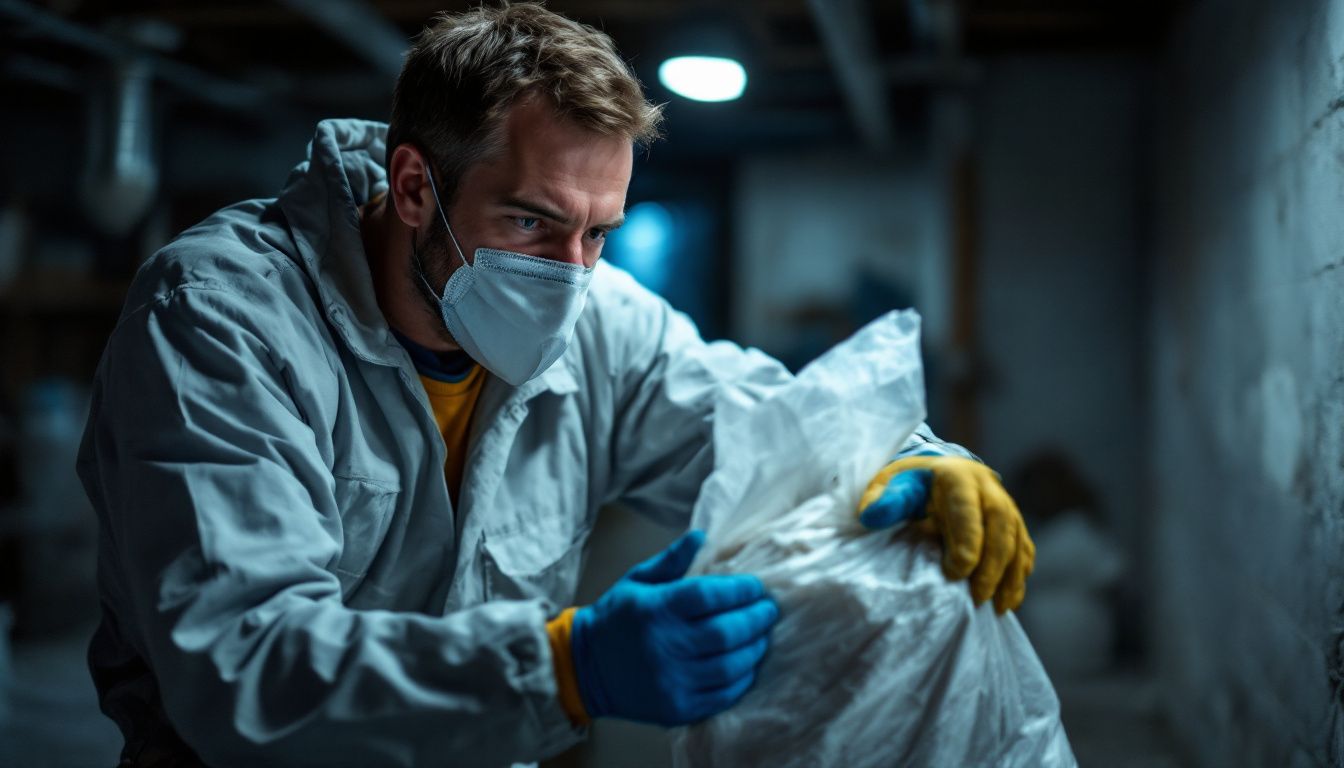
When work with asbestos cannot be avoided, appropriate PPE is non-negotiable. Correct PPE for asbestos work includes:
- Disposable coveralls (Type 5 as a minimum)
- Boot covers or disposable overshoes
- Chemical-resistant gloves
- Safety goggles or full-face shields
- Respiratory protective equipment (RPE) — at minimum a half-face respirator with P3 filter; for higher-risk work, a full-face respirator or powered air-purifying respirator is required
PPE must be correctly fitted, inspected before use, and disposed of safely after the job. Reusing disposable items is not acceptable — contaminated coveralls and gloves must be double-bagged and disposed of as asbestos waste.
Step 4: Controlled Work Environment
The work area must be properly contained to prevent fibre spread. This typically involves:
- Isolating the work area with physical barriers
- Using negative pressure enclosures for higher-risk work
- Suppressing dust with water or a suitable wetting agent
- Avoiding dry sweeping — using HEPA-filtered vacuum equipment instead
- Controlling access so that only authorised, protected personnel enter the zone
Step 5: Decontamination
Decontamination is a critical and often underestimated step. Workers must pass through a decontamination unit before leaving the work area — removing and bagging contaminated PPE, showering, and changing into clean clothing.
Skipping or rushing decontamination risks carrying fibres out of the work zone and into clean areas, vehicles, and homes. This is how asbestos exposure spreads beyond the immediate worksite and puts families and the wider public at risk.
Step 6: Safe Disposal of Asbestos Waste
Asbestos waste is classified as hazardous waste in the UK and must be disposed of accordingly. All asbestos waste must be:
- Double-bagged in clearly labelled, heavy-duty polythene bags
- Transported only by a licensed waste carrier
- Disposed of at a licensed landfill site permitted to accept asbestos waste
Fly-tipping asbestos waste is a serious criminal offence. Documentation — including waste transfer notes — must be retained. Cutting corners on disposal does not just put people at risk; it exposes you to significant legal liability.
Common Mistakes That Put People at Risk
Even well-intentioned people make dangerous errors when it comes to asbestos. These are the most common mistakes — and why they matter.
Assuming a Building Is Asbestos-Free
Many property owners assume that because a building looks modern or was recently refurbished, it cannot contain asbestos. This is wrong. Asbestos can be hidden beneath newer finishes and may not be visible during a standard inspection. Only a professional survey can confirm whether asbestos is present.
Disturbing Materials Without Testing First
Tradespeople regularly drill into walls, cut through ceilings, or remove floor tiles without checking for asbestos first. This is one of the most common routes to accidental asbestos exposure. The rule is straightforward: if in doubt, stop and test before proceeding.
Using Inadequate PPE
A standard dust mask provides no meaningful protection against asbestos fibres. Using the wrong grade of RPE — or wearing PPE incorrectly — can give a false sense of security while providing little actual protection. Always use the correct specification of equipment for the risk level involved.
Engaging Unlicensed Contractors
Price should never be the primary factor when selecting an asbestos contractor. Unlicensed operatives working on licensable materials are breaking the law, and the consequences — for them, for you, and for anyone in the vicinity — can be catastrophic. Verify licences before any work begins.
Failing to Update the Asbestos Register
An asbestos register is only useful if it is current. If materials have been removed, encapsulated, or disturbed since the last survey, the register must be updated. An out-of-date register can mislead workers and create serious exposure risks.
The Role of Professional Asbestos Surveys
One of the most important decisions you can make when dealing with asbestos is knowing when to call in qualified professionals. The risks of attempting DIY asbestos handling are severe, and in many cases, attempting the work yourself is illegal.
A professional asbestos surveyor will identify the presence, type, and condition of asbestos-containing materials, produce a detailed report and asbestos register, and advise on the appropriate management strategy. This information is the bedrock of any safe and legally compliant approach to asbestos management.
Surveyors accredited by the United Kingdom Accreditation Service (UKAS) operate to the highest professional standards and provide reports that stand up to regulatory scrutiny. When commissioning a survey, always check that the surveying company holds the appropriate accreditation.
Asbestos Safety Across the UK: Why Location Does Not Change the Rules
The legal requirements and safety protocols for asbestos management apply equally across England, Scotland, Wales, and Northern Ireland. Whether you are managing a commercial property in the capital or overseeing a refurbishment in the north of England, the obligations are the same.
If you need an asbestos survey in London, Supernova Asbestos Surveys provides fully accredited surveys across the city and surrounding areas. For properties in the north-west, our team carries out an asbestos survey in Manchester covering commercial, industrial, and residential premises. We also deliver an asbestos survey in Birmingham and across the wider Midlands region, ensuring duty holders across the country can access the professional support they need.
No matter where your property is located, the importance of following proper health and safety protocols when dealing with asbestos remains absolute. Geography does not reduce the risk, and it does not reduce the legal obligation.
What to Do If You Suspect Asbestos Is Present
If you suspect that a material in your building may contain asbestos, the immediate priority is straightforward: do not disturb it. Leave the material alone, keep others away from the area, and contact a qualified asbestos surveyor.
Do not attempt to sample the material yourself. Improper sampling can release fibres and create the very exposure risk you are trying to avoid. A trained professional will take samples safely, send them to an accredited laboratory for analysis, and provide you with a clear report of the findings.
If asbestos-containing materials have already been disturbed — for example, during maintenance or renovation work — vacate the area immediately, prevent access, and seek professional advice. In serious cases, the area may need to be air-tested before it can be reoccupied.
Building a Culture of Asbestos Safety
Compliance with asbestos regulations is not a one-off task — it is an ongoing responsibility. Buildings change, materials deteriorate, and personnel turn over. Maintaining a genuine culture of asbestos safety requires consistent effort from everyone involved in managing or working within a building.
This means keeping the asbestos register up to date after any work that may have affected asbestos-containing materials. It means ensuring that all new contractors and maintenance staff are briefed on the asbestos management plan before they begin work. It means reviewing the plan regularly and commissioning re-inspections when the condition of materials changes.
It also means taking training seriously. Asbestos awareness training is not a formality — it equips workers with the knowledge to recognise potential risks and respond correctly. A workforce that understands the importance of following proper health and safety protocols when dealing with asbestos is far less likely to make the kind of inadvertent mistakes that lead to exposure.
The cost of getting this right is modest. The cost of getting it wrong — in human terms and in legal terms — is immeasurable.
Get Professional Support From Supernova Asbestos Surveys
Supernova Asbestos Surveys has completed over 50,000 surveys nationwide, working with property managers, local authorities, contractors, housing associations, and private clients across the UK. Our UKAS-accredited surveyors provide management surveys, demolition and refurbishment surveys, asbestos sampling, and re-inspection services — everything you need to meet your legal obligations and protect the people in your building.
Do not leave asbestos safety to chance. Call our team today on 020 4586 0680 or visit asbestos-surveys.org.uk to book a survey or discuss your requirements.
Frequently Asked Questions
What makes asbestos so dangerous compared to other hazardous materials?
Asbestos fibres are microscopic, which means they can be inhaled without any awareness that exposure is occurring. Once lodged in the lungs or other tissue, the body cannot expel them. Over decades, the fibres cause scarring and cellular damage that leads to serious, incurable diseases including mesothelioma, asbestosis, and lung cancer. There is no safe level of exposure.
Am I legally required to have an asbestos survey carried out?
If you are the duty holder for a non-domestic premises — which includes anyone responsible for maintaining or managing a building — you have a legal obligation under the Control of Asbestos Regulations to manage asbestos. This requires identifying whether asbestos-containing materials are present, which in practice means commissioning a professional survey. Domestic properties are not covered by the duty to manage, but surveys are still strongly advisable before any renovation or refurbishment work.
Can I remove asbestos myself?
In very limited circumstances, small amounts of certain non-licensed asbestos materials may be handled by a competent non-specialist. However, any work involving high-risk materials such as sprayed coatings, lagging, or asbestos insulation board must only be carried out by an HSE-licensed contractor. Attempting licensed work without the appropriate accreditation is illegal. If you are in any doubt, always seek professional advice before touching any suspect material.
How often should an asbestos management plan be reviewed?
The Control of Asbestos Regulations require that an asbestos management plan is kept up to date and reviewed regularly. In practice, this means reviewing the plan at least annually and updating it whenever work has been carried out that may have affected asbestos-containing materials, when the condition of materials changes, or when new information comes to light. A re-inspection survey is typically recommended every 12 months for materials that are in poor condition or at risk of disturbance.
What should I do if a contractor disturbs asbestos unexpectedly during building work?
Work should stop immediately. The area must be vacated and access prevented. Do not attempt to clean up any debris yourself. Contact a qualified asbestos surveyor or licensed removal contractor as soon as possible. Depending on the extent of the disturbance, an air test may be required before the area can be safely reoccupied. The incident may also need to be reported to the HSE under the relevant notification requirements.