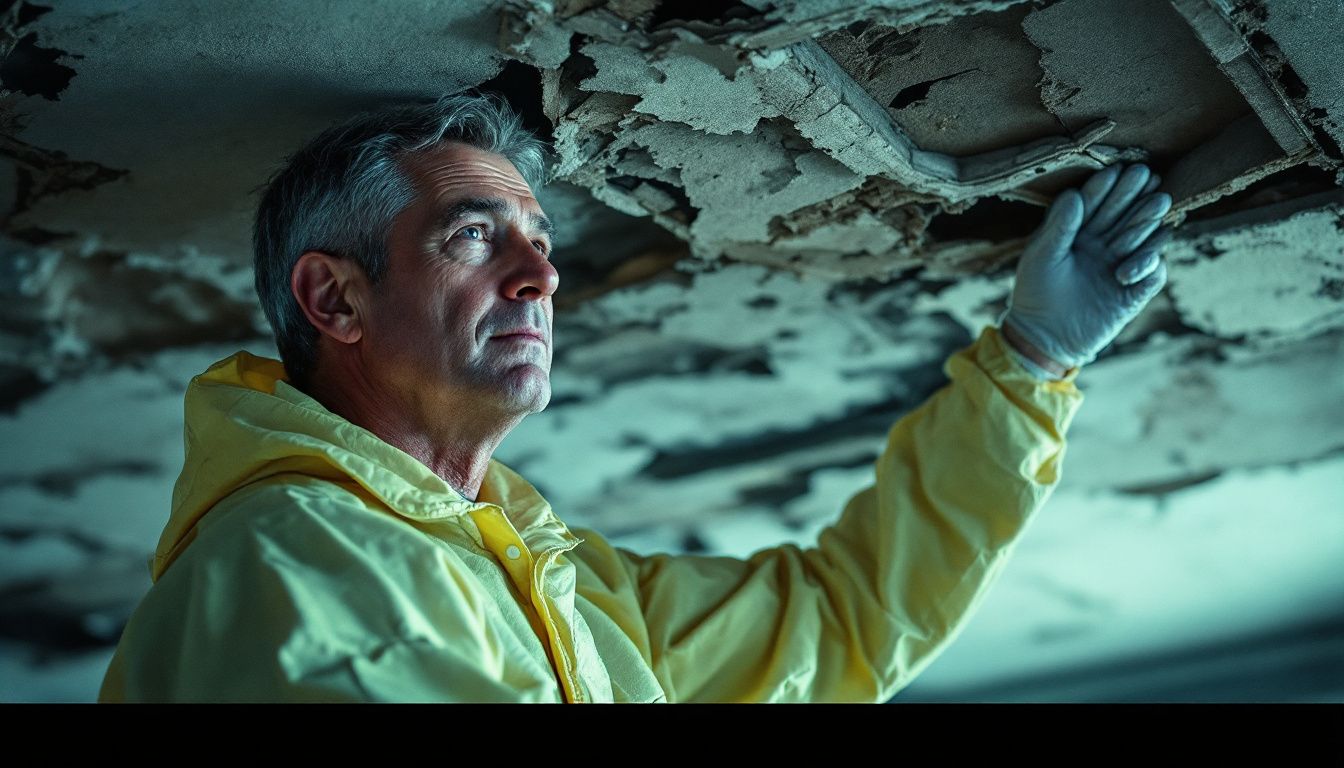
The Environmental Consequences of Asbestos — And Why They Matter Beyond the Building
Most people know asbestos is dangerous to breathe in. What fewer appreciate is that the environmental consequences of asbestos extend far beyond a single building, a single worker, or a single demolition project. Once fibres are released into the environment, they persist in air, soil, and water for years — sometimes decades — creating risks that ripple outward into communities and ecosystems long after the original source has been demolished or forgotten.
This post covers the full picture: how asbestos damages human health, what happens when fibres enter the wider environment, what the legal framework requires of UK property owners, and what practical steps you can take to manage the risk responsibly.
How Asbestos Damages Human Health
Asbestos causes harm through inhalation. When asbestos-containing materials are disturbed — during renovation, demolition, or natural deterioration — microscopic fibres become airborne. These fibres are too small to see and too light to settle quickly, meaning they can remain suspended in the air for extended periods.
Once inhaled, the fibres embed themselves in lung tissue. The body cannot break them down, and the resulting inflammation and scarring leads, over time, to serious and often fatal disease.
The Main Asbestos-Related Diseases
- Mesothelioma — a cancer of the lining of the lungs, abdomen, or heart, almost exclusively caused by asbestos exposure. There is no cure, and prognosis is poor.
- Lung cancer — asbestos significantly increases the risk, particularly in those who also smoke.
- Asbestosis — chronic scarring of lung tissue causing progressive breathlessness and reduced quality of life.
- Pleural thickening and pleural plaques — non-cancerous changes to the lining of the lungs that can cause discomfort and restricted breathing.
A critical and frequently misunderstood feature of all these conditions is their latency period. Symptoms typically do not emerge until 10 to 50 years after the initial exposure. Someone exposed during a building project in the 1980s may only now be receiving a diagnosis.
The UK has one of the highest rates of mesothelioma in the world — a direct legacy of heavy industrial asbestos use throughout the twentieth century. The Health and Safety Executive publishes regular data on mesothelioma deaths, and the figures remain sobering.
Occupational Exposure Remains the Primary Risk
Construction workers, electricians, plumbers, carpenters, and others who regularly work in older buildings are at greatest risk. The Control of Asbestos Regulations places a clear duty on employers to protect workers from exposure, requiring risk assessments, appropriate controls, and — where necessary — licensed removal by competent contractors.
If you manage a building constructed before 2000, a management survey is the essential starting point for understanding what asbestos-containing materials are present and whether they pose a risk to anyone working in or using the building.
The Environmental Consequences of Asbestos: Air, Soil, and Water
The environmental consequences of asbestos are not confined to indoor spaces. When asbestos-containing materials are disturbed, demolished, or disposed of improperly, fibres migrate into the surrounding environment — and they are extraordinarily persistent once they do.
Airborne Asbestos Fibres
Asbestos fibres released into open air can remain suspended for days before settling. Wind can carry them considerable distances from the original source. This is why demolition and refurbishment sites involving asbestos require strict enclosure, wetting techniques, and air monitoring — not just to protect workers on site, but to prevent fibres from spreading into surrounding neighbourhoods.
Regulatory guidance, including the HSE’s HSG264, sets out clear requirements for how surveys must be conducted before any notifiable work begins. These are not bureaucratic formalities — they are the practical barriers that prevent airborne contamination from affecting communities beyond the site boundary.
Soil Contamination
Asbestos fibres that settle from the air, or that are deposited through improper disposal of asbestos waste, can contaminate soil indefinitely. Unlike many pollutants, asbestos does not degrade naturally. Contaminated land presents ongoing risks — particularly if it is later developed, disturbed by digging, or used in ways that bring people into contact with the surface.
Fly-tipping of asbestos waste is a persistent problem in the UK. Asbestos sheeting, pipe insulation, and other materials are sometimes illegally dumped on open land, leaving councils and landowners with significant remediation costs and genuine public health concerns. Asbestos is classified as hazardous waste under UK law, and fly-tipping it carries serious legal penalties.
Water Contamination
Asbestos fibres can enter water bodies through surface run-off from contaminated land, the erosion of naturally occurring asbestos deposits, or the deterioration of asbestos cement water pipes — which were widely installed in the UK’s water infrastructure during the mid-twentieth century.
The World Health Organisation has acknowledged that the evidence linking ingested asbestos in drinking water to specific health effects remains inconclusive. However, the precautionary principle applies: contamination of water sources is undesirable, and the presence of asbestos in water systems is taken seriously by regulators and water companies alike.
Impact on Vegetation and Ecosystems
High concentrations of asbestos in soil can inhibit vegetation growth. Contaminated sites may show reduced plant diversity and vitality, which in turn affects the insects, birds, and animals that depend on those plants.
While the direct ecological toxicity of asbestos is less well-documented than its effects on human health, the disruption to soil and water quality creates cascading effects through local ecosystems that can persist for generations.
Natural Disasters and Legacy Contamination
Flooding, fires, and severe storms can damage buildings containing asbestos, releasing fibres into the environment suddenly and in large quantities. The UK’s ageing building stock — much of it constructed during the peak asbestos use period of the 1950s to 1980s — means that extreme weather events carry an asbestos contamination risk that is frequently overlooked in emergency planning.
Legacy contamination from former industrial sites — shipyards, power stations, factories — also continues to affect communities across many parts of the UK. These sites require careful, ongoing environmental monitoring and should never be developed without thorough investigation.
Legal Duties and Prevention: What UK Property Owners Must Do
The UK’s legal framework for managing asbestos is one of the most developed in the world. The Control of Asbestos Regulations sets out clear obligations for those who own or manage non-domestic premises.
The Duty to Manage
Regulation 4 of the Control of Asbestos Regulations places a duty to manage asbestos on the owner or person responsible for the maintenance of non-domestic premises. This duty requires:
- Identifying whether asbestos-containing materials are present
- Assessing the condition and risk of those materials
- Producing and maintaining an asbestos register
- Implementing a written asbestos management plan
- Keeping the information up to date through regular re-inspection
Failure to comply is a criminal offence and can result in significant fines. More critically, failure to manage asbestos properly puts people — and the wider environment — at genuine risk.
Before Refurbishment or Demolition
Before any intrusive building work begins, a refurbishment survey is legally required. This type of survey is more intrusive than a management survey — it involves accessing all areas that will be disturbed, including voids, ceiling spaces, and wall cavities, to identify all asbestos-containing materials before work starts.
Skipping this step is not just a legal risk — it is precisely how asbestos fibres end up being released into the environment during building works, exposing workers, neighbouring properties, and the wider area to contamination.
Ongoing Monitoring and Re-inspection
An asbestos register is not a one-off document. Materials that are left in place and managed — rather than removed — must be monitored regularly to ensure their condition has not deteriorated. An re-inspection survey checks the condition of known asbestos-containing materials and updates the risk assessment accordingly.
This is particularly important in buildings that experience heavy use, maintenance activity, or any structural changes. Conditions change, and an out-of-date register is a liability — legally and practically.
When Removal Is the Right Decision
In some cases — particularly where materials are in poor condition, where significant refurbishment is planned, or where ongoing management is not practicable — asbestos removal by a licensed contractor is the appropriate course of action. Certain types of asbestos work are legally restricted to licensed contractors under the Control of Asbestos Regulations, and attempting unlicensed removal is a serious criminal offence.
Proper removal, carried out under controlled conditions with correct containment and disposal procedures, eliminates the long-term environmental risk that deteriorating in-situ materials can create.
International Controls and the Global Picture
At a global level, the Rotterdam Convention governs the international trade in hazardous chemicals, including chrysotile asbestos. The convention requires that importing countries give informed consent before shipments of listed substances can proceed.
The UK, along with the European Union, has banned all forms of asbestos. However, chrysotile continues to be mined and used in some countries, meaning the global environmental consequences of asbestos remain an active and serious concern. The UK ban is robust, but imported goods and materials from countries with different standards can occasionally present a risk — another reason why thorough surveying and testing remains essential.
Practical Steps for Property Owners and Managers
If you own or manage a property built before 2000, the following steps will help you manage the environmental and health risks associated with asbestos responsibly.
- Commission a survey — if you don’t already have an up-to-date asbestos register, book a survey before any maintenance or building work takes place.
- Don’t disturb suspect materials — if you think a material may contain asbestos, treat it as such until it has been tested. Use a testing kit for preliminary sampling where appropriate, or book a professional survey.
- Keep your register current — update it after any works, and ensure it is accessible to contractors before they begin work on site.
- Use licensed contractors for removal — never attempt to remove asbestos yourself without fully understanding your legal obligations.
- Dispose of asbestos waste correctly — asbestos is classified as hazardous waste and must be disposed of at a licensed facility. Fly-tipping asbestos carries serious legal penalties and creates real environmental harm.
- Consider fire risk alongside asbestos risk — buildings with asbestos may also have other legacy safety issues. A fire risk assessment should form part of your overall building safety management.
Asbestos Surveys Across the UK
Supernova Asbestos Surveys operates nationwide, providing BOHS P402-qualified surveyors and UKAS-accredited laboratory analysis for properties of all types and sizes. Whether you need a survey for a residential property, a commercial building, or an industrial site, we provide detailed, HSG264-compliant reports with clear risk ratings and management recommendations.
We cover every corner of the country. If you need an asbestos survey in London, an asbestos survey in Manchester, or an asbestos survey in Birmingham, our local teams can typically offer same-week availability to keep your project on track.
With over 50,000 surveys completed and more than 900 five-star reviews, Supernova is the trusted choice for property professionals, housing associations, local authorities, and private landlords across the UK.
Call us on 020 4586 0680 or visit asbestos-surveys.org.uk to get a quote and book your survey today.
Frequently Asked Questions
What are the main environmental consequences of asbestos?
The main environmental consequences of asbestos include the contamination of air, soil, and water with persistent mineral fibres that do not degrade naturally. Airborne fibres can travel significant distances from a source site. Soil contamination can inhibit plant growth and disrupt local ecosystems. Water contamination can occur through run-off from contaminated land or the deterioration of asbestos cement pipes. These effects can persist for decades and are particularly associated with improper demolition, illegal dumping, and the disturbance of legacy industrial sites.
How long do asbestos fibres persist in the environment?
Asbestos fibres are extraordinarily durable. Unlike organic pollutants, they do not biodegrade, and they can persist in soil and water indefinitely. In air, fibres can remain suspended for several days before settling. Once in soil or water, they remain until physically removed through remediation. This persistence is one of the key reasons why preventing fibre release in the first place — through proper surveying, management, and licensed removal — is so critical.
Is asbestos contamination in soil dangerous?
Yes. Asbestos-contaminated soil poses a risk whenever it is disturbed — through construction, gardening, or any activity that brings people into contact with the surface or generates dust. The risk is particularly significant on former industrial sites, land where asbestos waste has been fly-tipped, and areas adjacent to buildings where asbestos-containing materials have deteriorated and shed fibres over time. Any land suspected of asbestos contamination should be assessed by a qualified environmental specialist before development or disturbance.
Do I need a survey before refurbishment work on an older building?
Yes — a refurbishment survey is a legal requirement before any intrusive building work begins on premises that may contain asbestos. This applies to all non-domestic buildings and, in many cases, to the common areas of residential properties. The survey must be carried out by a competent surveyor and must cover all areas that will be disturbed. Proceeding without one is a breach of the Control of Asbestos Regulations and creates a serious risk of releasing fibres into the environment and exposing workers to harm.
What should I do if I suspect asbestos has been illegally dumped on my land?
Do not disturb the material. Asbestos waste that has been fly-tipped should be reported to your local council, which has powers to investigate and arrange removal. Do not attempt to handle or move the material yourself. If you are a landowner, you may have a legal obligation to arrange safe disposal — seek advice from a licensed asbestos contractor and your local environmental health team. Asbestos is classified as hazardous waste, and its disposal is tightly regulated under UK law.