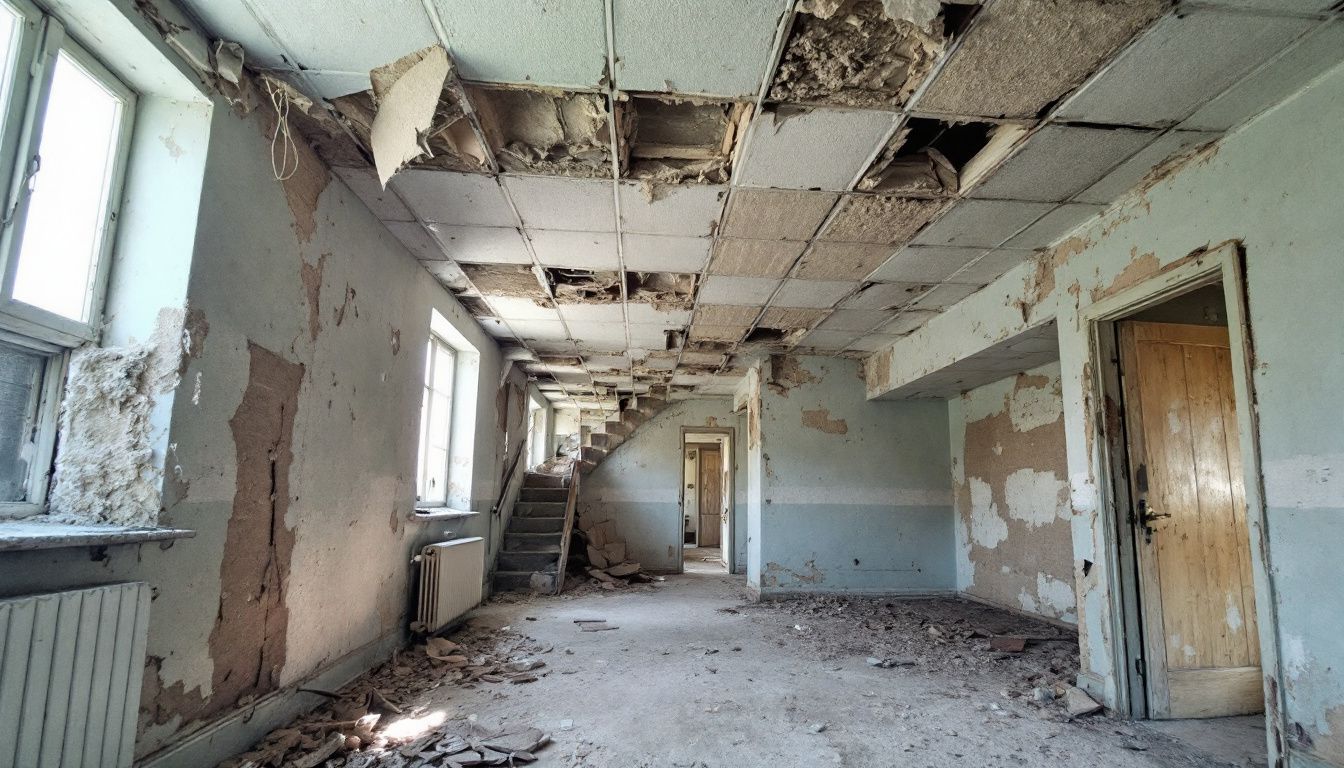
What You Must Know Before Anyone Touches a Thing
Asbestos fibres are invisible to the naked eye — and that is precisely what makes them so dangerous. When disturbed, they become airborne and can be inhaled deep into the lungs, where they remain permanently. Knowing how to safely remove asbestos contamination is not simply a matter of good practice; it is a legal obligation and, in the most direct sense, a question of life and death.
Mesothelioma, asbestosis, and lung cancer are all linked to asbestos exposure. None of them develop overnight. The damage accumulates silently over years, sometimes decades.
If you own, manage, or occupy a property built before 2000, there is a realistic chance asbestos-containing materials (ACMs) are present somewhere on the premises. The question is not whether to take it seriously — it is whether you are taking the right steps.
Why Asbestos Contamination Is Never a DIY Problem
Let us be direct: attempting to remove asbestos yourself is illegal in most commercial and industrial contexts, and deeply inadvisable in any setting. The Control of Asbestos Regulations sets out clear legal duties for duty holders, contractors, and employers.
Licensed asbestos removal contractors must carry out work on the most hazardous ACMs — including sprayed coatings, lagging, and asbestos insulating board. Even where lower-risk work can technically be performed by unlicensed contractors, it must still follow specific procedures, including notification requirements and the use of appropriate personal protective equipment (PPE).
There is no grey area here. Before any removal work begins, a thorough removal plan must be in place, prepared by competent professionals who understand both the materials involved and the regulatory framework that governs the work.
Identifying Asbestos Contamination: The Essential First Step
You cannot safely remove what you have not properly identified. This is where a professional asbestos survey becomes non-negotiable. Surveyors trained to HSG264 standards will inspect the building, sample suspect materials, and have those samples analysed by an accredited laboratory.
Asbestos was used in a vast range of building products — textured coatings such as Artex, floor tiles, pipe lagging, roof sheeting, ceiling tiles, and even some adhesives. Visual inspection alone is never sufficient to confirm the presence of asbestos. Only laboratory analysis of a physical sample can do that.
What a Professional Asbestos Survey Involves
- A thorough inspection of all accessible areas of the building
- Sampling of suspect materials using techniques that minimise fibre release
- Laboratory analysis under polarised light microscopy
- A written report identifying the location, type, condition, and risk rating of any ACMs found
- Recommendations for management, encapsulation, or removal
If you are based in the capital and need an expert assessment, our asbestos survey London service covers all property types across the city, from Victorian terraces to modern commercial premises.
Choosing the Right Type of Survey Before Removal Work Begins
Not all asbestos surveys are the same, and using the wrong type can leave hidden ACMs undiscovered — putting workers and occupants at serious risk.
A management survey is the standard option for occupied buildings. It identifies ACMs that could be disturbed during normal occupation and routine maintenance activities, forming the foundation of any asbestos management plan.
A refurbishment survey is required before any building work takes place. It is more intrusive and aims to locate all ACMs that could be disturbed by planned works. Using a management survey when a refurbishment survey is needed can leave materials undiscovered in wall cavities, floor voids, or structural elements.
If a demolition project is planned, a demolition survey is a legal requirement before any structural work begins. This is the most intrusive survey type and must cover the entire structure, including areas that are difficult to access.
Getting the right survey type from the outset is not a formality — it is the bedrock of safe asbestos management.
How to Safely Remove Asbestos Contamination: The Step-by-Step Process
Once asbestos has been identified and a decision made to remove it, the work must follow a strict, regulated sequence. Licensed contractors do not simply arrive on site and start pulling materials apart. There is a structured methodology behind every safe removal job.
Step 1: Risk Assessment and Method Statement
Before any work begins, the licensed contractor must produce a written risk assessment and a site-specific method statement. This document outlines the scope of work, the type of asbestos involved, the controls that will be in place, and the emergency procedures to follow if something goes wrong.
The HSE must be notified at least 14 days before licensable work commences. This is a legal requirement, not a formality, and failure to notify can result in enforcement action.
Step 2: Setting Up a Controlled Work Area
The contaminated area must be physically isolated from the rest of the building. Contractors use heavy-duty polythene sheeting and duct tape to seal off the zone, covering floors, walls, and all openings.
A negative pressure unit (NPU) is installed to ensure that any airborne fibres are drawn inward rather than escaping into clean areas of the building. A decontamination unit — an airlock system — is also set up so that workers can remove contaminated PPE without carrying fibres out of the work zone. This unit typically consists of a dirty area, a shower stage, and a clean area.
Step 3: Personal Protective Equipment
Every worker entering the enclosure must be properly equipped. There are no exceptions and no shortcuts. Standard PPE for licensed asbestos removal includes:
- Disposable coveralls (Type 5, Category 3) — worn once and disposed of as asbestos waste
- Full-face respirator with P3 HEPA filter — the minimum standard for licensable work
- Disposable gloves, taped at the wrist to the coverall
- Rubber boots or disposable boot covers
- Eye protection where face respirators do not provide full facial coverage
Fit testing for respirators is mandatory. A mask that does not fit correctly offers no meaningful protection, regardless of its specification or rating.
Step 4: Wetting and Controlled Removal
Asbestos-containing materials must be kept wet throughout the removal process. Water suppresses fibre release by preventing dust from becoming airborne. Contractors use low-pressure sprayers with an appropriate wetting agent to dampen materials before and during removal.
Hand tools are preferred over power tools wherever possible. Cutting, drilling, or sanding ACMs with power tools dramatically increases fibre release. Where power tools are unavoidable, they must be fitted with local exhaust ventilation (LEV) and HEPA filtration.
Step 5: Air Monitoring Throughout the Work
Continuous air monitoring is carried out inside and outside the enclosure throughout the removal process. Samples are collected and analysed — typically using phase contrast microscopy — to ensure fibre concentrations remain within safe limits.
If readings spike unexpectedly, work stops immediately. Air monitoring is not optional; it is a core component of how to safely remove asbestos contamination and provides documented evidence that the work was conducted safely. This documentation may be required later for insurance or legal purposes.
Step 6: Cleaning the Work Area and Obtaining Clearance
Once the ACMs have been removed, the enclosure must be thoroughly decontaminated before it is dismantled. This involves a combination of wet wiping, HEPA vacuuming, and visual inspection.
A four-stage clearance procedure is typically followed:
- Visual inspection by the contractor to confirm all visible asbestos debris has been removed
- Independent visual inspection by a licensed analyst
- Air testing by the analyst
- Final clearance certificate issued once air fibre levels are within acceptable limits
The clearance certificate is your proof that the area is safe for reoccupation. Do not accept verbal assurances — insist on the paperwork every time.
Asbestos Waste Disposal: Getting It Right
Asbestos waste is classified as hazardous waste under UK environmental legislation. It cannot go in a skip, a general waste bin, or an unlicensed landfill. The disposal process is as tightly regulated as the removal itself.
Packaging Asbestos Waste Correctly
All asbestos waste must be double-bagged in polythene bags with a minimum thickness of 0.2 mm. Each bag must be clearly labelled with the words ASBESTOS WASTE and include the contractor’s details.
Larger items that cannot be bagged — such as asbestos cement sheets — must be wrapped in polythene sheeting and sealed securely. Bags must not be overfilled, as overfull bags are more likely to split during handling, creating a serious contamination risk.
Transportation and Licensed Disposal
Only licensed waste carriers registered with the Environment Agency (or SEPA in Scotland, NRW in Wales) can transport asbestos waste. The waste must be accompanied by a consignment note — a paper trail that tracks the material from the point of removal to the licensed disposal site.
Your contractor should provide copies of all consignment notes as part of the job documentation. If they cannot produce these, that is a serious red flag.
Under no circumstances should household vacuum cleaners be used to clean up asbestos debris. Standard vacuums do not have HEPA filtration and will simply redistribute fibres back into the air.
Your Legal Duties as a Duty Holder
If you own or manage a non-domestic property, you have a legal duty to manage asbestos under the Control of Asbestos Regulations. This is not a voluntary commitment — it is a statutory obligation with real consequences for non-compliance.
Your duties include:
- Identifying whether ACMs are present in the premises
- Assessing the condition and risk of those materials
- Producing and maintaining an asbestos register
- Developing a written asbestos management plan
- Ensuring anyone who may disturb ACMs is informed of their location
- Reviewing and updating the register and plan regularly
Failing to meet these duties is not simply a regulatory breach. It can result in prosecution, unlimited fines, and in the most serious cases, imprisonment. More importantly, it puts people at risk of life-altering illness.
Domestic landlords also carry responsibilities. Before any building work begins on a residential property, a refurbishment survey is required to ensure tradespeople are not unknowingly exposed to asbestos during works.
Professional Asbestos Removal: What to Expect from a Licensed Contractor
Choosing the right contractor is as important as understanding the process itself. A reputable, licensed asbestos removal contractor will hold a current HSE asbestos removal licence, carry adequate insurance, and be able to provide references and documentation from previous jobs.
They will not pressure you to proceed without a survey. They will not offer suspiciously low quotes that cut corners on air monitoring, waste disposal, or clearance certification. And they will provide a full package of documentation once the work is complete — including the risk assessment, method statement, air monitoring results, waste consignment notes, and clearance certificate.
Our asbestos removal service operates to the highest regulatory standards, with fully licensed operatives, independent air monitoring, and complete documentation provided as standard on every job.
Regional Asbestos Services Across the UK
Asbestos contamination is not confined to any one region — it is a nationwide issue affecting properties of every age and type. Whether you are dealing with a Victorian school, a 1970s office block, or a residential conversion, the same rigorous standards apply regardless of location.
For businesses and property managers in the North West, our asbestos survey Manchester team delivers fast, accredited surveys across the region, including Greater Manchester and the surrounding areas.
In the Midlands, our asbestos survey Birmingham service supports commercial landlords, local authorities, housing associations, and contractors with surveys tailored to the specific demands of each project.
Wherever you are in the country, Supernova Asbestos Surveys has the expertise, accreditation, and regional reach to support you — from initial survey through to final clearance certificate.
Frequently Asked Questions
Can I remove asbestos myself from my own home?
In limited circumstances, a homeowner working on their own domestic property may carry out minor work involving certain lower-risk ACMs. However, this does not apply to the most hazardous materials, and it is strongly inadvisable in all cases. The risks of incorrect removal — including spreading fibres throughout the property — far outweigh any cost savings. A licensed contractor will always be the safer and more legally defensible choice.
How do I know if a contractor is properly licensed to remove asbestos?
You can verify a contractor’s HSE asbestos removal licence directly on the HSE website, which maintains a public register of licensed contractors. A legitimate contractor will have no hesitation in sharing their licence number and documentation. Always check before any work begins — an unlicensed contractor carrying out licensable work is breaking the law, and the liability can fall back on the property owner.
What is the difference between asbestos encapsulation and asbestos removal?
Encapsulation involves sealing ACMs in place with a specialist coating or physical barrier, preventing fibre release without physically removing the material. It is a valid option when ACMs are in good condition and are unlikely to be disturbed. Removal eliminates the material entirely. A professional surveyor will advise on which approach is appropriate based on the type, condition, and location of the ACMs identified.
How long does asbestos removal typically take?
The duration depends on the volume and type of material being removed, the complexity of the site, and whether the work requires full enclosure and negative pressure. A small domestic job may take a single day; a large commercial project involving multiple ACMs could take several weeks. Your contractor should provide a realistic programme of works as part of their method statement before any work begins.
Do I need a new asbestos survey if one was done several years ago?
An existing survey may still be valid, but it should be reviewed carefully. If the condition of ACMs has changed, if areas were inaccessible at the time of the original survey, or if building works are now planned, a new or supplementary survey will almost certainly be required. Asbestos management is an ongoing duty — a survey is a snapshot in time, not a permanent clearance document.
Speak to Supernova Asbestos Surveys Today
With over 50,000 surveys completed nationwide, Supernova Asbestos Surveys is one of the UK’s most experienced and trusted asbestos surveying companies. Whether you need an initial survey to establish what is present, guidance on managing ACMs in an occupied building, or a fully managed removal programme, our team is ready to help.
Call us on 020 4586 0680 or visit asbestos-surveys.org.uk to request a quote or speak to one of our surveyors directly. Do not wait until a problem forces your hand — proactive asbestos management protects your people, your property, and your legal position.